Telang
all
कार्कश्यं स्तनयोर्दृशोस्तरलतालीकं मुखे श्लाघ्यते
कौटिल्यं कचसंचये च वदने मान्द्यं त्रिके स्थूलता ।
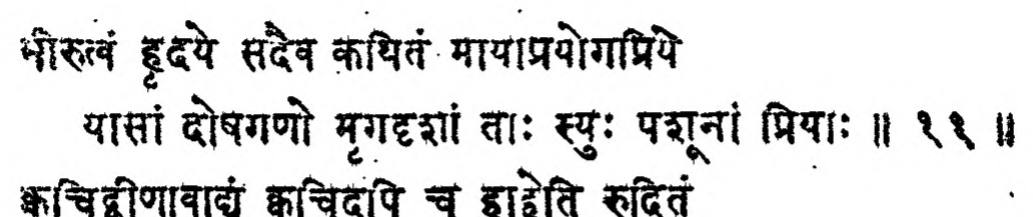
भीरुत्वं हृदये सदैव कथितं मायाप्रयोगप्रिये
यासां दोषगणो मृगदृशां ताः स्युः पशूनां प्रियाः ॥ ११ ॥

Notes
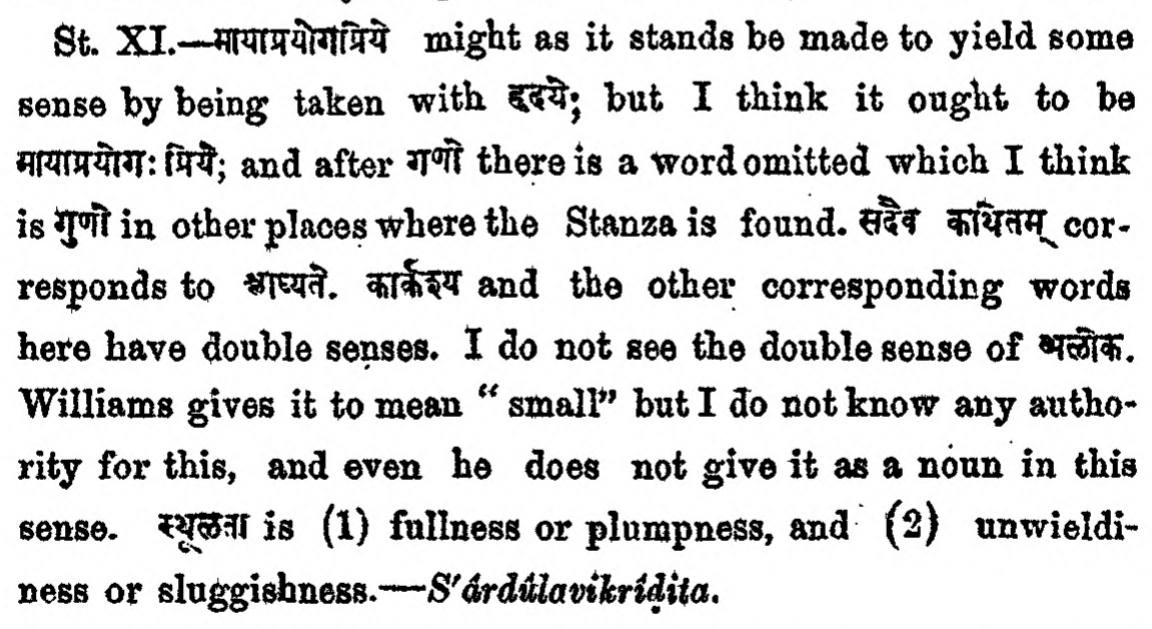
St. XI.—मायाप्रयोगप्रिये might as it stands be made to yield some sense by being taken with हृदये; but I think it ought to be मायाप्रयोगः प्रिये; and after गणो there is a word omitted which I think is गुणो in other places where the Stanza is found. सदैव कथितम् corresponds to श्लाघ्यते. कार्कश्य and the other corresponding words here have double senses. I do not see the double sense of अलीक. Williams gives it to mean “small” but I do not know any authority for this, and even he does not give it as a noun in this sense. स्थूलता is (1) fullness or plumpness, and (2) unwieldiness or sluggishness.—S'ârdûlavikrîḍita.
Kale
all
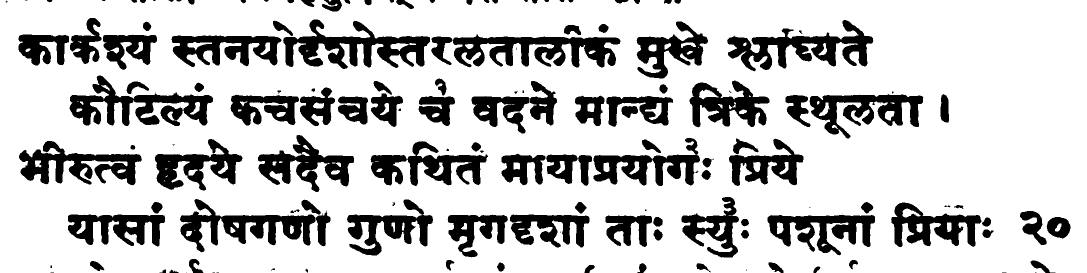
कार्कश्यं स्तनयोर्दृशोस्तरलतालीकं मुखे श्लाघ्यते
कौटिल्यं कचसंचये च वदने मान्द्यं त्रिके स्थूलता ।
भीरुत्वं हृदये सदैव कथितं मायाप्रयोगः प्रिये
यासां दोषगणो गुणो मृगदृशां ताः स्युः पशूनां प्रियाः २०
Translation
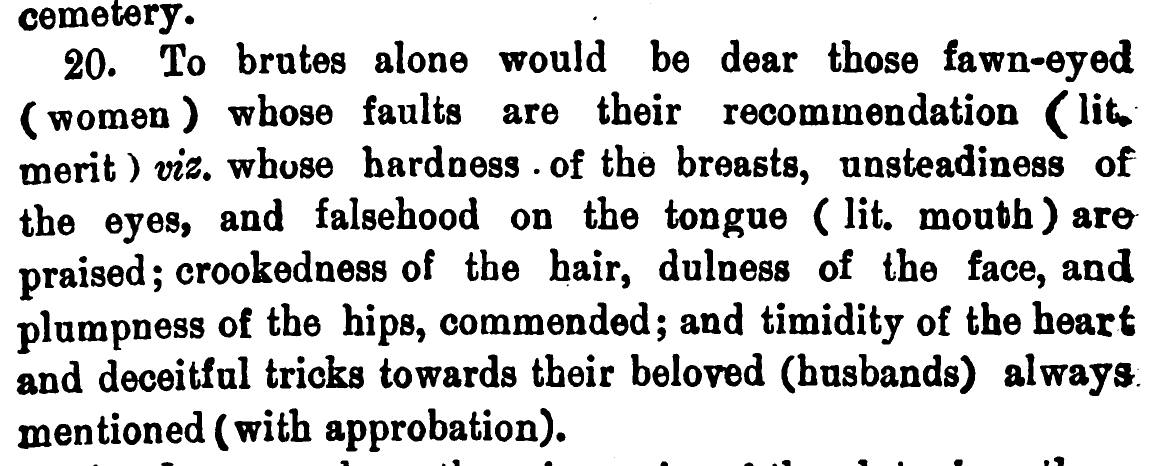
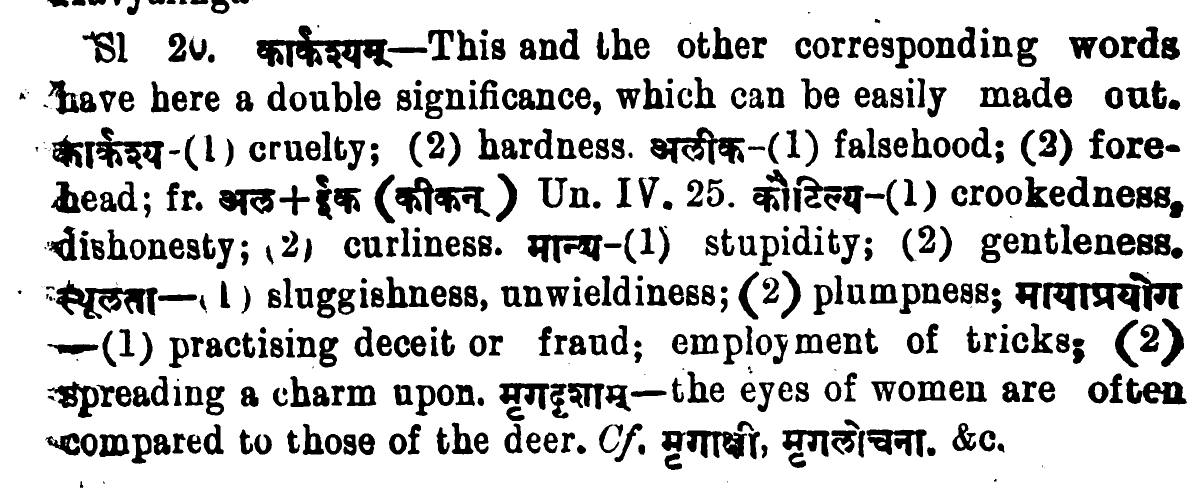
20. To brutes alone would be dear those fawn-eyed ( women ) whose faults are their recommendation ( lit. merit ) viz. whose hardness of the breasts, unsteadiness of the eyes, and falsehood on the tongue ( lit. mouth ) are praised; crookedness of the hair, dulness of the face, and plumpness of the hips, commended; and timidity of the heart and deceitful tricks towards their beloved (husbands) always mentioned (with approbation).
Notes
Sl. 20. कार्कश्यम्—This and the other corresponding words have here a double significance, which can be easily made out. कार्कश्य-(1) cruelty; (2) hardness. अलीक-(1) falsehood; (2) forehead; fr. अल + ईक (कीकन्) Un. IV. 25. कौटिल्य-(1) crookedness, dishonesty; (2) curliness. मान्द्य-(1) stupidity; (2) gentleness. स्थूलता—( 1 ) sluggishness, unwieldiness; (2) plumpness; मायाप्रयोग —(1) practising deceit or fraud; employment of tricks; (2) spreading a charm upon. मृगदृशाम्—the eyes of women are often compared to those of the deer. Cf. मृगाक्षी, मृगलोचना. &c.
Commentary