Tawney
Nor Meru nor Himâdri's heights adore,
Where trees are simply trees and nothing more,
For Malaya's nobler mount thy praises keep,
Whose woods sweetgums and odorous balsams weep.
Telang
all
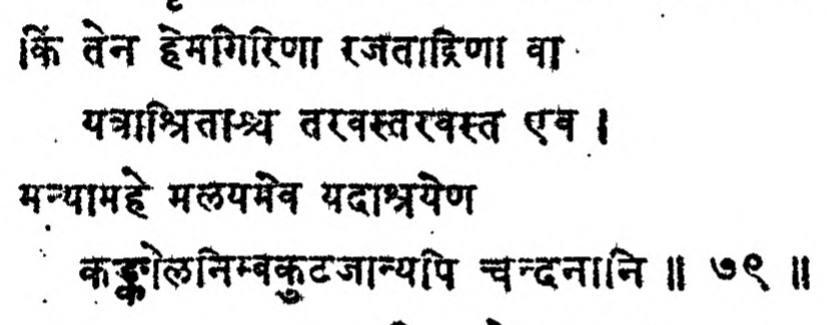
किं तेन हेमगिरिणा रजताद्रिणा वा
यत्राश्रिताश्च तरवस्तरवस्त एव ।
मन्यामहे मलयमेव यदाश्रयेण
कङ्कोलनिम्बकुटजान्यपि चन्दनानि ॥ ७९ ॥
Notes
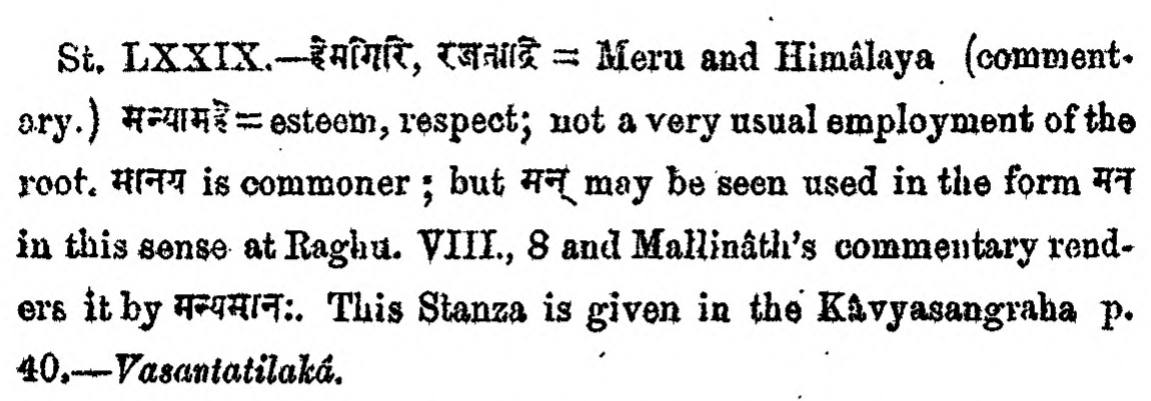
St. LXXIX.—हेमगिरि, रजताद्रि = Meru and Himâlaya (commentary.) मन्यामहे = esteem, respect; not a very usual employment of the root. मानय is commoner ; but मन् may be seen used in the form मन in this sense at Raghu. VIII., 8 and Mallinâth's commentary renders it by मन्यमानः. This Stanza is given in the Kâvyasangraha p. 40.—Vasantatilakâ.

Kale
all

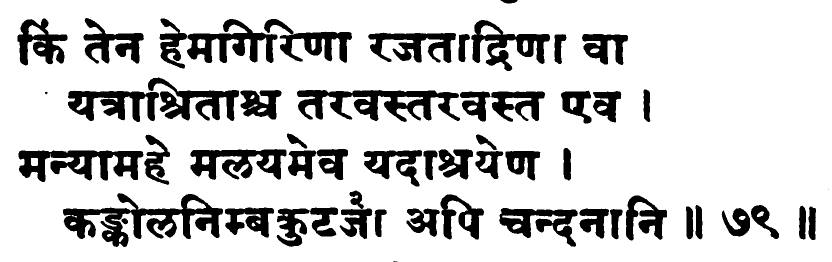
किं तेन हेमगिरिणा रजताद्रिणा वा
यत्राश्रिताश्च तरवस्तरवस्त एव ।
मन्यामहे मलयमेव यदाश्रयेण ।
कङ्कोलनिम्बकुटजा अपि चन्दनानि ॥ ७९ ॥
Translation
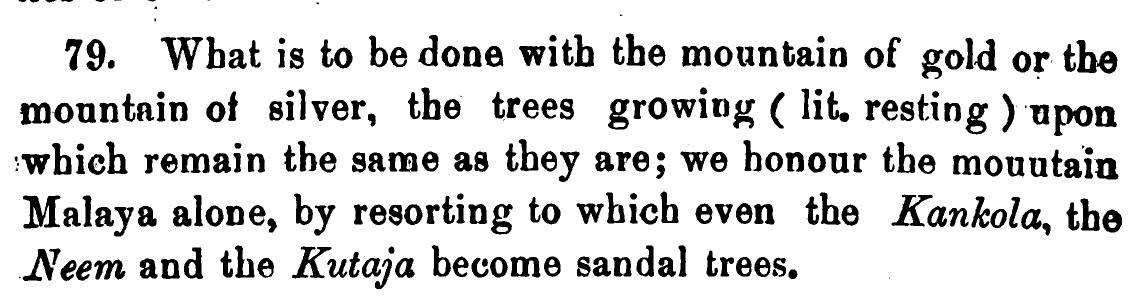
79. What is to be done with the mountain of gold or the mountain of silver, the trees growing ( lit. resting ) upon which remain the same as they are; we honour the mouutain Malaya alone, by resorting to which even the Kankola, the Neem and the Kutaja become sandal trees.
Notes
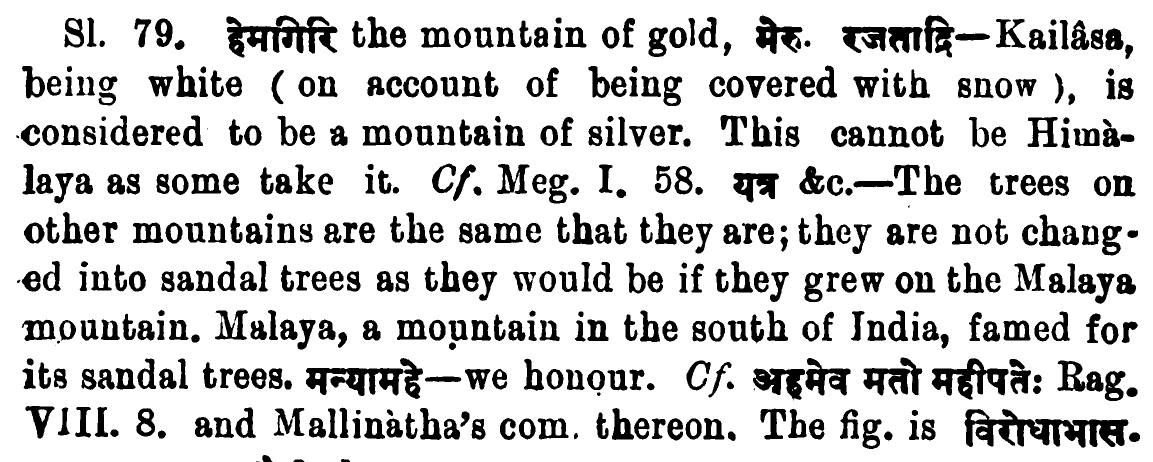
Sl. 79. हेमगिरि the mountain of gold, मेरु. रजताद्रि—Kailâsa, being white (on account of being covered with snow), is considered to be a mountain of silver. This cannot be Himàlaya as some take it. Cf. Meg. I. 58. यत्र &c.—The trees on other mountains are the same that they are; they are not changed into sandal trees as they would be if they grew on the Malaya mountain. Malaya, a mountain in the south of India, famed for its sandal trees. मन्यामहे—we honour. Cf. अहमेव मतो महीपतेः Rag. VIII. 8. and Mallinàtha's com. thereon. The fig. is विरोधाभास.
Gopinath1914
all
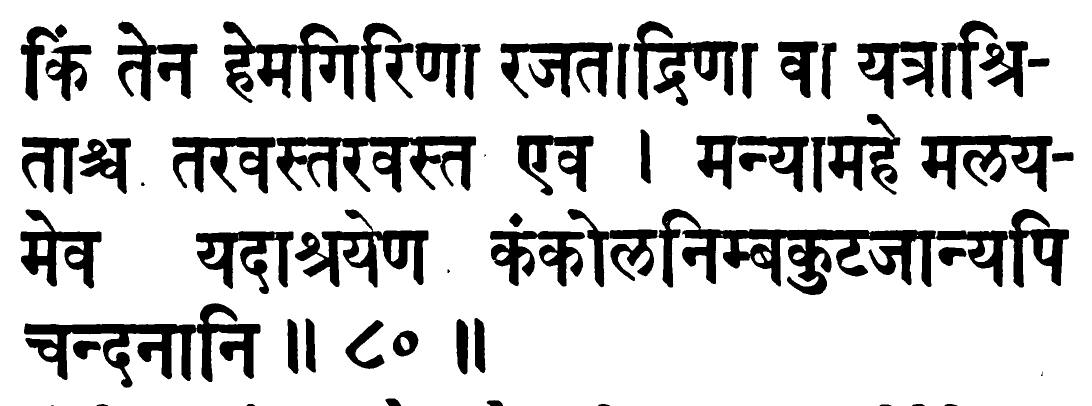
किं तेन हेमगिरिणा रजतादिणा वा यत्राश्रि-
ताश्च तरवस्तरवस्त एव । मन्यामहे मलय-
मेव यदाश्रयेण कंकोलनिम्बकुटजान्यपि
चन्दनानि ॥ ८० ॥
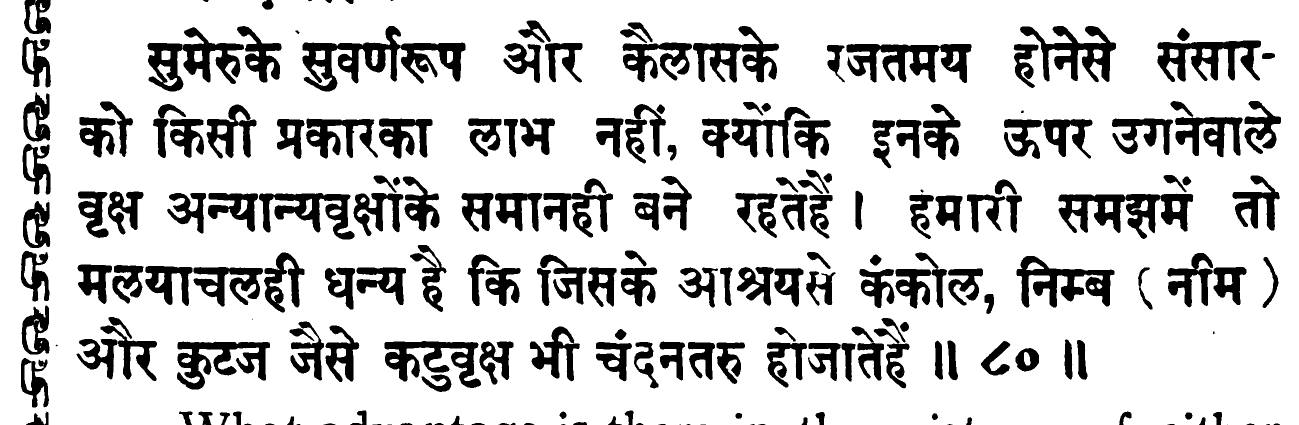
सुमेरुके सुवर्णरूप और कैलासके रजतमय होनेसे संसार को किसी प्रकारका लाभ नहीं, क्योंकि इनके ऊपर उगनेवाले वृक्ष अन्यान्यवृक्षोंके समानही बने रहते हैं । हमारी समझमें तो मलयाचलही धन्य है कि जिसके आश्रय से कंकोल, निम्ब (नीम ) और कुटज जैसे कटुवृक्ष भी चंदनतरु होजाते हैं ॥ ८० ॥
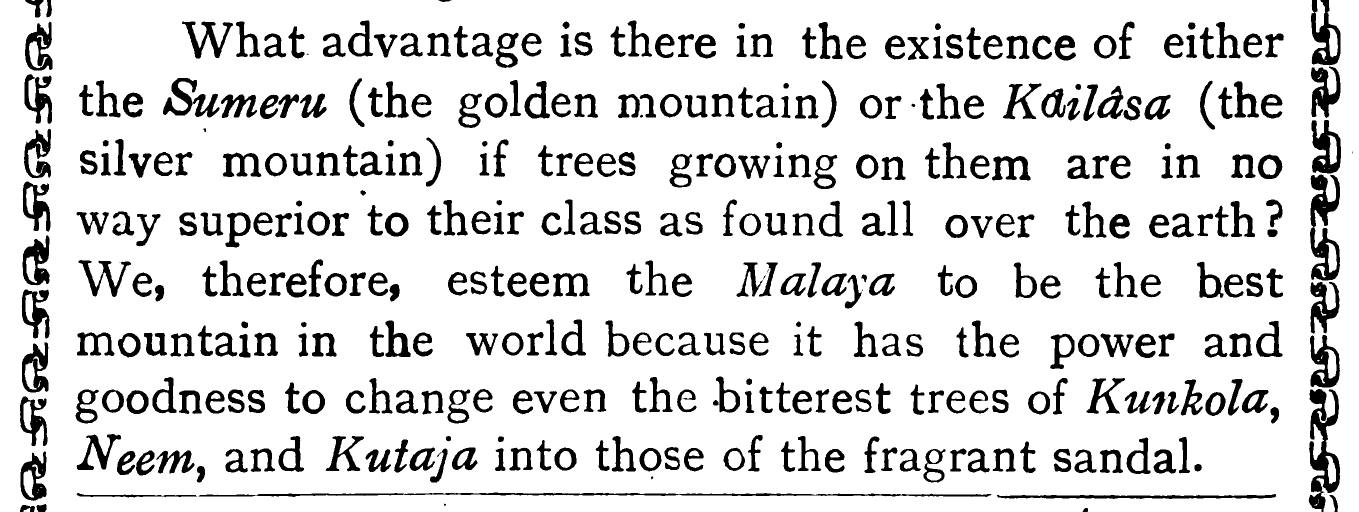
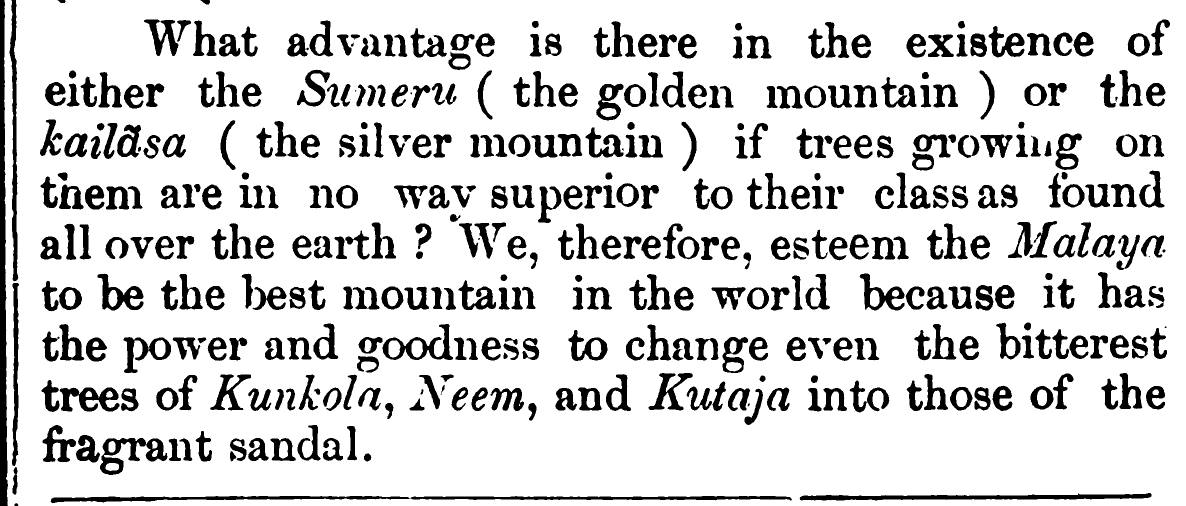
What advantage is there in the existence of either the Sumeru (the golden mountain ) or the Kailasa (the silver mountain) if trees growing on them are in no way superior to their class as found all over the earth? We, therefore, esteem the Malaya to be the best mountain in the world because it has the power and goodness to change even the bitterest trees of Kunkola, Neem, and Kutaja into those of the fragrant sandal.
Footnote
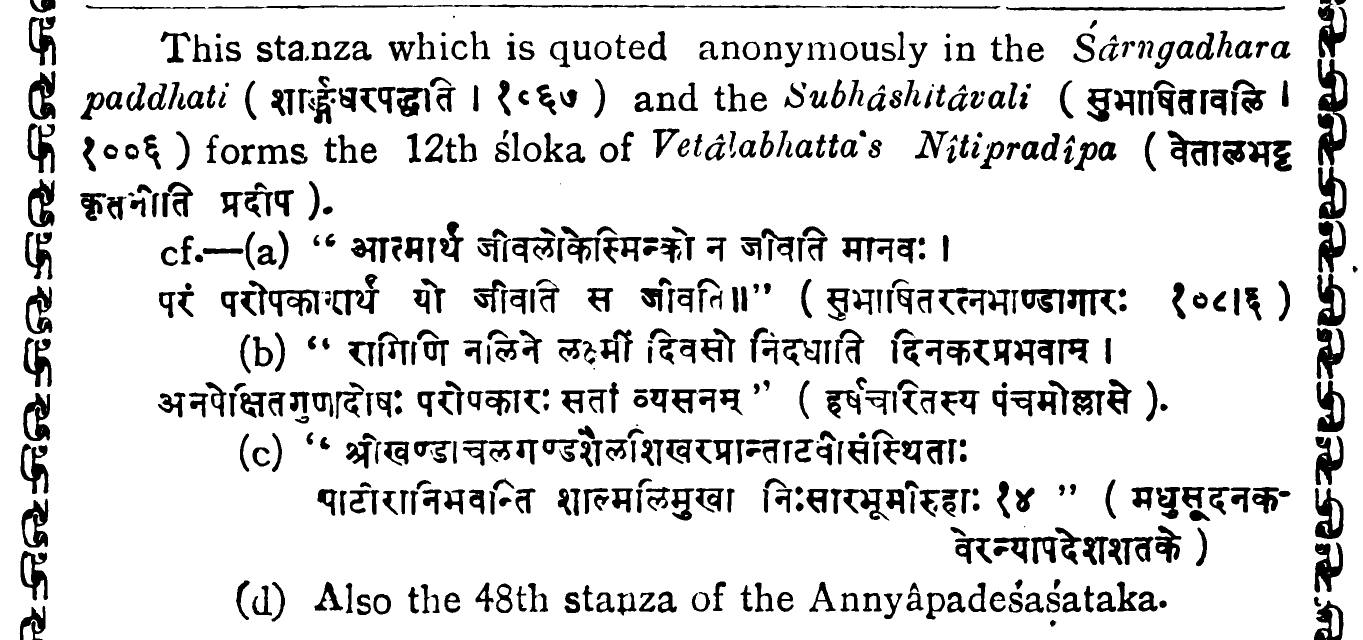
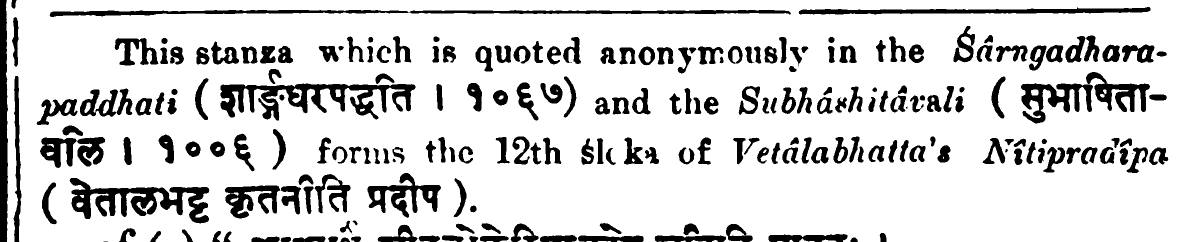
This stanza which is quoted anonymously in the Sárngadhara paddhati ( शार्ङ्गधरपद्धति । १०६७ ) and the Subhashitavali ( सुभाषितावलि । १००६ ) forms the 12th sloka of Vetalabhatta's Nitipradipa ( वेताळभट्ट कृतनीति प्रदीप ). cf.—(a) “ आत्मार्थ जीवलोकेस्मिन्को न जीवति मानवः । परं परोपकारार्थं यो जीवति स जीवति ॥" ( सुभाषितरत्नभाण्डागारः १०८/६ ) (b) " रागिणि नलिने लक्ष्मीं दिवसो निंदधाति दिनकरप्रभवाम् । अनपेक्षित गुणादोषः परोपकारः सतां व्यसनम् " ( हर्षचरितस्य पंचमोल्ला से ). (c) " श्रीखण्ड। चल गण्डशैलशिखरप्रान्ताटवासंस्थिताः " पाटीरानिभवन्ति शाल्मलिमुखा निःसारभूमीरुहाः वेरन्यापदेशशतके१४ ( मधुसूदनक- ) (d) Also the 48th stanza of the Annyâpadeśaśataka.
Gopinath1896
all
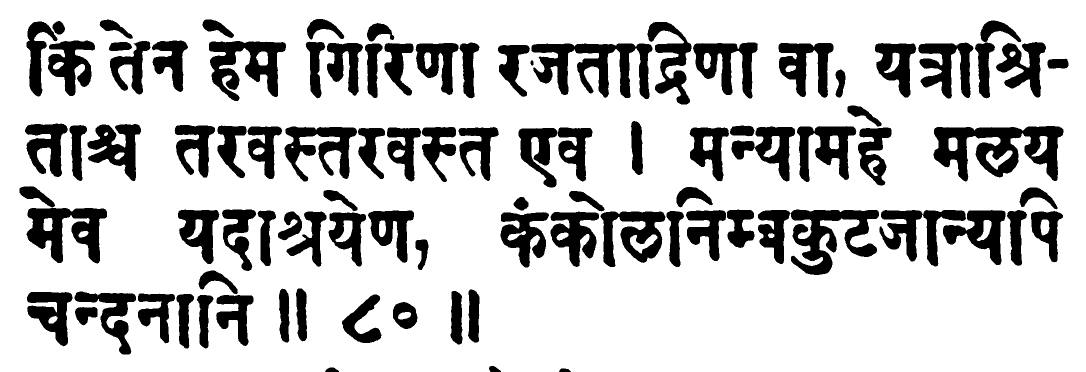
किं तेन हेम गिरिणा रजताद्रिणा वा यत्राश्रि-
ताश्च तरवस्तरवस्त एव । मन्यामहे मलय
मेव यदाश्रयेण, कंकोल निम्बकुटजान्यपि
चन्दनानि ॥ ८० ॥
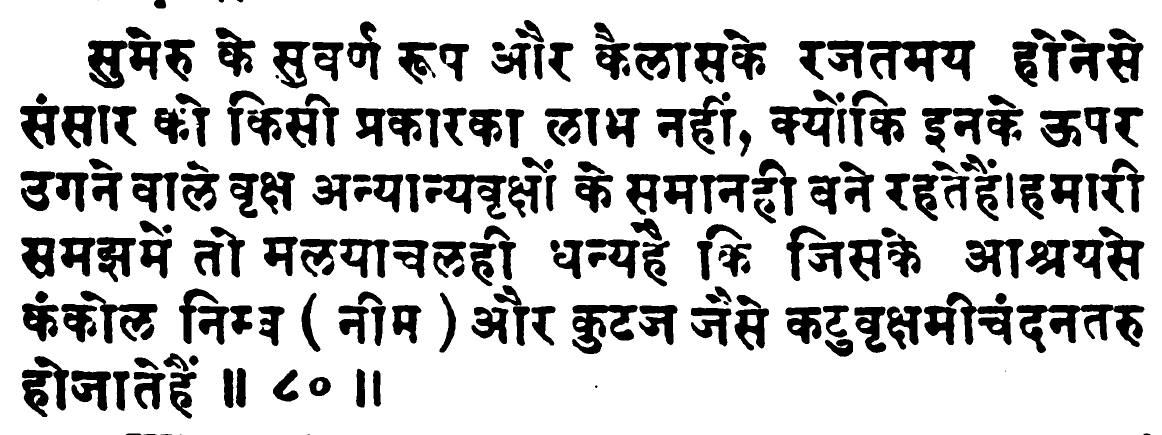
सुमेरु के सुवर्ण रूप और कैलासके रजतमय होनेसे संसार को किसी प्रकारका लाभ नहीं, क्योंकि इनके ऊपर उगने वाले वृक्ष अन्यान्यवृक्षों के समानही बने रहते हैं। हमारी समझमें तो मलयाचलही धन्यहै कि जिसके आश्रयसे कंकोल निम्ब (नीम ) और कुटज जैसे कटुवृक्षमीचंदनतरु होजाते हैं ॥ ८० ॥
What advantage is there in the existence of either the Sumeru (the golden mountain) or the kailasa (the silver mountain) if trees growing on them are in no way superior to their class as found all over the earth ? We, therefore, esteem the Malaya to be the best mountain in the world because it has the power and goodness to change even the bitterest trees of Kunkola, Neem, and Kutaja into those of the fragrant sandal.
Footnote
This stanza which is quoted anonymously in the Sarngadharapaddhati ( शार्ङ्गधरपद्धति । १०६७) and the Subhashitārali ( सुभाषितावाल । १००६ ) forms the 12th slcks of Vetálabhatta's Nitipradipa ( वेतालभट्ट कृतनीति प्रदीप ).
Footnote
cf (a ) " आत्मायें जीवलोकेस्मिन्कोन जविति मानवः । परं परोपकारार्थ यो जीवति स जीवति ॥" (सुभाषितरत्नभाण्डागारः १०८१६)

Footnote
(b) " रागिण नलिने लक्ष्मीं दिवसो निदधाति दिनकरप्रभवाम् । अनपेक्षितगुणदोषः परोपकारः सतां व्यसनम् ” " (हर्षचरितस्य पंचमोल्लासे )

Footnote
(c) श्रीखण्डाचलगण्डशैलशिखरप्रान्ताटवीसंस्थिताः पाटीरानिभवन्ति शाल्मलिमुखा निःसारभूमीरुहाः १४ ( मधुसूदनक वेरन्यापदेशशतके)


Commentary