Tawney
They smile and weep to gain their end,
Cajole, but never trust a friend,
So wise men keep from women far
Shunning them like the funeral jar.
Telang
all
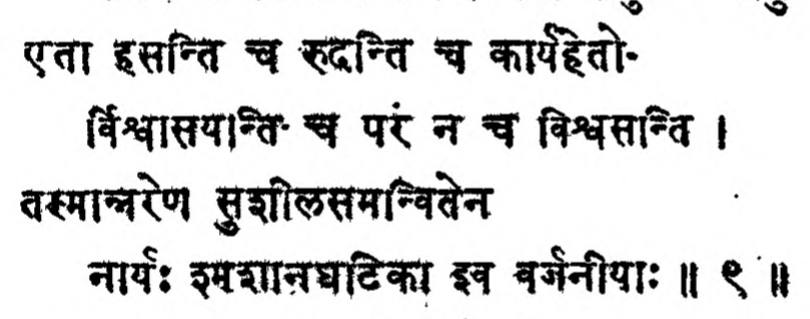
एता हसन्ति च रुदन्ति च कार्यहेतो-
र्विश्वासयन्ति च परं न च विश्वसन्ति ।
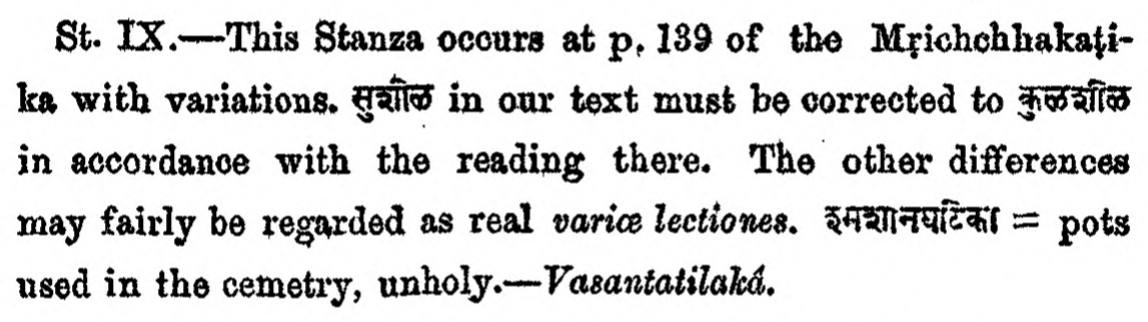
तस्मान्नरेण सुशीलसमन्वितेन
नार्यः श्मशानघटिका इव वर्जनीयाः ॥ ९ ॥
Kale
all
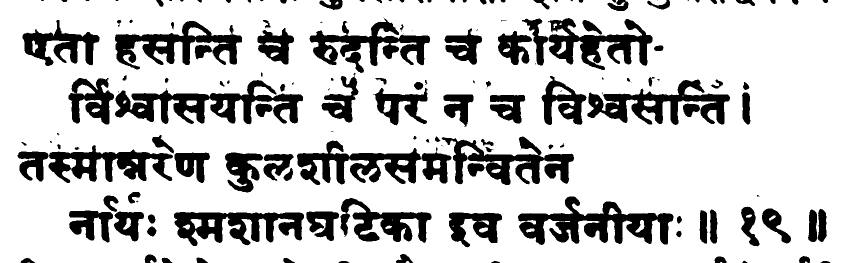
एता हसन्ति च रुदन्ति च कार्यहेतो-
र्विश्वासयन्ति च परं न च विश्वसन्ति ।
तस्मान्नरेण कुलशीलसमन्वितेन
नार्यः श्मशानघटिका इव वर्जनीयाः ॥ १९ ॥
Translation
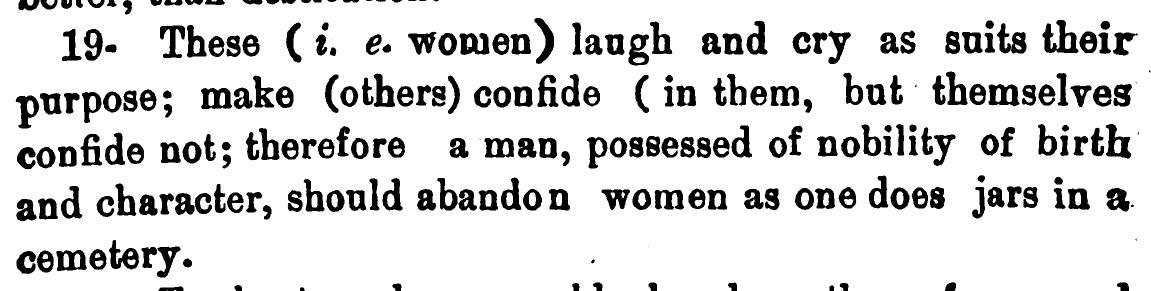
19. These ( i. e. women) laugh and cry as suits their purpose; make (others) confide ( in them, but themselves confide not; therefore a man, possessed of nobility of birth and character, should abandon women as one does jars in a cemetery.
Notes
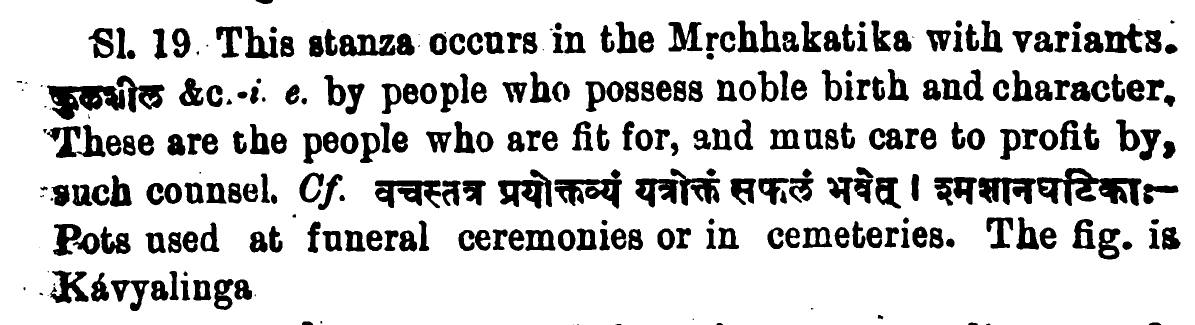
Sl. 19. This stanza occurs in the Mṛchhakatika with variants. कुलशील &c.-i. e. by people who possess noble birth and character. These are the people who are fit for, and must care to profit by, such counsel. Cf. वचस्तत्र प्रयोक्तव्यं यत्रोक्तं सफलं भवेत् । श्मशानघटिकाः— Pots used at funeral ceremonies or in cemeteries. The fig. is Kávyalinga
Commentary