Ryder
THE INTELLIGENT CORPSE
A beggar in the graveyard cried:
"Awake, my friend, be satisfied
To live again and bear the weight
Of poverty; for I of late
Am weary grown; my heart is led
To crave the comfort of the dead."
The corpse was silent; he was sure
'Twas better to be dead than poor.
— From Bhartṛhari
Brough
‘Stop but a moment, friend, and rise and carry
The burden of my weary poverty’
But the dead man, who would not change his peace
For poverty, said nothing in reply.
Tawney
“Rise up and bear one second's space
Grim penury's awful load;
Let me o'erwearied take thy place
In Pluto's dark abode.”—
A poor man thus a corpse bespake;
The corpse, preferring death
To want, would not its silence break
For all his waste of breath.

Kale
all
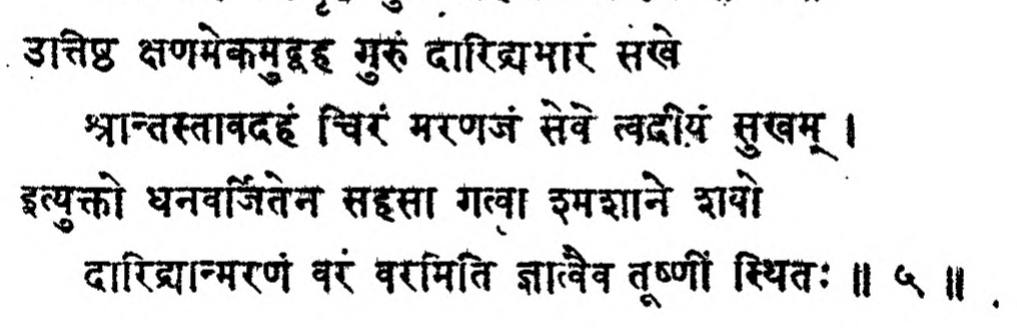
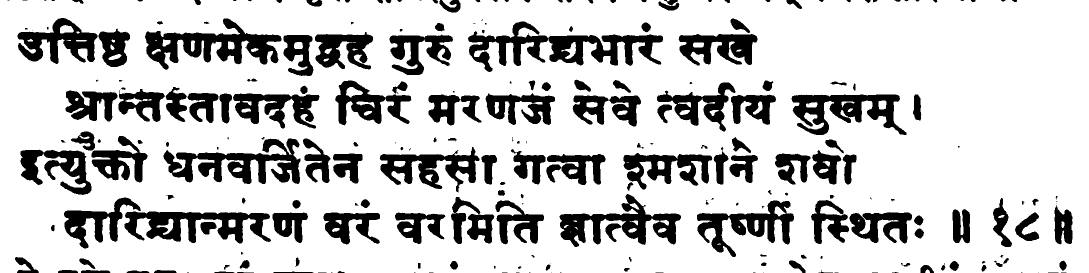
उत्तिष्ठ क्षणमेकमुद्वह गुरुं दारिद्र्यभारं सखे
श्रान्तस्तावदहं चिरं मरणजं सेवे त्वदीयं सुखम् ।
इत्युक्तो धनवर्जितेन सहसा गत्वा श्मशाने शवो
दारिद्र्यान्मरणं वरं वरमिति ज्ञात्वैव तूष्णीं स्थितः ॥ १८ ॥
Translation
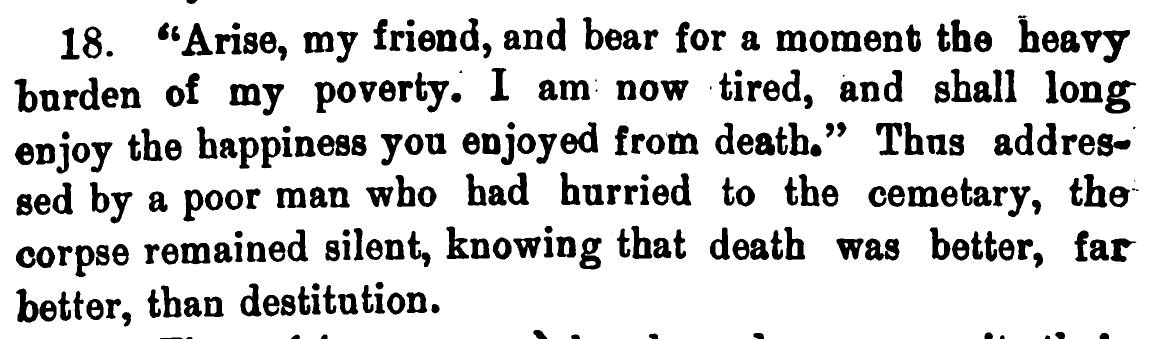
18. “Arise, my friend, and bear for a moment the heavy burden of my poverty. I am now tired, and shall long enjoy the happiness you enjoyed from death.” Thus addressed by a poor man who had hurried to the cemetary, the corpse remained silent, knowing that death was better, far better, than destitution.


Commentary