Telang
all
Notes
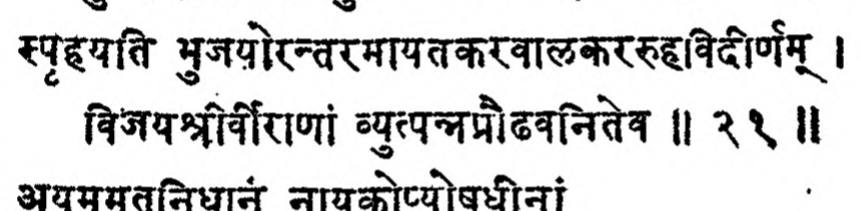
St. XXI.—भुजयोरन्तरम् = bosom. करवाळकररुह must be analysed in two different ways when going with वनिता and with श्रीः.—“ swordlike nails” and “ nail-like sword.”—Âryâ.


Kale
all

Translation
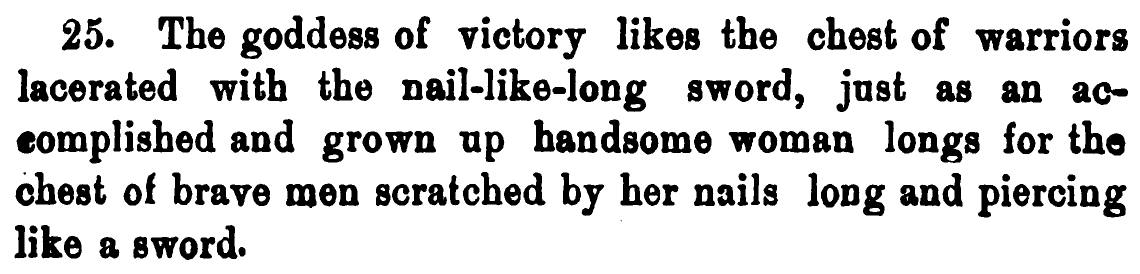
25. The goddess of victory likes the chest of warriors lacerated with the nail-like-long sword, just as an accomplished and grown up handsome woman longs for the chest of brave men scratched by her nails long and piercing like a sword.
Notes
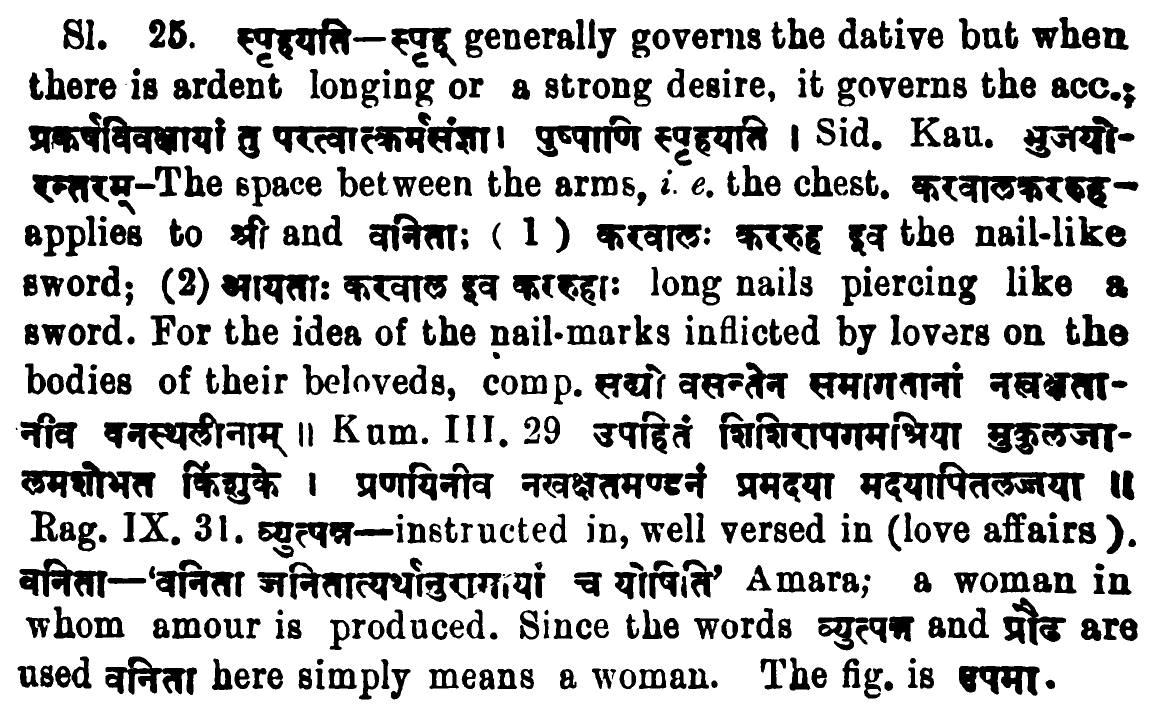
Sl. 25. स्पृहयति—स्पृह् generally governs the dative but when there is ardent longing or a strong desire, it governs the acc.; प्रकर्षविवक्षायां तु परत्वात्कर्मसंज्ञा । पुष्पाणि स्पृहयति । Sid. Kau. भुजयोरन्तरम्—The space between the arms, i. e. the chest. करवालकररुह— applies to श्री and वनिता; ( 1 ) करवालः कररुह इव the nail-like sword; (2) आयताः करवाल इव कररुहाः long nails piercing like a sword. For the idea of the nail-marks inflicted by lovers on the bodies of their beloveds, comp. सद्यो वसन्तेन समागतानां नखक्षतानीव वनस्थलीनाम् ॥ Kum. III. 29 उपहितं शिशिरापगमश्रिया मुकुलजालमशोभत किंशुके । प्रणयिनीव नखक्षतमण्डनं प्रमदया मदयापितलज्जया ॥ Rag. IX. 31. व्युत्पन्न—instructed in, well versed in (love affairs ). वनिता—‘वनिता जनितात्यर्थानुरागायां च योषिति’ Amara; a woman in whom amour is produced. Since the words व्युत्पन्न and प्रौढ are used वनिता here simply means a woman. The fig. is उपमा.
Kosambi
all
Footnote
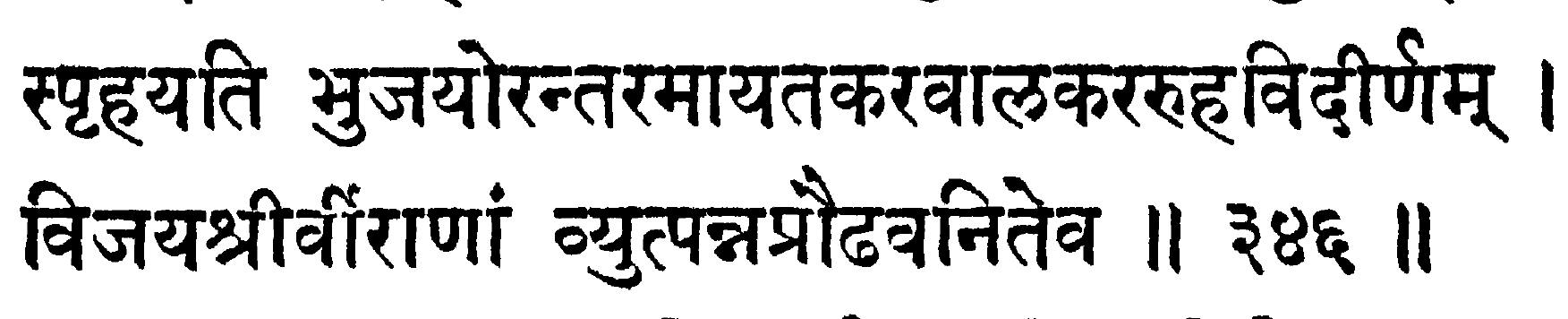
346 { N } . Om . ‡ n A CJ1 S BORI 326. -- 4 ) B1 F -विदीर्णा ; It -विकीर्णा ;
J2.3 विदीर्णा . ● ) F1.3 J2 विजयश्री . d * ) Eo . 3 व्युत्पन्ना ; J2 वृक्षं न ( for व्युत्पन्न ) .
J3 उत्पन्नवनिताविव .
BIS . 7251 ( 5327 ) Bhartr . ed . Bohl . extra 18. Haeb . 2.97 . Satakāv . 92 ;
SR.B. p . 78.5 .

Commentary