Tawney
A hermit's forest cell, and fellowship with deer,
A harmless meal of fruit, stone beds beside the stream,
Are helps to those who long for Siva's guidance here;
But be the mind devout, our homes will forests seem.
Telang
all
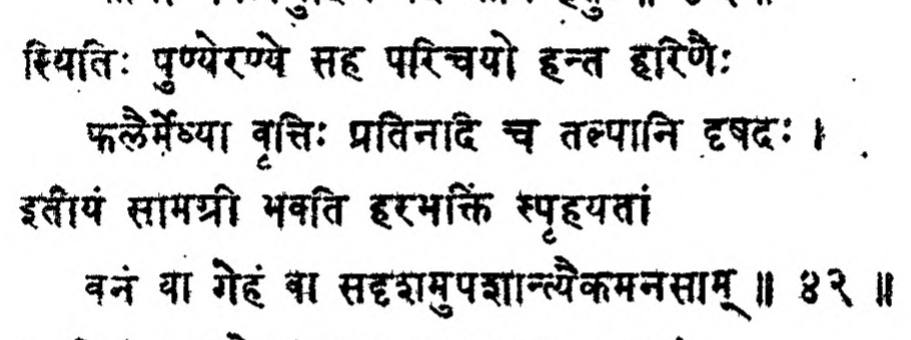
स्थितिः पुण्येरण्ये सह परिचयो हन्त हरिणैः
फलैर्मेध्या वृत्तिः प्रतिनदि च तल्पानि दृषदः ।
इतीयं सामग्री भवति हरभक्तिं स्पृहयतां
वनं वा गेहं वा सदृशमुपशान्त्यैकमनसाम् ॥ ४२ ॥
Notes
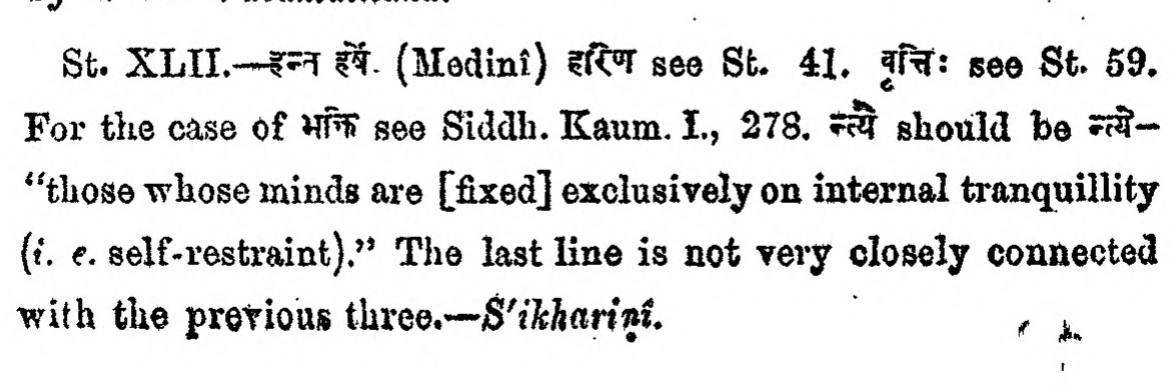
St. XLII.—हन्त हर्षे. (Medinî) हरिण see St. 41. वृत्तिः see St. 59. For the case of भक्ति see Siddh. Kaum. I., 278. न्त्यै should be न्त्ये— “those whose minds are [fixed] exclusively on internal tranquillity (i. e. self-restraint).” The last line is not very closely connected with the previous three.—S'ikhariṇî.

Kale
all
स्थितिः पुण्येरण्ये सह परिचयो हन्त हरिणैः
फलैर्मेध्या वृत्तिः प्रतिनदि च तल्पानि दृषदः ।
इतीयं सामग्री भवति हरभक्तिं स्पृहयतां
वनं वा गेहं वा सदृशमुपशान्त्यैकमनसाम् ॥ ३६ ॥


Translation
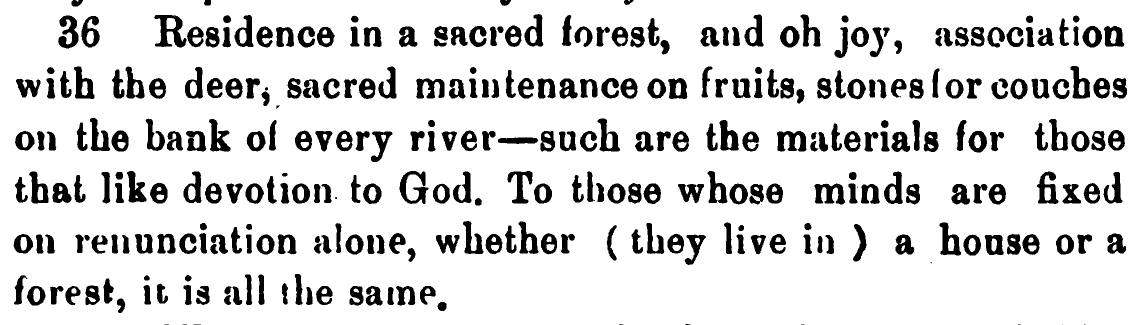
36 Residence in a sacred forest, and oh joy, association with the deer, sacred maintenance on fruits, stones for couches on the bank of every river—such are the materials for those that like devotion to God. To those whose minds are fixed on renunciation alone, whether (they live in) a house or a forest, it is all the same.
Notes
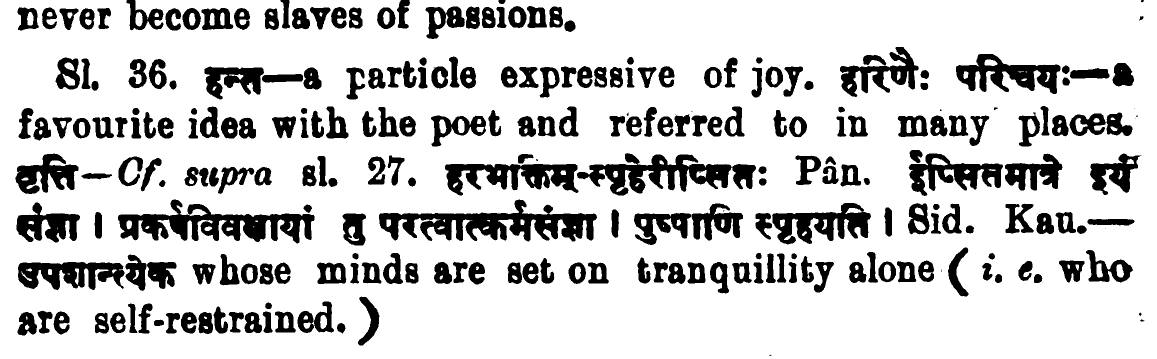
Sl. 36. हन्त—a particle expressive of joy. हरिणैः परिचयः—a favourite idea with the poet and referred to in many places. वृत्ति—Cf. supra sl. 27. हरभक्तिम्-स्पृहेरीप्सितः Pân. ईप्सितमात्रे इयं संज्ञा । प्रकर्षविवक्षायां तु परत्वात्कर्मसंज्ञा । पुष्पाणि स्पृहयति । Sid. Kau.— उपशान्त्येक whose minds are set on tranquillity alone ( i. e. who are self-restrained. )

Gopinath1914
all
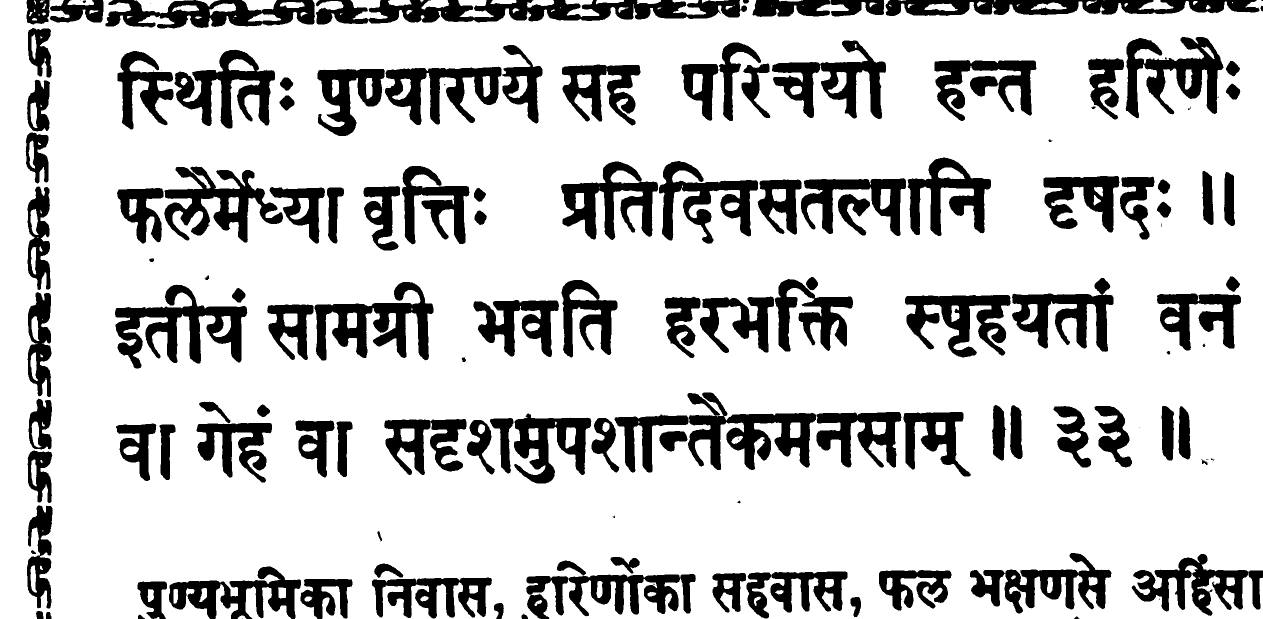
स्थितिः पुण्यारण्ये सह परिचय हन्त हरिणैः
फलैर्मेध्या वृत्तिः प्रतिदिवसतल्पानि दृषदः ॥
इतीयं सामग्री भवति हरभक्तिं स्पृहयतां वनं
वा गेहं वा सदृशमुपशान्तैकमनसाम् ॥ ३३ ॥
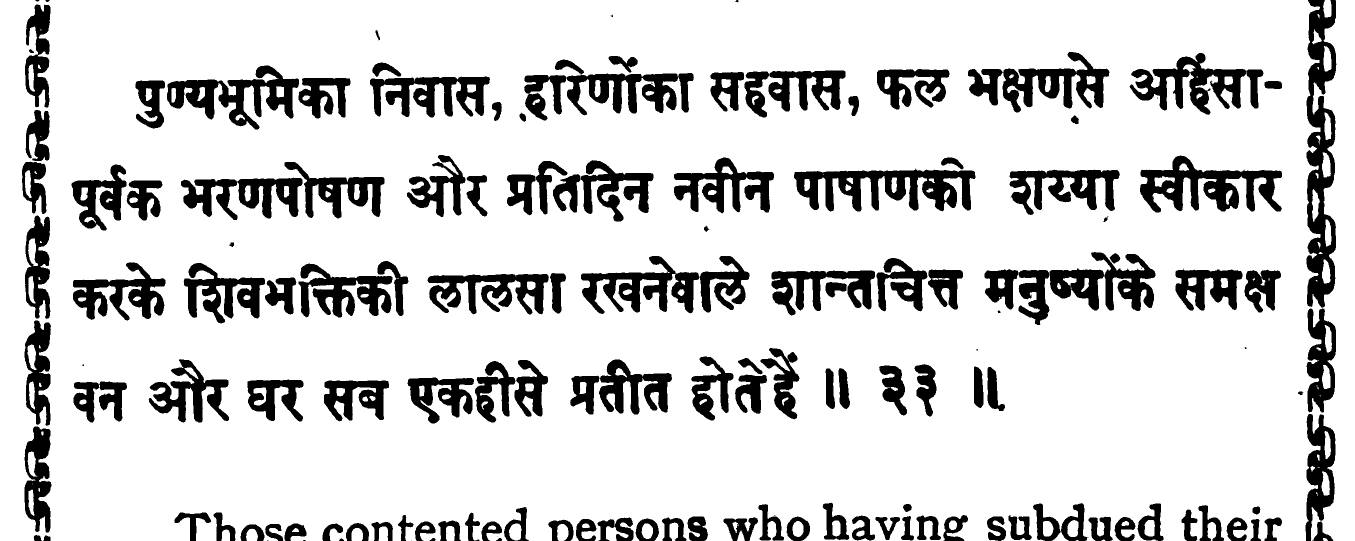
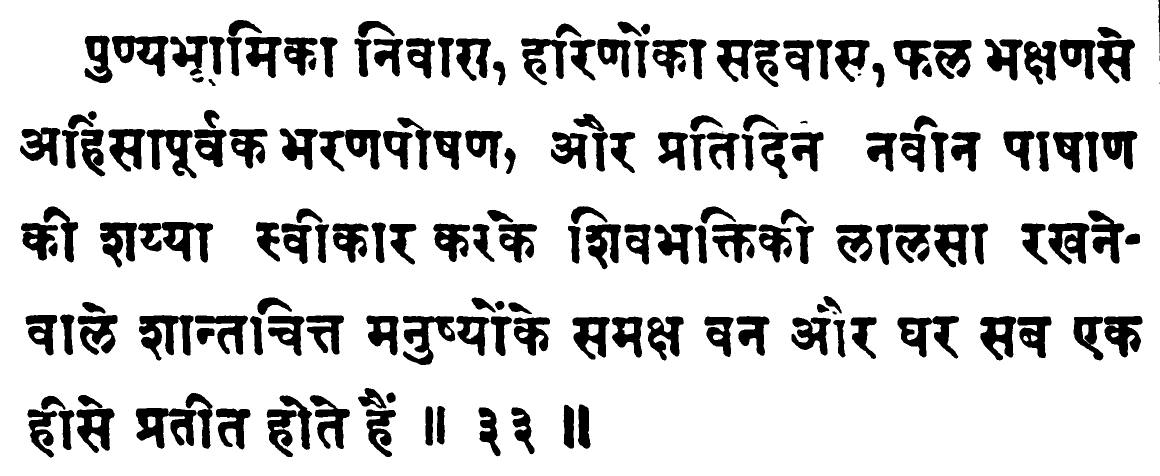
पुण्यभूमिका निवास, हरिणोंका सहवास, फल भक्षणसे अहिंसापूर्वक भरणपोषण और प्रतिदिन नवीन पाषाणकी शय्या स्वीकार करके शिवभक्तिकी लालसा रखनेवाले शान्तचित्त मनुष्योंके समक्ष वन और घर सब एकहीसे प्रतीत होते हैं ॥ ३३ ॥
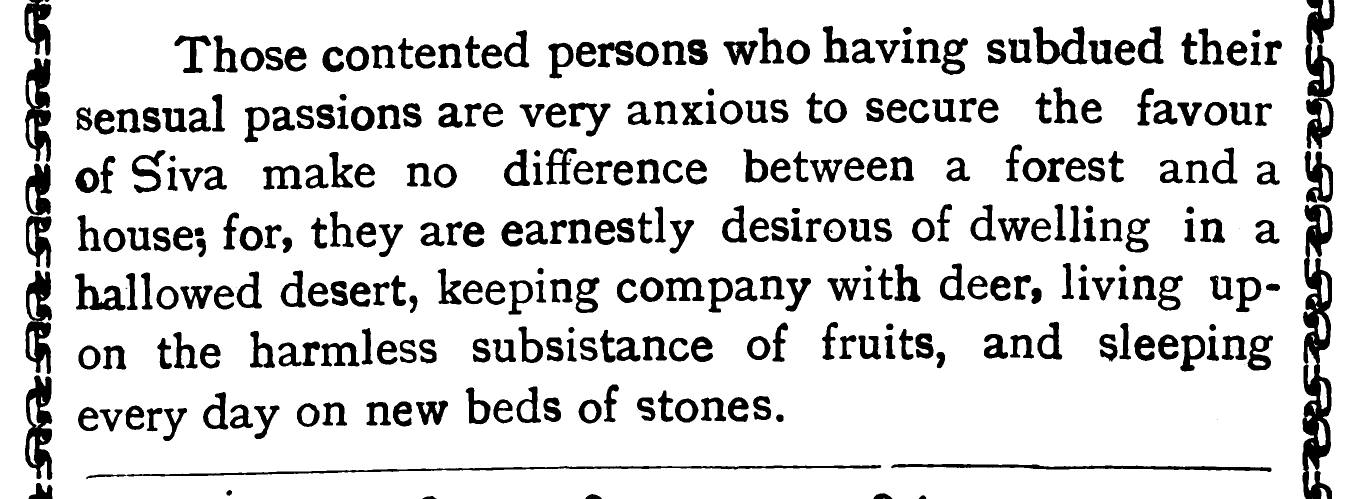
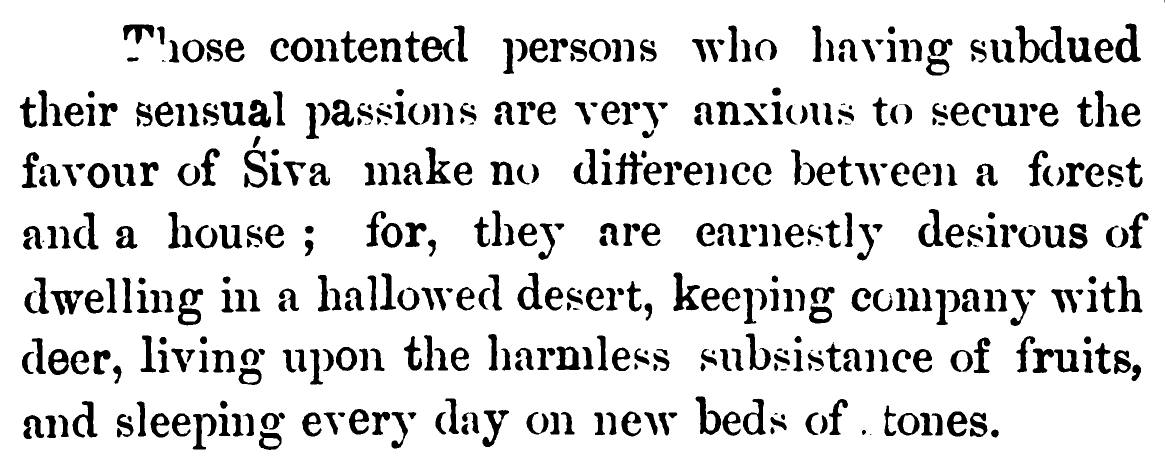
Those contented persons who having subdued their sensual passions are very anxious to secure the favour of Siva make no difference between a forest and a house; for, they are earnestly desirous of dwelling in a hallowed desert, keeping company with deer, living upon the harmless subsistance of fruits, and sleeping every day on new beds of stones.
Footnote
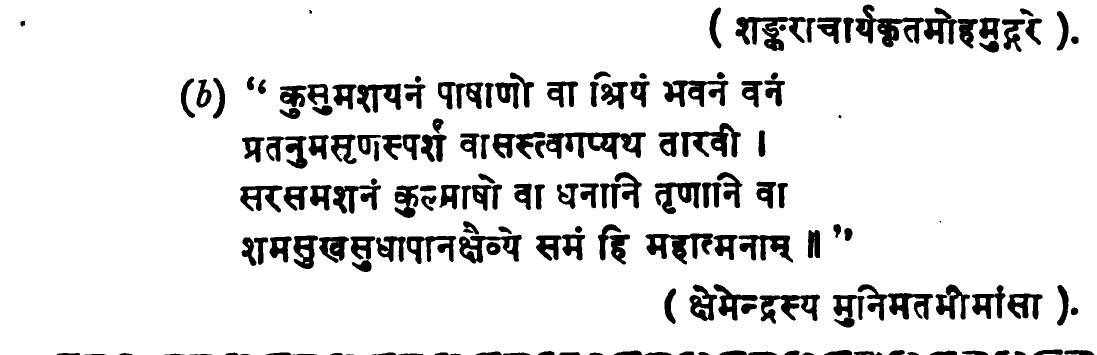
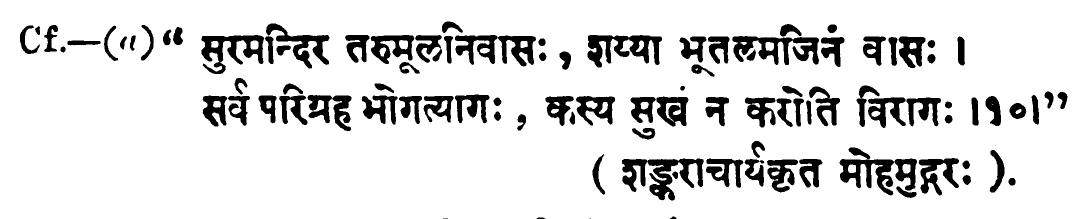
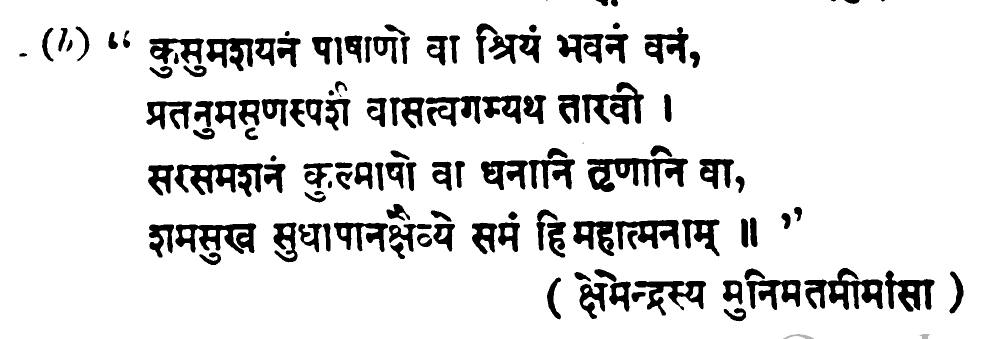
Cf. (a) “सुरमन्दिरतरुमूलानिवासः शय्या भूतलमजिनं वासः । सर्वपरिग्रहभोगत्यागः कस्य सुखं न करोति विरागः ॥ १० ॥ " (शङ्कराचार्यकृतमोहमुद्ररे ).

Gopinath1896
all
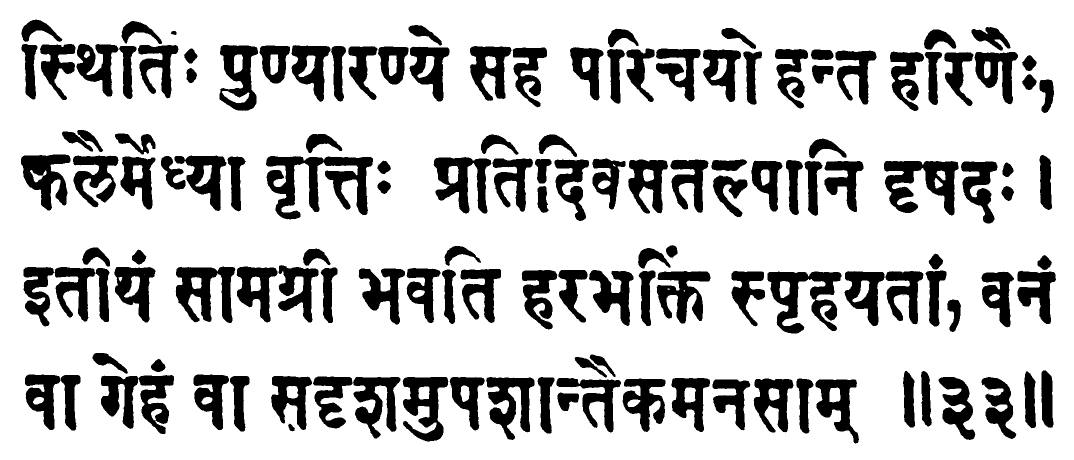
स्थितिः पुण्यारण्ये सह परिचय हन्त हरिणैः,
फलैर्मेध्या वृत्तिः प्रतिदिवसतल्पानि दृषदः ।
इतीयं सामग्री भवति हरभक्तिं स्पृहयतां वनं
वा गेहं वा सदृशमुपशान्तैकमनसाम् ॥३३॥
पुण्यभूमिका निवास, हरिणोंका सहवास, फल भक्षणसे अहिंसापूर्वक भरणपोषण, और प्रतिदिन नवीन पाषाण की शय्या स्वीकार करके शिवभक्तिकी लालसा रखनेवाले शान्तचित्त मनुष्योंके समक्ष वन और घर सब एक हीसे प्रतीत होते हैं ॥ ३३ ॥
Those contented persons who having subdued their sensual passions are very anxious to secure the favour of Śiva make no difference between a forest and a house; for, they are earnestly desirous of dwelling in a hallowed desert, keeping company with deer, living upon the harmless subsistance of fruits, and sleeping every day on new beds of tones.
Footnote
Cf. - (1) " सुरमन्दिर तरुमूलनिवासः, शय्या भूतलमजिनं वासः । सर्व परिग्रह भोगत्यागः, कस्य सुखं न करोति विरागः । १० ।” (शङ्कराचार्यकृत मोहमुद्गरः ).
Kosambi
all
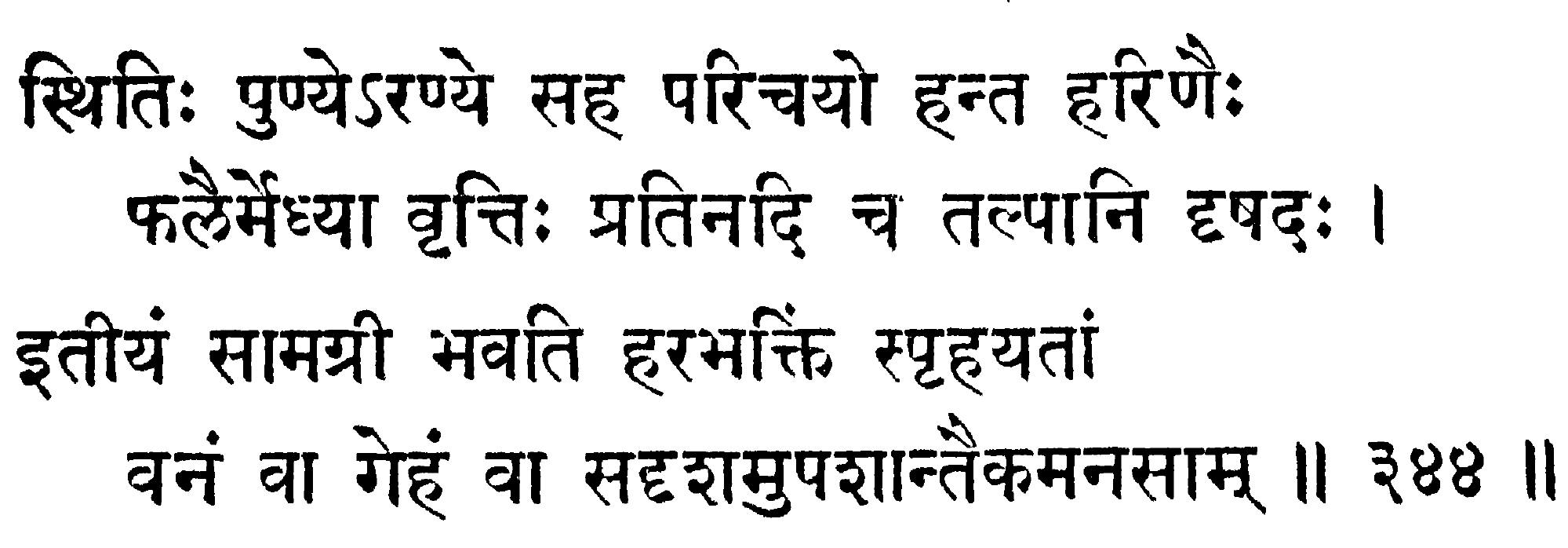
स्थितिः पुण्येऽरण्ये सह परिचयो हन्त हरिणैः
फलैर्मेध्या वृत्तिः प्रतिनदि च तल्पानि दृषदः ।
इतीयं सामग्री भवति हरभक्तिं स्पृहयतां
वनं वा गेहं वा सदृशमुपशान्तैकमनसाम् ॥ ३४४ ॥
Footnote
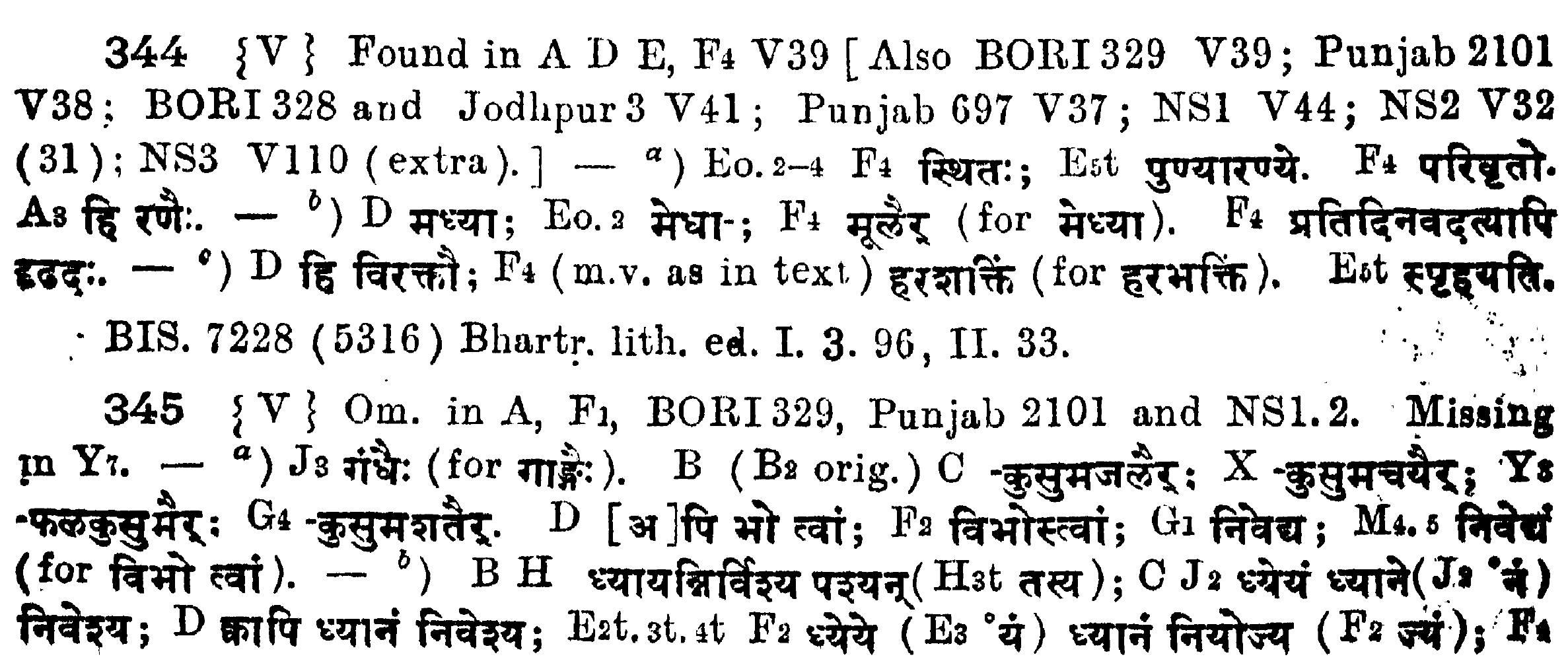
344 { V } Found in A D E , F4 V39 [ Also BORI 329 V39 ; Punjab 2101
V38 ; BORI 328 and Jodhpur 3 V41 ; Punjab 697 V37 ; NS1 V44 ; NS2 V32
( 31 ) ; NS3 V110 ( extra ) . ] ± ) Eo.2–4 F4 स्थितः ; Est पुण्यारण्ये . F½ परिवृतो .
As हि रणैः . ० ) D मध्या ; Eo . 2 मेधा- ; F + मूलैर् ( for मेध्या ) . F½ प्रतिदिनवदत्यापि
हृढदः - ) D हि विरक्तौ ; F4 ( m.vas in text ) हरशक्तिं ( for हरभक्ति ) . Eot स्पृहयति .
• BIS . 7228 ( 5316 ) Bhartr . lith ed . I. 3. 96 , II . 33 .
345 { V } Om . in A , F1 , BORI 329 , Punjab 2101 and NS1.2 . Missing
n Y7 . – 4 ) J3 गंधै : ( for गाङ्गः ) . B ( Ba orig . ) C- कुसुमजलैर् : X कुसुमचयैर ; Ys
- फळकुसुमैर् : G4 कुसुम शतैर् D [ अ ] पि भो त्वां ; F2 विभोस्त्वां ; G1 निवेद्य ; Ms.6 निवेद्यं
( for विभो त्वां ) . 0 ) B H ध्यायन्निर्विश्य पश्यन् ( H3t तस्य ) ; C J2 ध्येयं ध्याने ( Ja ' नं )
निवेश्य ; D क्वापि ध्यानं निवेश्य ; Eat . 3t at F ध्येये ( Ea यं ) ध्यानं नियोज्य ( F2 जयं ) ; Fs
Commentary