Ryder
FRIENDSHIP'S END
Yes, you were I, and I was you,
So fond the love that linked us two;
Alas, my friend, for friendship's end!
Now I am I, and you are you.
Brough
In former days we’d both agree
That you were me, and I was you.
What has now happened to us two,
That you are you, and I am me?
Tawney
Once I was thou, and thou wast I,
In perfect union blent;
Say, what hath severed friendship's tie,
And souls asunder rent ?
Telang
all
Notes
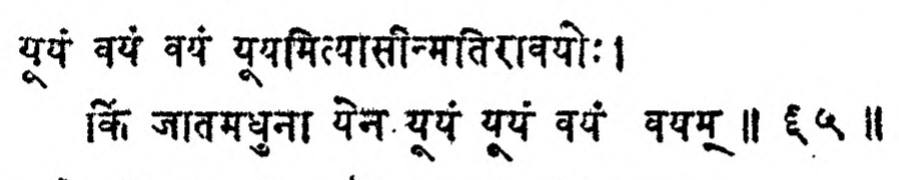
St. LXV.—These words are addressed by one to an estranged friend. The commentator gives an incorrect meaning. यूयं वयमिति बहुत्वं पुत्रशिष्यपरिजनपरिग्रहाभिप्रायेण says Râmarshi.—Anushṭub.


Kale
all

Translation
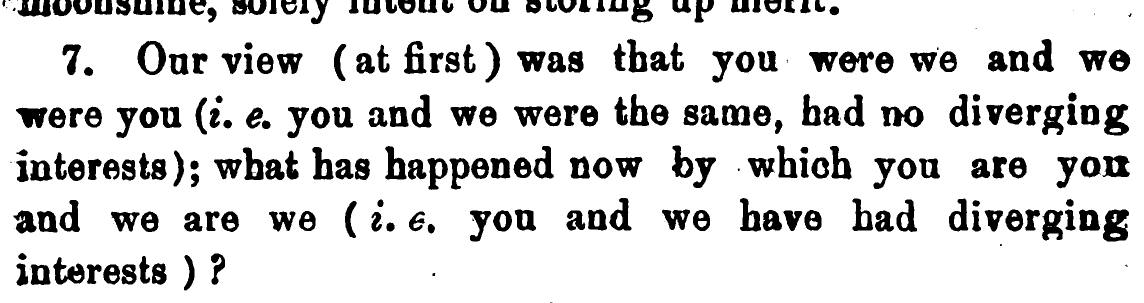
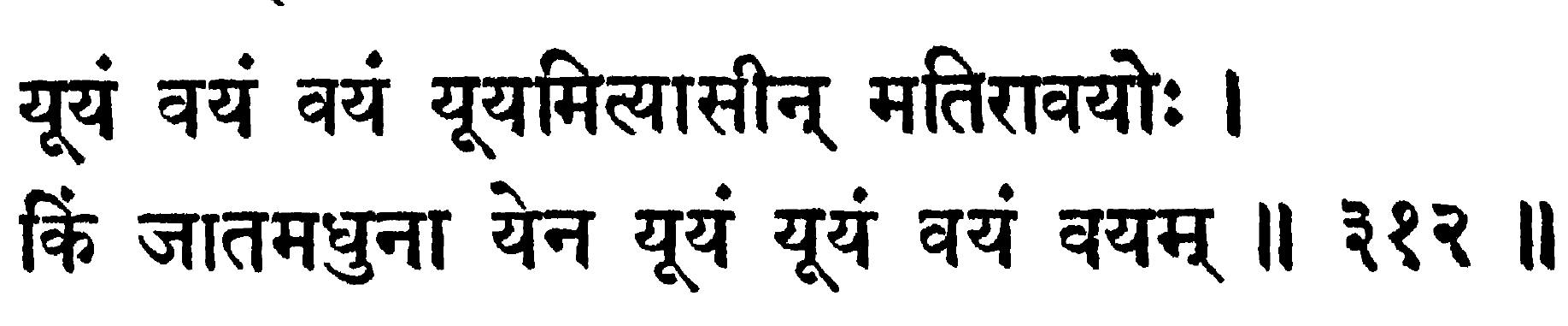
7. Our view ( at first ) was that you were we and we were you (i. e. you and we were the same, had no diverging interests); what has happened now by which you are you and we are we ( i. e. you and we have had diverging interests ) ?
Notes
Sl. 7. A question to an estranged friend. Once our interests were identical; now you and we have no connection. What has happened in the meanwhile to estrange us ?

Gopinath1914
all
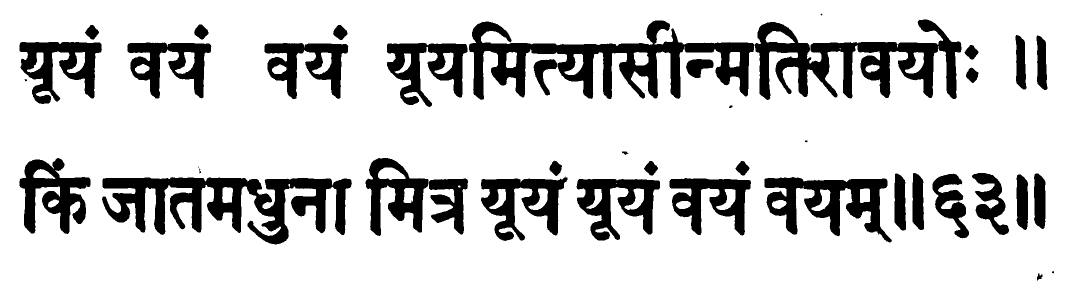
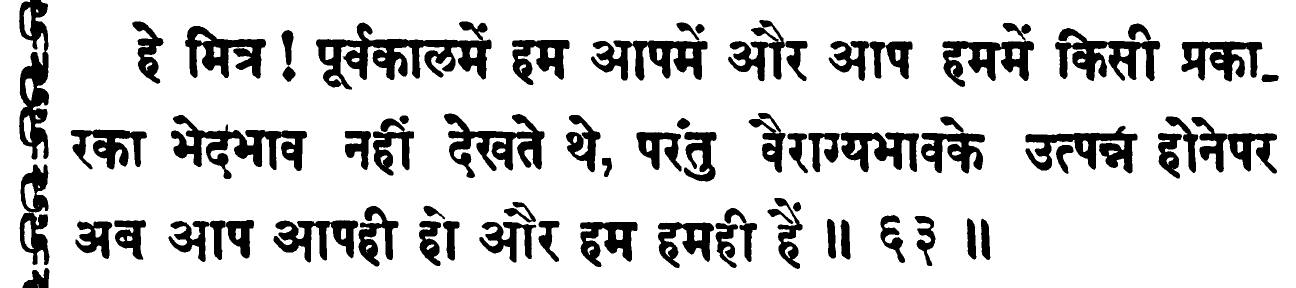
हे मित्र ! पूर्वकालमें हम आपमें और आप हममें किसी प्रका रका भेदभाव नहीं देखते थे, परंतु वैराग्यभावके उत्पन्न होनेपर अब आप आपही हो और हम हमही हैं ॥ ६३ ॥
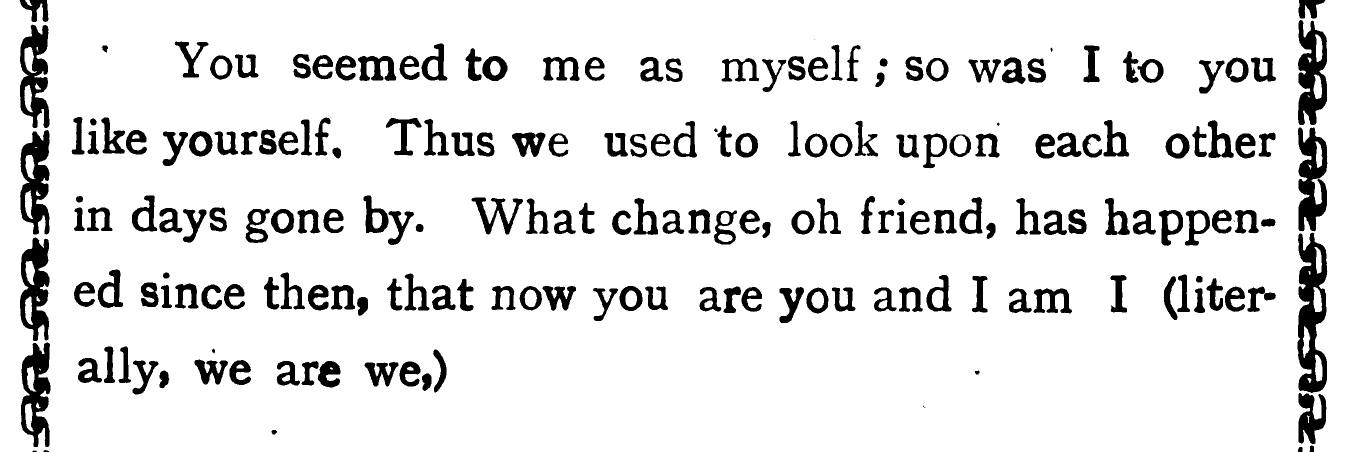
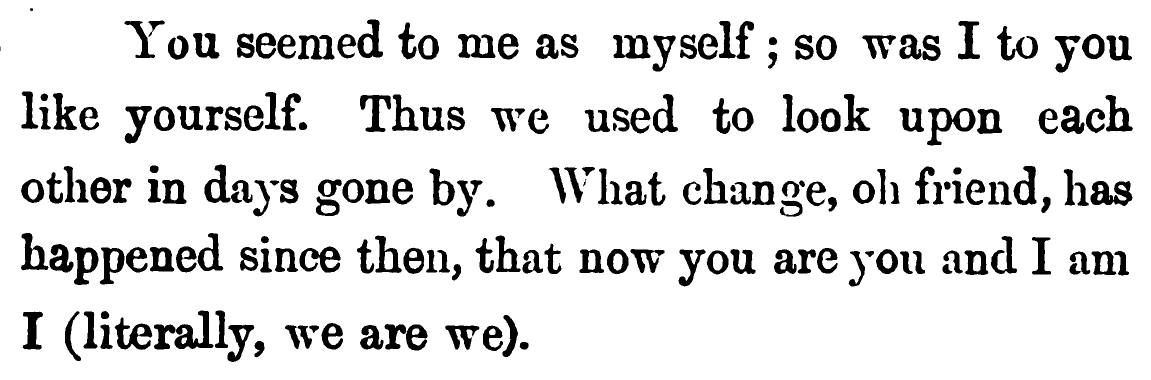
You seemed to me as myself; so was I to you like yourself. Thus we used to look upon each other in days gone by. What change, oh friend, has happen ed since then, that now you are you and I am I (literally, we are we,)

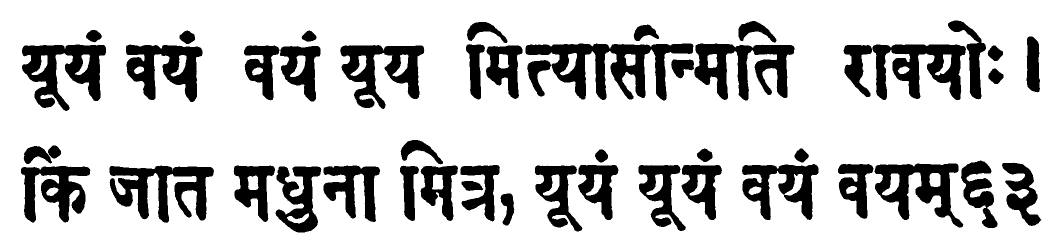
Gopinath1896
all
हे मित्र ! पूर्वकाल में हम आपमें और आप हममें किसी प्रकारका भेदभाव नहीं देखते थे, परंतु वैराग्यभावके उत्पन्न होनेपर अब आप आपही हो और हम हम ही हैं ॥ ६३ ॥
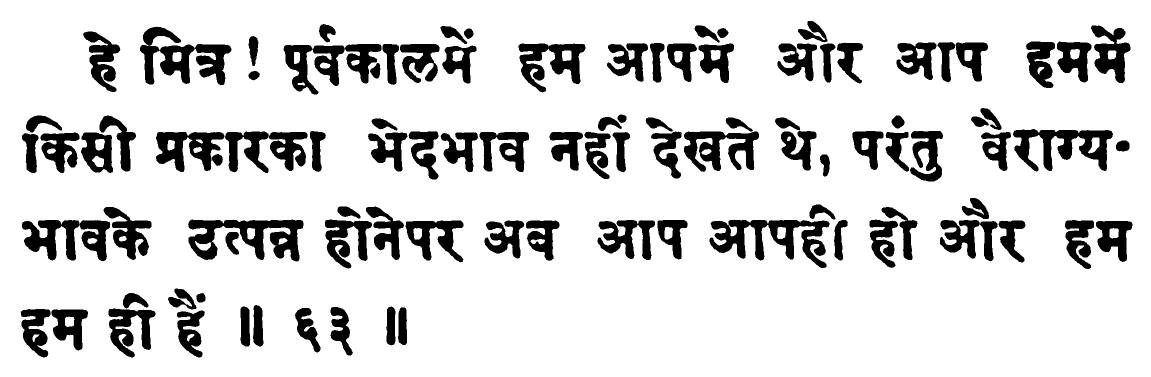
You seemed to me as myself; so was I to you like yourself. Thus we used to look upon each other in days gone by. What change, oh friend, has happened since then, that now you are you and I am I (literally, we are we).

Kosambi
all
Footnote
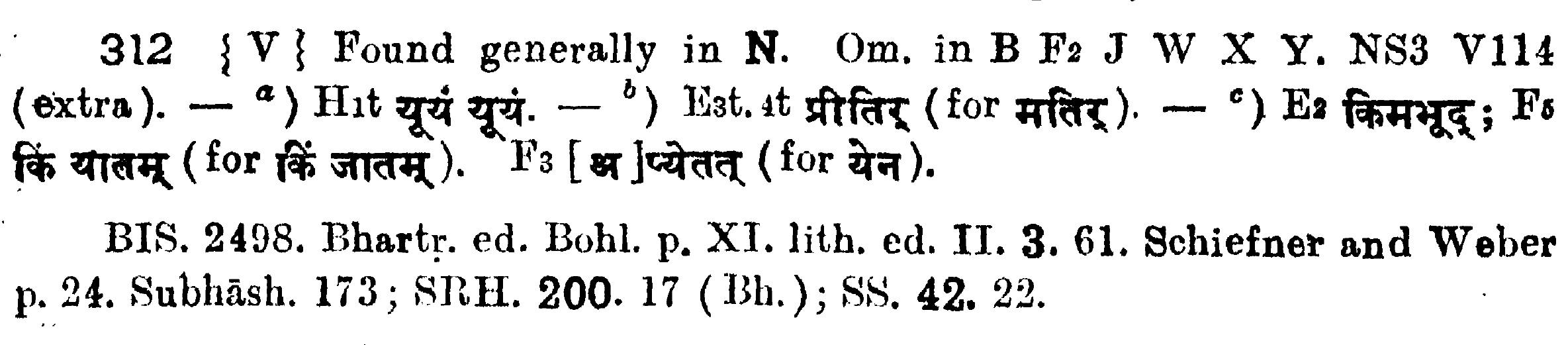
312 { V } Found generally in N. Om in B F 2 J W X Y. NS3 V114
( extra ) . – 4 ) Hit यूयं यूयं . - 0 5 ) ) IEat Est at st प्रीतिर् प्रीतिर ( ( for for मतिर् मतिर् ) ) . – ) ● Ea किमभूद् ; Fo
किं यातम् ( for किं जातम् ) . F3 [ अ प्येतत् ( for येन ) .
BIS . 2498. Bhartṛ . ed . Bohl . p . XI . lith . ed . II . 3. 61. Schiefner and Weber
p . 24. Subhāsh . 173 ; SRH . 20017 ( Bh . ) ; SS . 42. 22 .
Commentary