Telang
all
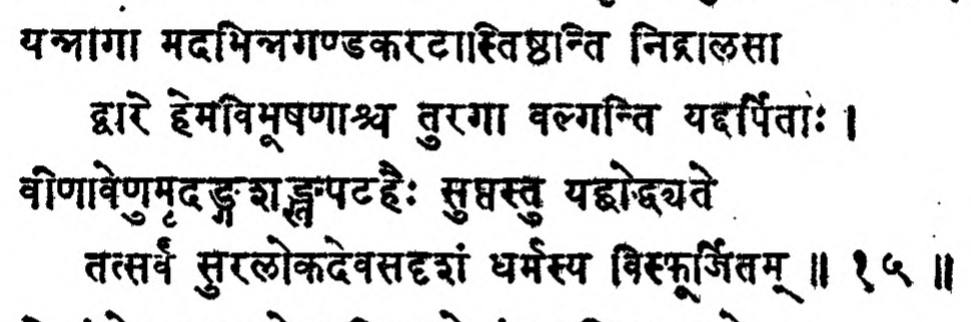
यन्नागा मदभिन्नगण्डकरटास्तिष्ठन्ति निद्रालसा
द्वारे हेमविभूषणाश्च तुरगा वल्गन्ति यद्दर्पिताः ।
वीणावेणुमृदङ्गशङ्खपटहैः सुप्तस्तु यद्बोध्यते
तत्सर्वं सुरलोकदेवसदृशं धर्मस्य विस्फूर्जितम् ॥ १५ ॥
Notes
St. XV.—सुरलोकदेव must be interpreted as a Saptamî Tatpurusha ; " gods in heaven." विस्फूर्जितम् = manifestation of power. Originally it means thundering.—S'ârdûlavikrîḍita.


Telang
all
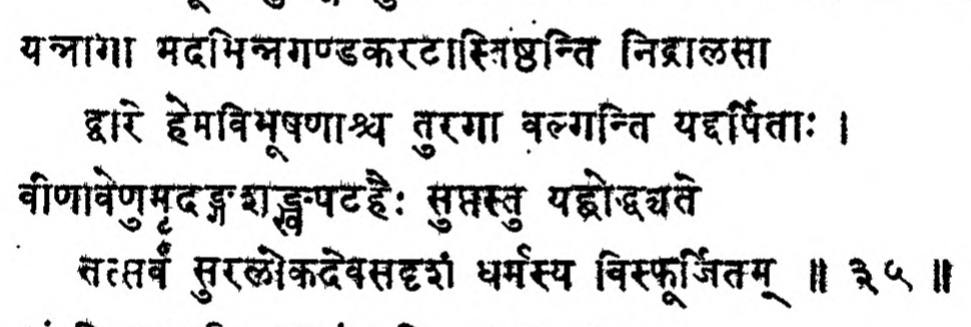
यन्नागा मदभिन्नगण्डकरटास्तिष्ठन्ति निद्रालसा
द्वारे हेमविभूषणाश्च तुरगा वल्गन्ति यद्दर्पिताः ।
वीणावेणुमृदङ्गशङ्खपटहैः सुप्तस्तु यद्बोध्यते
तत्सर्वं सुरलोकदेवसदृशं धर्मस्य विस्फूर्जितम् ॥ ३५ ॥


Kale
all
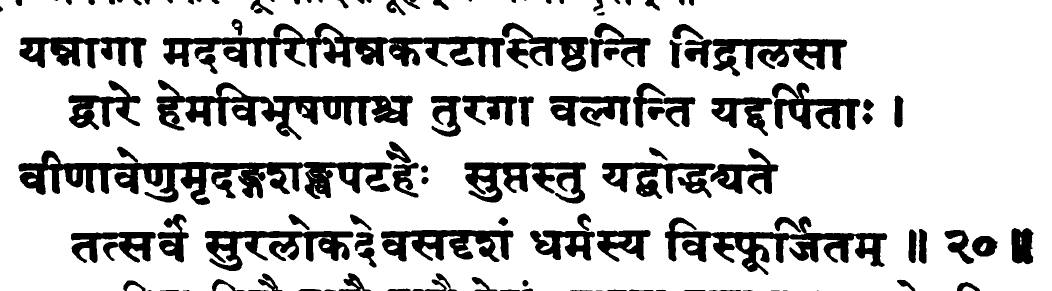
यन्नागा मदवारिभिन्नकरटास्तिष्ठन्ति निद्रालसा
द्वारे हेमविभूषणाश्च तुरगा वल्गन्ति यद्दर्पिताः ।
वीणावेणुमृदङ्गशङ्खपटहैः सुप्तस्तु यद्बोध्यते
तत्सर्वं सुरलोकदेवसदृशं धर्मस्य विस्फूर्जितम् ॥ २० ॥
Translation
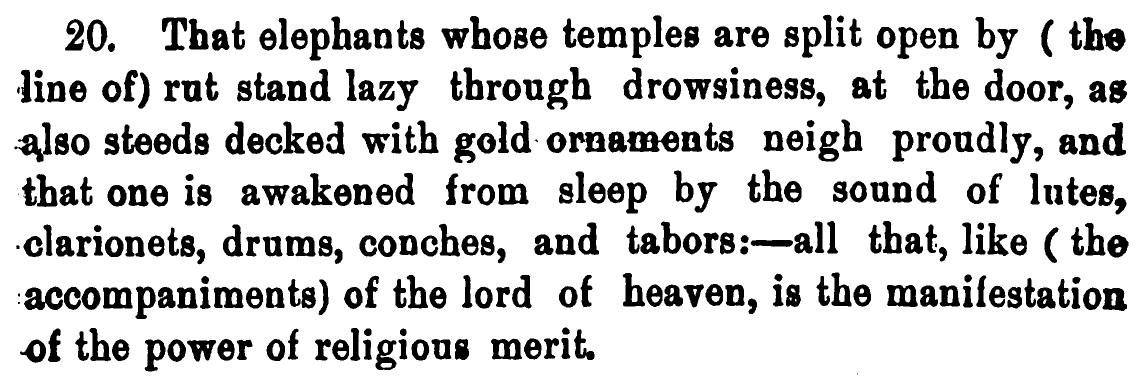
20. That elephants whose temples are split open by ( the line of) rut stand lazy through drowsiness, at the door, as also steeds decked with gold ornaments neigh proudly, and that one is awakened from sleep by the sound of lutes, clarionets, drums, conches, and tabors:—all that, like ( the accompaniments) of the lord of heaven, is the manifestation of the power of religious merit.
Notes
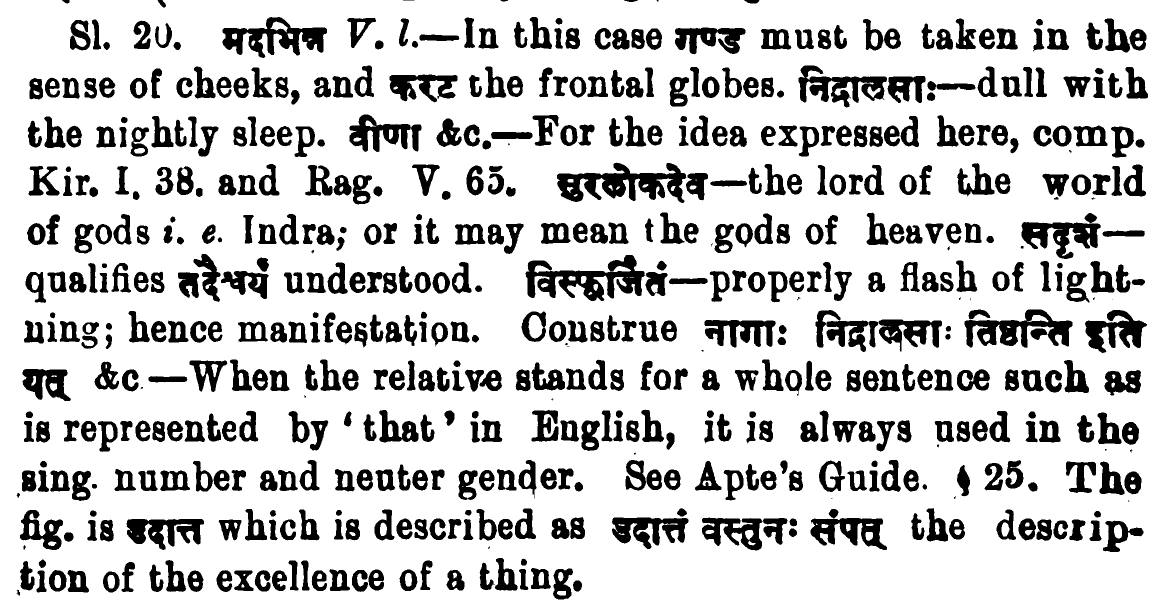
Sl. 20. मदभिन्न V. l.—In this case गण्ड must be taken in the sense of cheeks, and करट the frontal globes. निद्रालसाः—dull with the nightly sleep. वीणा &c.—For the idea expressed here, comp. Kir. I. 38. and Rag. V. 65. सुरलोकदेव—the lord of the world of gods i. e. Indra; or it may mean the gods of heaven. सदृशं— qualifies तदैश्वर्यं understood. विस्फूर्जितं—properly a flash of lightning; hence manifestation. Construe नागाः निद्रालसाः तिष्ठन्ति इति यत् &c.—When the relative stands for a whole sentence such as is represented by ‘that’ in English, it is always used in the sing. number and neuter gender. See Apte’s Guide. § 25. The fig. is उदात्त which is described as उदात्तं वस्तुनः संपत् the description of the excellence of a thing.
Kosambi
all
यन् नागा मदवारिभिन्नकरटास् तिष्ठन्ति निद्रालसा
द्वारे स्वर्णविभूषिताश् च तुरगा वल्गन्ति यद् दर्पिताः ।

वीणावेणुमृदङ्गशङ्खपणवैः सुप्तश् च यद् बोध्यते
तत् सर्वं सुरलोकऋद्धिसदृशं धर्मस्य विस्फूजितम् ॥ ३१० ॥


Commentary