Tawney
Our joys are like the wave in foam-flakes hurled,
Youth, life, and love like lightning come and go.
Learn this, ye wise, and teach the people so,
That all may know how hollow is this world.
Mādhavānanda
भोगास्तुङ्गतरङ्गभङ्गतरला: प्राणा: क्षणध्वंसिन:
स्तोकान्येव दिनानि यौवनसुखस्फूतिर्: प्रियासु स्थिता ।
तत्संसारमसारमेव निखिलं बुद्ध्वा बुधा बोधका
लोकानुग्रहपेशलेन मनसा यत्न: समाधीयताम् ।।३४।।
34. Enjoyments are unstable like the breaking of high billows, life is liable to speedy dissolution; the buoyancy of youthful happiness centred in our objects of love lasts for few days. Understanding that the whole world is unsubstantial, ye wise teachers of men with minds intent on benefiting mankind (by living exemplary lives), put forth your energies (for attaining the highest beatitude).
[लोकानुग्रहपेशलेन मनसा—लोकानाम् of men अनुग्रहे for the benefiting (out of kindness) पेशलं attached. The sense is that out of sympathy for suffering mankind, you shall by your exemplary lives and your counsels show men the way to cross the ocean of saṁsāra (world).]
Telang
all
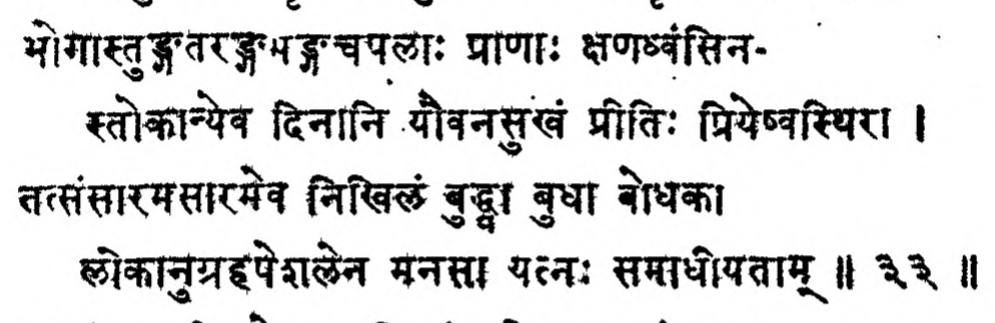
भोगास्तुङ्गतरङ्गभङ्गचपलाः प्राणाः क्षणध्वंसिन-
स्तोकान्येव दिनानि यौवनसुखं प्रीतिः प्रियेष्वस्थिरा ।
तत्संसारमसारमेव निखिलं बुद्ध्वा बुधा बोधका
लोकानुग्रहपेशलेन मनसा यत्नः समाधीयताम् ॥ ३३ ॥
Notes
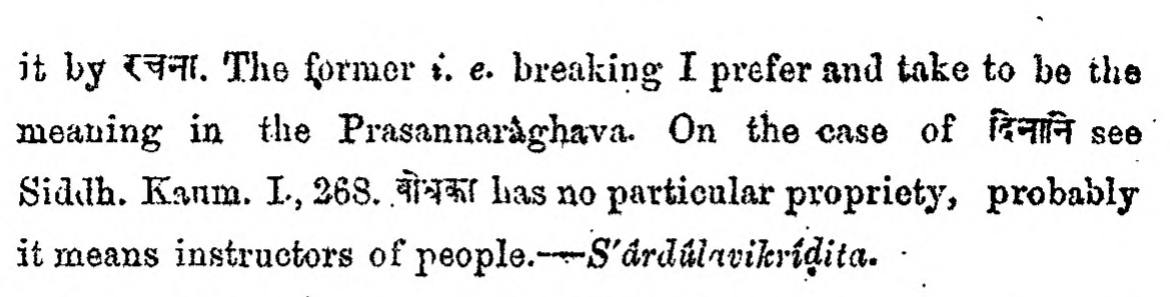
St. XXXIII.—तरंगभङ्ग–comp. Prasannarâghava Nâṭaka p. 166. Râmarshi renders भङ्ग apparently by शमन (original शनन) and adds महान्तो हि कल्लोलाः शीघ्रं नश्यन्तीति भावः. The commentary in M. renders it by रचना. The former i. e. breaking I prefer and take to be the meaning in the Prasannarâghava. On the case of दिनानि see Siddh. Kaum. I., 268. बोधका has no particular propriety, probably it means instructors of people.—S'ârdûlavikrîḍita.


Kale
all

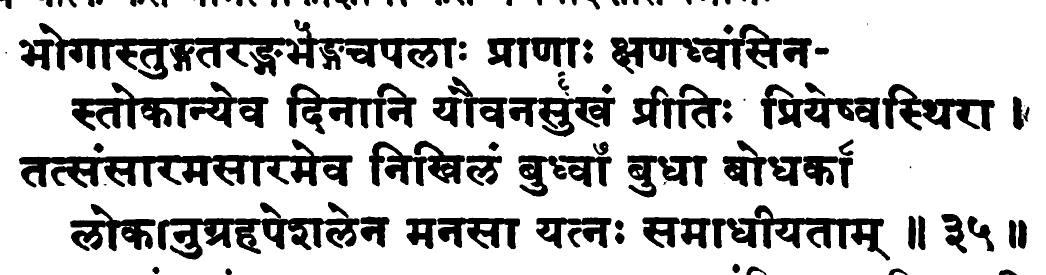
भोगास्तुङ्गतरङ्गभङ्गचपलाः प्राणाः क्षणध्वंसिन-
स्तोकान्येव दिनानि यौवनसुखं प्रीतिः प्रियेष्वस्थिरा ।
तत्संसारमसारमेव निखिलं बुध्वा बुधा बोधका
लोकानुग्रहपेशलेन मनसा यत्नः समाधीयताम् ॥ ३५ ॥
Translation
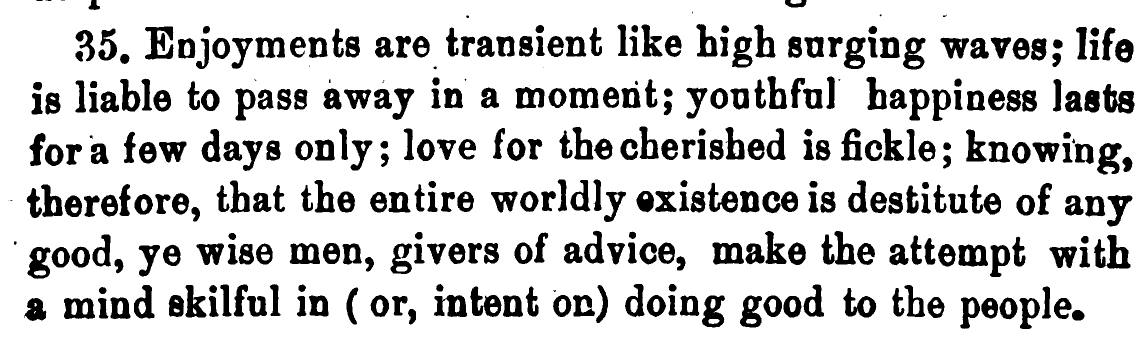
35. Enjoyments are transient like high surging waves; life is liable to pass away in a moment; youthful happiness lasts for a few days only; love for the cherished is fickle; knowing, therefore, that the entire worldly existence is destitute of any good, ye wise men, givers of advice, make the attempt with a mind skilful in ( or, intent on) doing good to the people.
Notes
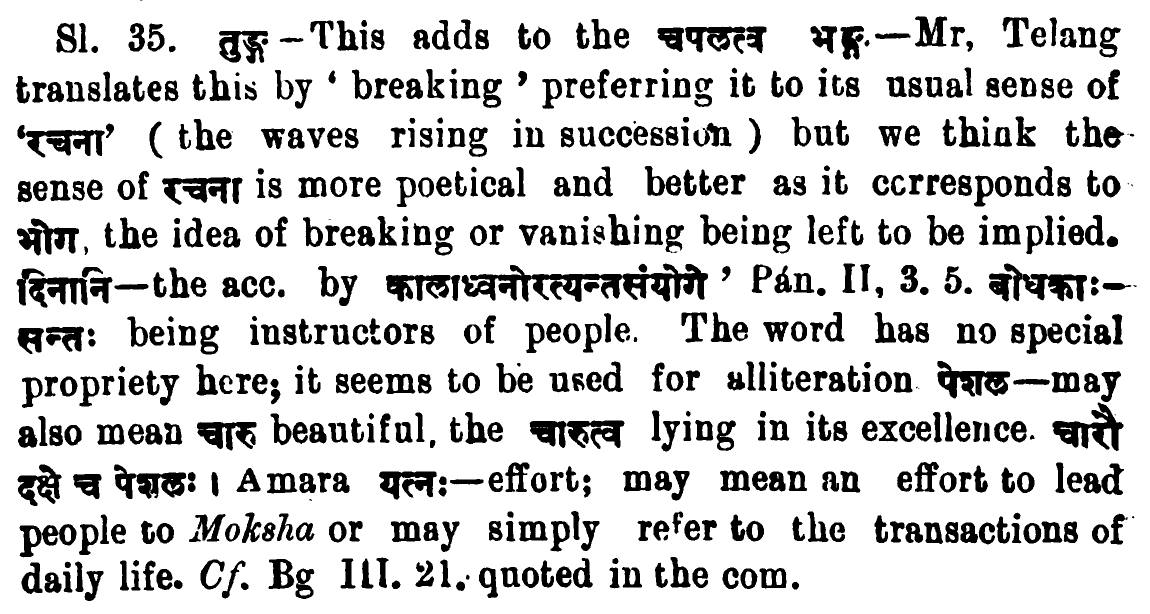
Sl. 35. तुङ्ग—This adds to the चपलत्व भङ्ग.—Mr, Telang translates this by ' breaking ' preferring it to its usual sense of 'रचना' ( the waves rising in succession ) but we think the sense of रचना is more poetical and better as it corresponds to भोग, the idea of breaking or vanishing being left to be implied. दिनानि—the acc. by कालाध्वनोरत्यन्तसंयोगे ' Pán. II, 3. 5. बोधकाः— सन्तः being instructors of people. The word has no special propriety here; it seems to be used for alliteration पेशल—may also mean चारु beautiful, the चारुत्व lying in its excellence. चारौ दक्षे च पेशलः । Amara यत्नः—effort; may mean an effort to lead people to Moksha or may simply refer to the transactions of daily life. Cf. Bg III. 21. quoted in the com.


Kosambi
all
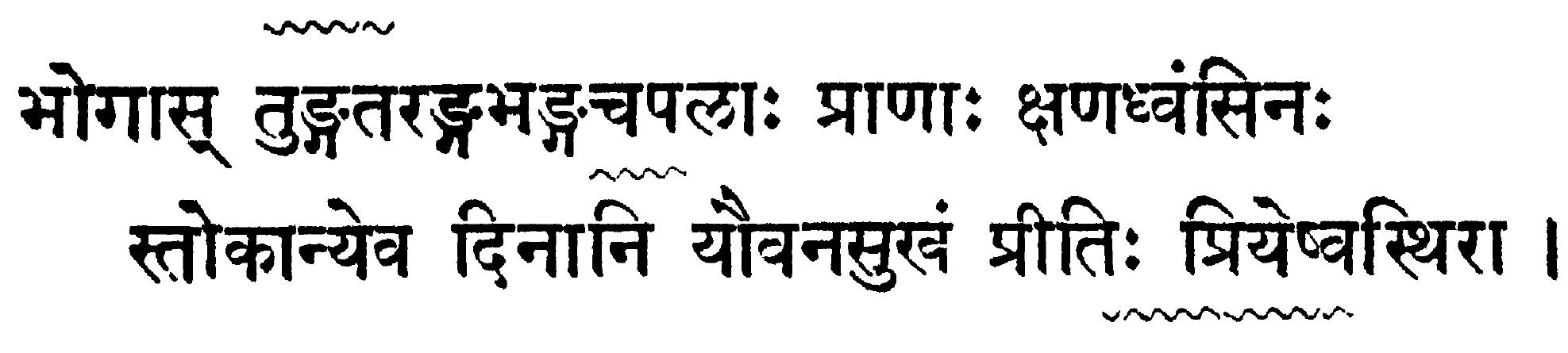
भोगास् तुङ्गतरङ्गभङ्गचपलाः प्राणाः क्षणध्वंसिनः
स्तोकान्येव दिनानि यौवनसुखं प्रीतिः प्रियेष्वस्थिरा ।

Footnote
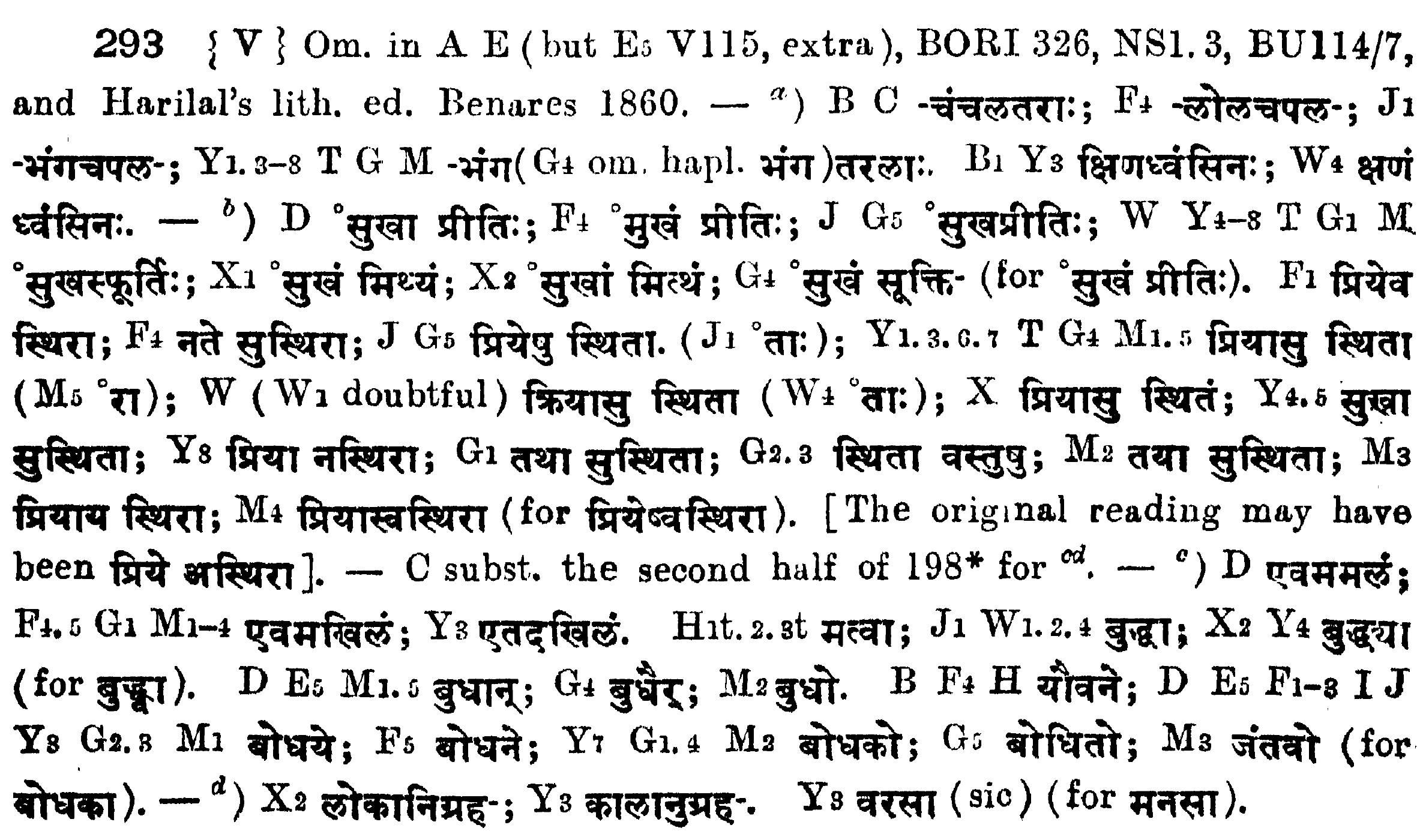
293 { V } Om . in A E ( but Es V115 , extra ) , BORI 326 , NS1 . 3 , BU114 / 7 ,
and Harilal's lith , ed . Benares 1860. 2 a ) B C - चंचलतरा :; F + -लोलचपल- ; J1
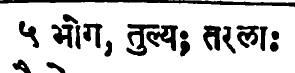
-भंगचपल- ; Y1 . 3-4 TGM - भंग ( G ± om . hapl . भंग ) तरला : B1 Y क्षिणध्वंसिनः ; W + क्षणं
ध्वंसिनः – 6 ) D सुखा प्रीतिः ; Fs मुखं प्रीतिः ; J Go ' सुखप्रीतिः ; W W_Y4−4 Y + -8 TG1 M M
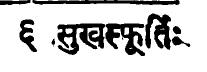
' सुखस्फूर्तिः ; X1 X 1 ' सुखं मिथ्यं ; X 2 सुखां मित्थं ; G + सुखं सूक्ति- ( for सुखं प्रीतिः ) . F1 प्रियेव
स्थिरा ; F + नते सुस्थिरा ; J Gs प्रियेषु स्थिता . ( Ji ताः ) ; Y1.3.0.7T G4 M1.5 प्रियासु स्थिता
( Ms ' रा ) ; W ( Wa doubtful ) क्रियासु स्थिता ( W4 ° वा : ) ; X प्रियासु स्थितं ; Y4.5 सुखा
सुस्थिता ; Y8 प्रिया नस्थिरा ; G1 तथा सुस्थिता ; G2.3 स्थिता वस्तुषु ; M2 तथा सुस्थिता ; M3
प्रियाय स्थिरा ; M4 प्रियास्वस्थिरा ( for प्रियेष्वस्थिरा ) . [ The original reading may have
been प्रिये अस्थिरा ] . C subst . the second half of 198 * for ot " ) D एवममर्ल ;
F + 6 G1 M1 - 1 एवमखिलं ; Y3 एतदखिलं . Hit . 2. 3t मत्वा ; J1 W1.2.4 बुद्धा ; X 2 Y 4 बुद्ध्या
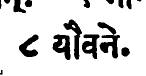
( for बुवा ) . DE5s M1 . बुधान् ; G + बुधैर् ; M2 बुधो BF H यौवने ; DE5 F1-8 I J
Ys G2 . 3 M1 बोधये ; Fs बोधने ; Y7 G1.4 M2 बोधको ; Go बोधितो ; M3 जंतवो ( for
बोधका ) . – d ( ) X 2 लोकानिग्रह ; X 3 कालानुग्रह . Y : वरसा ( sic ) ( for मनसा ) .

Commentary