Tawney
Alms to bestow in secret, and the houseless wanderer feed,
To hide one's own and loud proclaim another's kindly deed,
Humbly to bear prosperity, and mourn with those who weep—
Behold a vow which all the saints as yet have failed to keep!
Telang
all
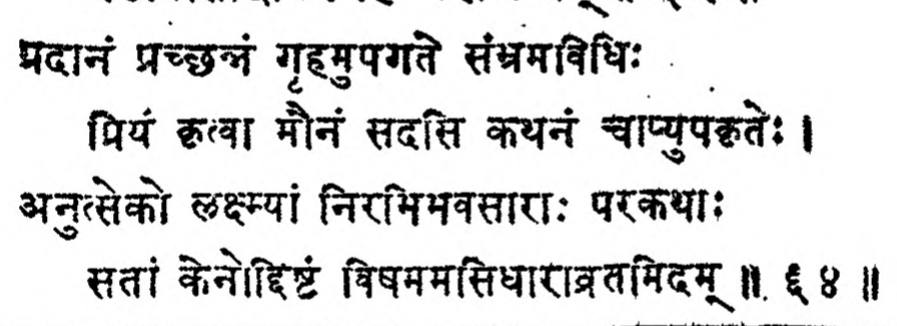
प्रदानं प्रच्छन्नं गृहमुपगते संभ्रमविधिः
प्रियं कृत्वा मौनं सदसि कथनं चाप्युपकृतेः ।
अनुत्सेको लक्ष्म्यां निरभिभवसाराः परकथाः
सतां केनोद्दिष्टं विषममसिधाराव्रतमिदम् ॥ ६४ ॥
Notes
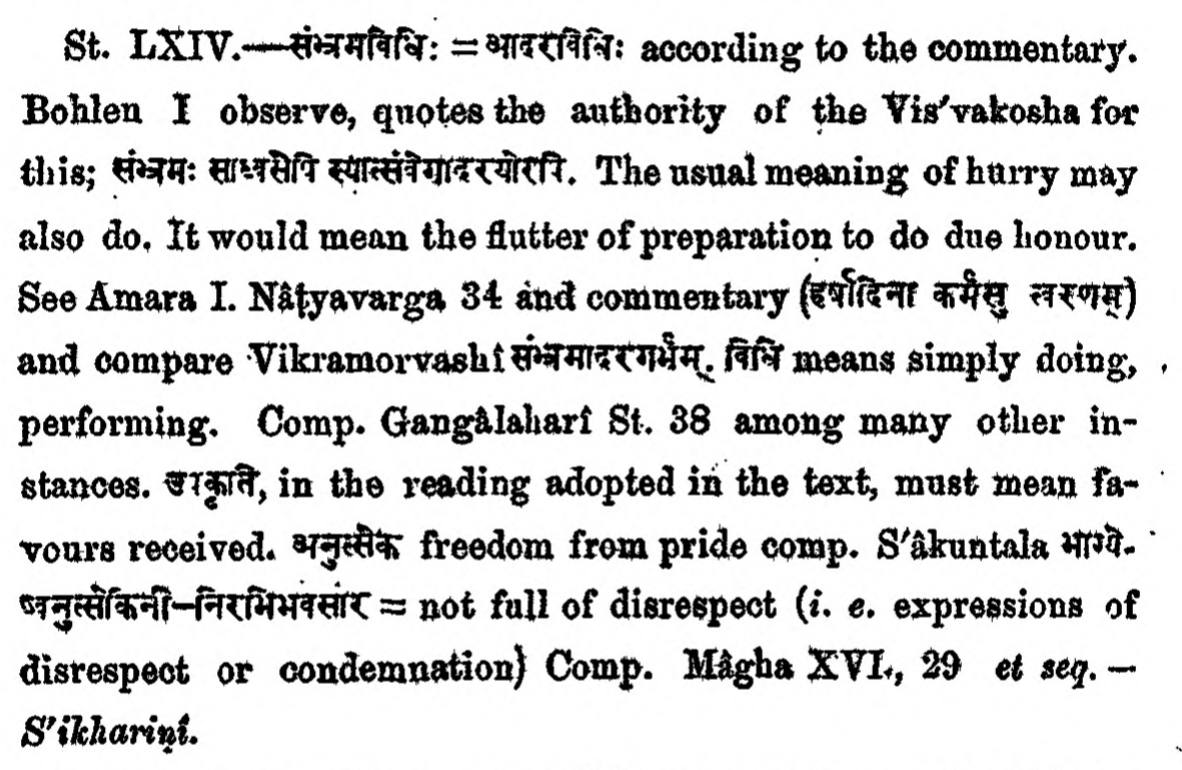
St. LXIV.—संभ्रमविधिः = आदरविधिः according to the commentary. Bohlen I observe, quotes the authority of the Vis'vakosha for this; संभ्रमः साध्वसेपि स्यात्संवेगादरयोरपि. The usual meaning of hurry may also do. It would mean the flutter of preparation to do due honour. See Amara I. Nâṭyavarga 34 and commentary (हर्षादिना कर्मसु त्वरणम्) and compare Vikramorvashî संभ्रमादरगर्भम्. विधि means simply doing, performing. Comp. Gangâlaharî St. 38 among many other instances. उपकृति, in the reading adopted in the text, must mean favours received. अनुत्सेक freedom from pride comp. S'âkuntala भाग्येष्वनुत्सेकिनी—निरभिभवसार = not full of disrespect (i. e. expressions of disrespect or condemnation) Comp. Mâgha XVI., 29 et seq. — S'ikhariṇî.

Kale
all

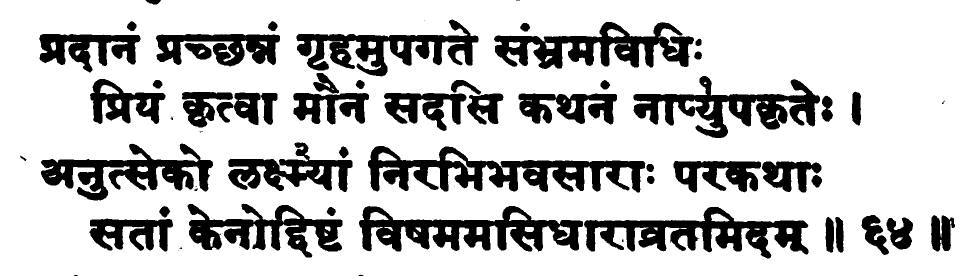
प्रदानं प्रच्छन्नं गृहमुपगते संभ्रमविधिः
प्रियं कृत्वा मौनं सदसि कथनं नाप्युपकृतेः ।
अनुत्सेको लक्ष्म्यां निरभिभवसाराः परकथाः
सतां केनोद्दिष्टं विषममसिधाराव्रतमिदम् ॥ ६४ ॥
Translation
64. Who taught this course of conduct, difficult like lying on the edge of a sword-blade, to the good, viz. charity well concealed, quick reception to him who comes to their house, silence after doing good, not announcing in public their kindness ( to others ), freedom from arrogance in prosperity, and speaking of others in terms free from disrespectfulness.

Notes
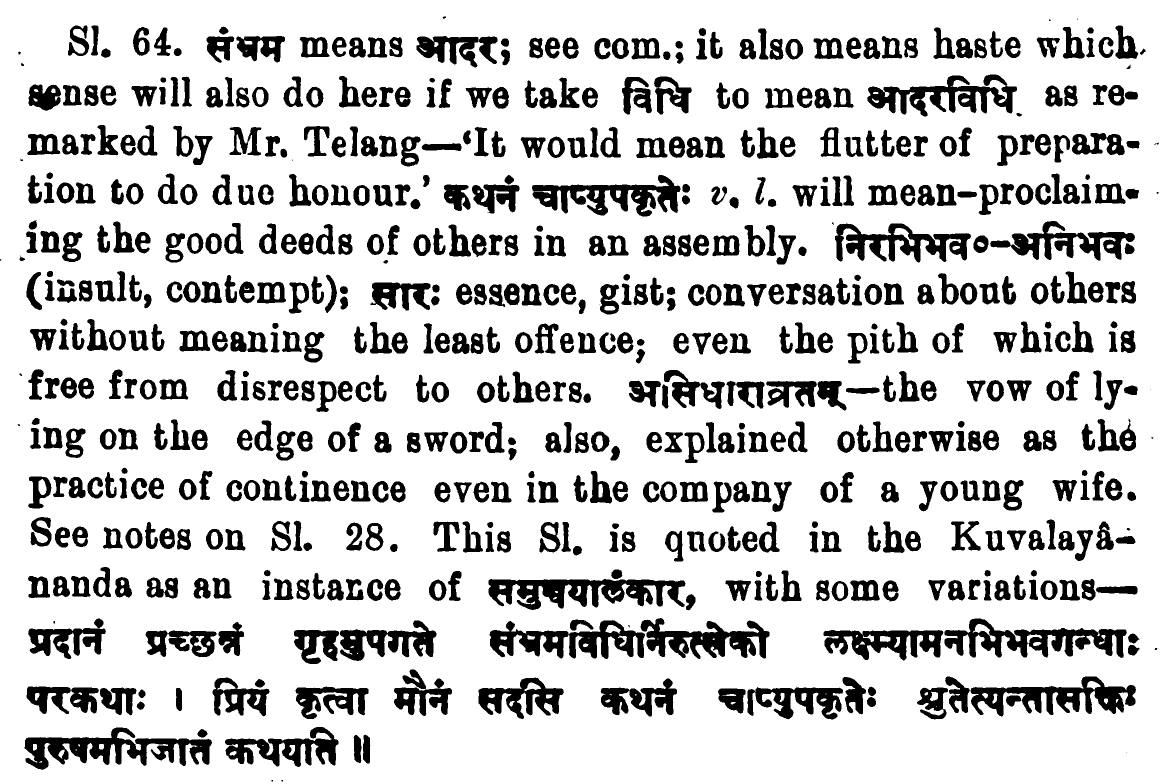
Sl. 64. संभ्रम means आदर; see com.; it also means haste which sense will also do here if we take विधि to mean आदरविधि. as remarked by Mr. Telang—‘It would mean the flutter of preparation to do due honour.’ कथनं चाप्युपकृतेः v. l. will mean–proclaiming the good deeds of others in an assembly. निरभिभव०–अनिभवः (insult, contempt); सारः essence, gist; conversation about others without meaning the least offence; even the pith of which is free from disrespect to others. असिधाराव्रतम्—the vow of lying on the edge of a sword; also, explained otherwise as the practice of continence even in the company of a young wife. See notes on Sl. 28. This Sl. is quoted in the Kuvalayânanda as an instance of समुच्चयालंकार, with some variations— प्रदानं प्रच्छन्नं गृहमुपगते संभ्रमविधिर्निरुत्सेको लक्ष्म्यामनभिभवगन्धाः परकथाः । प्रियं कृत्वा मौनं सदसि कथनं चाप्युपकृतेः श्रुतेत्यन्तासक्तिः पुरुषमभिजातं कथयति ॥


Gopinath1914
all
प्रदानं प्रच्छन्नं गृहमुपगते सम्भ्रमविधिः प्रियं
कृत्वा मौनं सदसि कथनं चाप्युपकृतेः । ।
अनुत्सेको लक्ष्म्या निरभिभवसाराः परकथाः
संतां केनोद्दिष्टं विषममसिधाराव्रतमिदम् ॥ ६४॥
गुप्तीतिका दान, घर आएका सत्कार, पराया हित साधन करके मौन धारण करना, दूसरेके किए हुए उपकारका सभामें प्रकाश करना, लक्ष्मीका निरभिमान, और निंदारहित परकथाका संकीर्तन ये उत्तमोत्तम गुणं सत्पुरुषों में स्वभावही से सिद्ध होते हैं, किसीके सिखाए हुए नहीं होते ॥ ६४ ॥
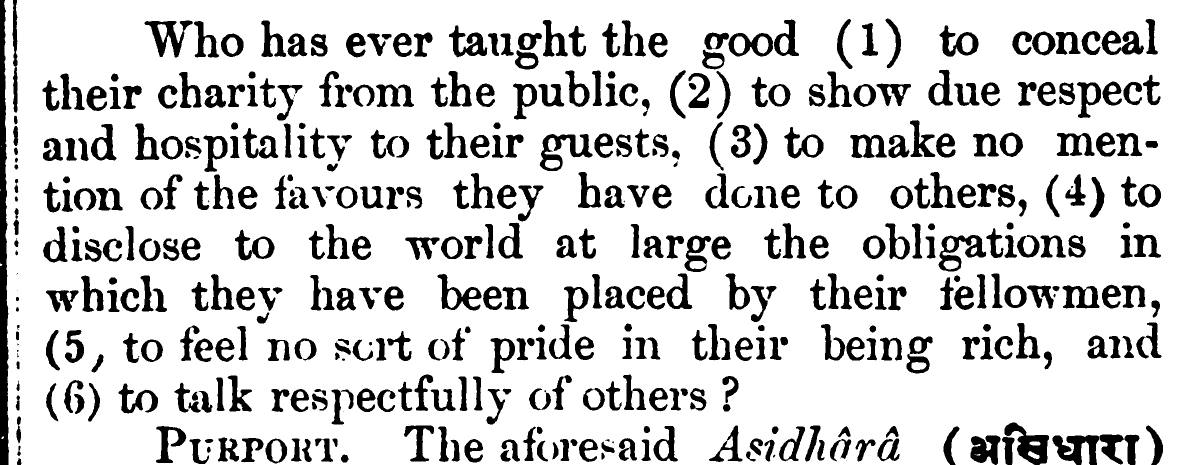
Who has ever taught the good (1) to conceal their charity from the public, (2) to show due respect and hospitality to their guests, (3) to make no mention of the favours they have done to others, (4) to disclose to the world at large the obligations in which they have been placed by their fellowmen, (5) to feel no sort of pride in their being rich, and (6) to talk respectfully of others?


Footnote
Quoted anonymously in the Subhashitawali (सुभाषितावलिं । २८१ ), and the Kuvalayananda ( कुवलयानन्द ).

Footnote
For 66 प्रदानं प्रच्छन्नं " ” cf.― " Let your charitable gifts be anonymous gifts. ( Alexander Dumas).

Footnote
66 For the 2nd line of the stanza, cf.He who has received a kindness should remember it for and he who has conferred it should instantly forget everit, if , the former would bear the character of a good man, and the latter avoid that of a paltry spirit." (The Oration of Demosthenes upon the crown).

Gopinath1896
all
प्रदानं प्रच्छन्नं गृहमुपगते सम्भ्रमविधिः, प्रियं
कृत्वा मौनं सदसि कथनं चाप्युपकृतेः ।
अनुत्सेको लक्ष्म्या निरभिभवसाराः परकथाः
सतां केनोद्दिष्टं विषम मसिधाराव्रतमिदम् ६४
गुप्तरीति का दान, घर आए का सत्कार, पराया हित साधन करके मौन धारणकरना, दूसरे के किए हुए उपकारका सभामें प्रकाश करना, लक्ष्मी का निरभिमान, और निंदारहित परकथा का संकीर्तन, ये उत्तमोत्तम गुण सत्पुरुषोंमें स्वभावही से सिद्ध होते हैं, किसीके सिखाए हुए नहीं होते ॥ ६४ ॥
Who has ever taught the good (1) to conceal their charity from the public, (2) to show due respect and hospitality to their guests, ( 3 ) to make no men tion of the favours they have done to others, (4) to disclose to the world at large the obligations in which they have been placed by their fellowmen, (5, to feel no sort of pride in their being rich, and (6) to_talk respectfully . of others ?

Footnote
Quoted anonymously in the Subhäshitärali ( सुभाषितावलि । २८१), and the Krralayänanda ( कुवलयानन्द ).

Footnote
For " प्रदानं प्रच्छन्नं " cf. "Let your charitable gifts be anonymous gifts." (Alexander Dumas).

Footnote
For the 2nd line of the stanza, cf."He who has received a kindness should remember it for ever, and he who has conferred it should instantly forget it, if the former would bear the character of a good man, and the latter avoid that of a paltry spirit." (The Oration of Demosthenes upon the crown).

Kosambi
all


Footnote
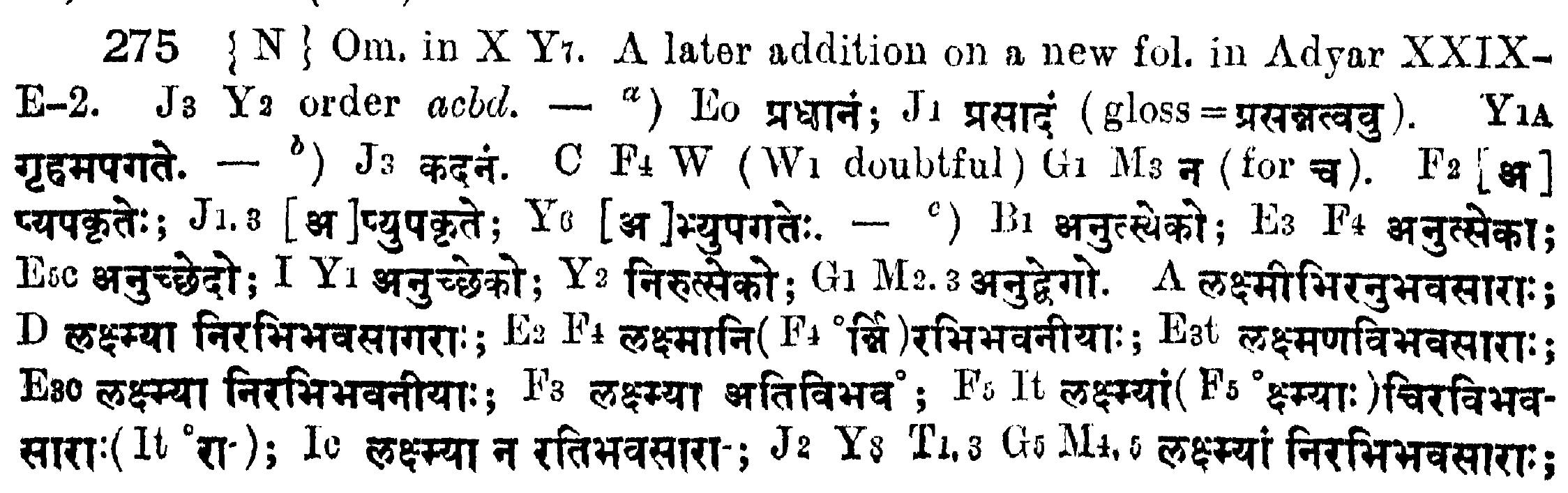
275 { N } Om . in X Y7 . A later addition on a new fol . in Adyar XXIX
E - 2 . J3 Ya order acbd . How “ a ) ELo प्रधानं ; J1 प्रसादं ( gloss = प्रसन्नत्ववु ) . Y1A
गृहमपगते . 4 ठ ) J3 कदनं . C F ‡ W ( W1 doubtful ) G1 M3 न ( for च ) . F2 [ अ ]
प्यपकृतेः ; J1.8 [ अ ] ] प्युपकृते ; X० [ अ ] भ्युपगतेः - ( ) B1 अनुत्स्थेको ; E3 F + अनुस्सेका ;
Esc अनुच्छेदो ; I Y1 अनुच्छेको ; Y : निरुत्सेको ; G1 Ms. 3 अनुद्वेगो 4 लक्ष्मीभिरनुभवसाराः ;
D लक्ष्म्या निरभिभवसागरा :; E2 F4 लक्ष्मानि ( F + ° नि ) रभिभवनीयाः ; Eat लक्ष्मणविभवसाराः ;
E30 लक्ष्म्या निरभिभवनीयाः ; F3 I 3 लक्ष्म्या अतिविभव ; Fs It लक्ष्म्यां ( FEs ° क्ष्म्याः ) चिरविभव
सारा : ( It रा . ) ; Io लक्ष्म्या न रतिभवसारा ; Ja Ys T13 G5 M15 लक्ष्म्यां निरभिभवसाराः ;
Footnote
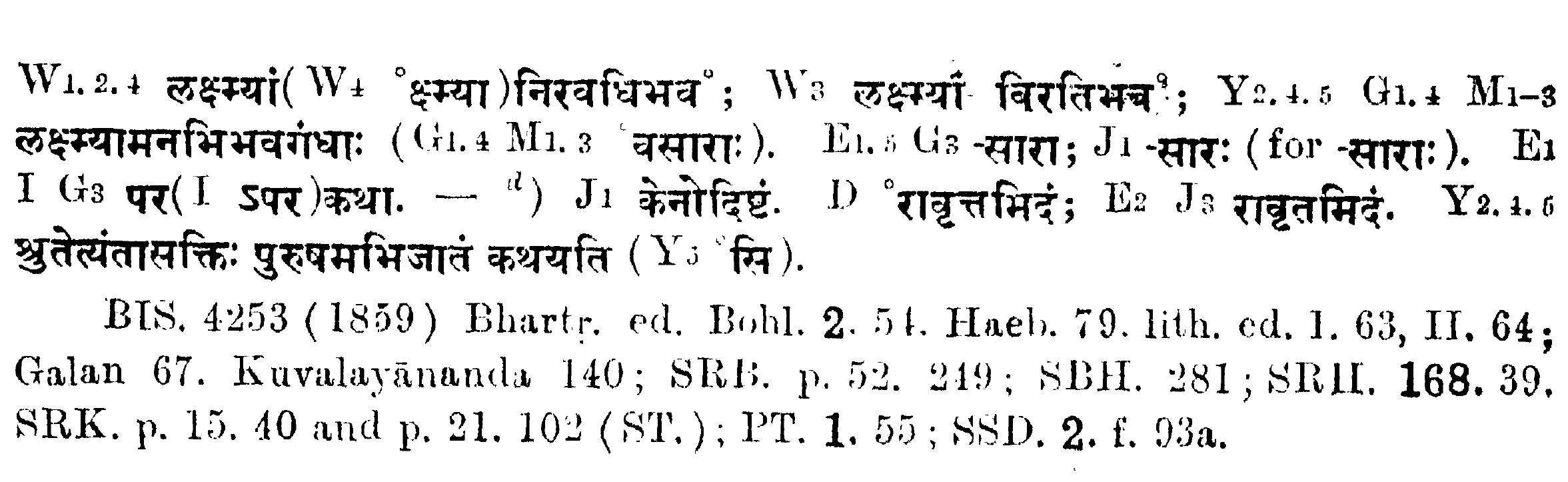
W1 . 2. + लक्ष्म्यां ( W + ' क्ष्म्या ) निरवधिभव ; \\ ' 3 लक्ष्म्यां विरतिभच ; Y2.45 G1 + M1 - 3
लक्ष्म्यामनभिभवगंधाः ( G1.4 M1.3 वसारा [ :) . Ei . G3 -सारा ; J1 -सार : ( for सारा : ) . E1
I G3 पर ( I S पर ) कथा . 4 ) J1 केनोदिष्टं D रावृत्तमिदं ; Da Js रावृतमिदं • X2.3.6
श्रुतेत्यंतासक्तिः पुरुषमभिजातं कथयति ( Y3 सि ) .
BIS . 4253 ( 1859 ) Bhartr . ed . Bohl . 2 51. Haeb . 79. lith ed . 1. 63 , II . 64 ;
Galan 67 Kuvalayānanda 140 ; SRE . p . 52 219 ; SBH 281 ; ; SRIH . 168. 39 .
SRK . p . 15 40 and p . 21 102 ( ST . ) ; PT . 1. 55 ; SSD . 2. f . 93a ,
Commentary