Tawney
The youthful freshness of my heart is worn with old decay,
The beauty of my limbs hath passed unrecognized away,
Grim Fate brings nigh with giant strides the unrelenting hour;
What hope but in the feet of him who smote Love's wanton power?
Mādhavānanda
जीर्णा एव मनोरथाश्च हृदये यातं च तद्यौवनं
हन्ताङ्गेषु गुणाश्च वन्ध्यफलतां याता गुणज्ञैविर्ना ।
किं युक्तं सहसाभ्युपैति बलवान्काल: कृतान्तोऽक्षमी
हा ज्ञातं मदनान्तकाङ्घ्रियुगलं मुक्त्वास्ति नान्या गति: ।।८३।।
83. Desires have worn off in our heart. Alas! Youth has also passed away from the body. The virtues have proved barren for want of appreciative admirers. The powerful, all-destroying, unrelenting Death is fast hastening in! What is to be done? Ah me! I see there is no other refuge left except the feet of the Destroyer of Cupid.
[मदनान्तक—Śiva is so called in allusion to His having turned the god Cupid to ashes on the eve of His marriage with Gaurī.]
Telang
all
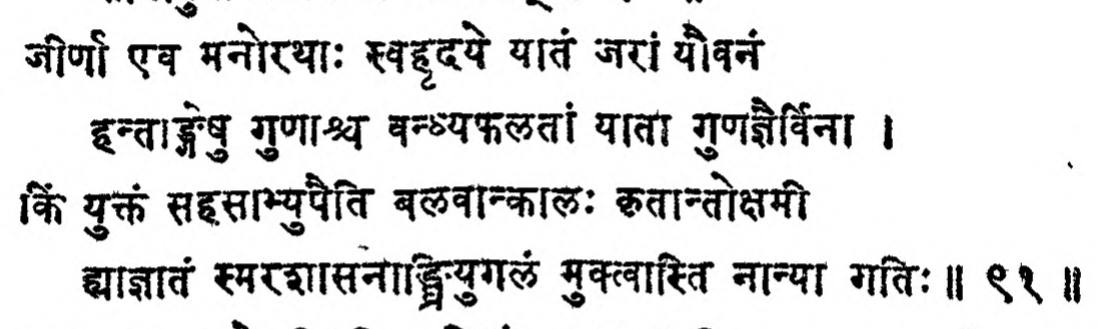
जीर्णा एव मनोरथाः स्वहृदये यातं जरां यौवनं
हन्ताङ्गेषु गुणाश्च बन्ध्यफलतां याता गुणज्ञैर्विना ।
किं युक्तं सहसाभ्युपैति बलवान्कालः कृतान्तोक्षमी
ह्याज्ञातं स्मरशासनाङ्घ्रियुगलं मुक्त्वास्ति नान्या गतिः ॥ ९१ ॥
Notes
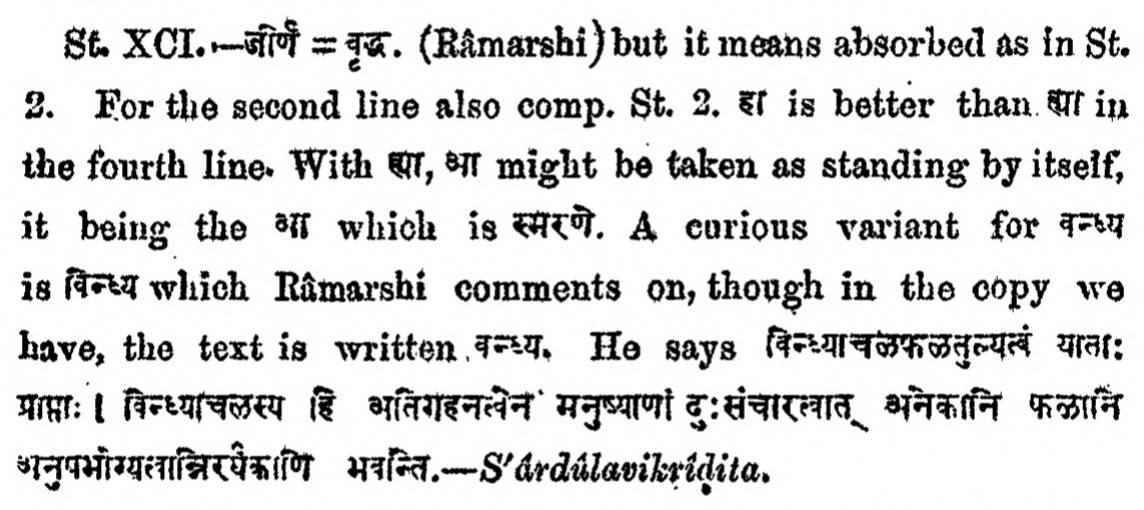
St. XCI.—जीर्ण=वृद्ध. (Râmarshi) but it means absorbed as in St. 2. For the second line also comp. St. 2. हा is better than ह्य़ा in the fourth line. With ह्या, आ might be taken as standing by itself, it being the आ which is स्मरणे. A curious variant for वन्ध्य is विन्ध्य which Râmarshi comments on, though in the copy we have, the text is written वन्ध्य. He says विन्ध्याचलफलतुल्यत्वं याताः प्राप्ताः। विन्ध्याचलस्य हि अतिगहनत्वेन मनुष्याणां दुःसंचारत्वात् अनेकानि फलानि अनुपभोग्यत्वान्निरर्थकानि भवन्ति.—S'ârdûlavikrîḍita.

Kale
all

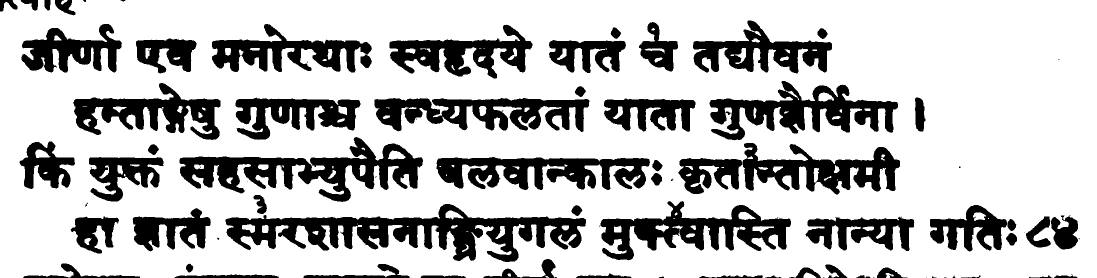
जीर्णा एव मनोरथाः स्वहृदये यातं च तद्यौवनं
हन्ताङ्गेषु गुणाश्च वन्ध्यफलतां याता गुणज्ञैर्विना ।
किं युक्तं सहसाभ्युपैति बलवान्कालः कृतान्तोक्षमी
हा ज्ञातं स्मरशासनाङ्घ्रियुगलं मुक्त्वास्ति नान्या गतिः८४
Translation
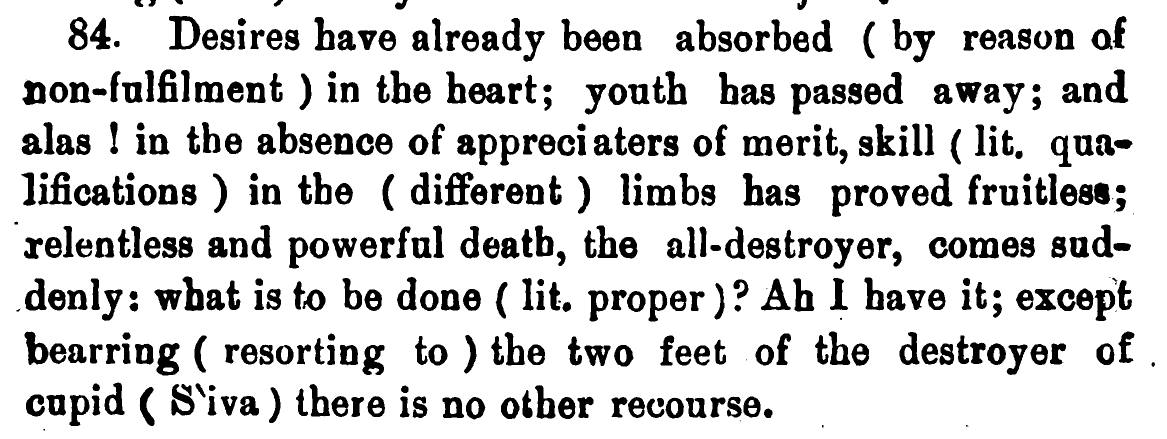
84. Desires have already been absorbed ( by reason of non-fulfilment ) in the heart; youth has passed away; and alas ! in the absence of appreciaters of merit, skill ( lit. qualifications ) in the ( different ) limbs has proved fruitless; relentless and powerful death, the all-destroyer, comes suddenly: what is to be done ( lit. proper )? Ah I have it; except bearring ( resorting to ) the two feet of the destroyer of cupid ( S'iva ) there is no other recourse.
Notes
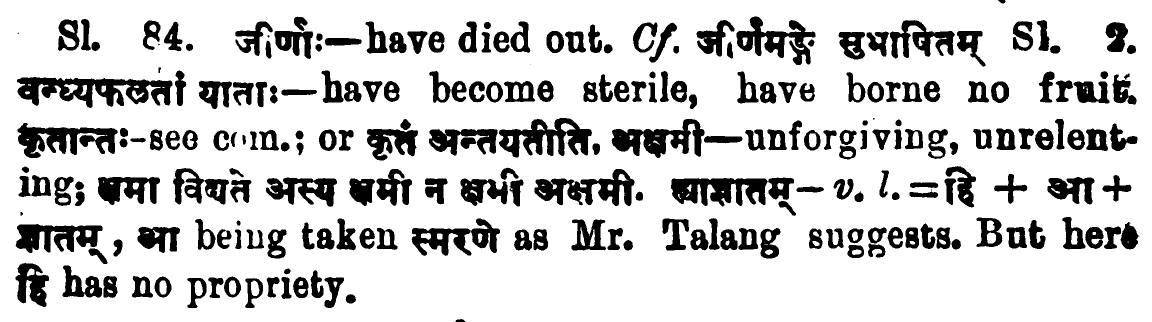
Sl. 84. जीर्णाः—have died out. Cf. जीर्णमङ्गे सुभाषितम् Sl. 2. वन्ध्यफलतां याताः—have become sterile, have borne no fruit. कृतान्तः-see com.; or कृतं अन्तयतीति. अक्षमी—unforgiving, unrelenting; क्षमा विद्यते अस्य क्षमी न क्षमी अक्षमी. ह्याज्ञातम्—v. l. = हि + आ + ज्ञातम्, आ being taken स्मरणे as Mr. Talang suggests. But here हि has no propriety.


Gopinath1914
all
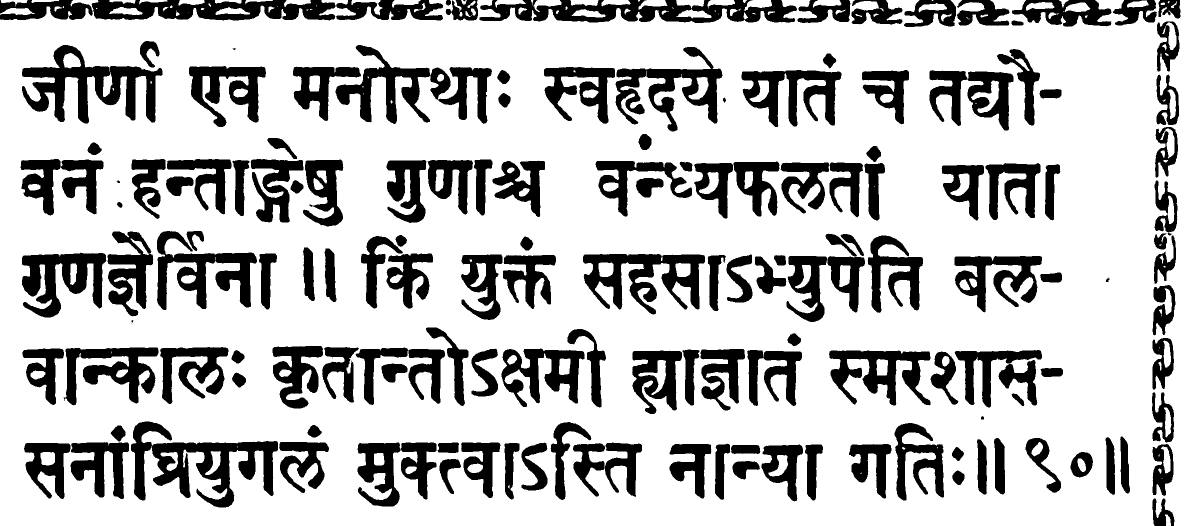
जीर्णा एव मनोरथाः स्वहृदये यातं च तद्यौ- :
वनं हन्ताङ्गेषु गुणाश्च वन्ध्यफलतां याता
गुणज्ञैर्विना ॥ किं युक्तं सहसाऽभ्युपैति बल- 529929252525
वान्कालः कृतान्तोऽक्षमी ह्याज्ञातं स्मरशास-
सनांत्रियुगलं मुक्त्वाऽस्ति नान्या गतिः ॥ ९० ॥
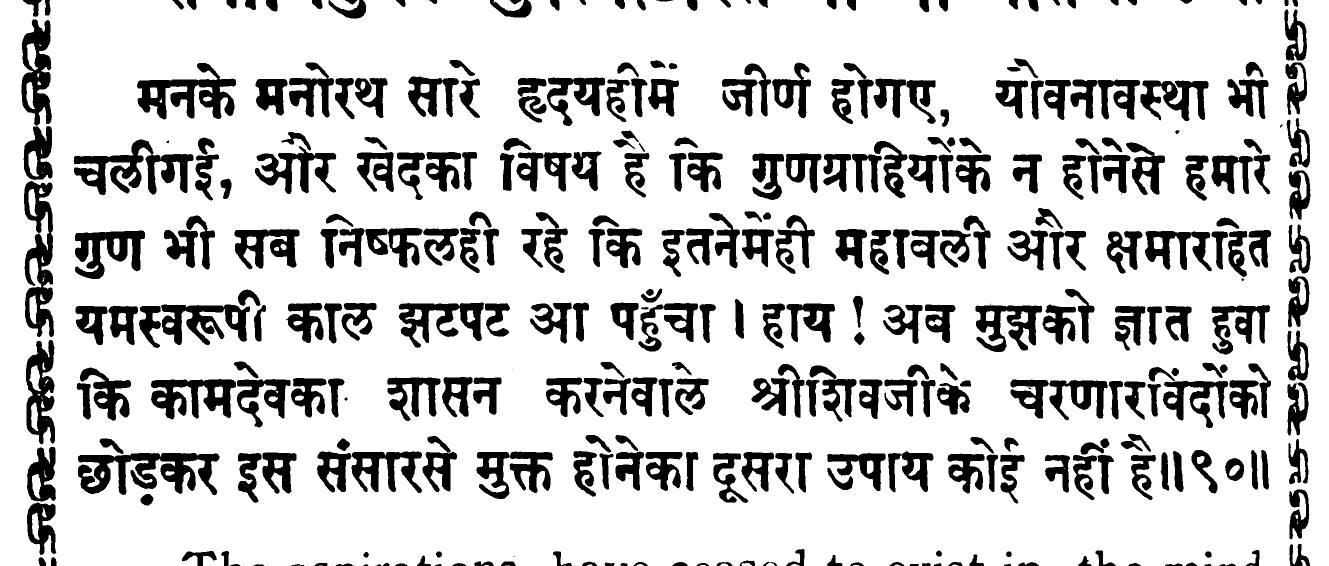
मनके मनोरथ सारे हृदयहीमें जीर्ण होगए, यौवनावस्था भी चलीगई, और खेदका विषय है कि गुणग्राहियोंके न होने से हमारे गुण भी सब निष्फलही रहे कि इतनेमेंही महावली और क्षमारहित यमस्वरूपी काल झटपट आ पहुँचा । हाय ! अब मुझको ज्ञात हुवा कि कामदेवका शासन करनेवाले श्रीशिवजी के चरणारविंदोंको छोड़कर इस संसार से मुक्त होनेका दूसरा उपाय कोई नहीं है ॥ ९० ॥
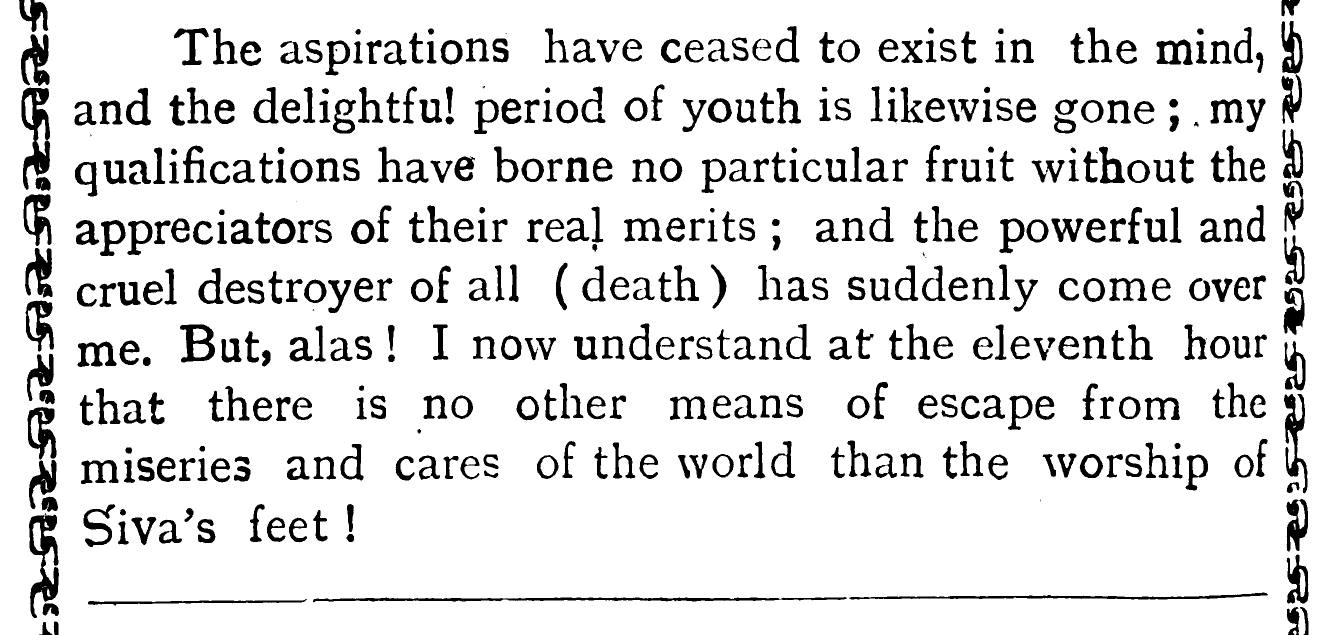
The aspirations have ceased to exist in the mind, and the delightfu! period of youth is likewise gone; my qualifications have borne no particular fruit without the appreciators of their real merits; and the powerful and cruel destroyer of all (death) has suddenly come over 1025: me. But, alas! I now understand at the eleventh hour that there is no other means of escape from the miseries and cares of the world than the worship of Siva's feet !
Footnote
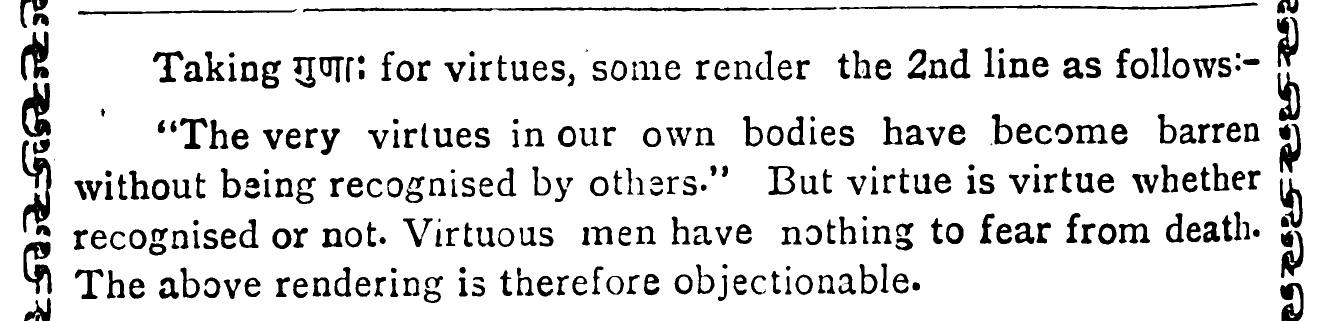
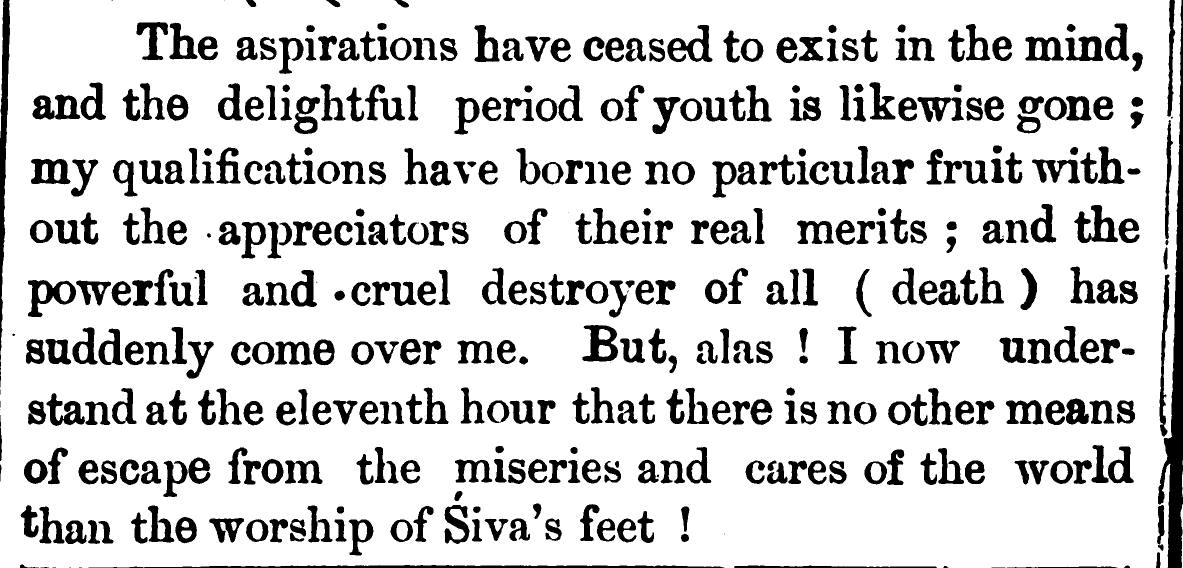
Taking д: for virtues, some render the 2nd line as follows: "The very virtues in our own " bodies have become barren 9252985 without being recognised by others.But virtue is virtue whether or not. Virtuous men have nothing to fear from death. recognised The above rendering is therefore objectionable.
Gopinath1896
all
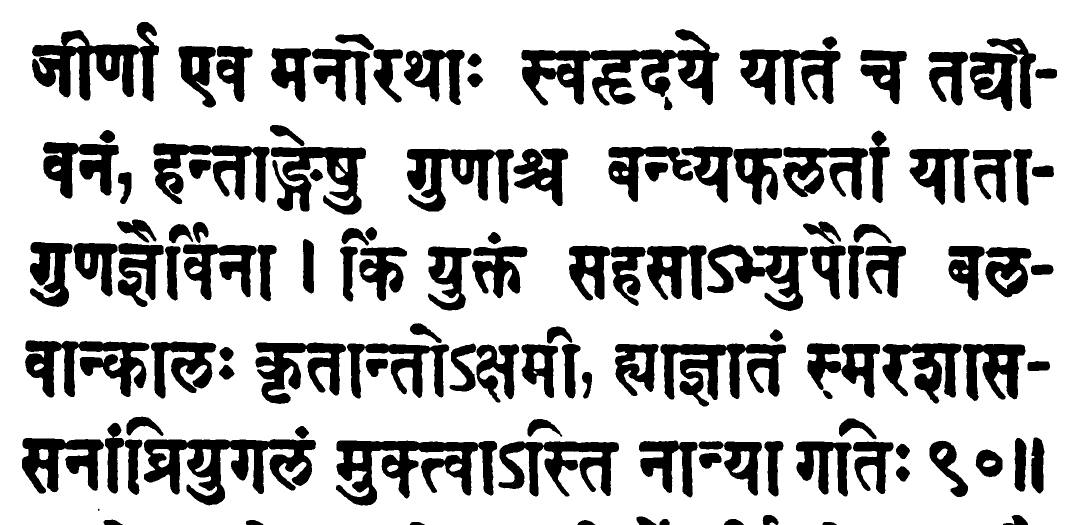
जीर्णा एव मनोरथाः स्वहृदये यातं च तद्यौ-
वनं हन्ताङ्गेषु गुणाश्च बन्ध्यफलतां याता-
गुणज्ञैर्विना । किं युक्तं सहसाऽभ्युपैति बल-
वान्कालः कृतान्तोऽक्षमी, ह्याज्ञातं स्मरशास-
सनांघ्रियुगलं मुक्त्वाऽस्ति नान्या गतिः ९० ॥
मनके मनोरथ सारे हृदयही में जीर्ण होगए, यौवनावस्था भी चली गई, और खेदका विषय है कि गुणग्राहियोंके न होने से हमारे गुण भी सब निष्फलही रहे कि इतनेमें ही महाबली और क्षमा रहित यमस्वरूपी काल झटपट आ पहुँचा । हाय ! अब मुझको ज्ञात हुवा कि कामदेवका शासन करनेवाले श्री शिवजीके चरणारविंदोंको छोड़ कर इस संसारसे मुक्त होनेका दूसरा उपाय कोई नहीं है ॥ ९० ॥
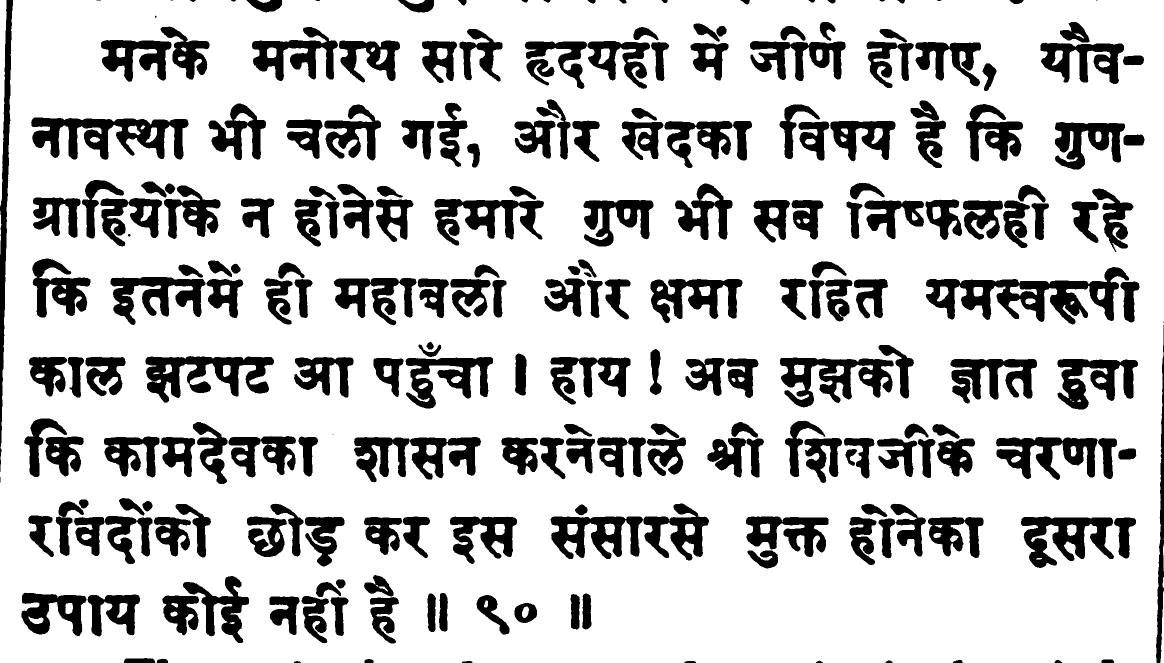
The aspirations have ceased to exist in the mind, and the delightful period of youth is likewise gone ; my qualifications have borne no particular fruit without the appreciators of their real merits; and the powerful and cruel destroyer of all ( death ) has suddenly come over me. But, alas! I now understand at the eleventh hour that there is no other means of escape from the miseries and cares of the world than the worship of Siva's feet !
Footnote
:-Taking गुणाः for virtues, some render the 2nd line as follows "The very virtues in our . " own But bodies virtue have is become virtue whether barren without recogbeing recognised by others nised or not. Virtuous men have nothing to fear from death. The above rendering is therefore objectionable.
Kosambi
all
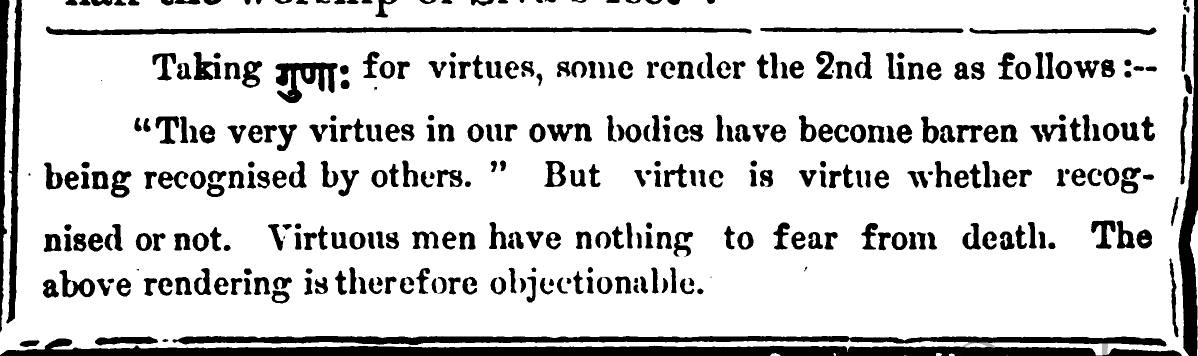
जीर्णा एव मनोरथाः मनोरथाः स्वहृदये यातं च तद् यौवनं
हन्ताङ्गेषु गुणाश् च वन्ध्यफलतां याता गुणज्ञैर्विना ।
किं युक्तं सहसाभ्युपैति बलवान् कालः कृतान्तोऽक्षमी
आ ज्ञातं मदनान्तकाडियुगलं मुक्त्वास्ति नान्या गतिः ॥ २४ ९ ॥
Footnote
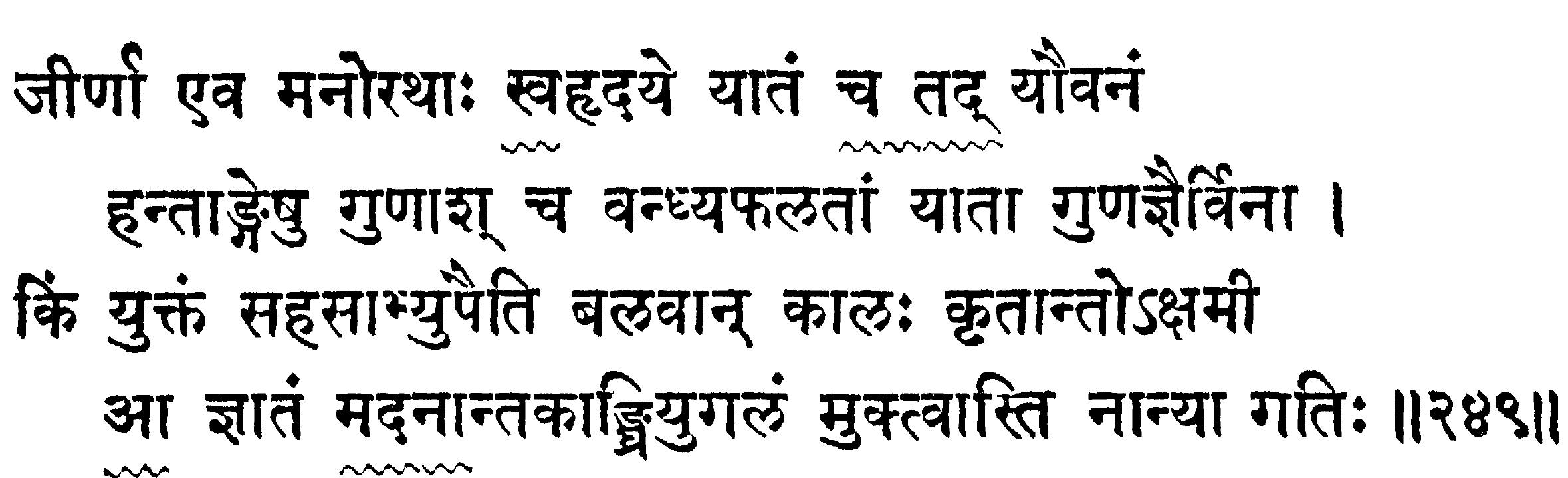
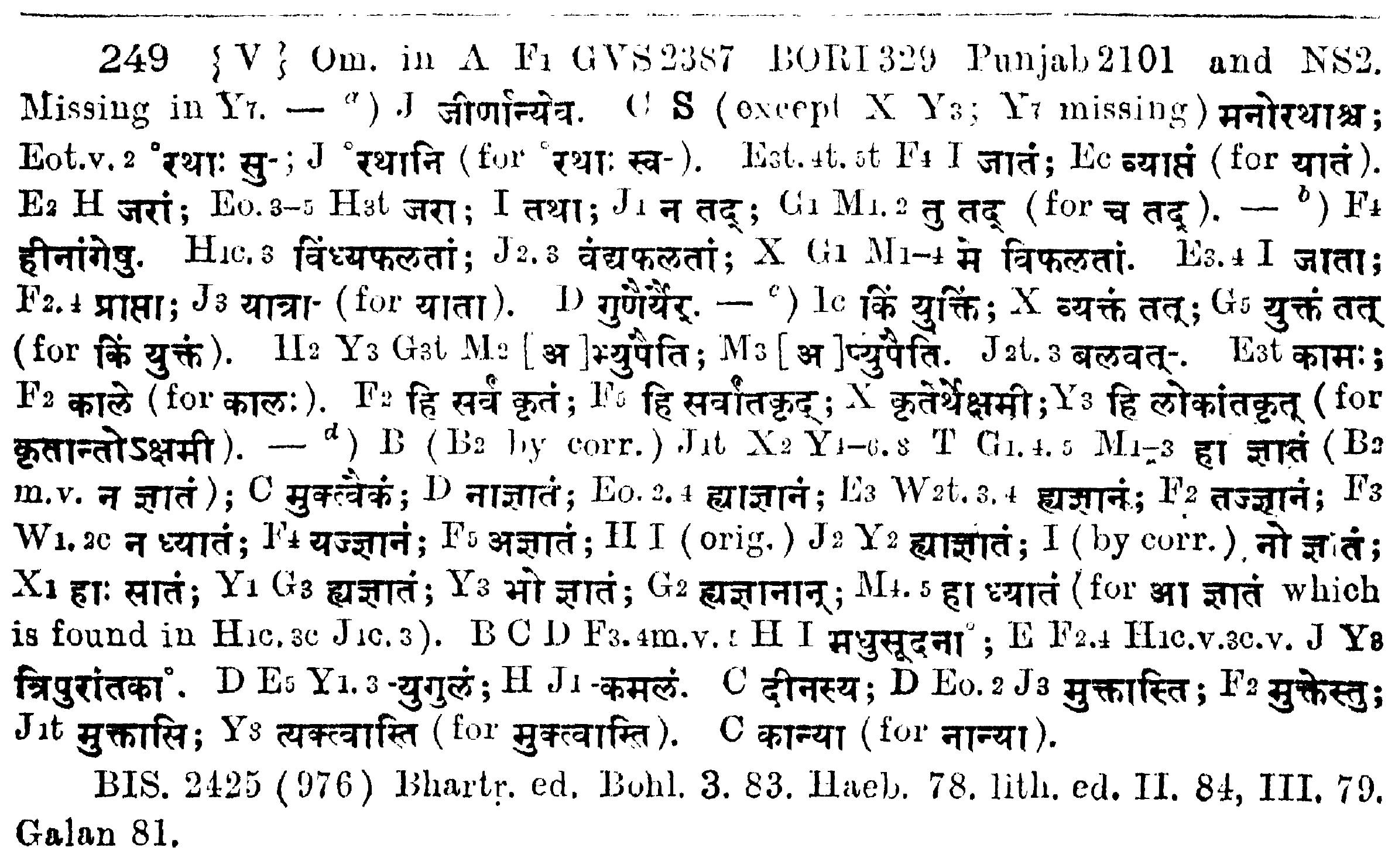
249 { V } Om . in A F1 GVs2387 BORI329 Punjab 2101 and NS2 .
Missing in Y7 . " ) J जीर्णान्येव . ( CS ( except X Y 3 ; 17 missing ) मनोरथाश्च ;
Eot . v . 2 ' रथाः सु- ; J स्थानि 0 ( for ' रथाः स्व ) . Estt . ot . F1 I जातं ; Ec व्याप्तं ( for यातं ) .
Ea H जरां ; E0.3–5 Hat जरा ; I तथा ; Ji न तद् ; G1 M. 2 तु तद् ( for च तद् ) . - 0 ) Fa
हीनांगेषु . Hic.3 विंध्यफलतां ; J2 . 3 वंद्यफलतां ; X ( G1 Mi - + मे विफलतां . E3 . I जाता ;
F2 . 1 प्राप्ता ; J3 यात्रा- ( for याता ) . 1 ) गुणैर्येर c ) 10 किं युक्तिं ; X व्यक्तं तत् ; G5 G० युक्तं तत्
( for किं युक्तं ) . II2 Y3 Gal Me [ अ ] भ्युपैति ; Ms [ अ ] प्युपैति Jat 3 बलवत् Est कामः ;
F2 काले ( for काल :) . I : हि सर्वं कृतं ; o हि सर्वातकृद् · X कृतेर्थेक्षमी ; X 3 हि लोकांतकृत् ( for
कृतान्तोऽक्षमी ) . – 4 ) B ( B2 by corr . ) Jit X2 Y 1-6 . TG1.15 M1 2 3 हा ज्ञातं ( Ba
1m.v. न ज्ञातं ) ; C मुक्त्वैकं ; D नाज्ञातं ; Eo . 2. 4 ह्याज्ञानं ; D3 W2t . 3. + ह्यज्ञानं ; P2 तज्ज्ञानं ; F3
W1.20 न ध्यातं ; + यज्ज्ञानं ; F5 Fs अज्ञातं ; II I ( orig . ) J2 X 2 ह्याज्ञातं ; I ( by corr . ) , नो ज्ञातं ;
X1 हाः सातं ; Y1 G 3 ह्यज्ञातं ; X 3 भो ज्ञातं ; G2 ह्यज्ञानान् ; Mi. 5 हा ध्यातं ( for आ ज्ञातं which
is found in Hic . 3c Jic . 3 ) . B C D F3.4m.v. ! H I मधुसूदना ; E F 2. Hac.v.3c.v. J Ya
त्रिपुरांतका • DE5Y1 . 3 युगुलं ; H JI -कमलं . C दीनस्य ; D Eo . 2 J3 मुक्तास्ति ; 2 मुक्तेस्तु ;
Jat मुक्तासि ; Ys त्यक्त्वास्ति ( for मुक्त्वाति ) . C कान्या ( for नान्या ) .
BIS . 2425 ( 976 ) Bhartr ed Bohl . 3. 83. Haeb 78. lith ed . II . 84 , III . 79 .
Galan 81 .
Commentary