Ryder
IN THE DAYS OF THY YOUTH
While life is vigorous and bright,
While sickness comes not, nor decay,
While all your powers are at their height,
While yet old age is far away,
Then, wise man, let your thoughts be turning
To heaven's hopes and fears of hell;
For when the house is fired and burning,
It is too late to dig a well.
Tawney
While the soul's temple still stands firm, and eld still bides afar,
While sense is keen, and Life with Death still wages equal war.
The wise to gain the spirit's peace should strive with strong desire.
What boots to dig a well when all the house is wrapped in fire?
Mādhavānanda
यावत्स्वस्थमिदं शरीरमरुजं यावज्जरा दूरतो
यावच्चेन्द्रियशक्तिरप्रतिहता यावत्क्षयो नायुष: ।
आत्मश्रेयसि तावदेव विदुषा कार्य: प्रयत्नो महान्
संदीप्ते भवने तु कूपखननं प्रत्युद्यम: कीदृश: ।।७५।।
75. As long as this body is free from disease and decrepitude, as long as senility is far off, as long as the powers of the senses are unaffected and life is not decaying, so long, wise persons should put forth mighty exertions for the sake of their supreme good, for when the house is on fire what avails setting about digging a well (for water)?
Telang
all
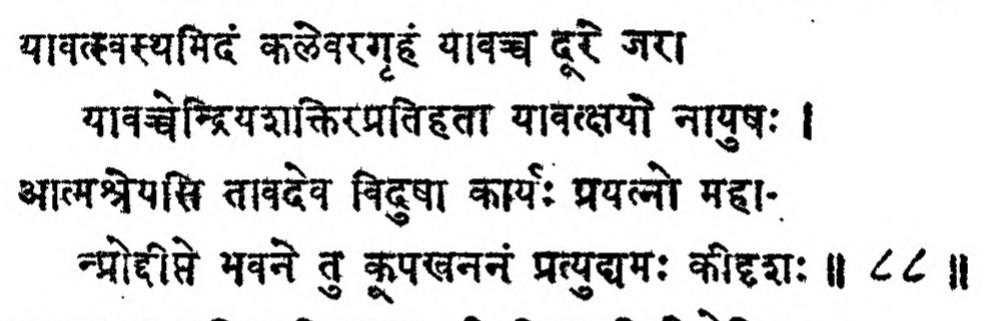
यावत्स्वस्थमिदं कलेवरगृहं यावच्च दूरे जरा
यावच्चेन्द्रियशक्तिरप्रतिहता यावत्क्षयो नायुषः ।
आत्मश्रेयसि तावदेव विदुषा कार्यः प्रयत्नो महा-
न्प्रोद्दीप्ते भवने तु कूपखननं प्रत्युद्यमः कीदृशः ॥ ८८ ॥
Notes
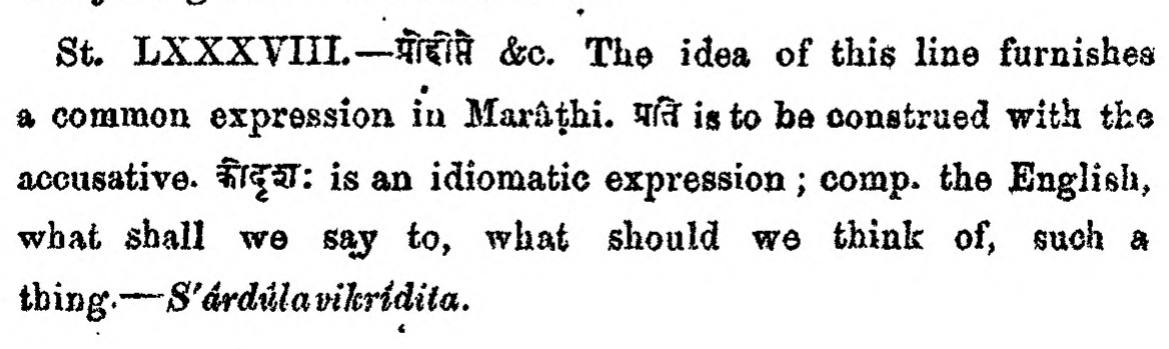
St. LXXXVIII.—प्रोद्दीप्ते &c. The idea of this line furnishes a common expression in Marâṭhi. प्रति is to be construed with the accusative. कीदृशः is an idiomatic expression ; comp. the English, what shall we say to, what should we think of, such a thing.—S'ârdûlavikrîḍita.

Kale
all

यावत्स्वस्थमिदं शरीरमरुजं यावच्च दूरे जरा
यावच्चेन्द्रियशक्तिरप्रतिहता यावत्क्षयो नायुषः ।
आत्मश्रेयसि तावदेव विदुषा कार्यः प्रयत्नो महा-
न्प्रोद्दीप्ते भवने तु कूपखननं प्रत्युद्यमः कीदृशः ॥ ७६ ॥


Translation
76. While this body is at ease and free from disease, while old age is at a distance, while physical power is unimpaired and while life is not yet exhausted, so long only should a wise man make a great effort for the welfare of his soul; of what good is an attempt to sink a well when the house is ablaze ?


Notes
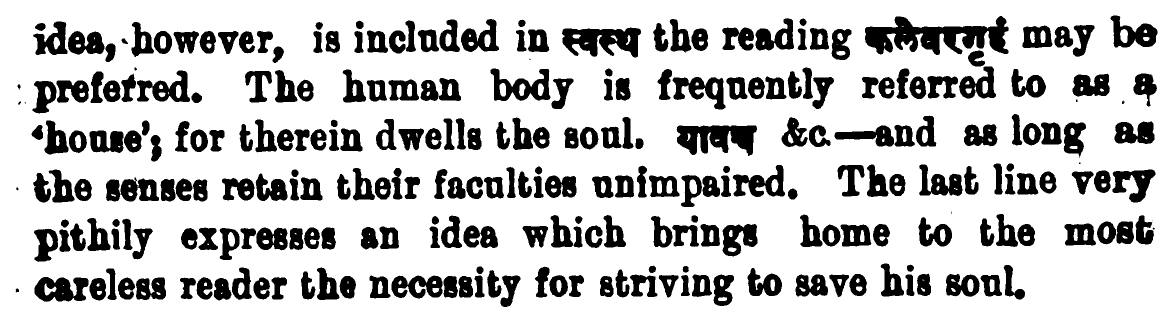
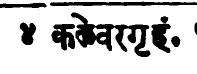
Sl. 76. स्वस्थ—at ease, lit. in its natural condition i. e. not enfeebled by diseases &c. अरुजं—free from disease; as this idea, however, is included in स्वस्थ the reading कलेवरगृहं may be preferred. The human body is frequently referred to as a ‘house’; for therein dwells the soul. यावच्च &c.—and as long as the senses retain their faculties unimpaired. The last line very pithily expresses an idea which brings home to the most careless reader the necessity for striving to save his soul.



Gopinath1914
all
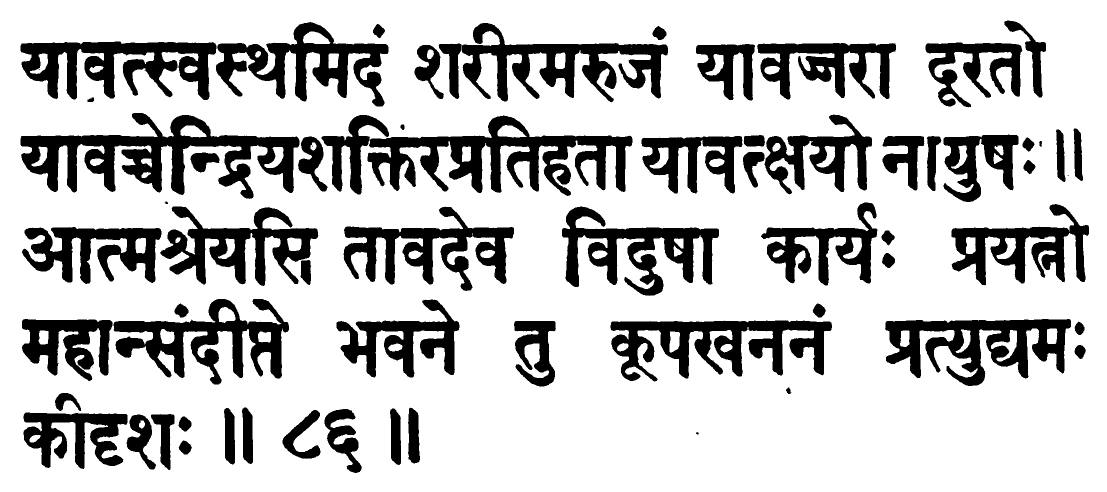
यावत्स्वस्थमिदं शरीरमरुजं यावज्जरा दूरतो
यावच्चेन्द्रियशक्तिरप्रतिहता यावत्क्षयो नायुषः ॥
आत्मश्रेयसि तावदेव विदुषा कार्यः प्रयत्नो
महान्संदीप्ते भवने तु कूपखननं प्रत्युद्यमः
कीदृशः ॥ ८६ ॥
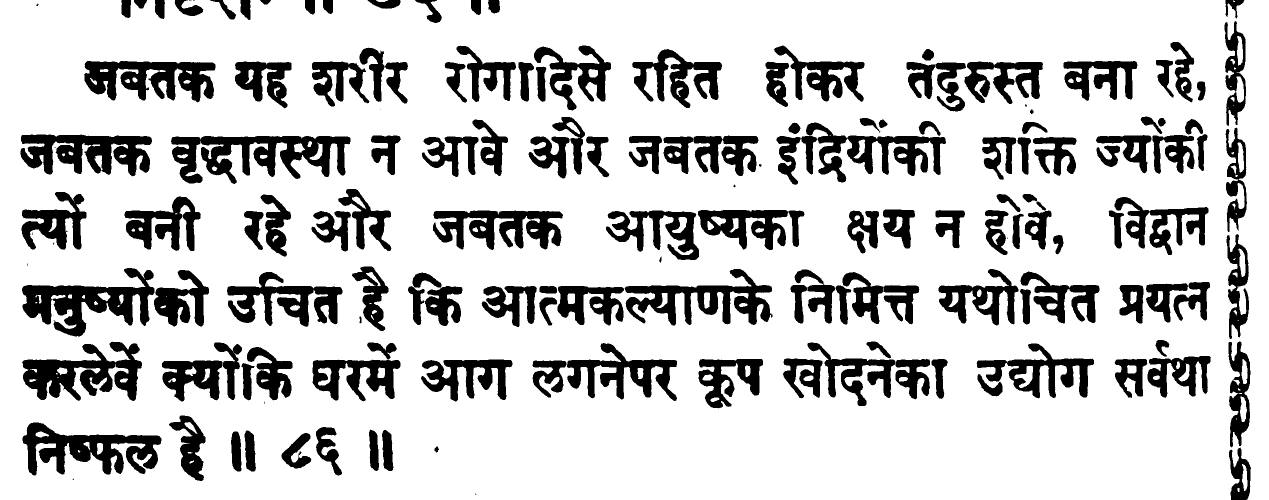
अबतक यह शरीर रोगादिसे रहित होकर तंदुरुस्त बना रहे, जबतक वृद्धावस्था न आवे और जबतक इंद्रियोंकी शक्ति ज्योंकी त्यों बनी रहे और जबतक आयुष्यका क्षय न होवे, विद्वान मनुष्योंको उचित है कि आत्मकल्याणके निमित्त यथोचित प्रयत्न करलेवें क्योंकि घरमें आग लगनेपर कूप खोदनेका उद्योग सर्वथा निष्फल है ॥ ८६ ॥
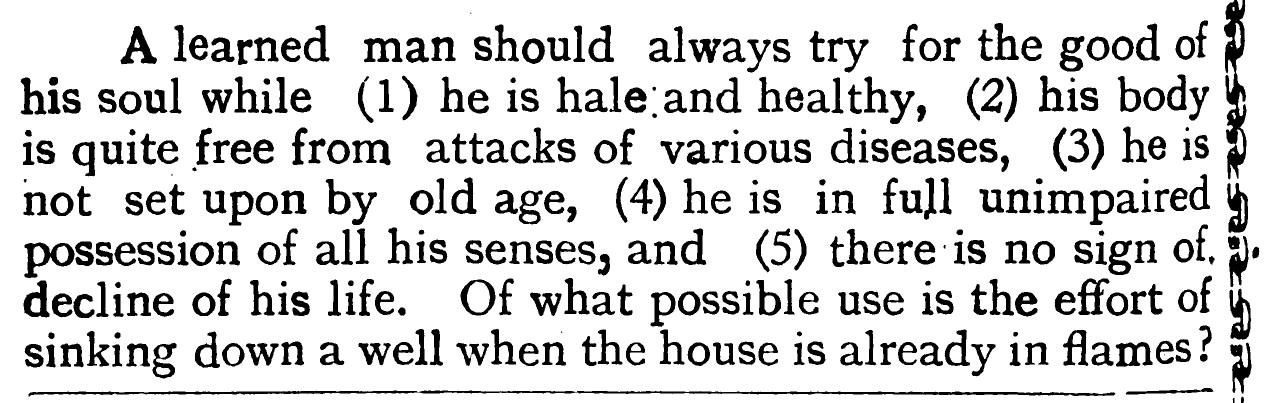
A learned man should always try for the good of his soul while (1) he is hale and healthy, (2) his body is quite free from attacks of various diseases, (3) he is not set upon by old age, (4) he is in full unimpaired possession of all his senses, and ( 5 ) there is no sign of, decline of his life. Of what possible use is the effort of sinking down a well when the house is already in flames?
Footnote
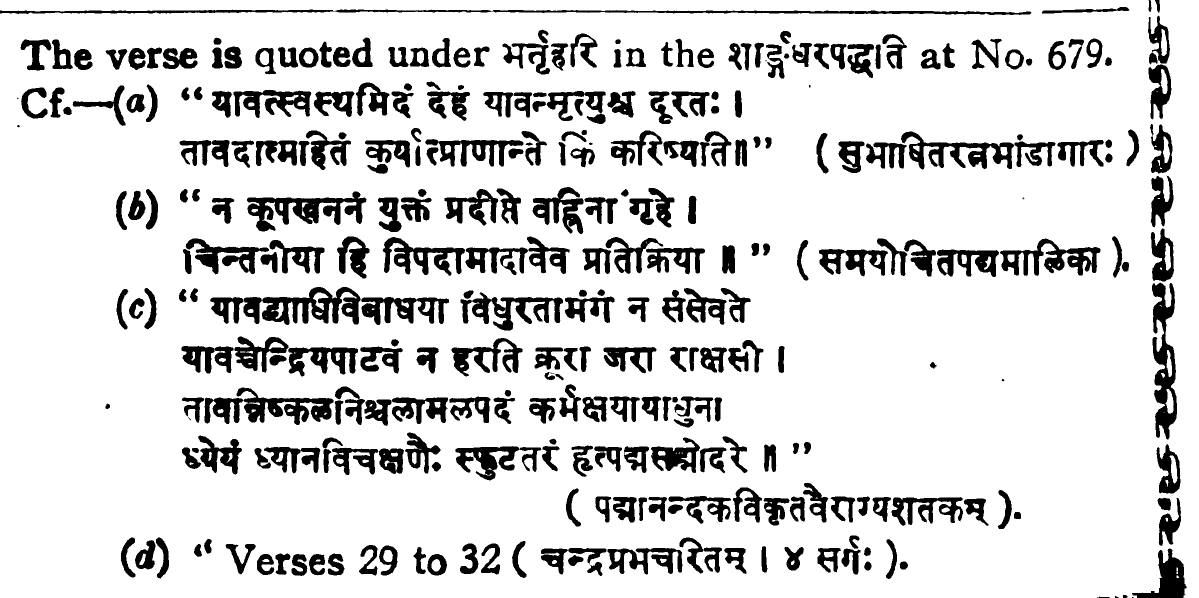
The verse is quoted under भर्तृहरि in the शार्ङ्गधरपद्धति at No. 679. Cf. (a) " यावत्स्वस्थमिदं देहं यावन्मृत्युश्च दूरतः । तावदात्महितं कुर्यात्प्राणान्ते किं करिष्यति ॥ " ( सुभाषितरत्नभांडागारः ) (b) " न कूपखननं युक्तं प्रदीप्ते वह्निना ं गृहे । चिन्तनीया हि विपदामादावेव प्रतिक्रिया ॥ " ( समयोचितपद्यमालिका ). (c) " यावद्व्याधिविबाधया विधुरतामंगं न संसेवते यावच्चेन्द्रियपाटवं न हरति क्रूरा जरा राक्षसी । तावन्निष्कळ निश्चलामलपदं कर्मक्षयायाधुना ध्यानविचक्षणैः स्फुटतरं हृत्पद्मसद्मोदरे ॥ " (पद्मानन्दकविकृत वैराग्यशतकम् ). : (d) " Verses 29 to 32 ( चन्द्रप्रभचरितम् । ४ सर्गः ).
Gopinath1896
all
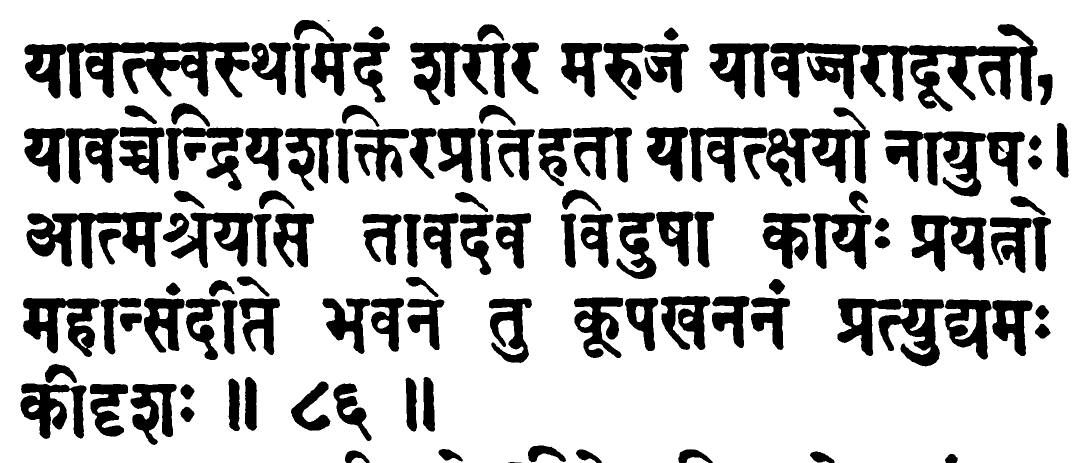
यावत्स्वस्थमिदं शरीर मरुजं यावज्जरादूरतो,
यावच्चेन्द्रियशक्तिरप्रतिहता यावत्क्षयो नायुषः।
आत्मश्रेयसि तावदेव विदुषा कार्यः प्रयत्नो
महान्संदीप्ते भवने तु कूपखननं प्रत्युद्यमः
कीदृशः ॥ ८६ ॥
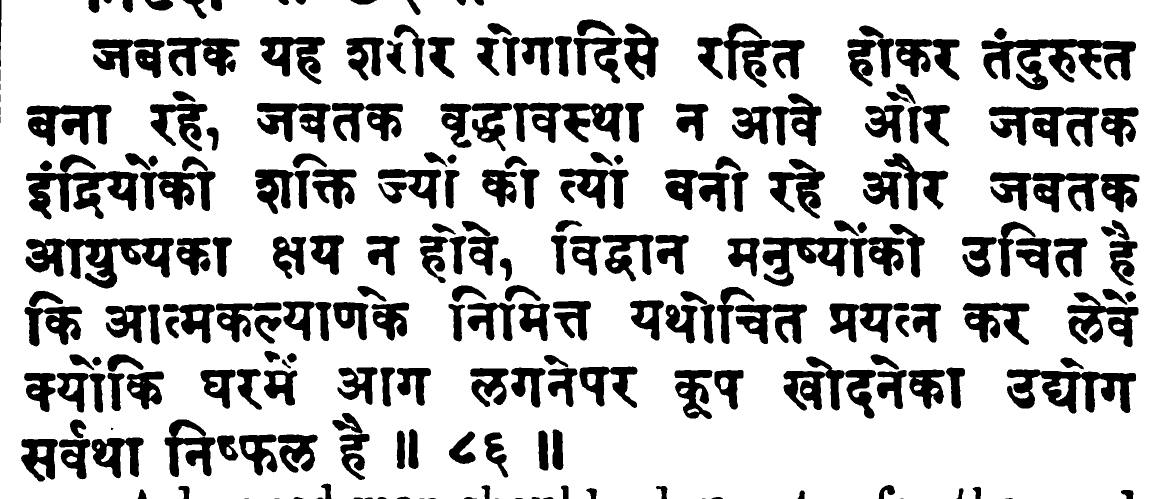
जबतक यह शरीर रोगादिसे रहित होकर तंदुरुस्त बना रहे, जबतक वृद्धावस्था न आवे और जबतक इंद्रियोंकी शक्ति ज्यों की त्यों बनी रहे और जबतक आयुष्यका क्षय न होवे, विद्वान मनुष्योंको उचित है कि आत्मकल्याणके निमित्त यथोचित प्रयत्न कर लेवें क्योंकि घरमें आग लगनेपर कूप खोदनेका उद्योग सर्वथा निष्फल है ॥ ८६ ॥
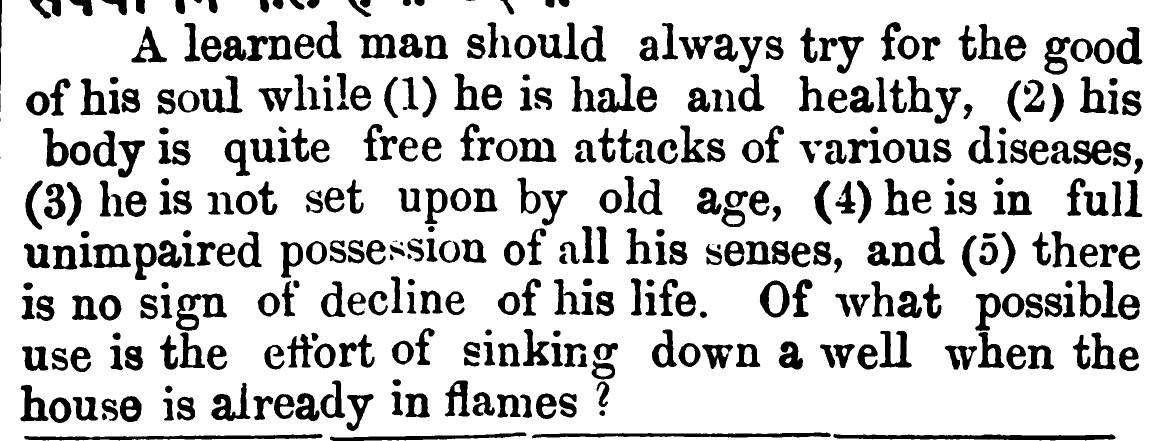
A learned man should always try for the good of his soul while (1) he is hale and healthy, ( 2 ) his body is quite free from attacks of various diseases, (3) he is not set upon by old age, (4) he is in full unimpaired possession of all his senses, and (5) there is no sign of decline of his life. Of what possible use is the effort of sinking down a well when the house is already in flames ?
Cf. (@) “ यावत्स्वस्थमिदं देहं यावन्मृत्युश्च दूरतः ।
तावदात्महितं कुर्यात्प्राणान्ते किं करिष्यति ॥ "


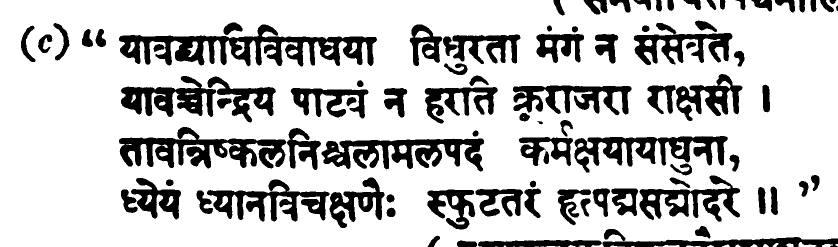
(c) " यावद्व्याधिविवाधया विधुरता मंगं न संसेवत,
यावश्चेन्द्रिय पाटवं न हरति कुराजरा राक्षसी ।
तावन्निष्कलनिश्चलामलपदं कर्मक्षयायाधुना,
ध्येयं ध्यानविचक्षणैः स्फुटतरं हृत्पद्मसद्मोदरे ॥ "


Kosambi
all

आत्मश्रेयसि तावदेव विदुषा कार्य : प्रयत्नो महान्
आदीप्ते भवने तु कूपखननं प्रत्युद्यमः कीदृशः ॥ १ ९ ४ ॥

Footnote
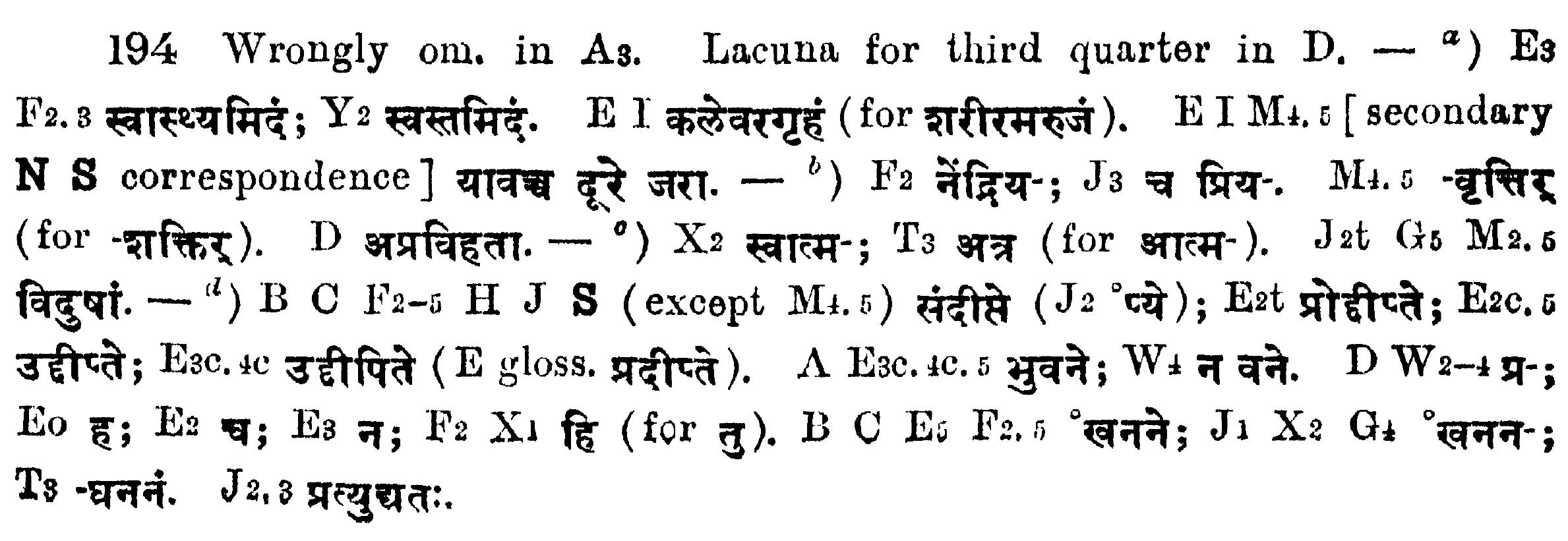
194 Wrongly om . in A3 . Lacuna for third quarter in D. — ª ) Es
F2.3 स्वास्थ्य मिर्द ; Y2 स्वस्तमिदं . EI कलेवरगृहं ( for शरीरमरुजं ) . E IM + 5 [ secondary
N S correspondence ] यावच्च दूरे जरा . - 4 ) F2 नेंद्रिय- ; J3 च प्रिय- . M1.5 -वृत्तिर्
( for -शक्तिर् ) . D अप्रविहता . ° ) X 2 स्वात्म ; T3 अत्र ( for आत्म - ) . J2t 5 M2.5
विदुषां - " ) B C F2-5 H J S ( except Ms. 5 6 ) संदीप्ते ( J2 प्ये ) ; Eat प्रोहीप्ते ; E2c . 5
उद्दीप्ते ; E3c . 20 उद्दीपिते ( Egloss . प्रदीप्ते ) . A E3c . 40. 5 भुवने ; W न वने . D W2- + प्र- ;
Eo ह ; मेर ग्व E3 नः F2 X 1 हि ( for तु ) . B C E F26 ° खनने ; J1 X 2 G + खनन- ;
Ts - घननं . J2.३ प्रत्युद्यतः .
Footnote
BIS . 5479 ( 2483 ) Bhartr ed . Bobl . 3.76 . Haeb . 73 lith ed . I. 75 , II . 81 .
Galan 69. Subhãsh . 128 Vikramacarita 218 ; Sp . 679 ( Bh . ) ; SRB . p . 178.1007 ;
SKM . 98. 40 ; SRK . p . 37. 2 ( Sphutaśloka ) ; SA . 15. 2 ; SS . 23. 20 ; SU . 1071 ;
SN . 38 ; SSD . 4. f . 28a ; SSV . 124 ; JSV . 13. 18 ,

Commentary