Ryder
SWEET AND BITTER
Sweet are the moonbeams, sweet the grass-grown wood,
Sweet is the peaceful converse of the good,
The poet's song is sweet, the maiden's face
When angry tear-drops lend a sudden grace:
All would be sweet if human fate were fitter;
The thought of death turns all the sweet to bitter.
Tawney
I love the moon's soft beams, I love the grassy wood,
I love to talk of verse among the wise and good,
I love the fair one's face gleaming with angry tears,
I think how fleeting all, and pleasure disappears.
Mādhavānanda
रम्याश्चन्द्रमरीचयस्तृणवती रम्या वनान्त:स्थली
रम्यं साधुसमागमागतसुखं काव्येषु रम्या: कथा: ।
कोपोपाहितबाष्पबिन्दुतरलं रम्यं प्रियाया मुखं
सर्वं रम्यमनित्यतामुपगते चित्ते न किञ्चित्पुन: ।।७९।।
79. Delightful are the rays of the moon, delightful the grassy plots in the outskirts of the forest, delightful are the pleasure of wise men’s society, delightful the narratives in poetical literature, and delightful the face of the beloved swimming in the tear-drops of (feigned) anger. Everything is charming, but nothing is so when the mind is possessed by the evanescence of things.
Telang
all
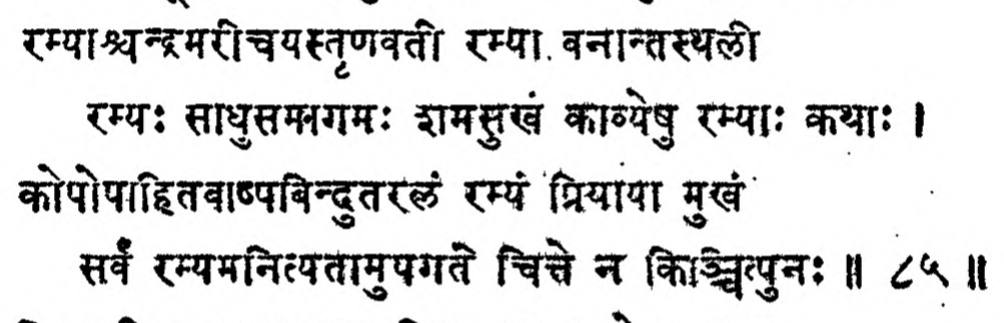
रम्याश्चन्द्रमरीचयस्तृणवती रम्या वनान्तस्थली
रम्यः साधुसमागमः शमसुखं काव्येषु रम्याः कथाः ।
कोपोपाहितबाष्पबिन्दुतरलं रम्यं प्रियाया मुखं
सर्वं रम्यमनित्यतामुपगते चित्ते न किञ्चित्पुनः ॥ ८५ ॥
Notes
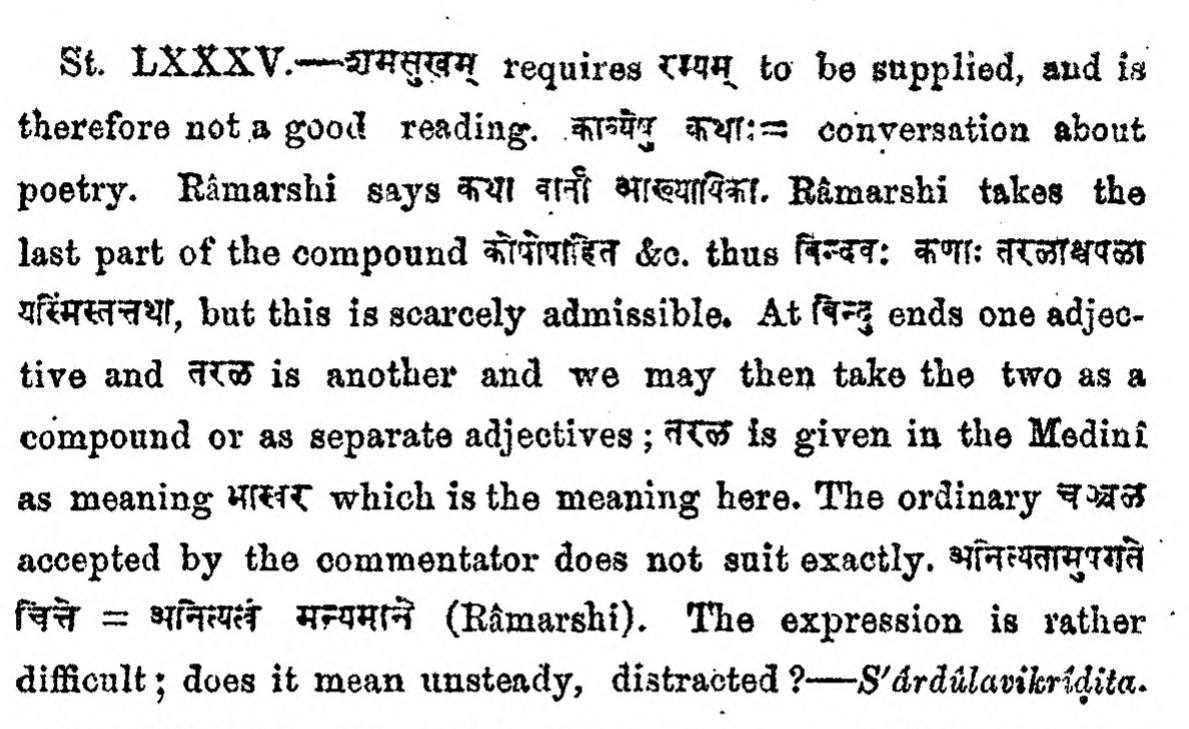
St. LXXXV.—शमसुखम् requires रम्यम् to be supplied, and is therefore not a good reading. काव्येषु कथाः= conversation about poetry. Râmarshi says कथा वार्त्ता आख्यायिका. Râmarshi takes the last part of the compound कोपोपहित &c. thus बिन्दवः कणाः तरलाश्चपला यस्मिंस्तत्तथा, but this is scarcely admissible. At बिन्दु ends one adjective and तरल is another and we may then take the two as a compound or as separate adjectives ; तरल is given in the Medinî as meaning भास्वर which is the meaning here. The ordinary चञ्चल accepted by the commentator does not suit exactly. अनित्यतामुपगते चित्ते = अनित्यत्वं मन्यमाने (Râmarshi). The expression is rather difficult ; does it mean unsteady, distracted ?—S'ârdûlavikrîḍita.

Kale
all
Introduction
अथ जाते नित्यानित्यवस्तुविवेके सर्वमैहिकं रम्यं वस्त्वनित्यत्वेनोपहतमरम्यं प्रतिभातीत्याह—

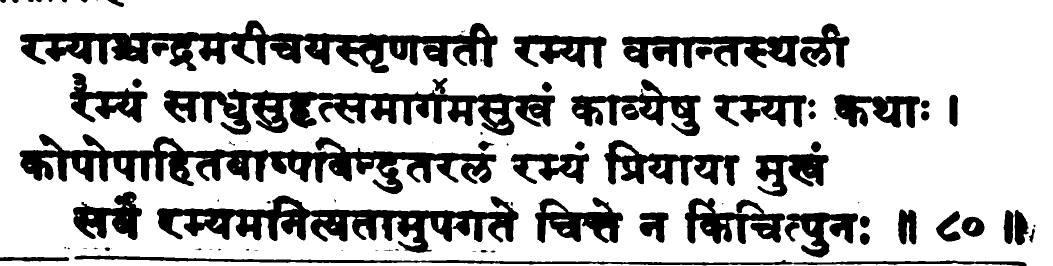
रम्याश्चन्द्रमरीचयस्तृणवती रम्या वनान्तस्थली
रम्यं साधुसुहृत्समागमसुखं काव्येषु रम्याः कथाः ।
कोपोपाहितबाष्पबिन्दुतरलं रम्यं प्रियाया मुखं
सर्वं रम्यमनित्यतामुपगते चित्ते न किंचित्पुनः ॥ ८० ॥
Translation
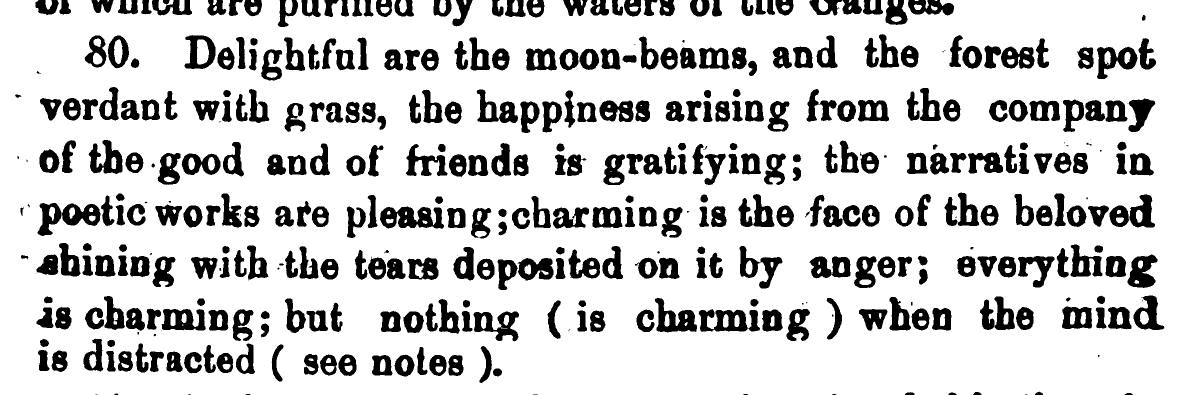
80. Delightful are the moon-beams, and the forest spot verdant with grass, the happiness arising from the company of the good and of friends is gratifying; the narratives in poetic works are pleasing; charming is the face of the beloved shining with the tears deposited on it by anger; everything is charming; but nothing ( is charming ) when the mind is distracted ( see notes ).
Notes
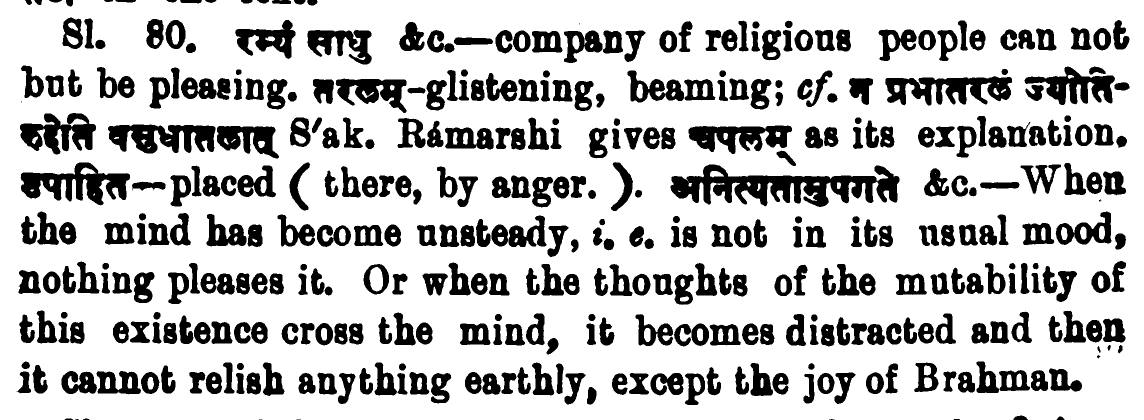
Sl. 80. रम्यं साधु &c.—company of religious people can not but be pleasing. तरलम्—glistening, beaming; cf. न प्रभातरलं ज्योतिरुदेति वसुधातलात् S'ak. Rámarshi gives चपलम् as its explanation. उपाहित—placed ( there, by anger. ). अनित्यतामुपगते &c.—When the mind has become unsteady, i. e. is not in its usual mood, nothing pleases it. Or when the thoughts of the mutability of this existence cross the mind, it becomes distracted and then it cannot relish anything earthly, except the joy of Brahman.


Gopinath1914
all
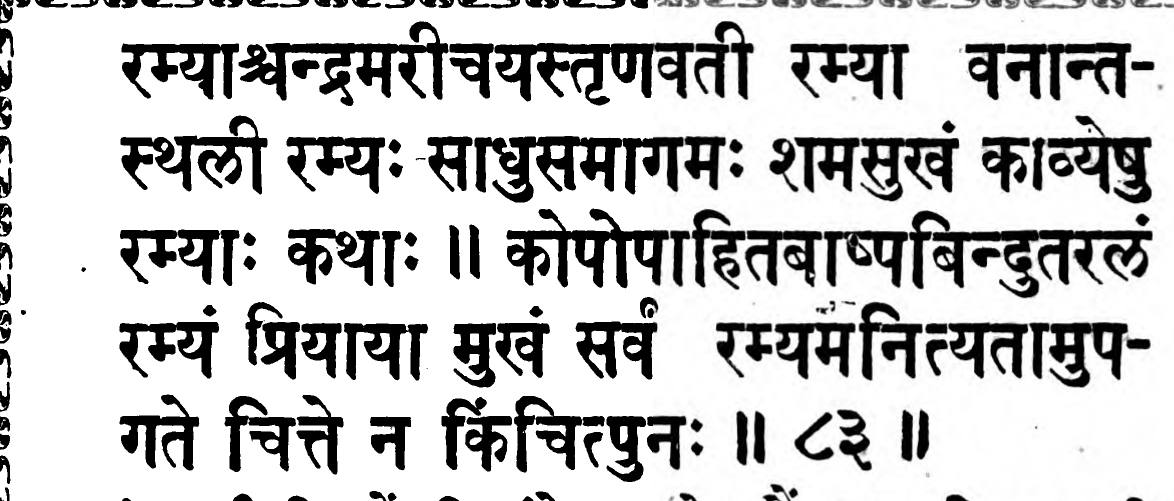
रम्याश्चन्द्रमरीचयस्तृणवती रम्या वनान्त-
स्थली रम्यः साधुसमागमः शमसुखं काव्येषु
रम्याः कथाः ॥ कोपोपाहितबाष्पबिन्दुतरलं
रम्यं प्रियाया मुखं सर्वं रम्यमनित्यतामुप-
गते चित्ते न किंचित्पुनः ॥ ८३ ॥
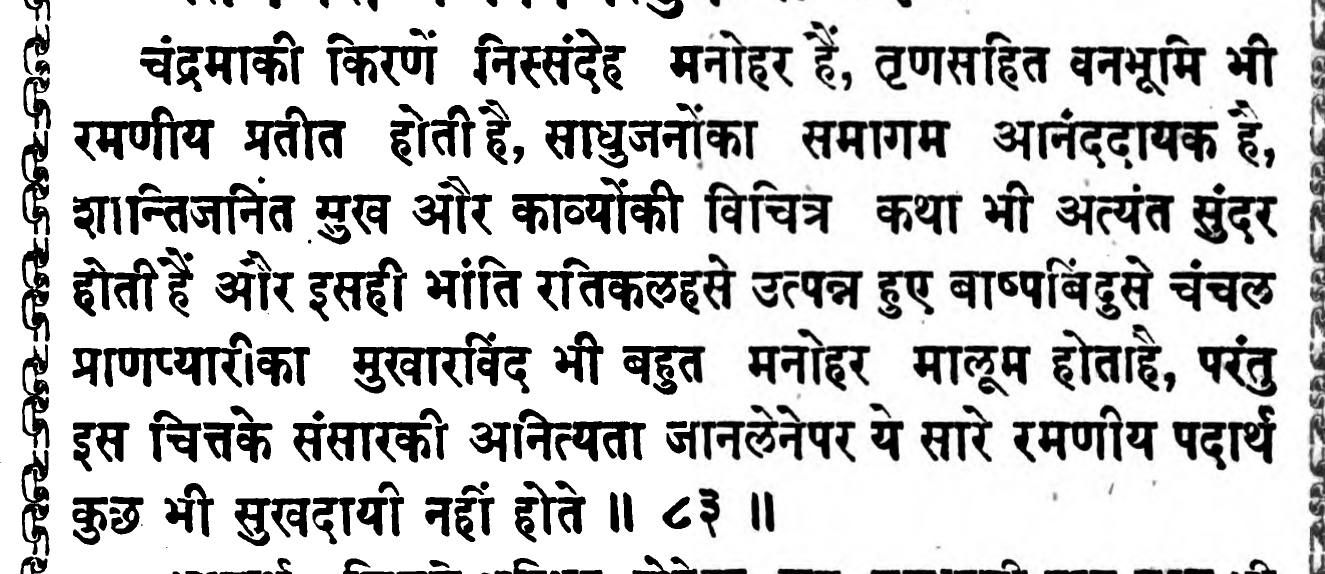
चंद्रमा की किरणें निस्संदेह मनोहर हैं, तृणसहित वनभूमि भी रमणीय प्रतीत होती है, साधुजनों का समागम आनंददायक है, शान्तिजनित सुख और काव्योंकी विचित्र कथा भी अत्यंत सुंदर होती हैं और इसही भांति रतिकलहसे उत्पन्न हुए बाष्पबिंदुसे चंचल प्राणप्यारीका मुखारविंद भी बहुत मनोहर मालूम होता है, परंतु इस चित्तके संसारकी अनित्यता जानलेनेपर ये सारे रमणीय पदार्थ कुछ भी सुखदायी नहीं होते ॥ ८३ ॥
भावार्थ -- चित्तके अस्थिर होनेपर सब प्रकारकी रम्य वस्तु भी अरम्यही प्रतीत होती है इसलिए येनकेन उपायसे चित्तवृत्तिका स्थिर करनाही सर्वथा मुख्य है ॥

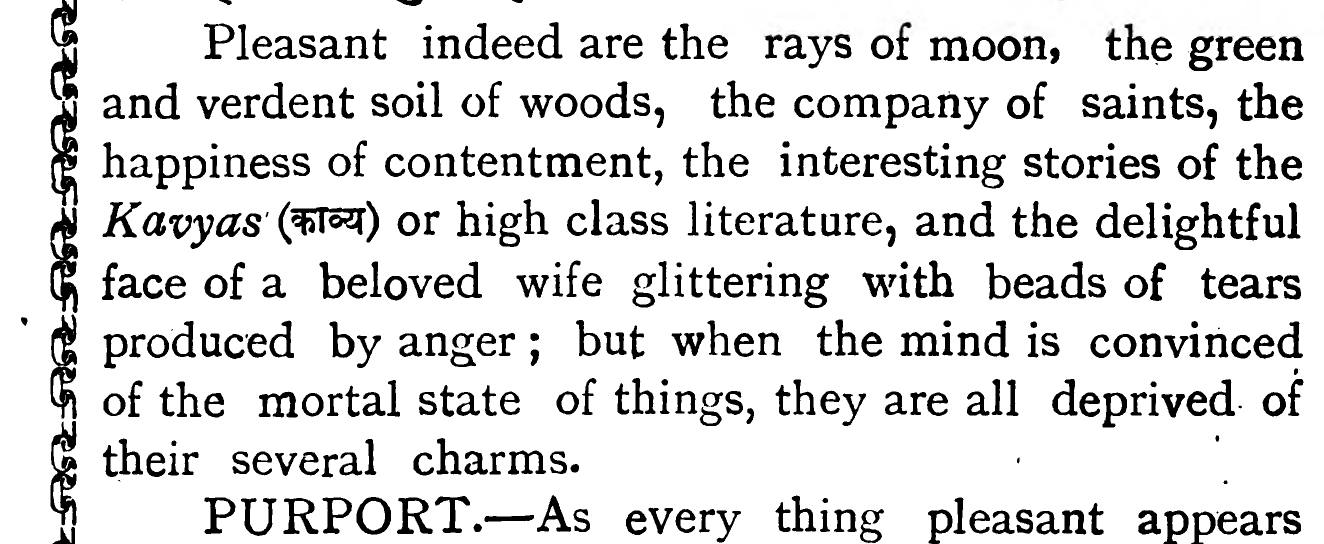
Pleasant indeed are the rays of moon, the green and verdent soil of woods, the company of saints, the happiness of contentment, the interesting stories of the Kavyas (काव्य) or high class literature, and the delightful face of a beloved wife glittering with beads of tears produced by anger; but when the mind is convinced of the mortal state of things, they are all deprived of their several charms.
Gopinath1896
all
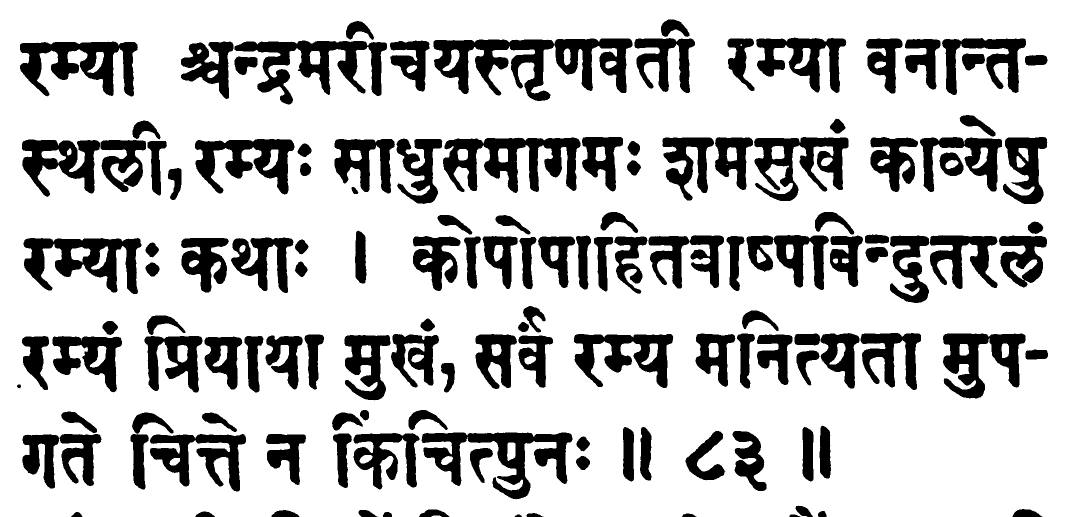
रम्या चन्द्रमरीचयस्तृणवती रम्या वनान्त-
स्थली, रम्यः साधुसमागमः शमसुखं काव्येषु
रम्याः कथाः । कोपोपाहितवाष्पविन्दुतरलं
रम्यं प्रियाया मुखं, सर्व रम्य मनित्यता मुप-
गते चित्ते न किंचित्पुनः ॥ ८३ ॥
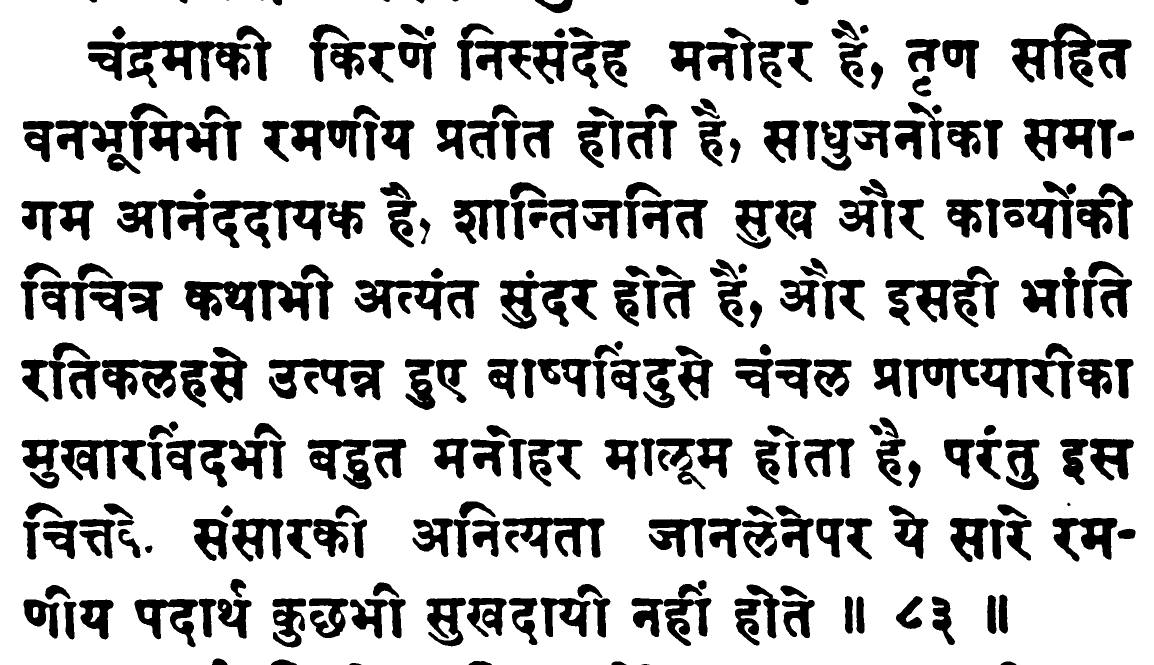
चंद्रमा की किरणें निस्संदेह मनोहर हैं, तृण सहित वनभूमिभी रमणीय प्रतीत होती है, साधुजनोंका समागम आनंददायक है, शान्तिजनित सुख और काव्योंकी विचित्र कथाभी अत्यंत सुंदर होते हैं, और इसही भांति रतिकलह से उत्पन्न हुए बाष्पबिंदु से चंचल प्राणप्यारीका मुखारविंदभी बहुत मनोहर मालूम होता है, परंतु इस चित्त. संसारकी अनित्यता जानलेनेपर ये सारे रमणीय पदार्थ कुछभी सुखदायी नहीं होते ॥ ८३ ॥
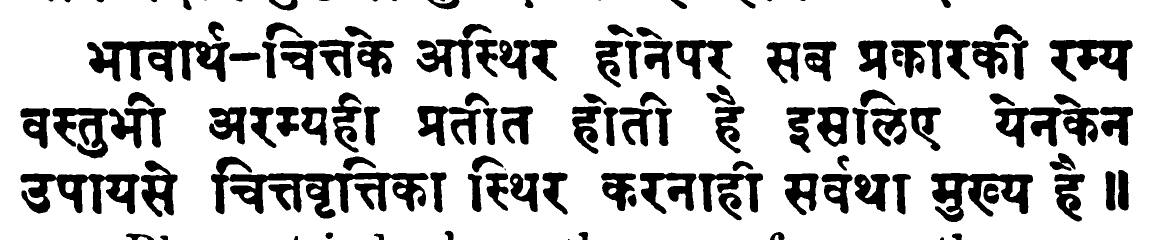
भावार्थ - चित्तके अस्थिर होनेपर सब प्रकारकी रम्य वस्तुभी अरम्यही प्रतीत होती है इसलिए येनकेन उपाय से चित्तवृत्तिका स्थिर करनाही सर्वथा मुख्य है ॥
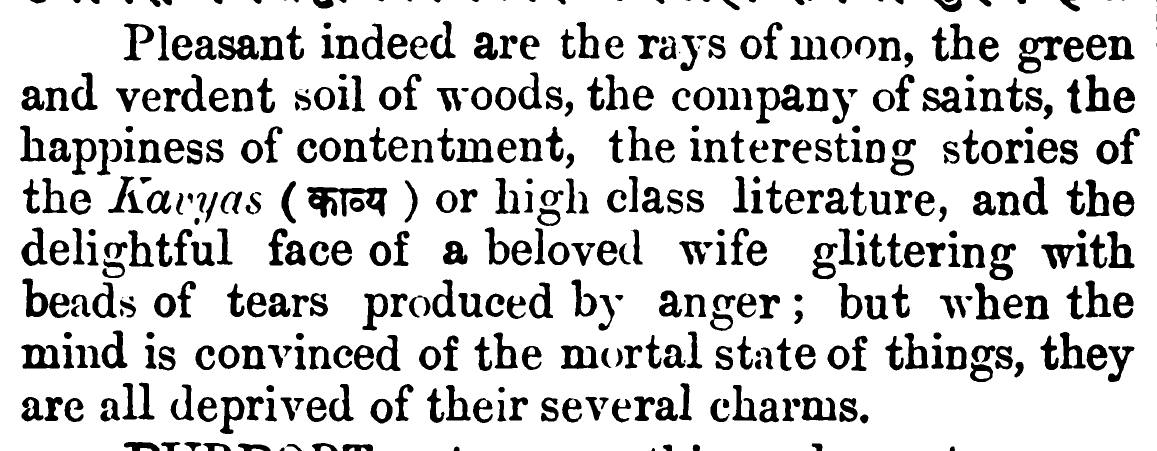
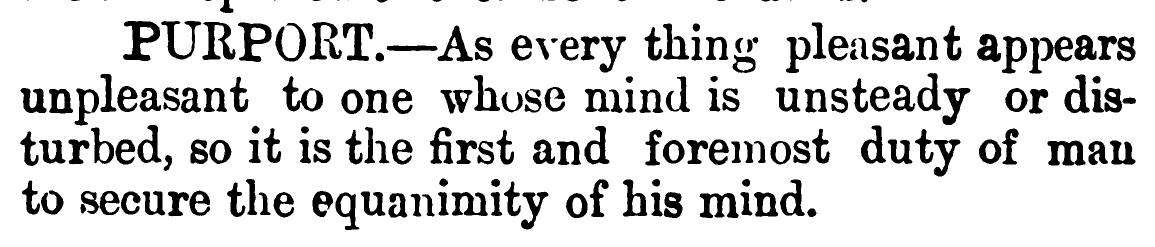
Pleasant indeed are the rays of moon, the green and verdent soil of woods, the company of saints, the happiness of contentment, the interesting stories of the Karyas ( काव्य ) or high class literature, and the delightful face of a beloved wife glittering with beads of tears produced by anger; but when the mind is convinced of the mortal state of things, they are all deprived of their several charms.
Kosambi
all
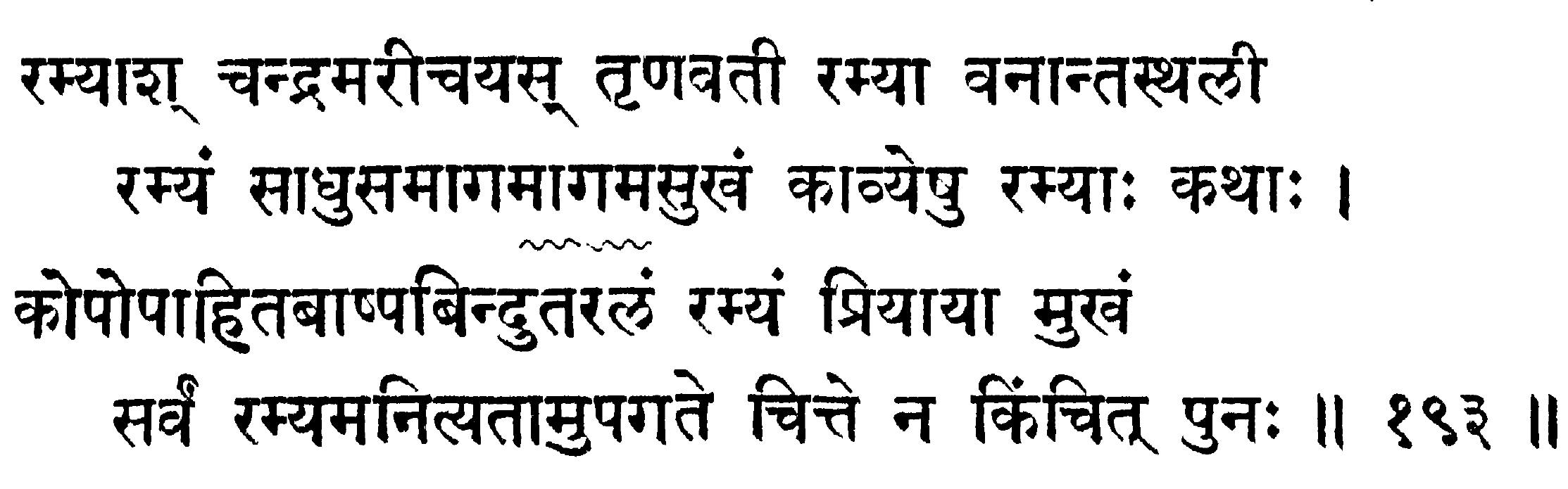
रम्याश् चन्द्रमरीचयस् तृणवती रम्या वनान्तस्थली
रम्यं साधुसमागमागमसुखं काव्येषु रम्याः कथाः ।
कोपोपाहितबाष्पबिन्दुतरलं रम्यं प्रियाया मुखं
सर्वं रम्यमनित्यतामुपगते चित्ते न किंचित् पुनः ॥ १ ९ ३ ॥
Footnote
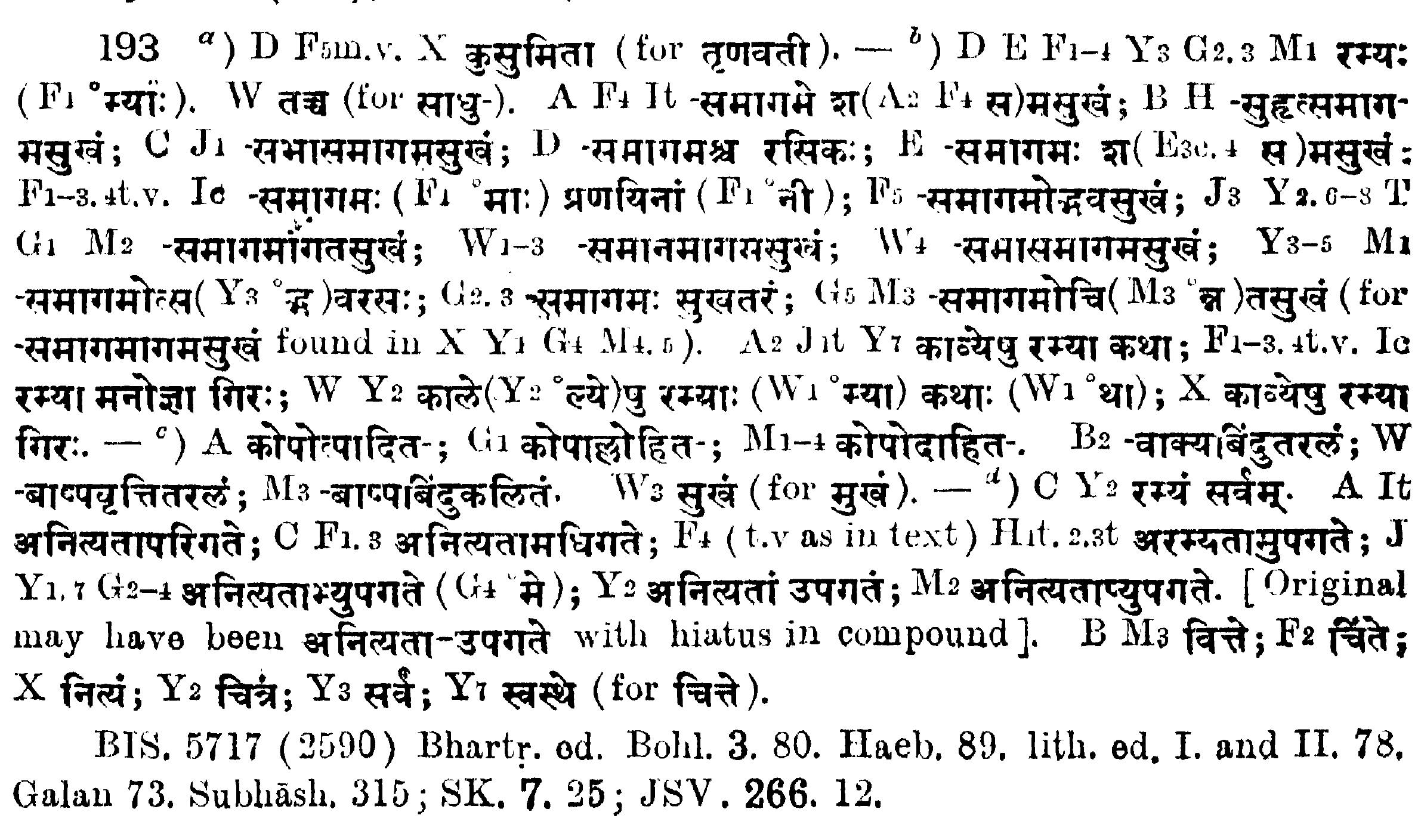
193 ) a DFsm.v. X कुसुमिता ( for तृणवती ) . 4 ) D E F1−1 Y3 G2.3 M1 रम्यः
( F1 ° म्यां :) . W तच्च ( for साधु- ) . AF + It -समागमे श ( A : F + स ) मसुखं ; BH -सुहृत्समाग
मसुखं ; CJI सभासमागमसुखं ; D समागमश्च रसिकः ; समागमः श ( E30 . + स ) मसुखं :
F1-8.4t.v . Ie - समागमः ( 1 माः ) प्रणयिनां ( F1 नी ) ; 5 - समागमोद्भवसुखं ; J3 Y 2. 0 – 3 T
( Ga Ma समागमांगतसुखं ; W1-3 समानमागमसुखं ; समासमागमसुखं ; Y3 - 6 M1
समागमोत्स ( Y3 ° द्भ ) वरसः ; G 3 समागमः सुखतरं ; ( ( 5 M3 समागमोचि ( M3 ° न्न ) तसुखं ( for
-समागमागमसुखं found in X Y1 Gt Mt6 ) . A2 Jht Yr काव्येषु रम्या कथा ; Fi - 3 + tv . Ie
रम्या मनोज्ञा गिरः ; W X 2 काले ( Y : ° ल्ये ) पु रम्याः ( W1 ° म्या ) कथा : ( W1 ° था ) ; X काव्येषु रम्या
गिर – " ) A कोपोत्पादित ; ( 1 कोपालो हित- ; M1-1 कोपोदाहित - . B : वाक्य बेंदुतरलं ; W
- बाष्पवृत्तितरलं ; M3 - बाप्पबिंदुकलितं . W 3 सुखं ( for मुखं ) . – “ 4 ) ) CY2 C रम्यं सर्वम् A A It
अनित्यतापरिगते ; C F1 . 3 अनित्यतामधिगते ; ‡ ( t.v as in text ) Hit . 2.st अरम्यतामुपगते ; J
X1 , 7 G2 - अनित्यताभ्युपगते ( G + मे ) ; X 2 अनित्यतां उपगतं ; M2 अनित्यताप्युपगते . [ Original
may have been अनित्यता - उपगते with hiatus in compound ] . B M3 वित्ते ; F2 चिंते ;
X नित्यं ; Y2 चित्र ; Y 3 सर्व ; X7 स्वस्थे ( for चित्ते ) .
BIS . 5717 ( 2590 ) Bhartr . od . Boil . 3. 80. Haeb 89. lith ed . I. and II . 78 .
Galan 73. Subhāsh 315 ; SK 7. 25 ; JSV . 266.12 .
Commentary