Ryder
THE ONE THING NEEDFUL
Why should I study scripture, sacred lore,
Or any good, big book? Why get a store
Of pious actions, anxiously performed—
And win a humble tent in heaven, no more?
The knowledge of myself is all I need
To give me lasting joy, to burn the seed
Of the interminable pain of life—
Let pious peddlers show their wares and plead.
Tawney
What profit are the Vedas,
Or books of legal lore,
Or those long-winded legends.
Repeated o'er and o'er?
What gain we by our merits?
A dwelling in the skies—
A miserable mansion,
That men of sense despise—
All these are huckstering methods, —
Give me that perfect way
Of self-contained fruition,
Where pain is done away.
Mādhavānanda
किं वेदै: स्मृतिभि: पुराणपठनै: शास्त्रैर्महाविस्तरै:
स्वर्गग्रामकुटीनिवासफलदै: कर्मक्रियाविभ्रमै: ।
मुक्त्वैकं भवदु:खभाररचनाविध्वंसकालानलं
स्वात्मानन्दपदप्रवेशकलनं शेषैर्वणिग्वृत्तिभि: ।।७१।।
71. What are worth the Vedas, the Smṛtis, the readings from the Purānas, the vast śāstras, or the mazes of ceremonials, which give us, as their fruits, a resting-place in heaven, (which is, as it were,) a village (interspersed) with huts! All else is but the bargaining of traders except that one way which admits one into the state of supreme bliss in one’s Self, and which is like the (final) destructive fire to consume the evolving mass of worldly miseries.
[The śāstras, by which are meant here logic, grammar, etc., and the six systems of philosophy, are said to be vast because of the amplitude of comment, illustration, and argument with which their doctrines have been developed.]
Telang
all
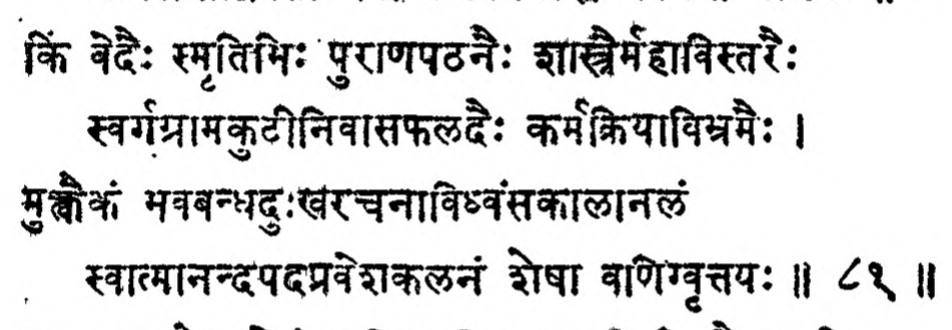
किं वेदैः स्मृतिभिः पुराणपठनैः शास्त्रैर्महाविस्तरैः
स्वर्गग्रामकुटीनिवासफलदैः कर्मक्रियाविभ्रमैः ।
मुक्तैकं भवबन्धदुःखरचनाविध्वंसकालानलं
स्वात्मानन्दपदप्रवेशकलंनं शेषा वणिग्वृत्तयः ॥ ८१ ॥
Notes
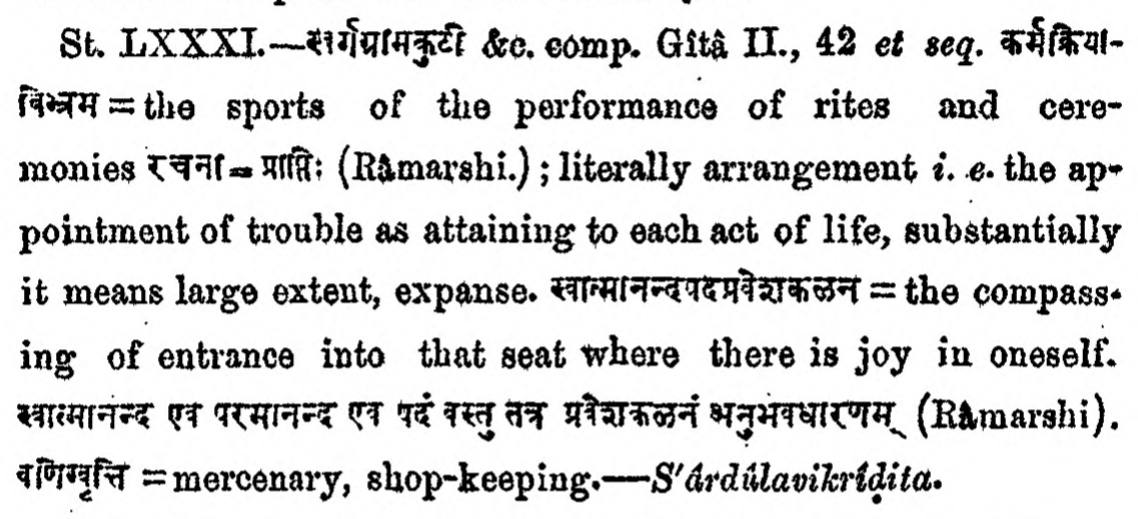
St. LXXXI.—सर्गग्रामकुटी &c. comp. Gîtâ II., 42 et seq. कर्मक्रियाविभ्रम = the sports of the performance of rites and ceremonies रचना = प्राप्तिः (Râmarshi.); literally arrangement i. e. the appointment of trouble as attaining to each act of life, substantially it means large extent, expanse. स्वात्मानन्दपदप्रवेशकलन = the compassing of entrance into that seat where there is joy in oneself. स्वात्मानन्द एव परमानन्द एव पदं वस्तु तत्र प्रवेशकळनं अनुभवधारणम् (Râmarshi). वणिग्वृत्ति = mercenary, shop-keeping.—S'ârdûlavikrîḍita.

Kale
all
Introduction
अथ केवलं वेदपठनस्मृतिपर्यालोचनशास्त्राध्ययनादिभिर्न कोपि लाभः । ब्रह्मप्राप्तिसाधनविचार एव श्रेयानित्याह--

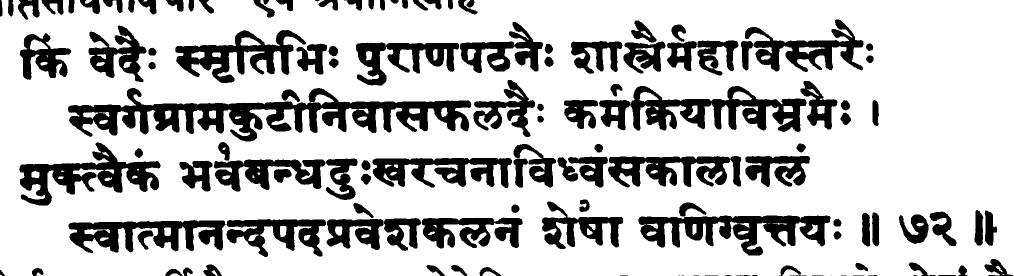
किं वेदैः स्मृतिभिः पुराणपठनैः शास्त्रैर्महाविस्तरैः
स्वर्गग्रामकुटीनिवासफलदैः कर्मक्रियाविभ्रमैः ।
मुक्त्वैकं भवबन्धदुःखरचनाविध्वंसकालानलं
स्वात्मानन्दपदप्रवेशकलनं शेषा वणिग्वृत्तयः ॥ ७२ ॥
Translation
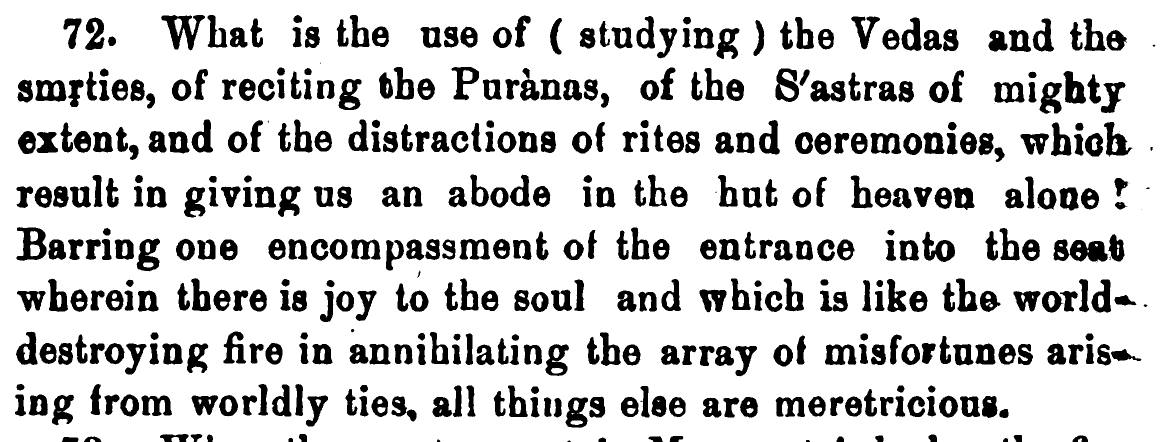
72. What is the use of ( studying ) the Vedas and the smṛties, of reciting the Purànas, of the S'astras of mighty extent, and of the distractions of rites and ceremonies, which result in giving us an abode in the hut of heaven alone ? Barring one encompassment of the entrance into the seat wherein there is joy to the soul and which is like the worlddestroying fire in annihilating the array of misfortunes arising from worldly ties, all things else are meretricious.
Notes
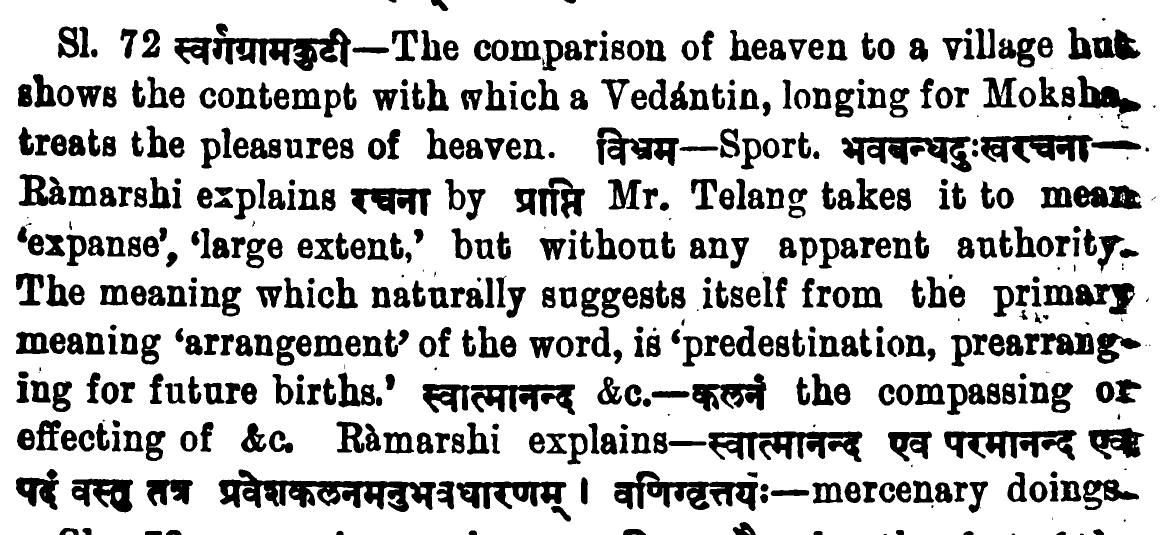
Sl. 72 स्वर्गग्रामकुटी—The comparison of heaven to a village hut shows the contempt with which a Vedántin, longing for Moksha, treats the pleasures of heaven. विभ्रम—Sport. भवबन्धदुःखरचना— Ràmarshi explains रचना by प्राप्ति Mr. Telang takes it to mean ‘expanse’, ‘large extent,’ but without any apparent authority. The meaning which naturally suggests itself from the primary meaning ‘arrangement’ of the word, is ‘predestination, prearranging for future births.’ स्वात्मानन्द &c.—कलनं the compassing or effecting of &c. Ràmarshi explains—स्वात्मानन्द एव परमानन्द एकं पदं वस्तु तत्र प्रवेशकलनमननुभवधारणम् । वणिग्वृत्तयः—mercenary doings.


Gopinath1914
all
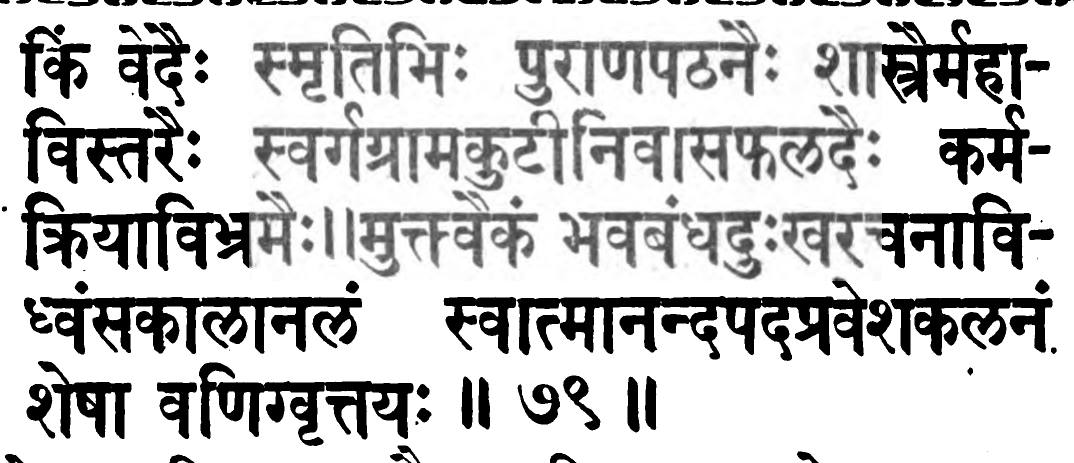
किं वेदैः स्मृतिभिः पुराणपठनैः
विस्तरैः स्वर्गग्रामकुटीनिवासफलदैः शास्त्रैर्महा- कर्म-
क्रियाविभ्रमैः। मुक्त्वैकं भवबंधदुःखरचनावि-
ध्वंसकालानलं स्वात्मानन्दपदप्रवेशकलनं.
शेषा वणिग्वृत्तयः ॥ ७९ ॥
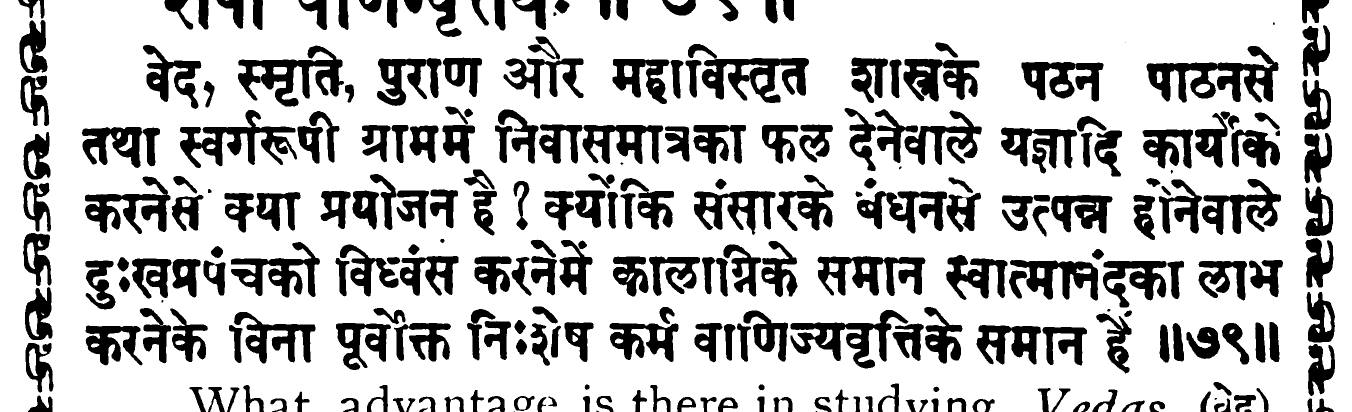
वेद, स्मृति, पुराण और महाविस्तृत शास्त्रके पठन पाठनसे : तथा स्वर्गरूपी ग्राम में निवासमात्रका फल देनेवाले यज्ञादि कार्यों के करने से क्या प्रयोजन है ? क्योंकि संसारके बंधन से उत्पन्न होनेवाले दुःखप्रपंचको विध्वंस करने में कालाग्निके समान स्वात्मानंदका लाभ करनेके विना पूर्वोक्त निःशेष कर्म वाणिज्यवृत्तिके समान हैं ॥७९॥
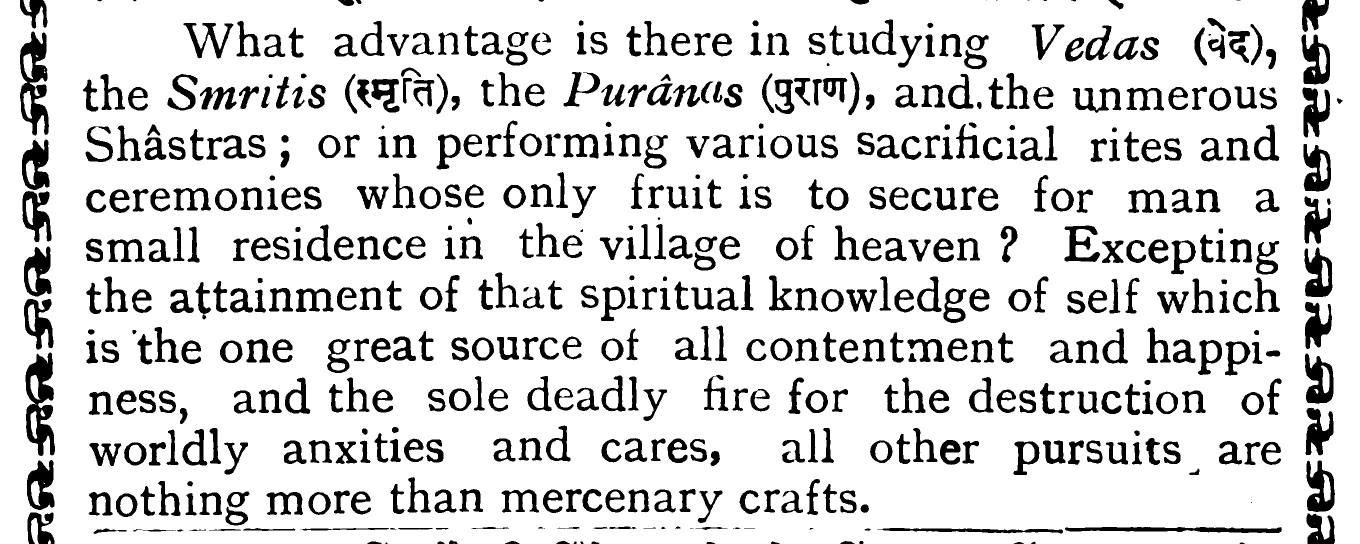
What advantage is there in studying Vedas (a), the Smritis (स्मृति), the Puranas (पुराण), and the unmerous Shâstrasceremonies ; or whose in performing only fruit various is to sacrificial secure for rites man and a small residence in the village of heaven? Excepting the attainment of that spiritual knowledge of self which is the one great source of all contentment and happiness, and the sole deadly fire for the destruction of worldly anxities and cares, all other pursuits are nothing more than mercenary crafts.
Footnote
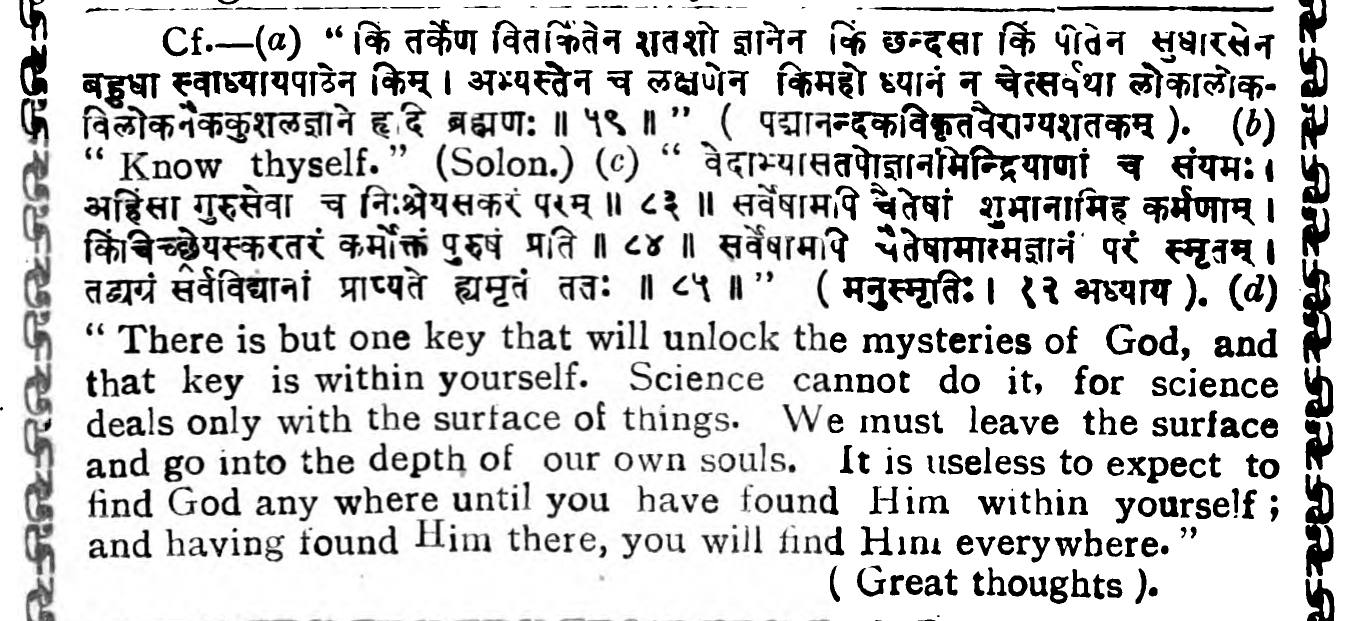
Cf. (a ) " किं तर्केण वितर्कितेन शतशो ज्ञानेन किं छन्दसा किं पोतेन सुधारसेन बहुधा स्वाध्यायपाठेन किम् । अभ्यस्तेन च लक्षणेन किमहो ध्यानं न चेत्सर्वथा लोकालोकविलोकनककुशलज्ञाने हृदि ब्रह्मणः ॥ ५९ ॥ " ( पद्मानन्दकविकृत वैराग्यशतकम्). (b) " “ Know thyself." (Solon.) (c) " वेदाभ्यासत पोज्ञानमिन्द्रियाणां च संयमः । अहिंसा गुरुसेवा च निःश्रेयसकरं परम् ॥ ८३ ॥ सर्वेषामपि चैतेषां शुभानामिह कर्मणाम् किंचिच्छेयस्करतरं कर्मोक्तं पुरुषं प्रति ॥ ८४ ॥ सर्वेषामपि चैतेषामात्मज्ञानं परं स्मृतम् । तद्व्यग्रं सर्वविद्यानां प्राप्यते ह्यमृतं ततः ॥ ८५ ॥ " ( मनुस्मृतिः । १२ अध्याय ). (d) " There is but one key that will unlock the mysteries of God, and that key is within yourself. Science cannot do it, for science deals only with the surface of things. We must leave the surface and go into the depth of our own souls. It is useless to expect to find God any where until you have found Him within yourself; and having found Him there, you will find Hin everywhere. " (Great thoughts ).
Gopinath1896
all
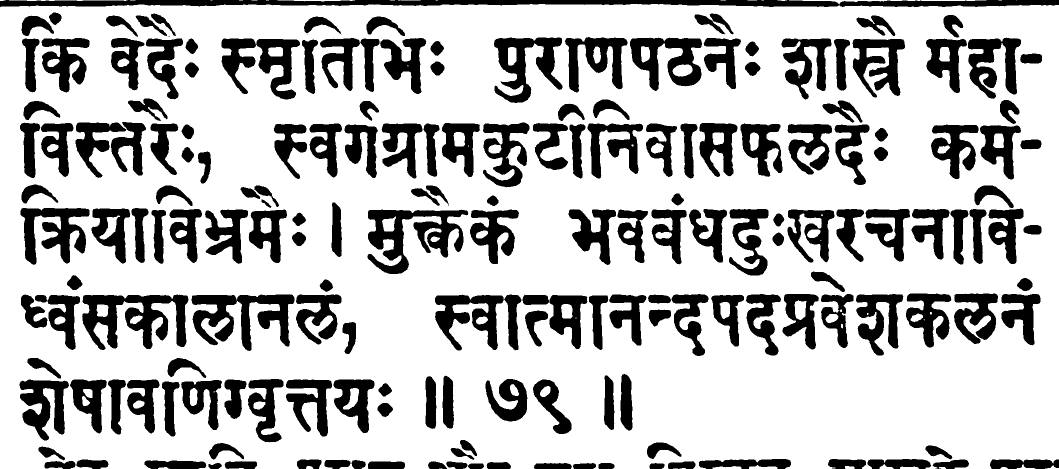
किं वेदैः स्मृतिभिः पुराणपठनैः शास्त्र महा-
विस्तरैः, स्वर्गग्रामकुटीनिवासफलदैः कर्म-
क्रियाविभ्रमैः । मुक्कैकं भवबंधदुःखरचनावि-
ध्वंसकालानलं, स्वात्मानन्दपदप्रवेश कलनं
शेषावणिग्वृत्तयः ॥ ७९ ॥
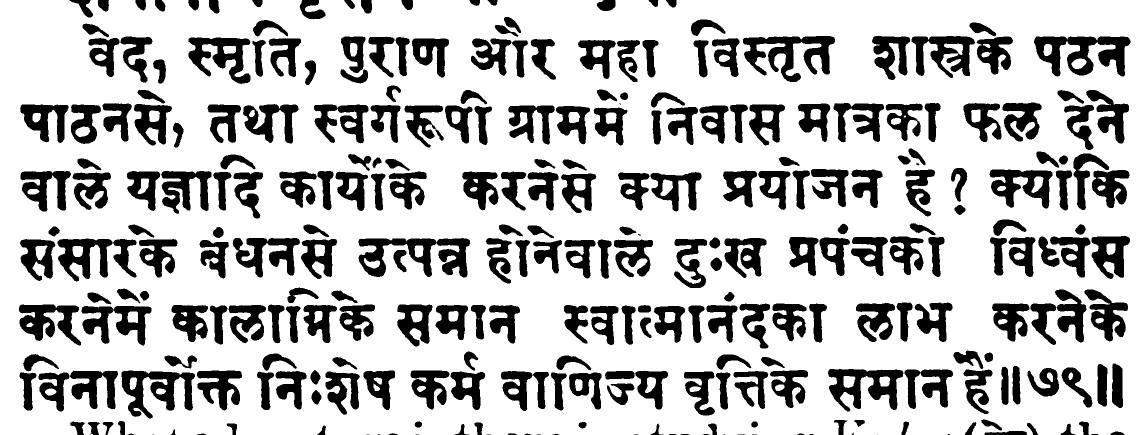
वेद, स्मृति, पुराण और महा विस्तृत शास्त्र के पठन पाठनसे, तथा स्वर्गरूपी ग्राम में निवास मात्रका फल देने वाले यज्ञादि कार्यों के करनेसे क्या प्रयोजन है ? क्योंकि संसारके बंधन से उत्पन्न होनेवाले दुःख प्रपंचको विध्वंस करनेमें कालामिके समान स्वात्मानंदका लाभ करनेके विनापूर्वोक्त निःशेष कर्म वाणिज्य वृत्तिके समान हैं ॥ ७९ ॥
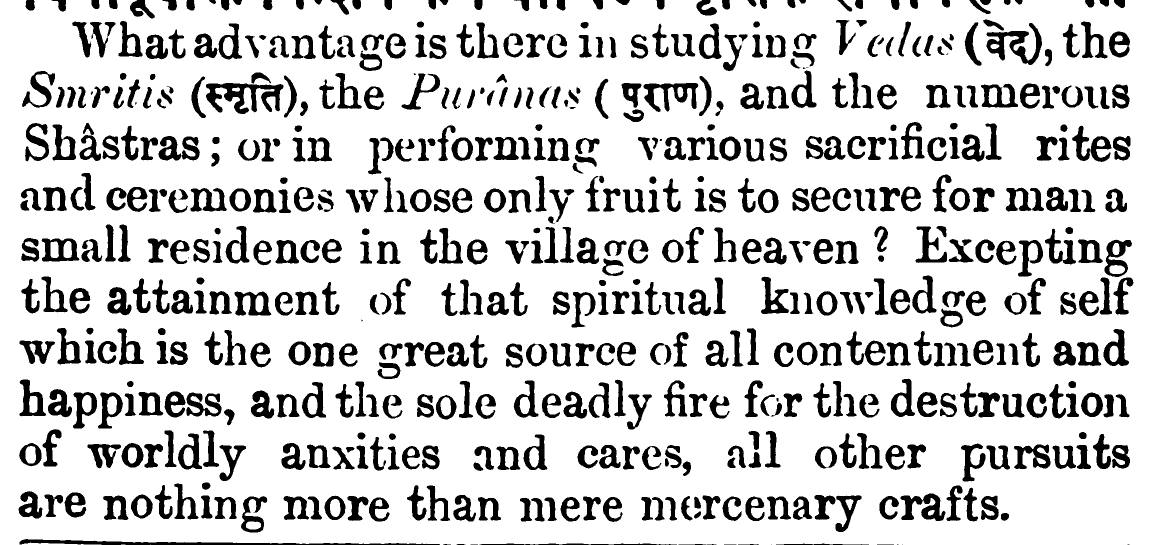
What advantage is there in studying Vedas (वेद), the Smritis (स्मृति), the Puranas (पुराण), and the numerous Shâstras; or in performing various sacrificial rites and ceremonies whose only fruit is to secure for man a small residence in the village of heaven? Excepting the attainment of that spiritual knowledge of self which is the one great source of all contentment and happiness, and the sole deadly fire for the destruction of worldly anxities and cares, all other pursuits are nothing more than mere mercenary crafts.
Footnote
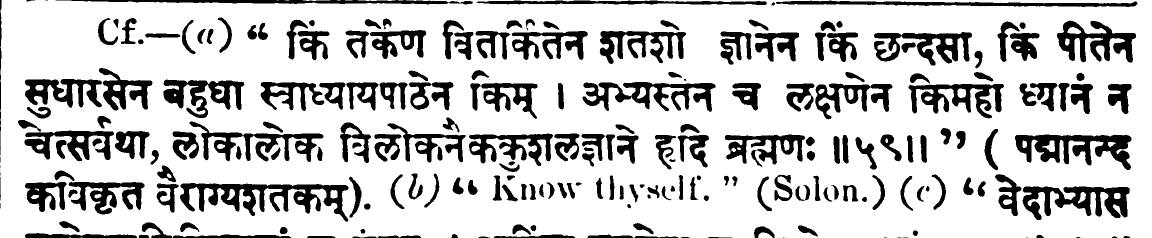
Cf. (1) 66 “ किं तर्केण वितर्कितेन शतशो ज्ञानेन किं छन्दसा, किं पीतेन सुधार सेन बहुधा स्वाध्यायपाठेन किम् । अभ्यस्तेन च लक्षणेन किमहो ध्यानं न चेत्सर्वथा, लोकालोक विलोकनैककुशलज्ञाने हृदि ब्रह्मणः ॥ ५९ ॥ ” ( पद्मानन्द कविकृत वैराग्यशतकम्). (c) " वेदाभ्यास

Footnote
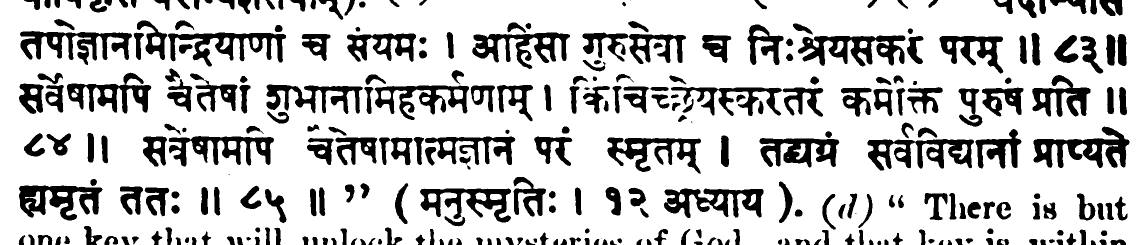
तपोज्ञानमिन्द्रियाणां च संयमः । अहिंसा गुरुसेवा च निःश्रेयसकरं परम् ॥ ८३ ॥ सर्वेषामपि चैतेषां शुभानामिहकर्मणाम् । किंचिच्छ्रेयस्करतरं कमेक्ति पुरुषं प्रति ॥ ८४ ॥ सर्वेषामपि चैतेषामात्मज्ञानं परं स्मृतम् । तद्व्ययं सर्वविद्यानां प्राप्यते ह्यमृतं ततः ॥ ८५ ॥ " ( मनुस्मृतिः । १२ अध्याय ). ( 7 ) “ 66 There is but
Footnote
one key that will unlock the mysteries of God, and that key is within yourself. Science cannot do it, for science deals only with the surface of things. We must leave the surface and go into the depth of our own souls. It is useless to expect to find God anywhere until you have found Him within yourself; and havin found Him there, you will find Him everywhere. (Great thoughts.)

Kosambi
all
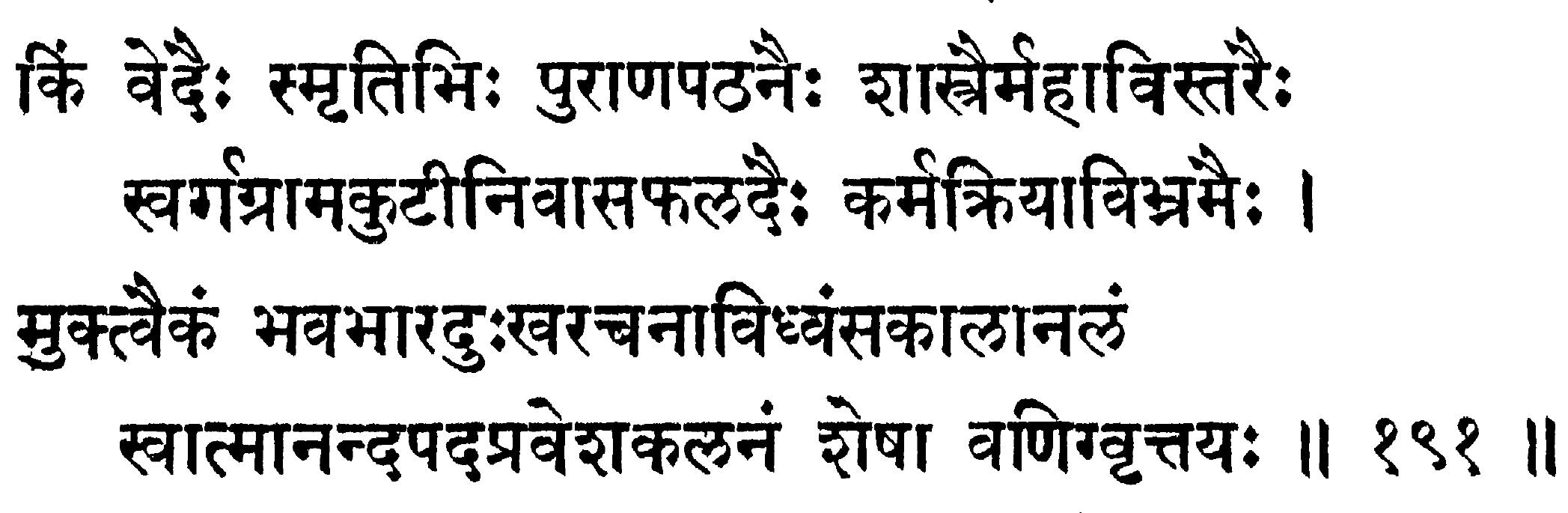
किं वेदैः स्मृतिभिः पुराणपठनैः शास्त्रैर्महाविस्तरैः
स्वर्गग्रामकुटीनिवासफलदैः कर्मक्रियाविभ्रमैः ।
मुक्त्वैकं भवभारदुःखरचनाविध्वंसकालानलं
खात्मानन्दपदप्रवेशकलनं शेषा वणिग्वृत्तयः ॥ १ ९ १ ॥
Footnote
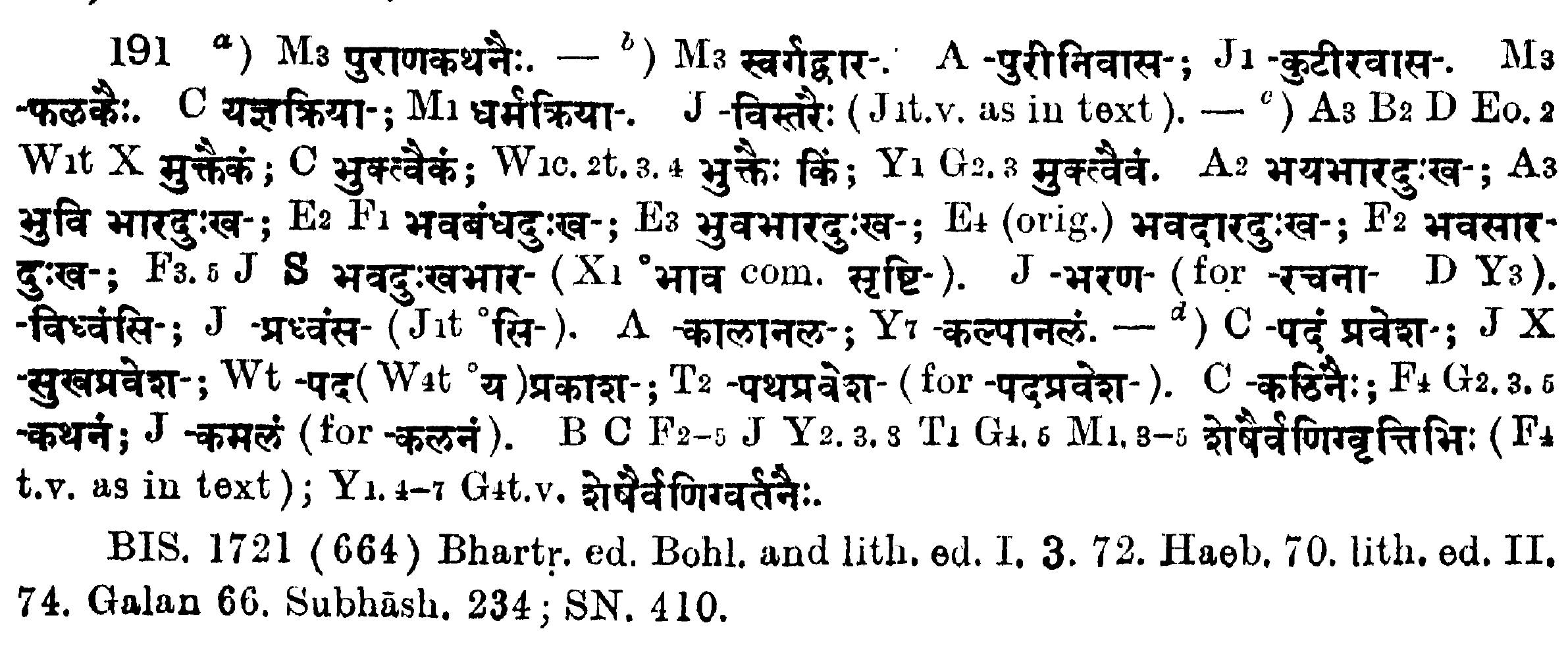
191 ) 4 M.3 पुराणकथनै : ● - 8 ) M3 स्वर्गद्वार A पुरीनिवास ; J1 कुटीरवास Mg
-फलकै : C यज्ञक्रिया ; M1 धर्मक्रिया J- विस्तरैः ( Jitv as in text ) . B " ) A3 B2 D Eo . 2
Wat X मुक्तैकं ; C भुक्त्वैकं ; W10 . 2. 3. 4 भुक्तैः किं ; Y1G3.3 मुक्त्वैवं . 42 भयभारदुःख- ; A3
भुवि भारदुःख- ; E2 F1 भवबंधदुःख- ; E3 भुवभारदुःख- ; E + ( orig . ) भवदारदुःख- ; F2 भवसार
दुःख- ; F3.6 J S भवदुःखभार- ( X ) भाव com . सृष्टि- ) . J - भरण- ( for रचना D Y3 ) .
- विध्वंसि ; J प्रध्वंस - ( Jat ° सि - ) . A कालानल ; Y1 कल्पानलं . ~ ) C -पदं प्रवेश ; J X
सुखप्रवेश ; Wt पद ( Wat ' य ) प्रकाश- ; T2 - पथप्रवेश - ( for पदप्रवेश - ) . C -कठिनै :; F + G2.3.6
कथनं ; J -कमलं ( for -कलनं ) . B C F2 - 5 J_Y2 . 3. 3 T1G4 6 M1 3 - 6 शेषैर्वणिग्वृत्तिभिः ( Fa
t.v. as in text ) ; Y1 . 4 - 7G + t.v . शेषैर्वणिग्वर्तनः
BIS . 1721 ( 664 ) Bhartṛ . ed . Bohl . and lith . ed . I. 3. 72. Haeb . 70. lith . ed . II .
74. Galan 66. Subhash 234 ; SN . 410 .
Commentary