Tawney
Think upon that self-developed, everlasting One Supreme,
Fling aside all vain delusions, all the worldling's baseless dream,
Pity those dull slaves of custom who are caught with empty toys,
Kingly crowns, and thrones imperial, and a round of sensual joys.
Mādhavānanda
तस्मादनन्तमजरं परमं विकासि
तद्ब्रह्म चिन्तय किमेभिरसद्विकल्पै: ।
यस्यानुषङ्गिण इमे भुवनाधिपत्य-
भोगादय: कृपणलोकमता भवन्ति ।।६९।।
69. What avails all this agitating over the unreal? Meditate, therefore, on that supreme, infinite, ageless, effulgent Brahman, in the light of which all such enjoyments as the sovereignty of the world appear as the desires of pitiable men!
Telang
all
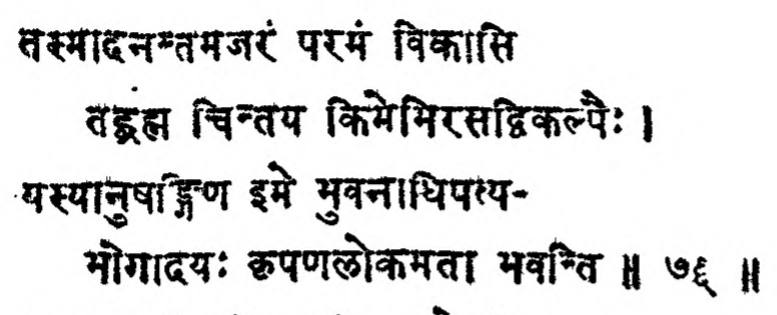
तस्मादनन्तमजरं परमं विकासि
तद्ब्रह्म चिन्तय किमेभिरसद्विकल्पैः ।
यस्यानुषङ्गिण इमे भुवनाधिपत्य-
भोगादयः कृपणलोकमता भवन्ति ॥ ७६ ॥
Notes
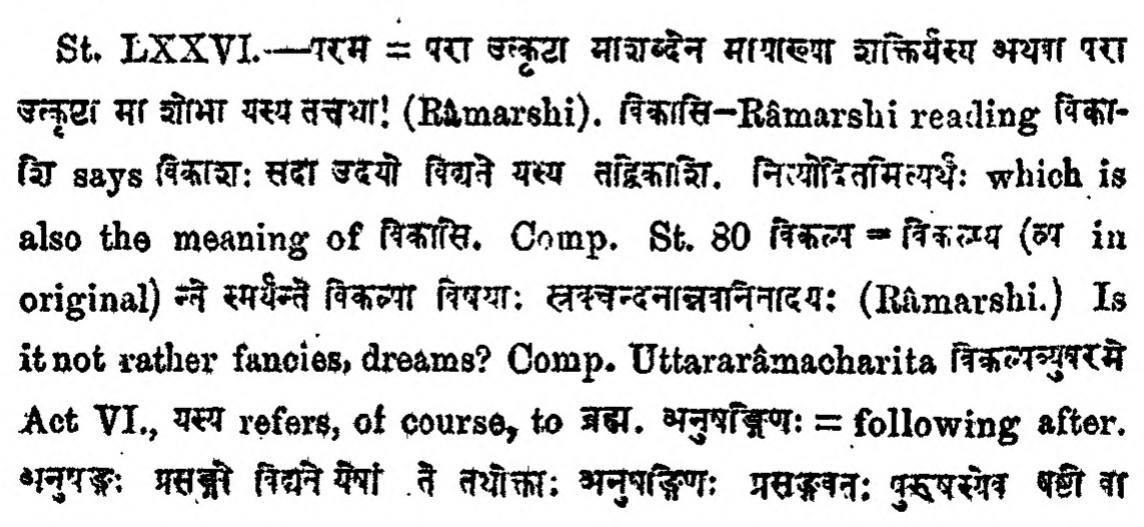
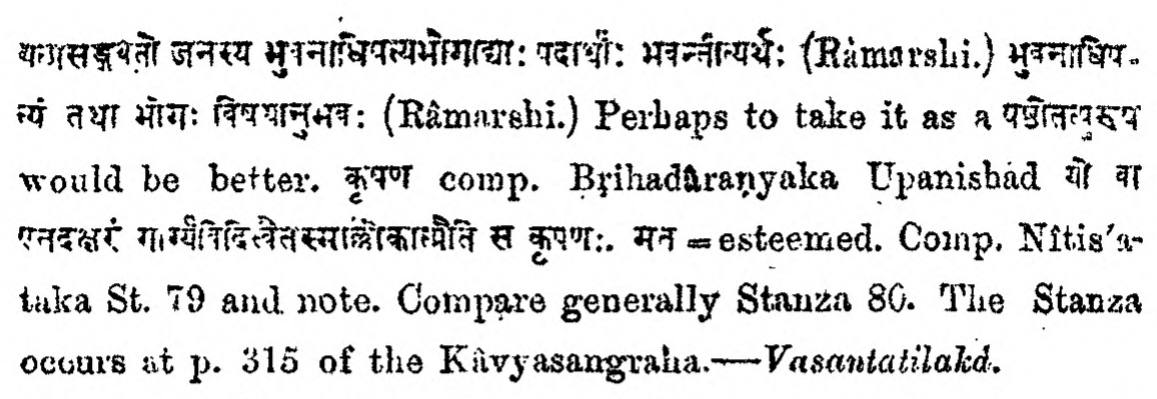
St. LXXVI.—परम = परा उत्कृष्टा माशब्देन मायाख्या शक्तिर्यस्य अथवा परा उत्कृष्टा मा शोभा यस्य तत्तथा! (Râmarshi). विकासि—Râmarshi reading विकाशि says विकाशः सदा उदयो विद्यते यस्य तद्विकाशि. नित्योदितमित्यर्थः which is also the meaning of विकासि. Comp. St. 80 विकल्प = विकल्प्य (व्य in original) न्ते स्मर्यन्ते विकल्पा विषयाः स्रक्चन्दनाङ्गनानिनादयः (Râmarshi.) Is it not rather fancies, dreams? Comp. Uttararâmacharita विकल्पव्युपरमे Act VI., यस्य refers, of course, to ब्रह्म. अनुषङ्गिणः = following after. अनुषङ्गः प्रसङ्गो विद्यते येषां ते तथोक्ताः अनुषङ्गिणः प्रसङ्गवतः पुरुषस्येव षष्ठी वा यथासङ्गवतो जनस्य भुवनाधिपत्यभोगाद्याः पदार्थाः भवन्तीत्यर्थः (Râmarshi.) भुवनाधिपत्यं तथा भोगः विषयानुभवः (Râmarshi.) Perhaps to take it as a षष्ठीतत्पुरुष would be better. कृपण comp. Bṛihadâraṇyaka Upanishad यो वा एतदक्षरं गार्ग्यविदित्वेतस्माल्लोकात्प्रैति स कृपणः. मत = esteemed. Comp. Nîtis'ataka St. 79 and note. Compare generally Stanza 80. The Stanza occurs at p. 315 of the Kâvyasangraha.—Vasantatilakâ.

Kale
all
Introduction
अथ वैराग्यसम्पन्नेन ब्रह्मचिन्तनपरेण भवितव्यं यतो ब्रह्मैकध्यानपरस्य भुवनाधिपत्यादयो भोगास्तुच्छा एव प्रतिभान्तीत्याह—

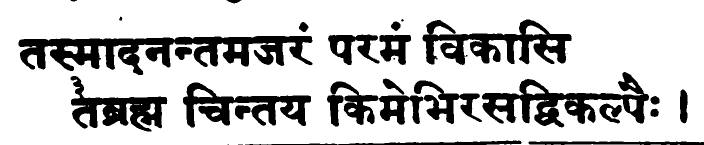
तस्मादनन्तमजरं परमं विकासि
तद्ब्रह्म चिन्तय किमेभिरसद्विकल्पैः ।
यस्यानुषङ्गिण इमे भुवनाधिपत्य-
भोगादयः कृपणलोकमता भवन्ति ॥ ७० ॥

Translation
70. Therefore contemplate that Brahman which is endless, undecaying, sublime and pervading; what is the use of these wrong notions ? Sovereignty and other pleasures, approved of by mean people, follow in the train of Brahman.

Notes
Sl. 70. अजर—not subject to old age as it is निर्विकार; comp. सत्यं ज्ञानमनन्तं ब्रह्म' Tait. Up.; पुराणमजरं विदुः । Rag. X. 19. परमम् —The highest. परा उत्कृष्टा मा शब्दन मायाख्या शक्तिर्यस्य । अथवा परा उत्कृष्टा मा शोभा यस्य तत्तथा । Râmarshi. विकासि—Cf The S'rutis परास्य शक्तिर्विविधैव श्रूयते स्वाभाविकी ज्ञानबलक्रिया च and तमेव भान्तमनुभाति सर्वं तस्यैव भासा सर्वमिदं विभाति । विकल्प—विषय Rámarshi; or rather fancies, dreams, as Mr. Telang takes it. अनुषङ्गिणः—those that follow, depend upon. कृपण०:—highly valued by mean people. कृपण may also mean poor, to be pitied ( for losing sight of the real ); see com.; supra—०गहनाक्षेपकृपणः । Mis. 2.
Gopinath1914
all
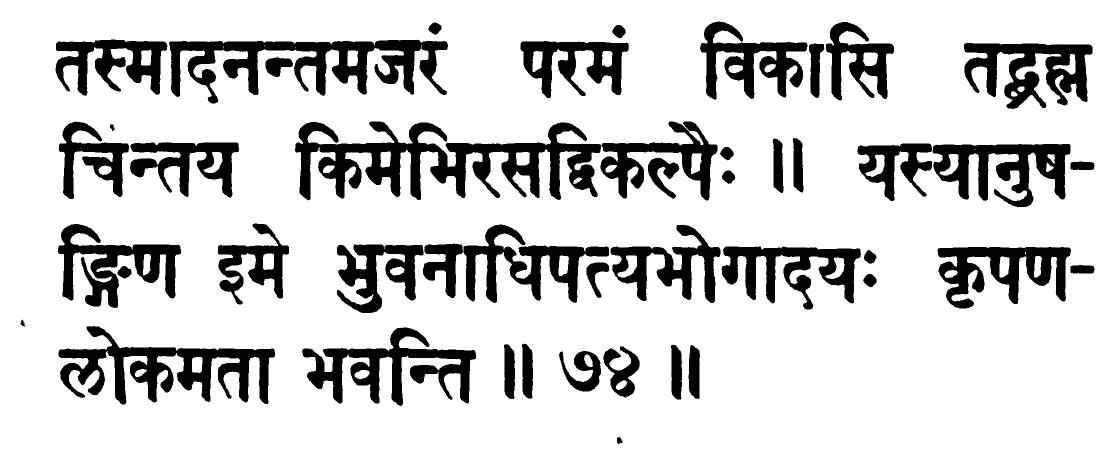
तस्मादनन्तमजरं परमं विकासि तद्ब्रह्म
चिन्तय किमेभिरसद्विकल्पैः ॥ यस्यानुष-
ङ्गिण इमे भुवनाधिपत्यभोगादयः कृपण-
लोकमता भवन्ति ॥ ७४ ॥
: इसलिए हे मनुष्यो ! संसारके मिथ्या विकल्पोंको छोड़कर उस अनंत, अजर, परमोत्कृष्ट और प्रकाशरूप ब्रह्मका चितवन करो, कि कृपणलोगोंके माननीय त्रिलोकीके राज्यादिके भोगादि : जिसका स्वयमेव अनुगमन करते हैं ॥ ७४ ॥
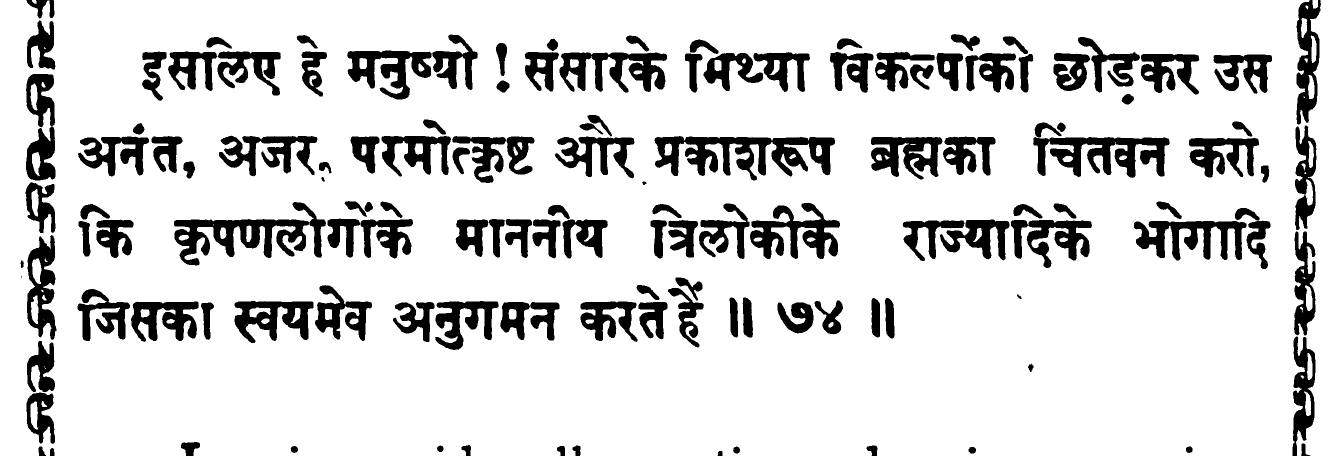
AAAARLeaving aside all sceptic and vain reasonings, you should devote yourself to the contemplation of that endless immortal, supreme, and luminous Brahma in whose imperial train all enjoyments of worldly sovereignty, which are so much coveted by misers, invariably follow.
Footnote
This ślôka which is same as stanza 24 in the Śantiģataka Part 111. (शान्तिशतकम् । ३ परिच्छेदः) is quoted under Bhartrihari ( मतृर्हरि ) in the Subhashitavali ( सुभाषितावलि ) at No. 3452.

Footnote
Rev. Wortham thus translates the latter half of this stanza in a different way:-" If a man be truly seeking unity with the supreme Being, all earthly pleasures and powers seem worthy only of the notice of low-minded men.


Gopinath1896
all
तस्मादनन्तमजरं परमं विकासि, तद्ब्रह्म
चिन्तय किमेभि रसद्विकल्पैः । यस्यानुष-
ङ्गिण इमे भुवनाधिपत्य- भोगादयः कृपण-
लोकमता भवन्ति ॥ ७४ ॥
इसलिए हे मनुष्यो ! संसारके मिथ्या विकल्पों को छोड़ कर उस अनंत, अजर, परमोत्कृष्ट और प्रकाशरूप ब्रह्मका चितवन करो, कि कृपणलोगोंके माननीय त्रिलोकीके राज्यादिके भोगादि जिसका स्वयमेव अनुगमन करते हैं ॥ ७४ ॥
Leaving aside all sceptic and vain reasonings, you should devote yourself to the contemplation of that endless immortal, supreme, and luminous Brahma in whose imperial train all enjoyments of worldly sovereignty, which are so much coveted by misers, invariably follow.
Footnote
This slôka which isesame as stanza 24 in the Santisatala. Part. III. ( शान्तिशतकम् । ३ परिच्छेदः ) is quoted under Bhartrihari ( भर्तृहरि ) in the Subhäshitârali ( सुभाषितावलि ) at No. 3452.

Footnote
Rev. Wortham thus translates the latter half of this stanza in a different way :-" If a man be truly seeking unity with the supreme Being, all earthly pleasures and powers seen worthy only of the notice of low-minded men. "


Kosambi
all
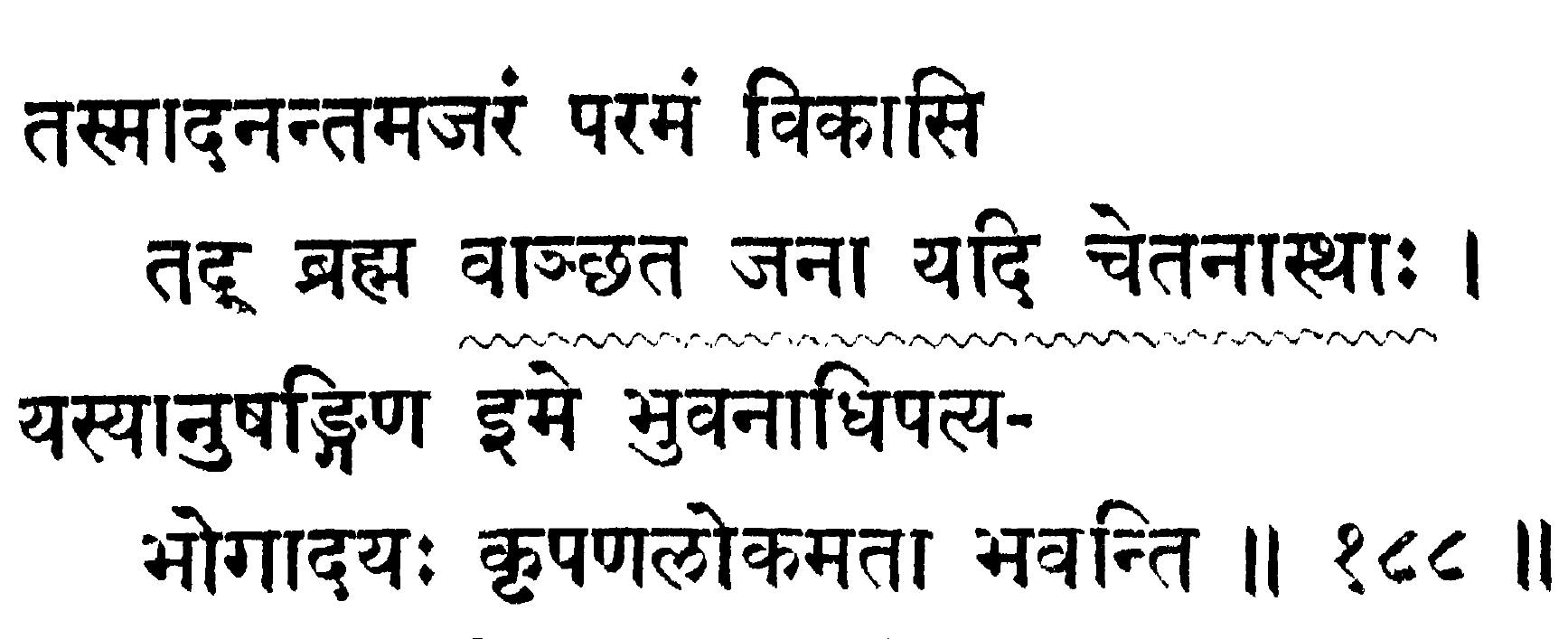
तस्मादनन्तमजरं परमं विकासि
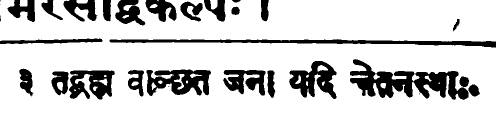
तद् ब्रह्म वाञ्छत जना यदि चेतनास्थाः ।
यस्यानुषङ्गिण इमे भुवनाधिपत्य
भोगादयः कृपणलोकमता भवन्ति ॥ १८८ ॥
Footnote
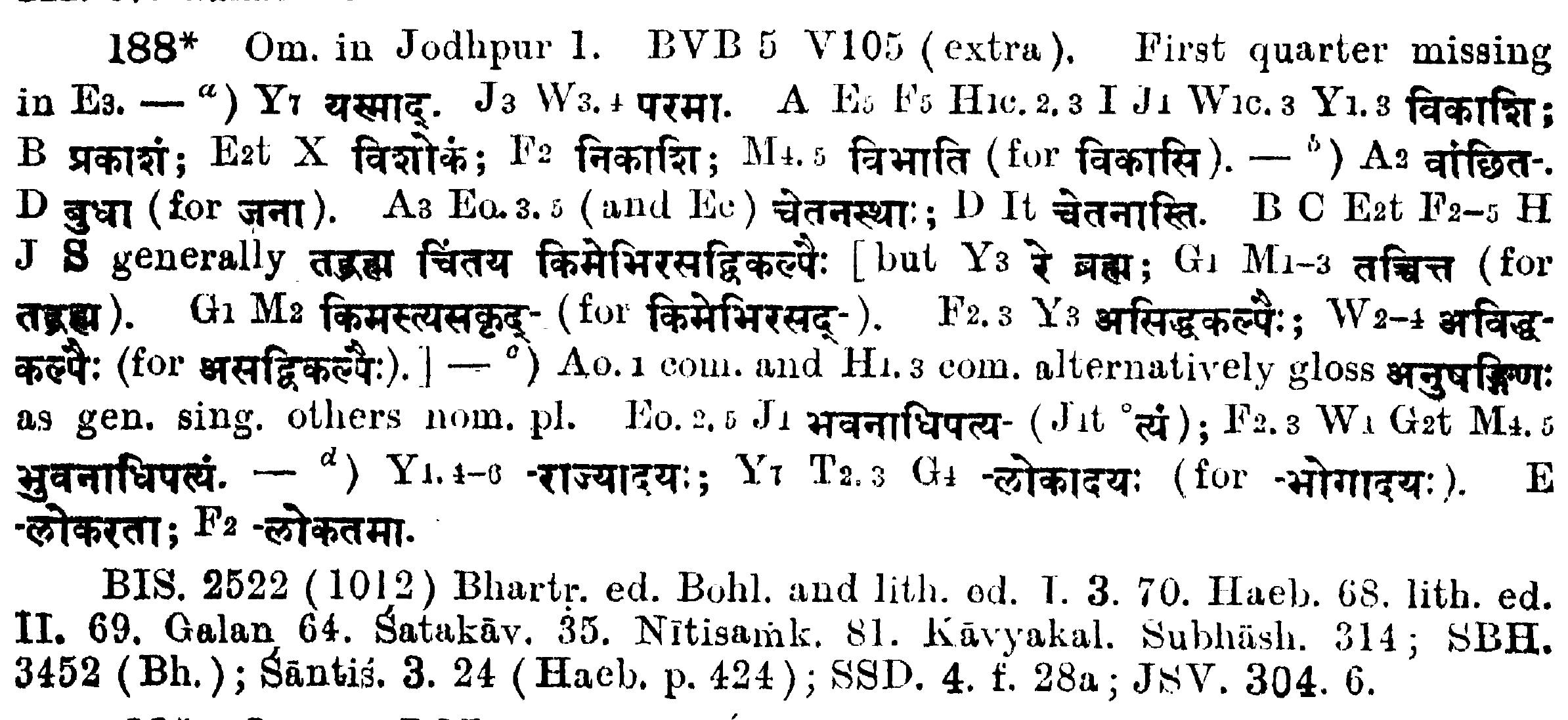
188 * Om . in Jodhpur 1. BVB 5 V105 ( extra ) , First quarter missing
in E3 . — M “ ) Y1 यस्माद् J3 W3 W3 . . + + परमा परमा . . AE Fs H1c . 2 • 3 I J 1 W10 . 3 Y1 . 3 विकाशि ;
B प्रकाशं ; Eat X विशोकं ; 12 निकाशि ; Ms.5 विभाति ( for विकासि ) . – ( ) A2 वांछित
D ( for जना ) . A3 Eo . 3. 5 ( and Ec ) चेतनस्था :; D It चेतनास्ति BC Eat F 2 - 5 H
बुधा
J ð generally तद्ब्रह्म चिंतय किमेभिरसद्विकल्पैः [ bul Y3 रे ब्रह्म ; G1 M1-3 तश्चित्त ( for
तद्रा ) . Q 1 M2 किमस्त्यसकृद् ( for किमेभिरसद् ) . F2.3 Y3 असिद्धकल्पैः ; W2-1 अविद्ध
कल्पै : ( for असद्विकल्पैः ) . ] – ° ) Ao . 1 com . and Hi3 com . alternatively gloss अनुषङ्गिणः
as gen . sing . others nom . pl . Eo . 2 , 5 Ji waanfuge- भवनाधिपत्य ( J₁t ° & ) ; F2.3 W₁ G2t M₁ . 5
भुवनाधिपत्यं . d ) Y1.1 - 0 राज्यादयः ; Y1 T2.3 G + - लोकादयः ( for भोगादयः ) . E
-लोकरता ; F2 -लोकतमा .
BIS . 2522 ( 1012 ) Bhartr . ed . Bohl . and lith . ed . 1. 3. 70. Haeb . 68. lith . ed .
II . 69. Galan 64. Satakāv . 35. Nitisamk . 81. Kāvyakal . Subhash 314 ; SBE .
3452 ( Bh . ) ; Sāntis . 3. 24 ( Haeb p . 424 ) ; SSD 4. f . 28a ; JSV . 304.6 .
Commentary