Ryder
HOW LONG, O LORD?
Alone, without desire, at rest,
In atmosphere of heaven drest,
My hand for spoon, when shall I be,
O Shiva, God! from <i>karma</i> free?
Tawney
When, when, O Siva, shall I be
Lonely and calm, from passion free;
My only robe the liberal air,
My hand the dish that holds my fare,
But able Action to uproot,
The tree that bears Life's bitter fruit.
Mādhavānanda
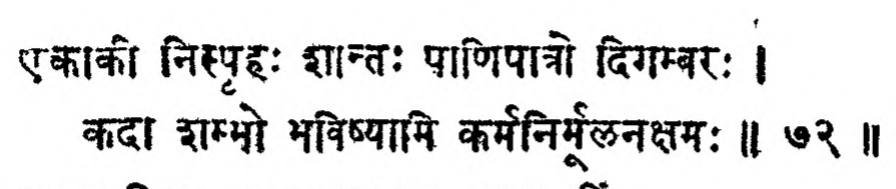
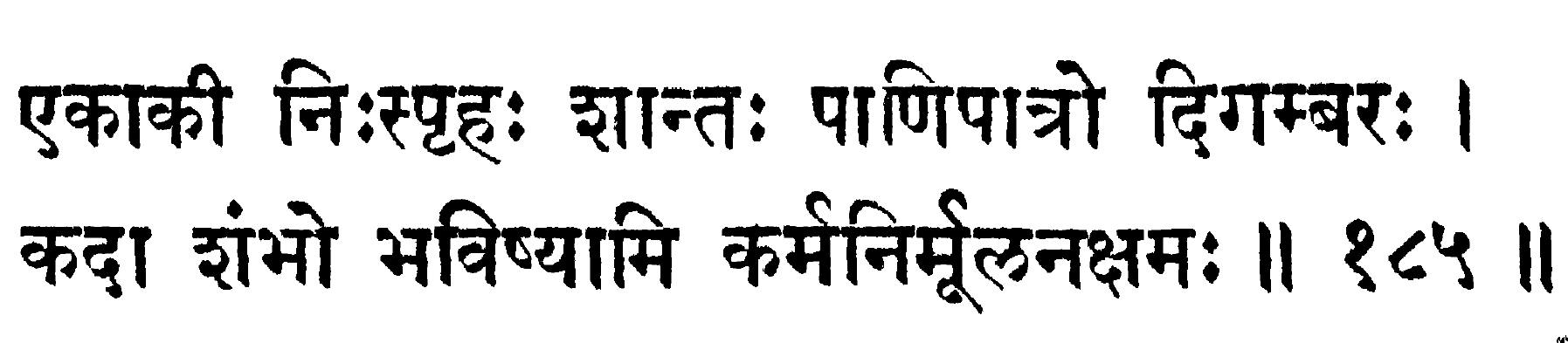
एकाकी नि:स्पृह: शान्त: पाणिपात्रो दिगम्बर: ।
कदा शम्भो भविष्यामि कर्मनिर्मूलनक्षम: ।।८९।।
89. O Śiva, when shall I, living alone, free from desires, peaceful in mind, with only the hand to eat from and the four quarters for garment (i.e., naked), be able to root out all karma?

Kale
all

Translation
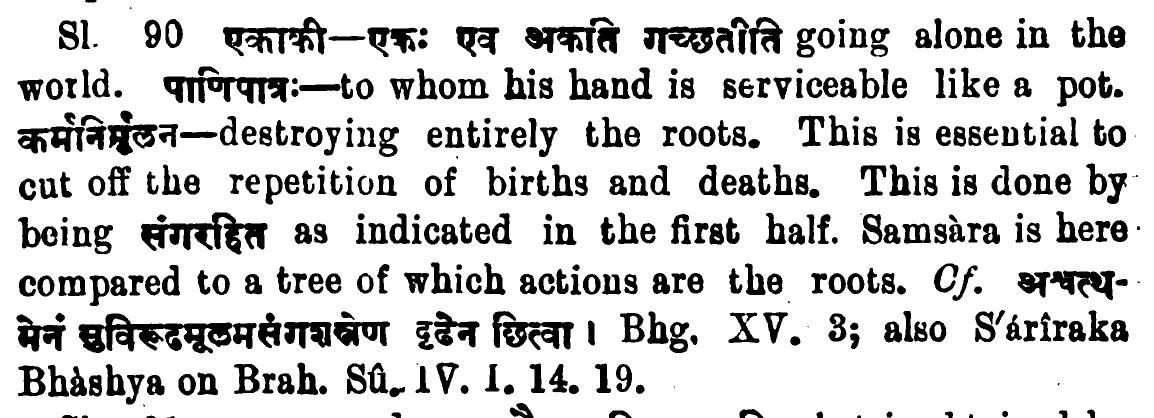
90. O S'ambhu, when shall I, living all alone, free from desire and peaceful, and having for my pot my hand ( only ) and for my garments the quarters, be able to root out Karma?

Notes
Sl. 90 एकाकी—एकः एव अकति गच्छतीति going alone in the world. पाणिपात्रः—to whom his hand is serviceable like a pot. कर्मनिर्मूलन—destroying entirely the roots. This is essential to cut off the repetition of births and deaths. This is done by being संगरहित as indicated in the first half. Samsàra is here compared to a tree of which actions are the roots. Cf. अश्वत्थमेनं सुविरूढमूलमसंगशस्त्रेण दृढेन छित्वा । Bhg. XV. 3; also S'árîraka Bhàshya on Brah. Sû. IV. 1. 14. 19.
Gopinath1914
all
अकेला, आशारहित, शान्तचित्त, पाणिपात्र ( हाथकोही पात्र समझनेवाला), और दिगम्बर ( नग्न या दिशामात्र कोही वस्त्र समझने वाला ) होकर, हे महादेव ! मैं अपने कर्मोंको निर्मूलन करनेमें कब समर्थ हूंगा ? ॥ ७० ॥
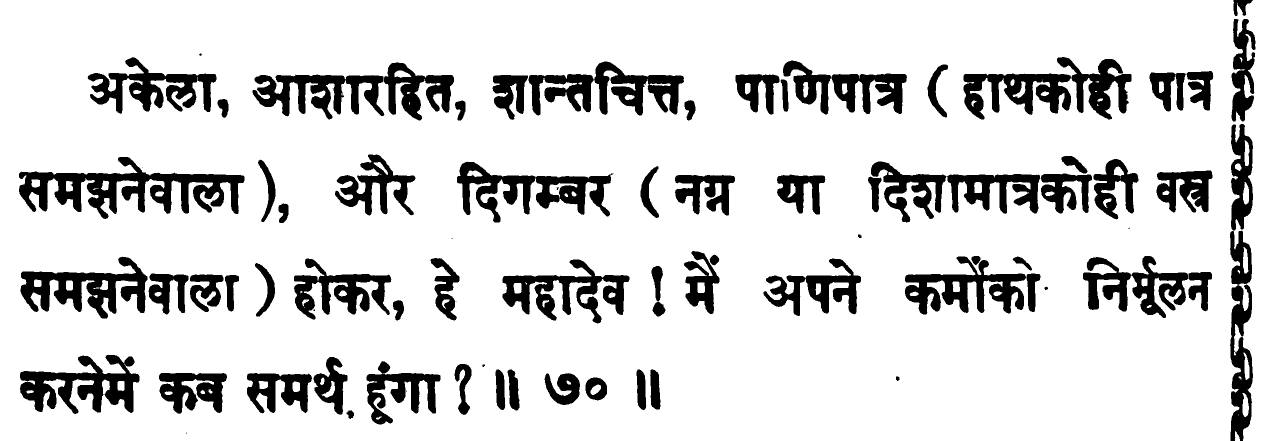
Oh God (Siva), when will the day come when I shall be able to put a stop to all my actions whether good or bad by being (1) alone, ( 2 ) devoid of all aspirations, and (3) contented, as well as by thinking my hands as necessary vessels and the different quarters of the globe as a sufficient clothing for my naked self?

Footnote
The line एकाकी गृहसंत्यक्तः पाणिपात्री दिगम्बरः also occurs in the Panchatantra V. 15. ( पंचतंत्रम् ५ तन्त्रम् । १५ ).


Gopinath1896
all
अकेला, आशारहित, शान्तचित्त, पाणिपात्र ( हाथको ही पात्र समझनेवाला ), और दिगम्बर ( नम या दिशा मात्र कोही वस्त्र समझनेवाला ) होकर, हे महादेव ! मैं अपने कर्मोंको निर्मूलन करनेमें कब समर्थ हूंगा ! ॥ ७० ॥
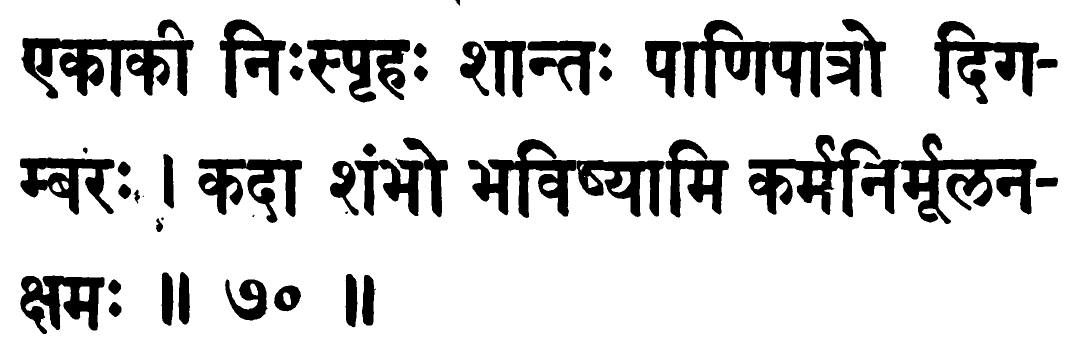
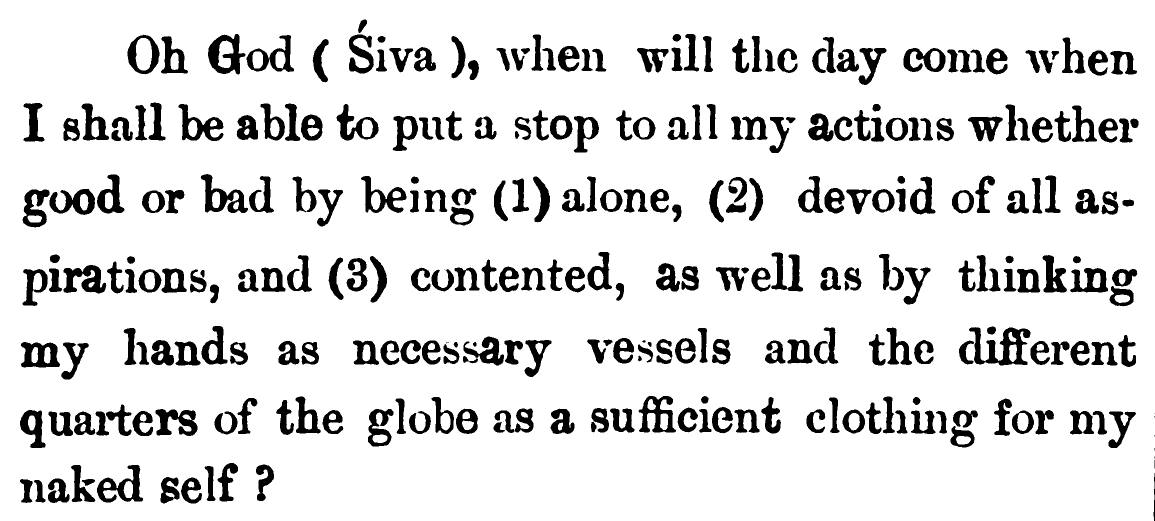
Oh God ( Śiva ), when will the day come when I shall be able to put a stop to all my actions whether good or bad by being (1) alone, (2) devoid of all aspirations, and (3) contented, as well as by thinking my hands as necessary vessels and the different quarters of the globe as a sufficient clothing for my naked self ?

Footnote
The line एकाकी गृहसन्त्यक्त: पाणिपात्रो दिगम्बर : also occurs in the Panchatantra. V. 15. ( पंचतंत्रम् ५ तंत्रम्. १५).



Kosambi
all
Footnote
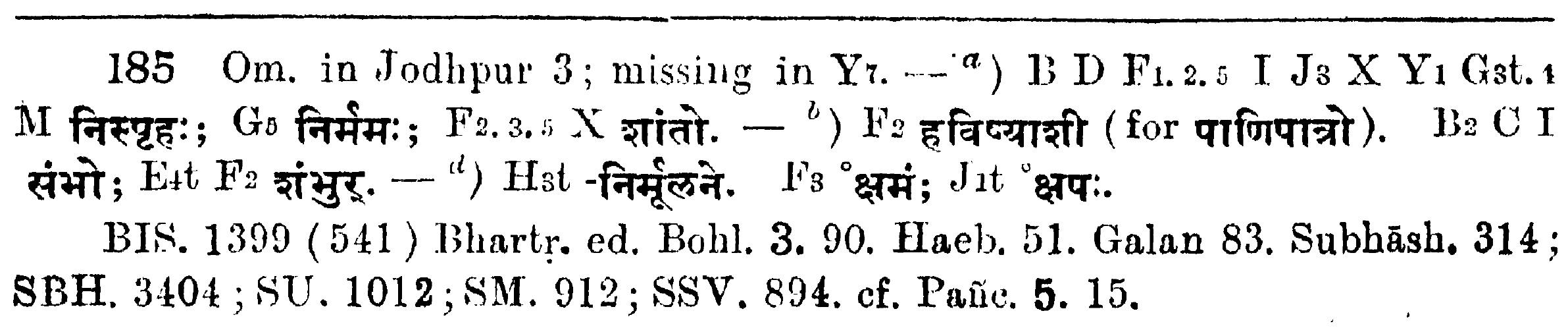
185 Om . in Jodhpur 3 missing in Y7 . ' a ) B DF 1.25 I J3 X Y1 Gst . 1
M निस्पृहः ; G० निर्ममः ; F2.3.5 F2 . 3.5 X X शांतो शांतो . . – 6 ) F2 हविष्याशी ( for पाणिपात्रो ) . B2 C I
संभो ; E + t F2 शंभुर् . -- “ ) Hst - निर्मूलने . F3 क्षमं ; Jit ' क्षपः .
BIS . 1399 ( 541 ) Bhartr ed . Bohl . 3. 90. Haeb 51. Galan 83. Subhāsh . 314 ;
SBH . 3404 ; SU . 1012 ; SM . 912 ; SSV . 894 cf. Pañc . 5. 15 .
Commentary