Ryder
THE BETTER PART-II
Have mountains lost their running streams,
The hillside nooks their roots,
The trees their bark-enveloped limbs
And all delicious fruits?
Why else should man disgrace himself
Before a loveless brow
That scowls in pride of scanty pelf,
With pain acquired but now?
Tawney
Are roots extinct in mountain caves? have streams forgot to flow?
Do vests of bark and woodland fruits on trees no longer grow?
Else why endure the haughty mien and eye-brows arched in scorn
Of men who've scraped together wealth to which they were not born ?
More
LXXXIX
Are there no caverns in the mountains left?
Are all the forest boughs of leaves bereft
And mellowing fruit? are the wild cataracts still
On every lonely hill?
Why haunt the servile press? or cringe and bow
To win the nod of some majestic brow
That wears for honor the low insolence
Of wealth — how got and whence?
Mādhavānanda
किं कन्दा: कन्दरेभ्य: प्रलयमुपगता निर्झरा वा गिरिभ्य:
प्रध्वस्ता वा तरुभ्य: सरसफलभृतो वल्कलिन्यश्च शाखा: ।
वीक्ष्यन्ते यन्मुखानि प्रसभमपगतप्रश्रयाणां खलानां
दु:खाप्तस्वल्पवित्तस्मयपवनवशान्नतिर्तभ्रूलतानि ।।२५।।
25. Or is it that herbs and roots have all disappeared from caves, and streams have gone away from hillsides, or that branches of trees bearing luscious fruits and yielding barks are all destroyed, that the faces of wretches, perfectly devoid of good breeding, are found to have their eyebrows dancing like creepers in the wind of an arrogance which their scanty earning eked out with hardship engenders in them?
Telang
all
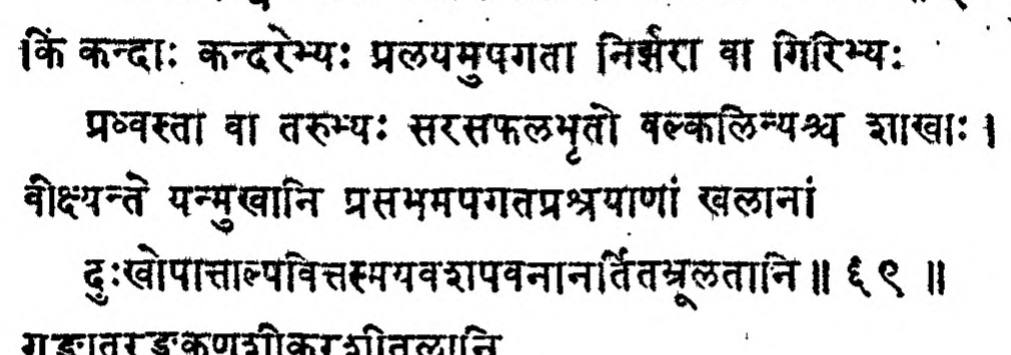
किं कन्दाः कन्दरेभ्यः प्रलयमुपगता निर्झरा वा गिरिभ्यः
प्रध्वस्ता वा तरुभ्यः सरसफलभृतो वल्कलिन्यश्च शाखाः ।
वीक्ष्यन्ते यन्मुखानि प्रसभमपगतप्रश्रयाणां खलानां
दुःखोपात्ताल्पवित्तस्मयवशपवनानर्तितभ्रूलतानि ॥ ६९ ॥
Notes
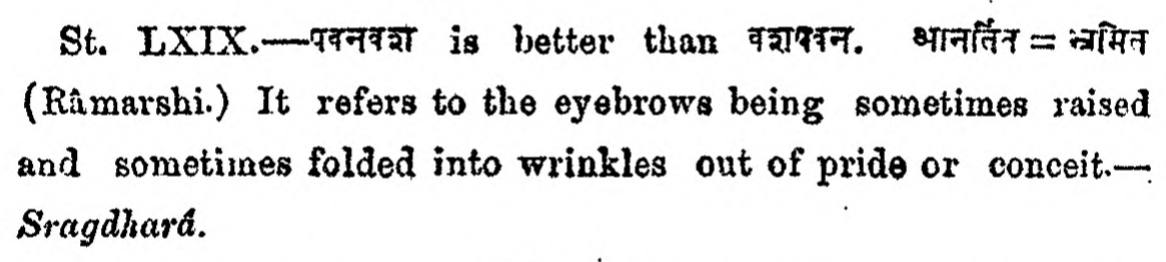
St. LXIX.—पवनवश is better than वशपवन. आनर्तित = भ्रमित (Râmarshi.) It refers to the eyebrows being sometimes raised and sometimes folded into wrinkles out of pride or conceit.—Sragdharâ.

Kale
all

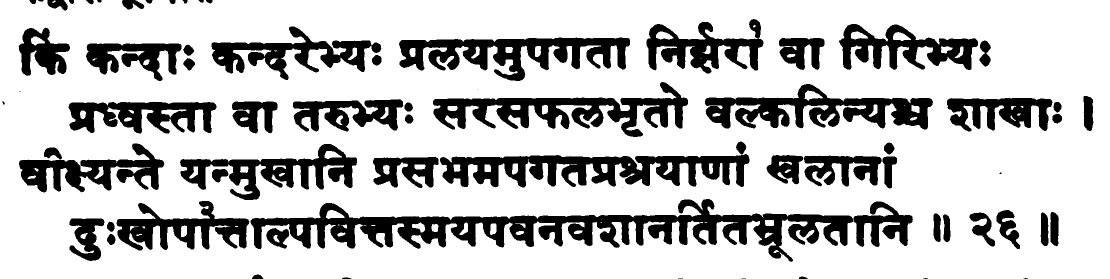
किं कन्दाः कन्दरेभ्यः प्रलयमुपगता निर्झरा वा गिरिभ्यः
प्रध्वस्ता वा तरुभ्यः सरसफलभृतो वल्कलिन्यश्च शाखाः ।
वीक्ष्यन्ते यन्मुखानि प्रसममपगतप्रश्रयाणां खलानां
दुःखोपात्ताल्पवित्तस्मयपवनवशानर्तितभ्रूलतानि ॥ २६ ॥
Translation
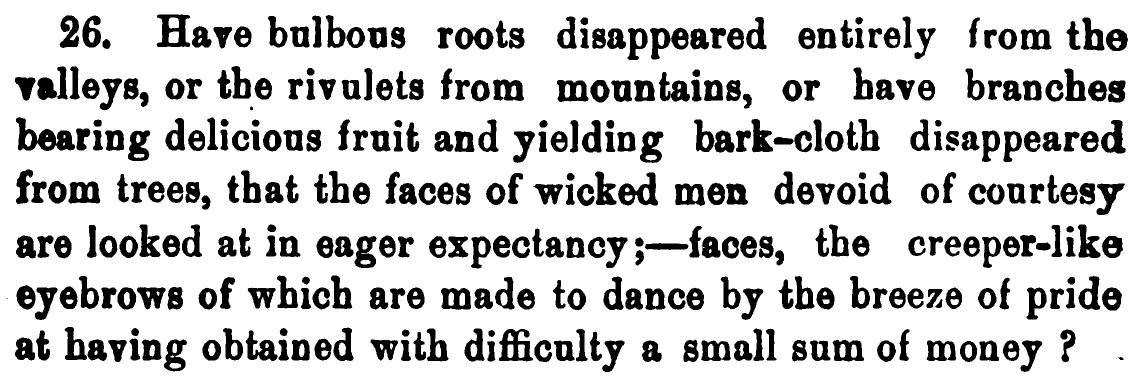
26. Have bulbous roots disappeared entirely from the valleys, or the rivulets from mountains, or have branches bearing delicious fruit and yielding bark–cloth disappeared from trees, that the faces of wicked men devoid of courtesy are looked at in eager expectancy;—faces, the creeper-like eyebrows of which are made to dance by the breeze of pride at having obtained with difficulty a small sum of money ?
Notes
Sl. 26. कन्दर—the slopes between two hills; see sl. 79. प्रसभं—प्रगता सभा विचारोऽस्मात् तद्यथा तथा । forcibly i. e. against one’s thoughts, or wishes. This may also be taken with अपगत०. प्रश्रय—courtesy, courteous behaviour. ‘प्रश्रयप्रणयौ समौ’ Amara. The last line is adj. to मुखानि.—लतानि—This refers to the eyebrows of men proud of their wealth which are sometimes raised, at others wrinkled. Cf. Bhàg. II. 2-5. quoted in the com., reading the 3rd and 4th lines as रुद्धा गुहाः किमजितोऽवति नोपसन्नान् कस्माद्भजन्ति &c.

Gopinath1914
all
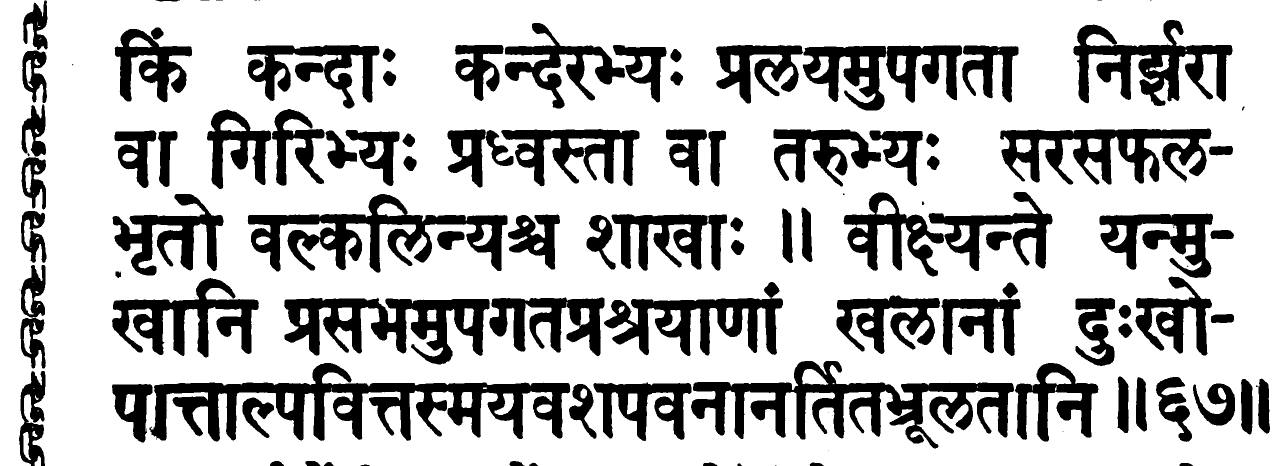
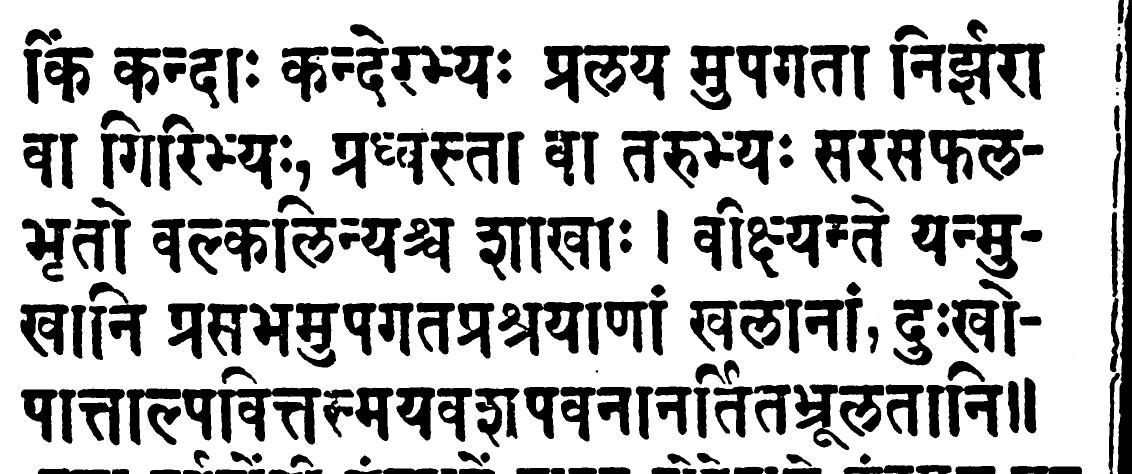
किं कन्दाः कन्देरभ्यः प्रलयमुपगता निर्झरा
वा गिरिभ्यः प्रध्वस्ता वा तरुभ्यः सरसफल-
भृतो वल्कलिन्यश्च शाखाः ॥ वीक्ष्यन्ते यन्मु-
खानि प्रसभमुपगतप्रश्रयाणां खलानां दुःखो-
पात्ताल्पवित्तस्मयवशपवनानर्तितभ्रूलतानि ॥ ६७॥
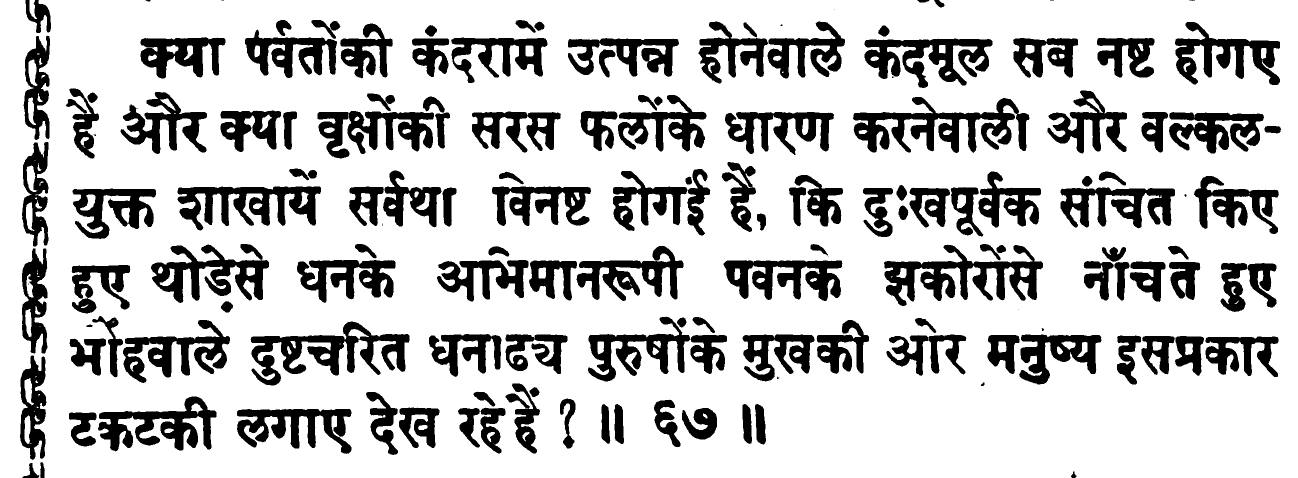
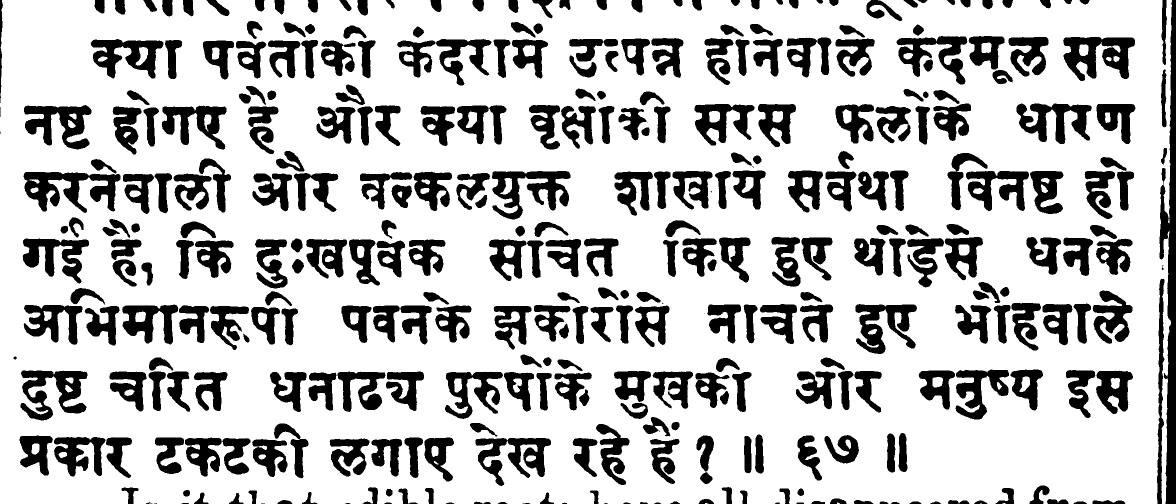
क्या पर्वतों की कंदरामें उत्पन्न होनेवाले कंदमूल सब नष्ट होगए हैं और क्या वृक्षोंकी सरस फलोंके धारण करनेवाली और वल्कलयुक्त शाखायें सर्वथा विनष्ट होगई हैं, कि दुःखपूर्वक संचित किए हुए थोड़ेसे धनके अभिमानरूपी पवनके झकोरोंसे नाँचते हुए भोइवाले दुष्टचरित धनाढ्य पुरुषोंके मुखकी ओर मनुष्य इसप्रकार टकटकी लगाए देख रहे हैं ? ॥ ६७ ॥
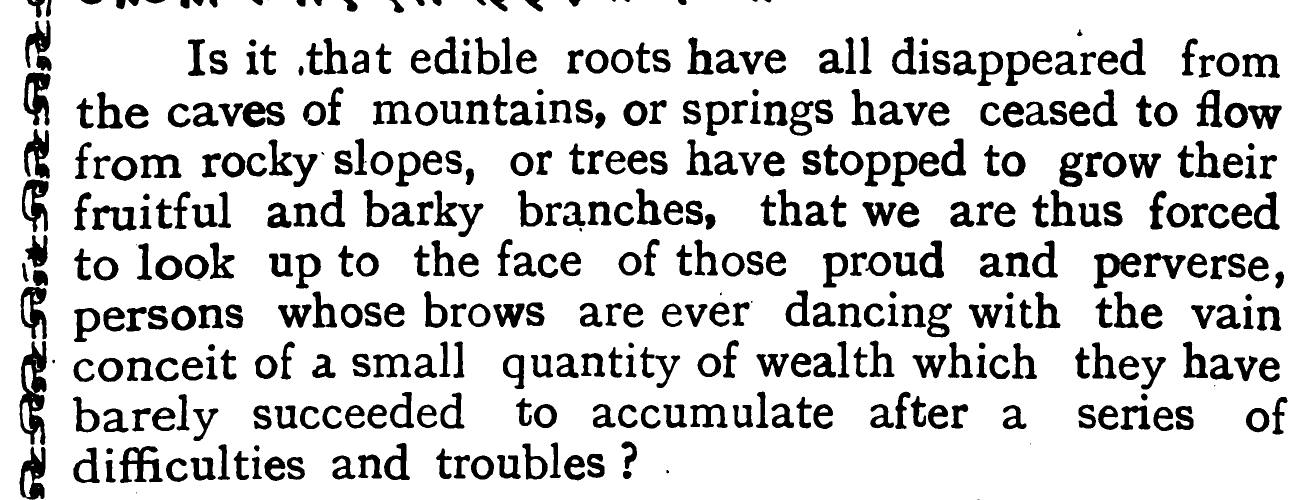
Is it that edible roots have all disappeared from the caves of mountains, or springs have ceased to flow from rocky slopes, or trees have stopped to grow their fruitful and barky branches, that we are thus forced to look up to the face of those proud and perverse, persons whose brows are ever dancing with the vain conceit of a small quantity of wealth which they have barely succeeded to accumulate after a series of difficulties and troubles ?
Footnote
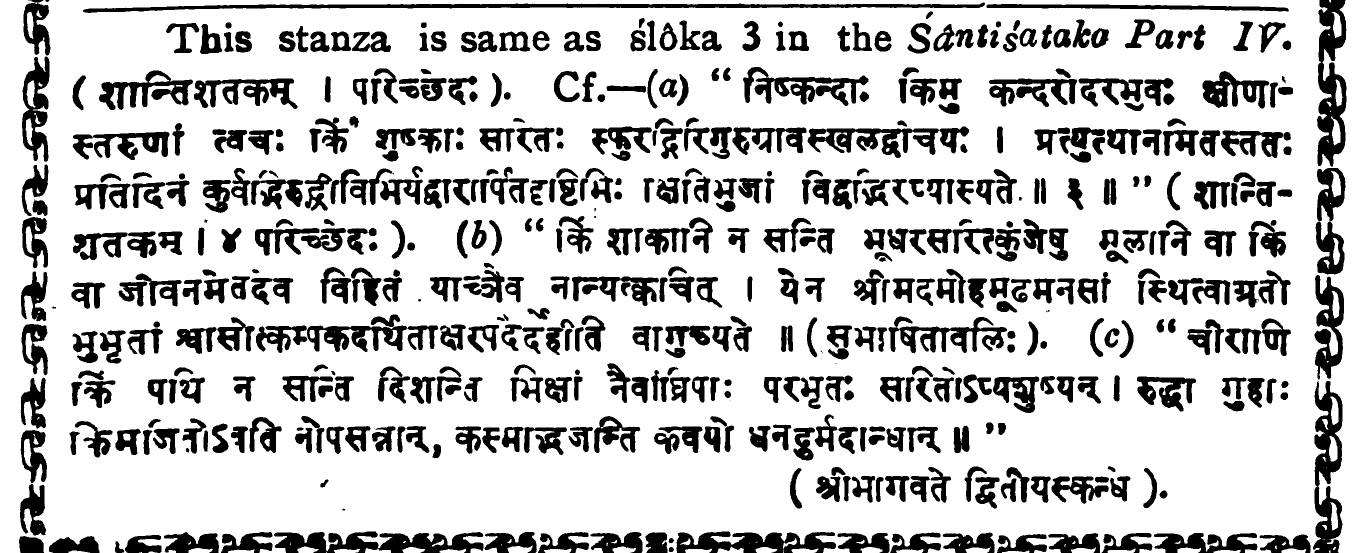
This stanza is same as ślôka 3 in the Santiśatako Part IV. ( शान्तिशतकम् । परिच्छेदः ). Cf. (a ) " निष्कन्दाः किमु कन्दरोदरभुवः क्षीणास्तरुणां त्वचः किं शुष्काः सारतः स्फुरद्विरिगुरुग्रावस्खलद्वोचयः । प्रत्युत्थानमितस्ततः प्रतिदिनं कुर्वद्भिरुद्रीविभिर्यद्वारार्पितदृष्टिभिः क्षितिभुजां विद्वद्भिरप्यास्यते ॥ ३ ॥ " ( शान्तिशतकम । ४ परिच्छेदः). (b) " किं शाकानि न सन्ति भूधरसरित्कुंजेषु मूलानि वा किं वा जीवनमेतदेव विहितं याच्चैव नान्यत्क्वचित् । येन श्रीमदमोहमूढमनसां स्थित्वाग्रतो भुभृतां श्वासोत्कम्पकदर्थिताक्षरपदेदेहीति वागुच्यते ॥ ( सुभाषितावलिः). (c) " चीराणि किं पथि न सन्ति दिशन्ति भिक्षां नैवाधिपाः परभृतः सरितोऽप्यशुष्यन् । रुद्धा गुहाः क्रिमजितोऽति नोपसन्नान्, कस्माद्भजन्ति कवयो धनदुर्मदान्धान् ( श्रीभागवते ॥ द्वितीयस्कन्ध " ).
Gopinath1896
all
किं कन्दाः कन्देरभ्यः प्रलय मुपगता निर्झरा
वा गिरिभ्यः, प्रध्वस्ता वा तरुभ्यः सरसफल-
भृतो वल्कलिन्यश्च शाखाः । वीक्ष्यन्ते यन्मु-
खानि प्रसभमुपगत प्रश्रयाणां खलानां दुःखो
पात्ताल्पवित्तस्मयवश पवनानर्तितभ्रूलतानि ॥
क्या पर्वतोंकी कंदरा में उत्पन्न होनेवाले कंदमूल सब नष्ट होगए हैं और क्या वृक्षों की सरस फलोंके धारण करनेवाली और वल्कलयुक्त शाखायें सर्वथा विनष्ट हो गई हैं, कि दुःखपूर्वक संचित किए हुए थोडेसे धनके अभिमानरूपी पवनके झकोरोंसे नाचते हुए भौंहवाले दुष्ट चरित धनाढ्य पुरुषोंके मुखकी ओर मनुष्य इस प्रकार टकटकी लगाए देख रहे हैं ? ॥ ६७ ॥
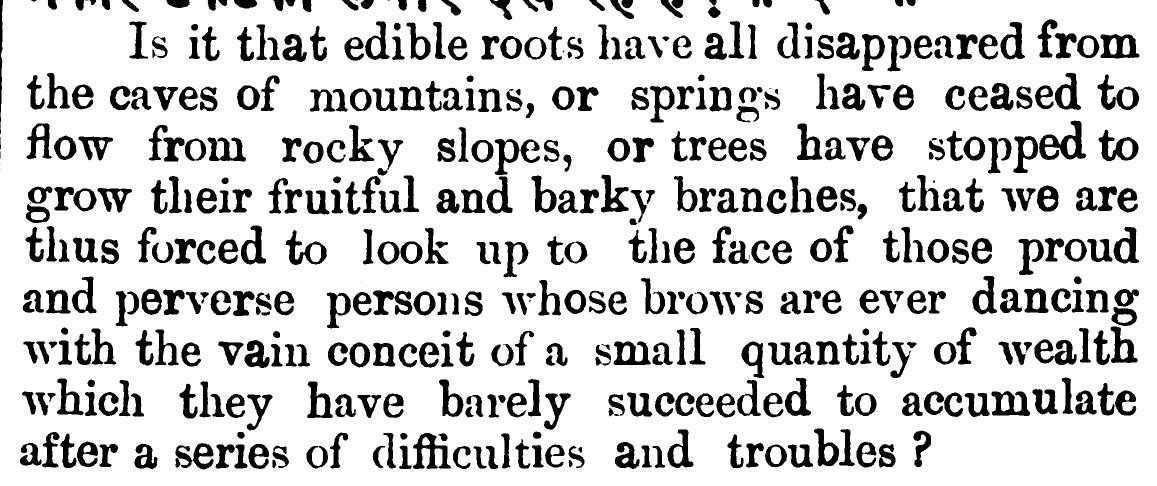
Is it that edible roots have all disappeared from the caves of mountains, or springs have ceased to flow from rocky slopes, or trees have stopped to grow their fruitful and barky branches, that we are thus forced to look up to the face of those proud and perverse persons whose brows are ever dancing with the vain conceit of a small quantity of wealth which they have barely succeeded to accumulate after a series of difficulties and troubles ?
Footnote
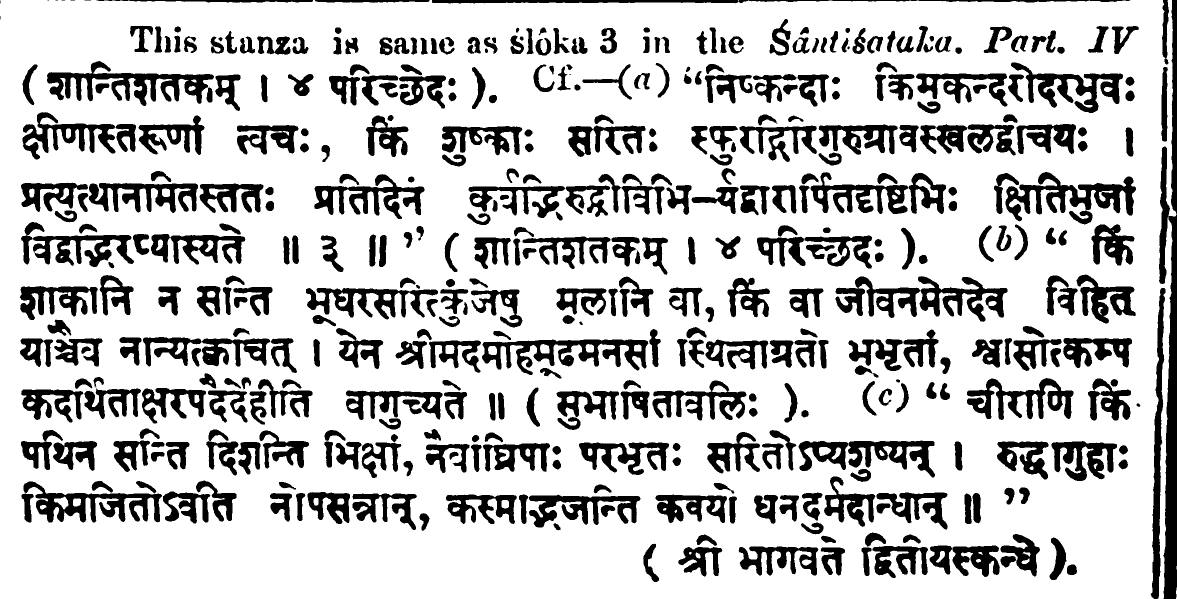
This stanza is same as ślôka 3 in the Śântiśatuka. Part. IV ( शान्तिशतकम् । ४ परिच्छेदः ). Cf. - (a ) “ निष्कन्दाः किमुकन्दरोदरभुवः क्षीणास्तरूर्णा त्वचः, किं शुष्काः सरितः स्फुरद्गिरिगुरुग्रा वस्खलद्वीचयः । प्रत्युत्थानमितस्ततः प्रतिदिनं कुर्वद्भिरुद्वीविभिर्यद्वारार्पितदृष्टिभिः क्षितिभुजां विद्वद्भिरध्यास्यते ॥ ३ ॥ " ( शान्तिशतकम् । ४ परिच्छंदः ) (1) “ किं शाकानि न सन्ति भूधरसरित्कुंजेषु मूलानि वा, किं वा जीवनमेतदेव विहित याश्चैव नान्यत्कचित् । येन श्रीमदमोहमदमनसां स्थित्वाग्रतो भूभृतां , श्वासोत्कम्प कदर्थिताक्षरपदेदेहीति वागुच्यते ॥ ( सुभाषितावलिः ) (c) “ " चीराणि किं. पथिन सन्ति दिशन्ति भिक्षां, नैवांघ्रिपाः परभृतः सरितोऽप्यष्यन् । रुद्धागुहाः किमजितोऽवति नोपसन्नान्, कस्माद्भजन्ति कवयों धनदुर्मदान्धान् ॥ " ( श्री भागवते द्वितीयस्कन्धे ).
Kosambi
all
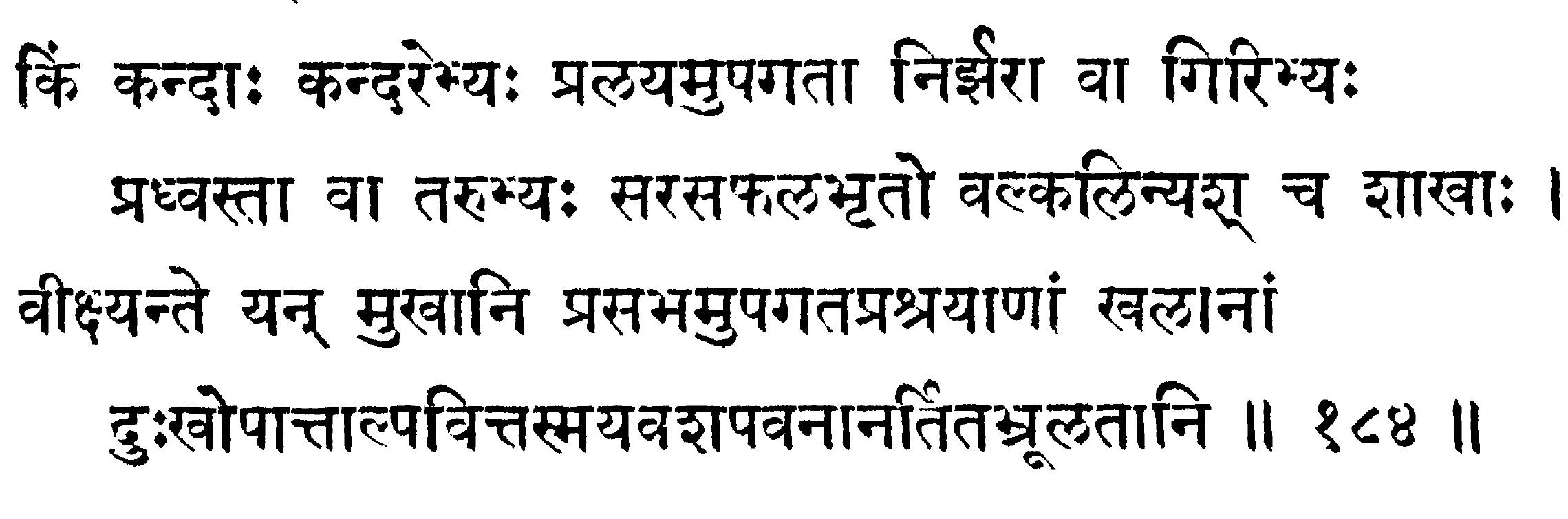
किं कन्दाः कन्दरेभ्यः प्रलयमुपगता निर्झरा वा गिरिभ्यः
प्रध्वस्ता वा तरुभ्यः सरसफलभृतो वल्कलिन्यश् च शाखाः ।
वीक्ष्यन्ते यन् मुखानि प्रसभमुपगतप्रश्रयाणां खलानां
दुःखोपात्ताल्पवित्तस्मयवशपवनानर्तितभ्रूलतानि ॥ १८४ ॥
Footnote
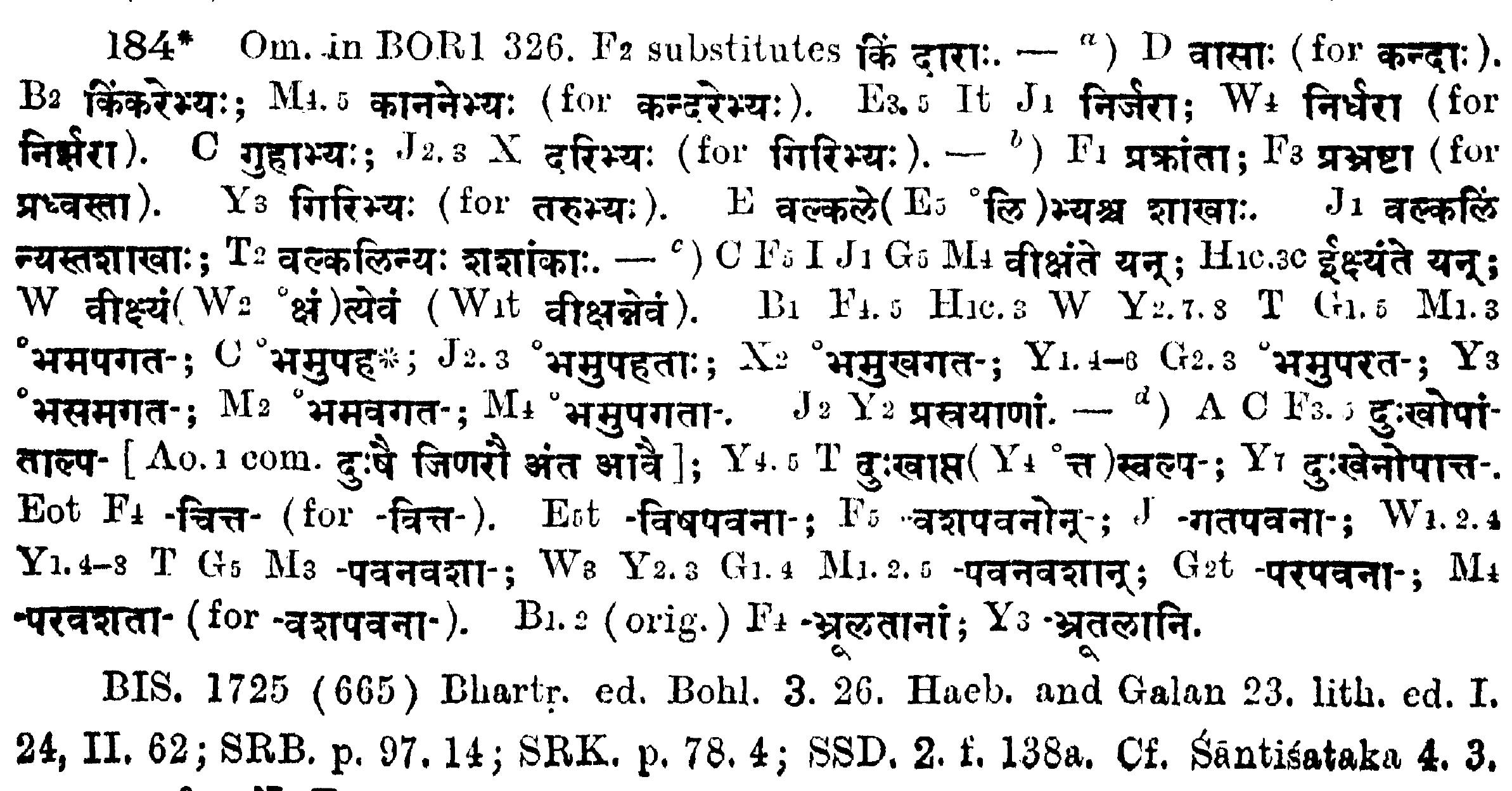
184 * Om.in BOR1 326. F2 substitutes किं द्वारा . " ) D वासाः ( for कन्दाः ) .
B2 किंकरेभ्य : ; M 1.5 काननेभ्यः ( for कन्दरेभ्य : ) . E5 It J1 निर्जरा ; W + निर्धरा ( for
निर्झरा ) . C गुहाभ्यः ; J2.3 X दरिभ्यः ( for गिरिभ्यः ) . 4 ) F1 प्रक्रांता ; F3 प्रभ्रष्टा ( for
प्रध्वस्ता ) . X 3 गिरिभ्यः ( for तरुभ्यः ) . वल्कले ( E : ° लि ) भ्यश्च शाखा :. J1 वल्कलिं
न्यस्तशाखाः ; T T2 : वल्कलिन्यः शशांकाः . – ° ) CF 3 I J1Go M4 वीक्षंते यन् ; H10.30 ईक्ष्यंते यन् ;
W वीक्ष्यं ( W : ' क्षं ) त्येवं ( Wit वीक्षन्नेवं ) . B1 F15 Hıc . 3 W Y 27.8 T G1.6M 1. 3
" भमपगत ; " भमुपह * ; J2.3 ° भमुपहताः ; 2 X भमुखगत ; X 1.16 G2.3 ° भमुपरत- ; Y3
' भसमगत- ; M2 ° भमवगत ; M + भमुपगता . J 2 X 2 प्रत्रयाणां . . ± ) A CF3 . 5 दुःखोपां
ताल्प- [ Ao . 1 com . दुःषै जिणरौ अंत आवै ] ; Y4.6 T दुःखाप्त ( Y + ' त्त ) स्वल्प- ; Y7 X1 दुःखेनोपात्त .
Eot F 1 - चित्त - ( for -वित्त ) . Est -विषपवना ; : वशपवनोनू- ; गतपवना ; W1 . 2.4
Y1.4 - 4 T G5 M3 -पवनवशा ; W3 Y2.3 G1.4 M1.25 पवनवशान् ; Get -परपवना ; M4
-परवशता ( for -वशपवना - ) . B12 ( orig . ) F + -भ्रूलतानां ; Y3 -भ्रूतलानि .
BIS . 1725 ( 665 ) Bhartṛ . ed . Bohl . 3. 26. Haeb . and Galan 23. lith . ed . I.
24 , II . 62 ; SRB . p . 97. 14 ; SRK . p . 78 4 ; SSD . 2. £ 138a Cf. Santiśataka 4. 3 .
Commentary