Ryder
EVERYTHING OR NOTHING
Suppose you have the sweetest song before you,
The graceful poets of the south beside you,
Fan-girls behind who winsomely adore you
With tinkling rings; if nothing be denied you,
Then you may well be most extremely greedy
To taste each charming, mortal delectation;
But if you be in anything left needy,
Renounce it all and plunge in meditation.
Tawney
If song resound thy steps before,
And Dekhan lyres behind,
And nymphs with jingling bracelets pour
The _Chowri's_ perfumed wind,
Scorn not this world's broad easy ways.
And drink of pleasure's bowl;
If not—then fix thy steadfast gaze
On that undying soul.
Mādhavānanda
अग्रे गीतं सरसकवय: पार्श्वयोर्दाक्षिणात्या:
पश्चाल्लीलावलयरणितं चामरग्राहिणीनाम् ।
यद्यस्त्वेवं कुरु भवरसास्वादने लम्पटत्वं
नो चेच्चेत: प्रविश सहसा निविर्कल्पे समाधौ ।।६६।।
66. If there are songs (going on) before you, sweet (skilful) poets from the South by your side and the tinkling of the moving bracelets of female waiters with waving chowries in their hands, then lavishly attach thyself to the enjoyment of worldly happiness. If otherwise, O my mind, then plunge into the absolute type of meditation.
[निविर्कल्प समाधि—the deepest concentration losing all separate consciousness of the knower, the known, and the knowing. चामर is the bushy tail of a yak used as a fan, being one of the insignia of royalty.
The argument in this śloka is that if you can find only enjoyment everywhere, you may enjoy, but really such enjoyment cannot be found in this world of misery. All worldly pleasures are transient and limited. For in the next śloka we find that the author is preaching the uselessness of the fulfilment of worldly desires.]
Telang
all
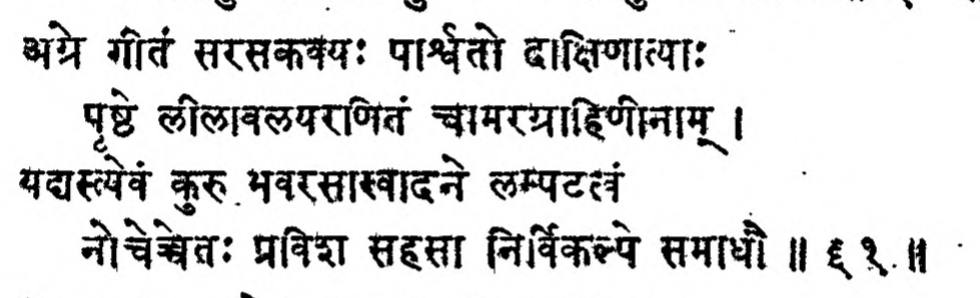
अग्रे गीतं सरसकवयः पार्श्वतो दाक्षिणात्याः
पृष्ठे लीलावलयरणितं चामरग्राहिणीनाम् ।
यद्यस्त्येवं कुरु भवरसास्वादने लम्पटत्वं
नोचेच्चेतः प्रविश सहसा निर्विकल्पे समाधौ ॥ ६१ ॥
Notes
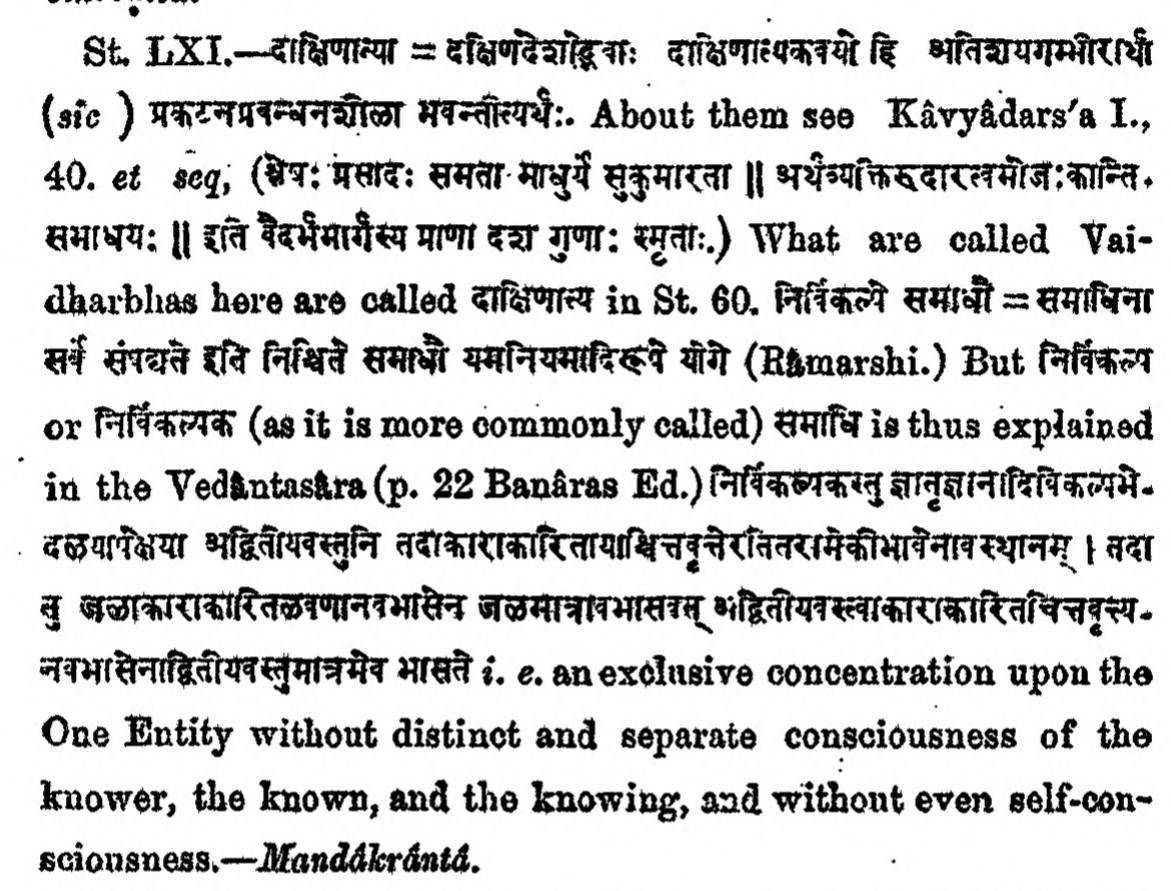
St. LXI.—दाक्षिणात्या = दक्षिणदेशोद्भवाः दाक्षिणात्यकवयो हि अतिशयगम्भीरार्था (sic) प्रकटनप्रवञ्चनशीला भवन्तीत्यर्थः. About them see Kâvyâdars'a I., 40. et seq, (श्लेषः प्रसादः समता माधुर्यं सुकुमारता ॥ अर्थव्यक्तिरुदारत्वमोजःकान्तिसमाधयः ॥ इति वैदर्भमार्गस्य प्राणा दश गुणाः स्मृताः.) What are called Vaidharbhas here are called दाक्षिणात्य in St. 60. निर्विकल्पे समाधौ = समाधिना सर्वं संपद्यते इति निश्चिते समाधौ यमनियमादिरूपे योगे (Râmarshi.) But निर्विकल्प or निर्विकल्पक (as it is more commonly called) समाधि is thus explained in the Vedântasâra (p. 22 Banâras Ed.) निर्विकल्पकस्तु ज्ञातृज्ञानादिविकल्पभेदलयापेक्षया अद्वितीयवस्तुनि तदाकाराकारितायाश्चित्तवृत्तेरतितरामेकीभावेनावस्थानम् । तदा तु जलाकाराकारितलवणानवभासेन जलमात्रावभासवत् अद्वितीयवस्त्वाकाराकारितचित्तवृत्त्यनवभासेनाद्वितीयवस्तुमात्रमेव भासते i. e. an exclusive concentration upon the One Entity without distinct and separate consciousness of the knower, the known, and the knowing, and without even self-consciousness.—Mandâkrântâ.

Kale
all
Introduction
संसारे वक्ष्यमाणा सामग्री स्याच्चेत्तत्राभिनिवेशो युक्तः । अन्यथा निर्विकल्पे समाधौ स श्रेयानित्याह—

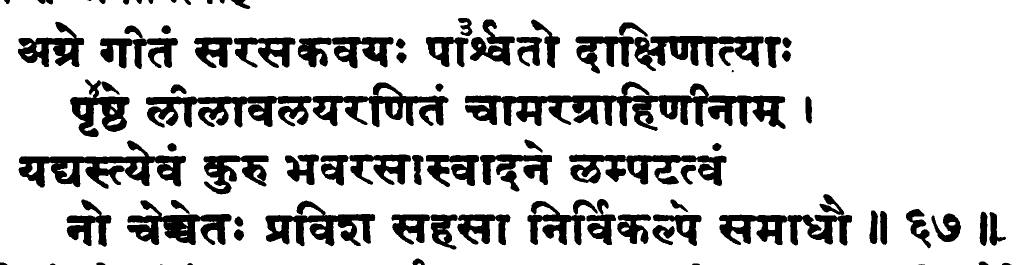
अग्रे गीतं सरसकवयः पार्श्वतो दाक्षिणात्याः
पृष्ठे लीलावलयरणितं चामरग्राहिणीनाम् ।
यद्यस्त्येवं कुरु भवरसास्वादने लम्पटत्वं
नो चेच्चेतः प्रविश सहसा निर्विकल्पे समाधौ ॥ ६७ ॥
Translation
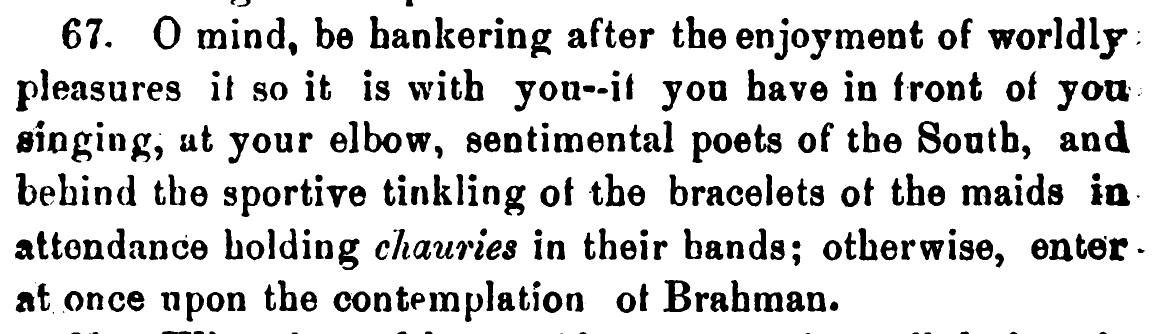
67. O mind, be hankering after the enjoyment of worldly pleasures if so it is with you--if you have in front of you singing, at your elbow, sentimental poets of the South, and behind the sportive tinkling of the bracelets of the maids in attendance holding chauries in their hands; otherwise, enter at once upon the contemplation of Brahman.
Notes
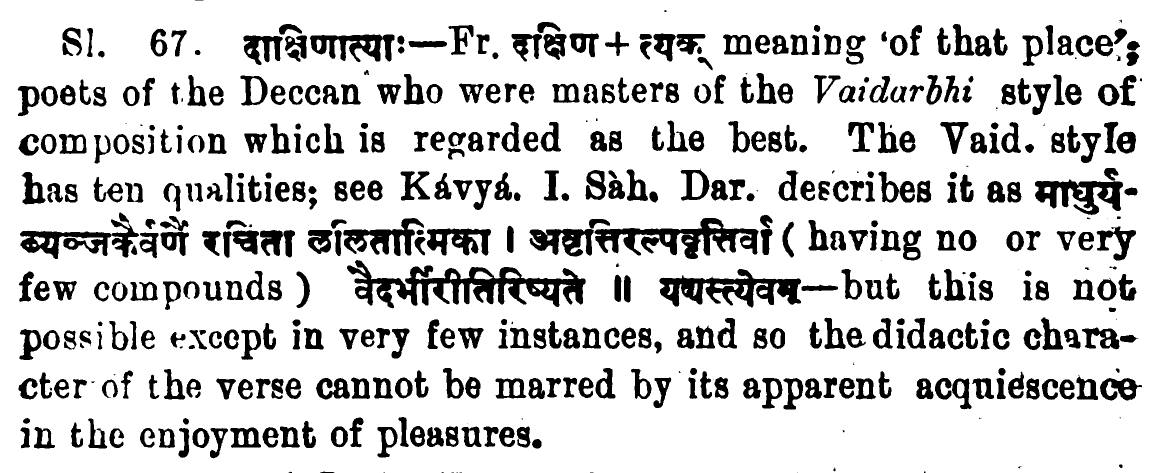
Sl. 67. दाक्षिणात्याः—Fr. दक्षिण + त्यक् meaning 'of that place'; poets of the Deccan who were masters of the Vaidarbhi style of composition which is regarded as the best. The Vaid. style has ten qualities; see Kávyá. I. Sàh. Dar. describes it as माधुर्यव्यञ्जकैर्वर्णै रचिता ललितात्मिका । अवृत्तिरल्पवृत्तिर्वा ( having no or very few compounds ) वैदर्भीरीतिरिष्यते ॥ यद्यस्त्येवम्—but this is not possible except in very few instances, and so the didactic character of the verse cannot be marred by its apparent acquiescence in the enjoyment of pleasures.

Gopinath1914
all
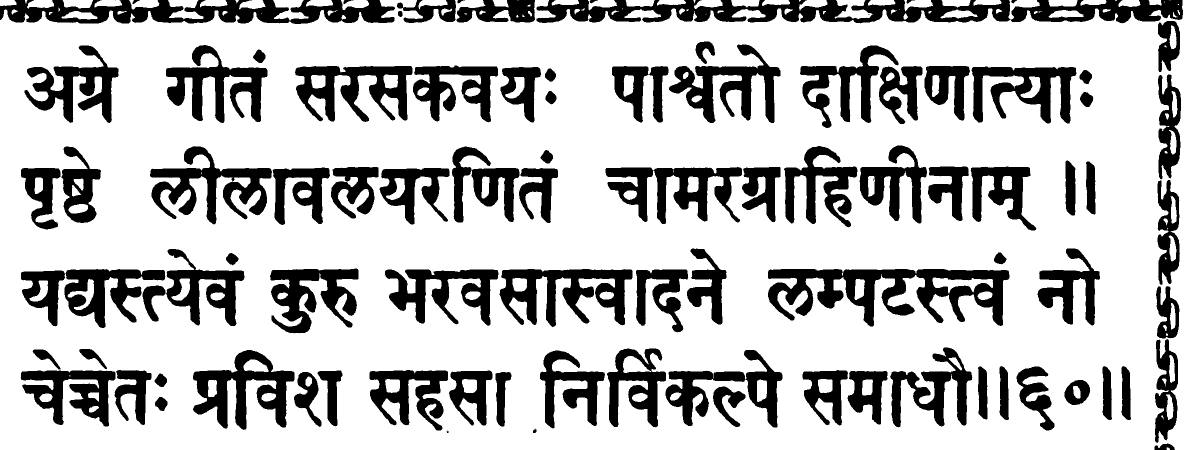
अग्रे गीतं सरसकवयः पार्श्वतो दाक्षिणात्याः
पृष्ठे लीलावलयरणितं चामरग्राहिणीनाम् ॥
यद्यस्त्येवं कुरु भरवसास्वादने लम्पटस्त्वं नो
चेच्चेतः प्रविश सहसा निर्विकल्पे समाधौ ॥ ६० ॥
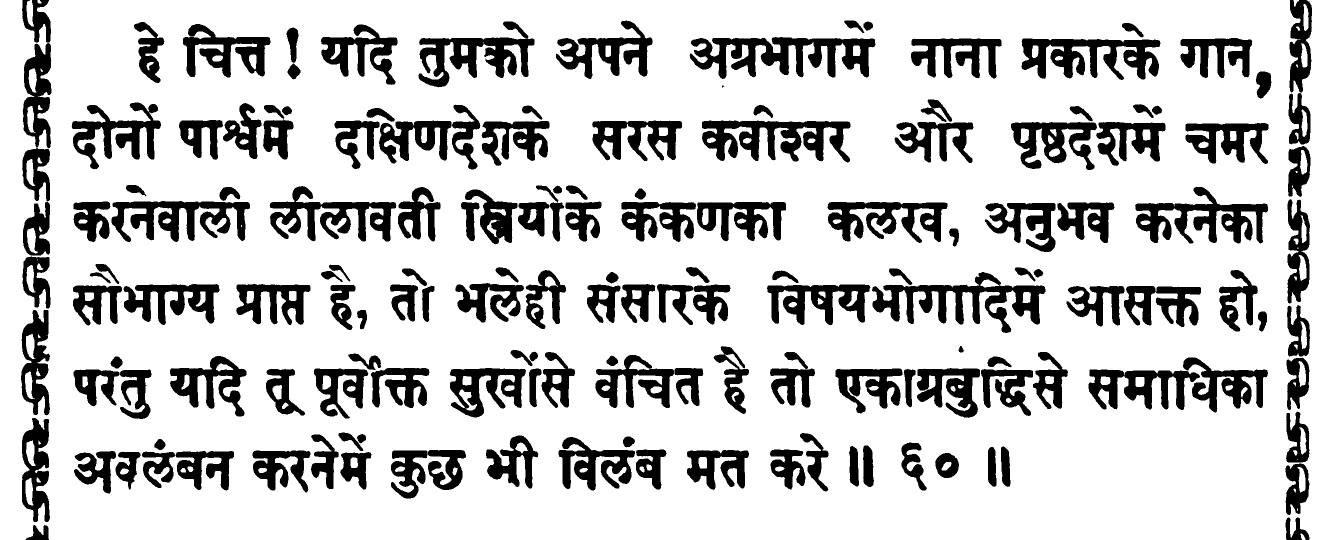
हे चित्त ! यदि तुमको अपने अग्रभागमें नाना प्रकारके गान, दोनों पार्श्व में दक्षिणदेशके सरस कवीश्वर और पृष्ठदेशमें चमर करनेवाली लीलावती स्त्रियोंके कंकणका कलव, अनुभव करनेका सौभाग्य प्राप्त है, तो भलेही संसारके विषयभोगादिमें आसक्त हो, परंतु यदि तू पूर्वोक्त सुखोंसे वंचित है तो एकाग्रबुद्धिसे समाधिका अवलंबन करनेमें कुछ भी विलंब मत करे ॥ ६० ॥
In case you can afford to hear sweet and agreeable songs in your front, melodious verses of the Dekkan poets on your sides and the charming tinkling of bracelets worn by graceful ladies fanning your back with beautiful Chowries, you are quite justified in devoting yourself to the enjoyment of the world; but when you cannot command the aforesaid pleasures you must not make the least delay in giving yourself to Samùdhi or absolute meditation of the Supreme Being.
Footnote
Quoted anonymously in the Subhashitavali ( सुभाषितावळि) at No. 3467, and under भर्तृहरि in the शार्ङ्गधरपद्धति at No. 4176.


Gopinath1896
all
अग्रे गीतं सरसकवयः पार्श्वतो दाक्षिणात्याः,
पृष्ठे लीलावलयरणितं चामरग्राहिणीनाम् ।
यद्यस्त्येवं कुरु भरवसास्वादने लम्पटत्वं, नो-
चेच्चेतः प्रविश सहसा निर्विकल्पे समाधौ ॥ ६० ॥
हे चित्त ! यदि तुमको अपने अग्रभागमें नाना प्रकार के गान, दोनों पार्श्वमें दक्षिण देशके सरस कवीश्वर, और पृष्ठदेश में चमर करनेवाली लीलावती स्त्रियोंके कंकणका कलरव, अनुभव करनेका सौभाग्य प्राप्त है, तो भलेही संसारके विषयभोगादिमें आसक्त हो, परंतु यदि तू पूर्वोक्त सुखोंसे वंचित है तो एकाग्रबुद्धिसे समाधिका अवलंबन करनेमें कुछभी विलंब मत करे ॥ ६० ॥
In case you can afford to hear sweet and agreeable songs in your front, melodious verses of the Dekkan poets on your sides and the charming tinkling of bracelets worn by graceful ladies fanning your back with beautiful Chowries, you are quite justified in devoting yourself to the enjoyment of the world; but when you cannot command the aforesaid pleasures you must not make the least delay in giving yourself to Samadhi or absolute meditation of the Supreme Being.
Footnote
Quoted anonymously in the Subhashitärali ( सुभाषितावलि) at No. 3467, and under भर्तृहरि in the शार्ङ्गधर पद्धति at No. 4176.


Kosambi
all
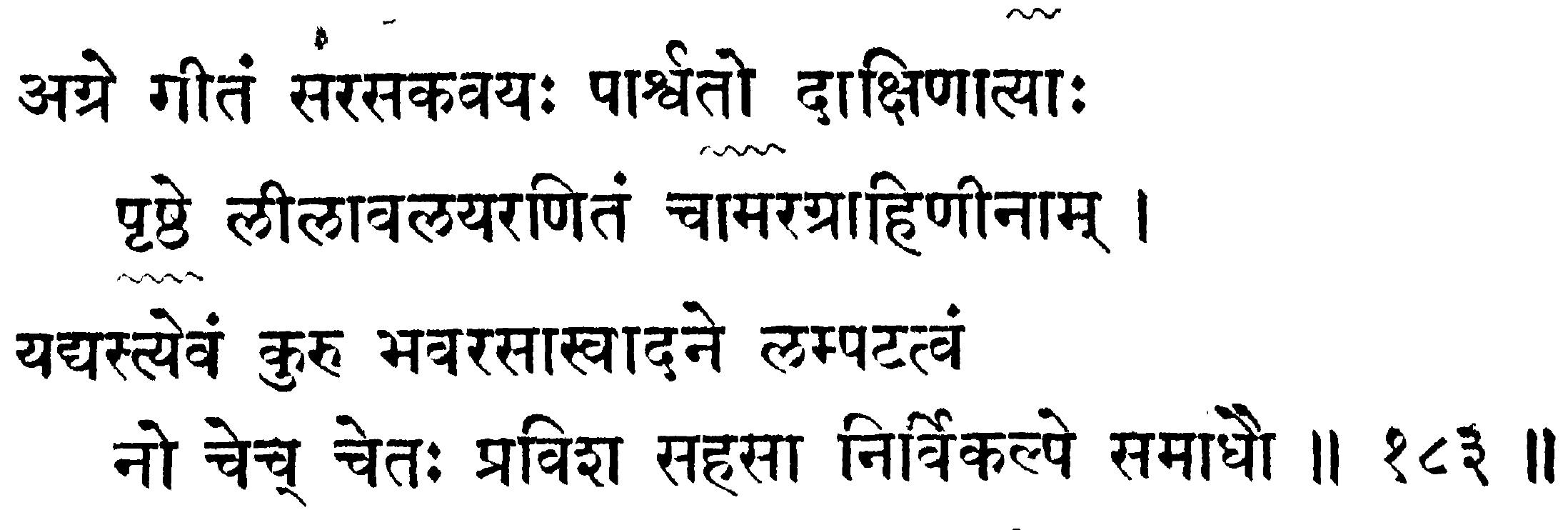
अग्रे गीतं सरसकवयः पार्श्वतो दाक्षिणात्याः
पृष्ठे लीलावलयरणितं चामरग्राहिणीनाम् ।
यद्यस्त्येवं कुरु भवरसाखादने लम्पटत्वं
नो चेच् चेतः प्रविश सहसा निर्विकल्पे समाधौ ॥ १८३ ॥
Footnote
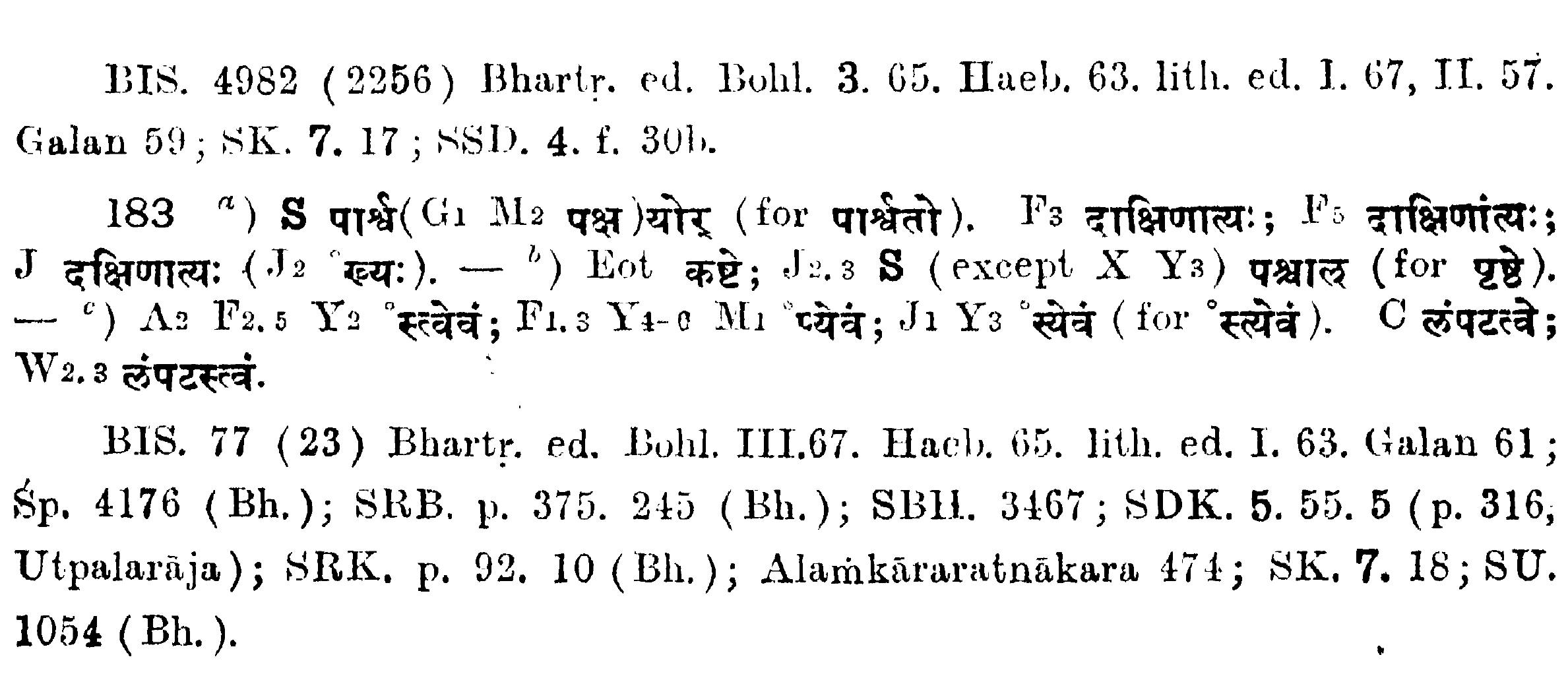
BIS . 4982 ( 2256 ) Bhartr . ed . Bohl . 3. 05. Haeb 63 lith ed . I. 67 , II . 57 .
Galan 59 ; SK 7 17 ; SSD 4. f . 30b .
183 a 2 ) S पार्श्व ( G 1 M2 पक्ष ) योर् ( for पार्श्वतो ) . I's दाक्षिणात्य : ; Is दाक्षिणांत्यः ;
J दक्षिणात्यः ( J2 ( ख्यः ) . - 2 ) Eot कष्टे ; J2 3 S ( except X Y 3 ) पश्चाल ( for पृष्ठे ) .
“ ) A3 F2.5 Y ‡ ' स्त्वेवं ; F1.3 Y1 - 0 M1 ° ध्येवं ; J1 X 3 स्येवं ( for ' स्त्येवं ) . C लंपटत्वे ;
W2.3 लंपटस्त्वं .
BIS . 77 ( 23 ) Bhartr . ed . Bohl . III.67 . Hacb 65. lith ed . I. 63. Galan 61 ;
Sp . 4176 ( Bh . ) ; SRB . p . 375 245 ( Bh . ) ; SBH . 3467 ; SDK 5.55 5 ( p . 316 ,
Utpalarāja ) ; SRK . p . 92. 10 ( Bh . ) ; Alamkararatnākara 471 ; SK . 7. 18 ; SU .
1054 ( Bh . ) .
Commentary