Tawney
This world still groans 'neath many hundred kings
All emulous to snatch their neighbour's share,
Each paltry gain some fresh enjoyment brings,
To fools whose greed should fill them with despair.
Mādhavānanda
अभुक्तायां यस्यां क्षणमपि न जातं नृपशतै-
र्भुवस्तस्या लाभे क इव बहुमान: क्षितिभृताम् ।
तदंशस्याप्यंशे तदवयवलेशेऽपि पतयो
विषादे कर्तव्ये विदधति जडा: प्रत्युत मुदम् ।।५८।।
58. What high dignity, alas, is there for kings in gaining that earth which has never for a moment been left unenjoyed by hundreds of rulers! The stupid owners of even a shred of the limb of a fraction of its fraction (i.e., of the most minute particle) feel delighted, whereas, on the contrary, they ought to grieve!
Telang
all
अभुक्तायां यस्यां क्षणमपि न यातं नृपशतै-
र्भुवस्तस्या लाभे क इव बहुमानः क्षितिभुजाम् ।
तदंशस्याप्यंशे तदवयवलेशेपि पतयो
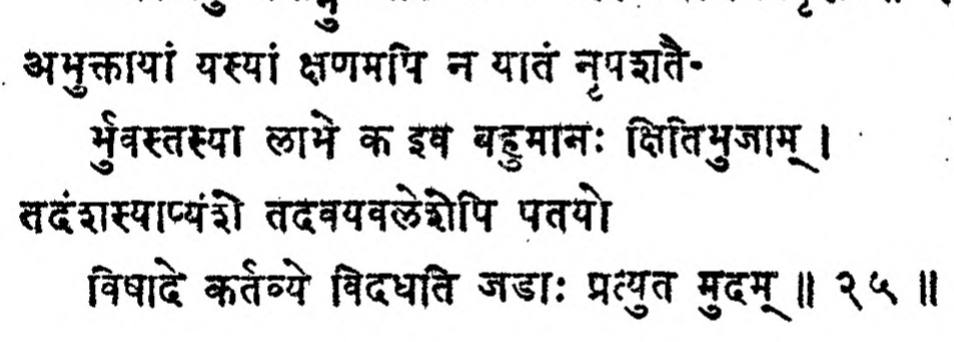
विषादे कर्तव्ये विदधति जडाः प्रत्युत मुदम् ॥ २५ ॥
Notes
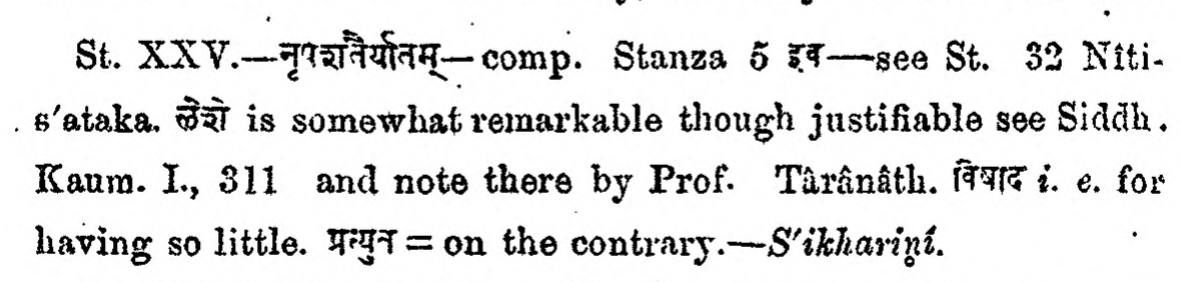
St. XXV.—नृपशतैर्यातम्—comp. Stanza 5 इव—see St. 32 Nîtis'ataka. लेशे is somewhat remarkable though justifiable see Siddh. Kaum. I., 311 and note there by Prof. Târânâth. विषाद i. e. for having so little. प्रत्युत = on the contrary.—S'ikhariṇî.

Kale
all
अभुक्तायां यस्यां क्षणमपि न यातं नृपशतै-
र्भुवस्तस्या लाभे क इव बहुमानः क्षितिभुजाम् ।
तदंशस्याप्यंशे तदवयवलेशेपि पतयो
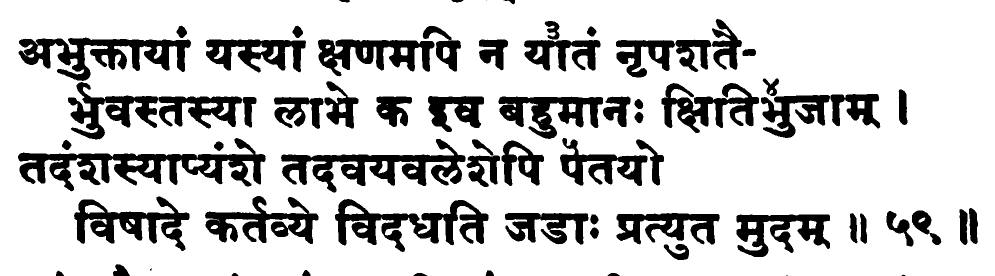
विषादे कर्तव्ये विदधति जडाः प्रत्युत मुदम् ॥ ५९ ॥
Translation
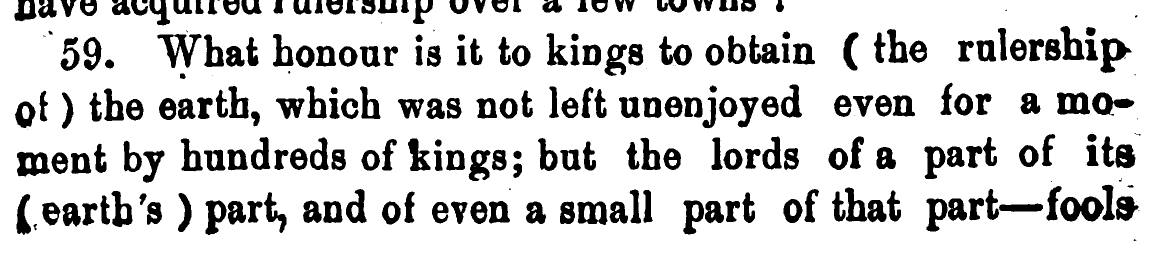
59. What honour is it to kings to obtain ( the rulership of ) the earth, which was not left unenjoyed even for a moment by hundreds of kings; but the lords of a part of its ( earth's ) part, and of even a small part of that part—fools that they are—rejoice when on the contrary they ought to grieve ! !

Notes
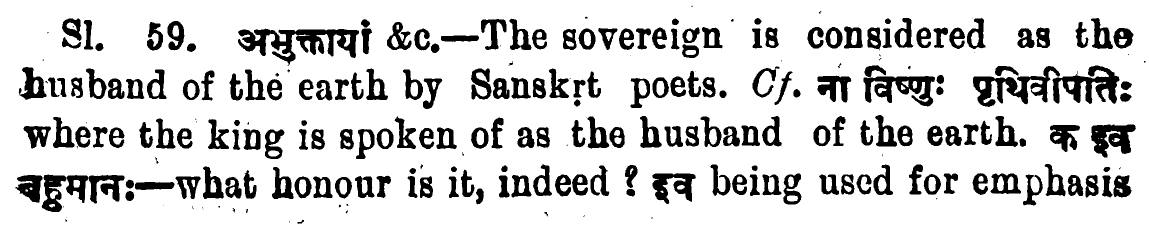
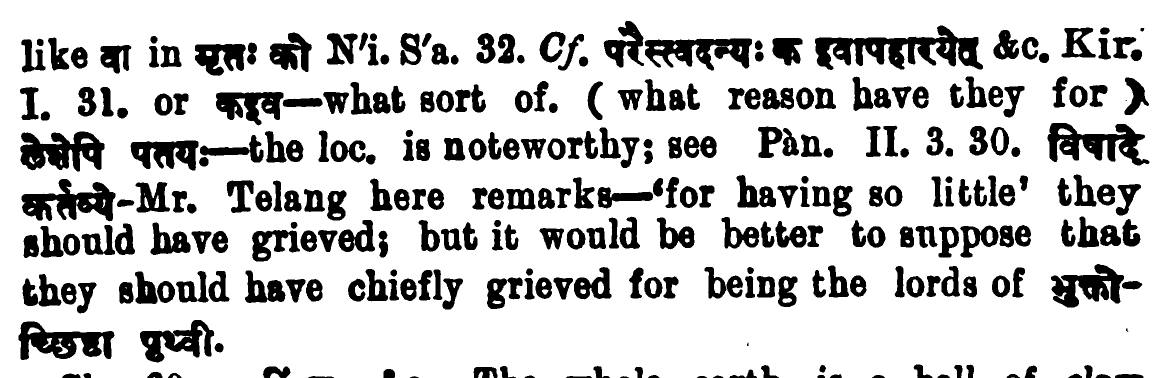
Sl. 59. अभुक्तायां &c.—The sovereign is considered as the husband of the earth by Sanskṛt poets. Cf. ना विष्णुः पृथिवीपतिः where the king is spoken of as the husband of the earth. क इव बहुमानः—what honour is it, indeed ? इव being used for emphasis like वा in मृतः को N'i. S'a. 32. Cf. परैस्त्वदन्यः क इवापहारयेत् &c. Kir. I. 31. or कइव—what sort of. ( what reason have they for ) लेशेपि पतयः—the loc. is noteworthy; see Pàn. II. 3. 30. विषादे कर्तव्ये-Mr. Telang here remarks—‘for having so little’ they should have grieved; but it would be better to suppose that they should have chiefly grieved for being the lords of भुक्तोच्छिष्टा पृथ्वी.
Gopinath1914
all
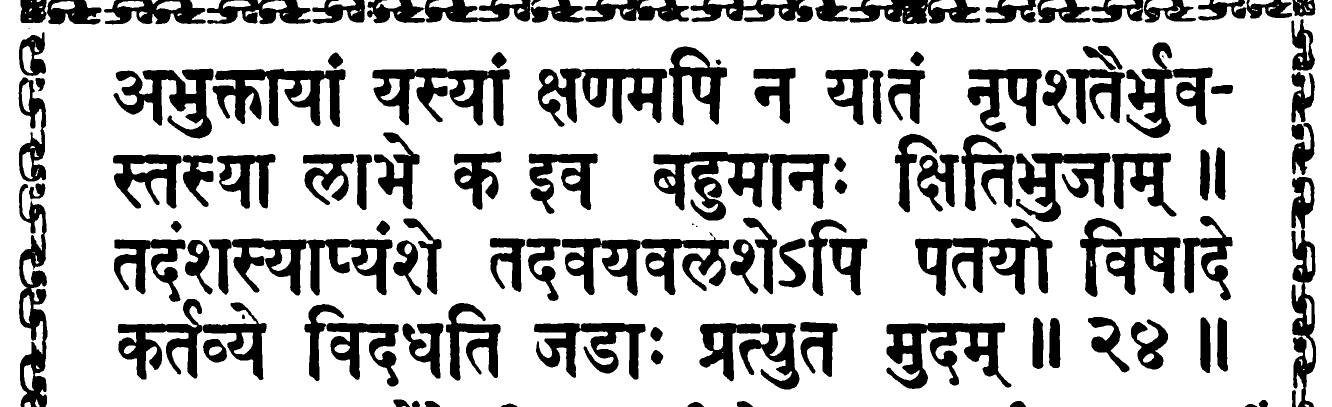
अभुक्तायां यस्यां क्षणमपि न यातं नृपशतैर्भुव-
स्तस्या लाभ क इव बहुमानः क्षितिभुजाम् ॥
तदंशस्याप्यंशे तदवयवलशेऽपि पतयो विषादे
कर्तव्ये विदधति जडाः प्रत्युत मुदम् 11 ॥ २४ ॥
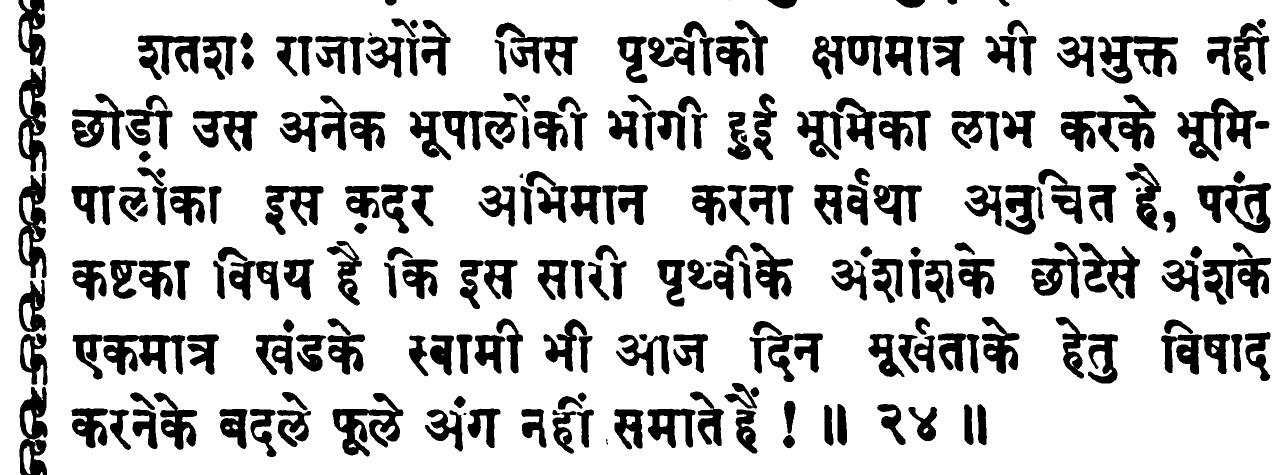
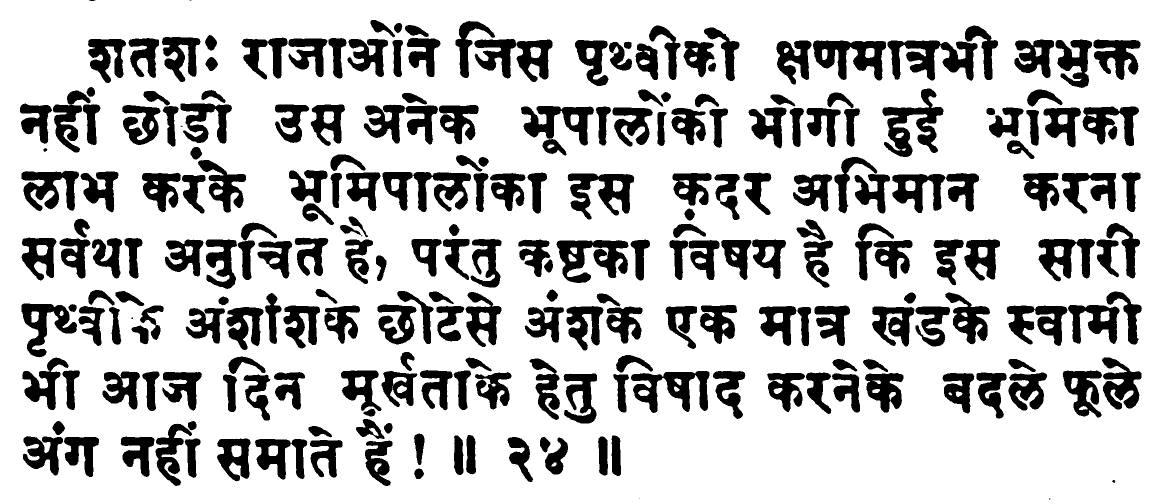
शतशः राजाओंने जिस पृथ्वीको क्षणमात्र भी अभुक्त नहीं छोड़ी उस अनेक भूपालोंकी भोगी हुई भूमिका लाभ करके भूमिपालोंका इस क़दर अभिमान करना सर्वथा अनुचित है, परंतु कष्टका विषय है कि इस सारी पृथ्वीके अंशांशके छोटेसे अंशके एकमात्र खंडके स्वामी भी आज दिन मूर्खताके हेतु विषाद करनेके बदले फूले अंग नहीं समाते हैं ! ॥ २४ ॥
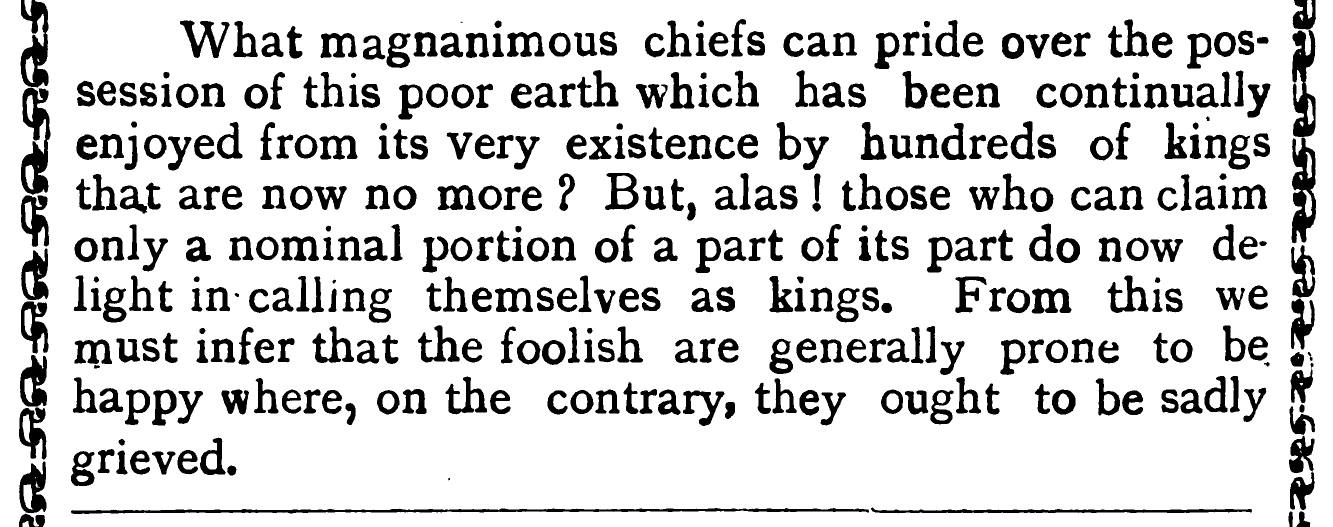
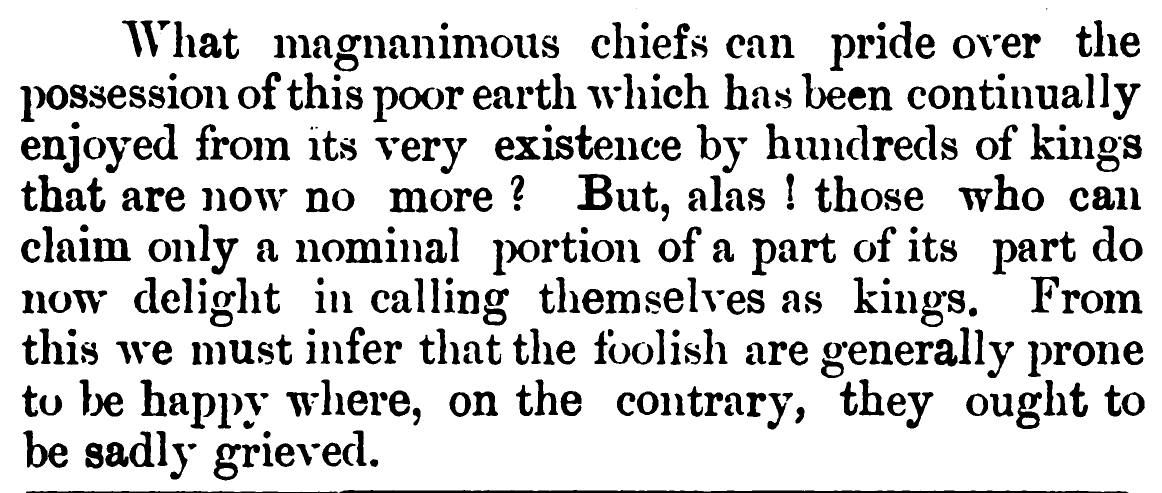
What magnanimous chiefs can pride over the possession of this poor earth which has been continually enjoyed from its very existence by hundreds of kings that are now no more ? But, alas! those who can claim only a nominal portion of a part of its part do now de light in calling themselves as kings. From this we must infer that the foolish are generally prone to be happy where, on the contrary, they ought to be sadly grieved.
Cf. " का रतिर्भूरिभेाग्यायां गणिकायामिव क्षितौ ।
भाग्यहीनं पतिं त्यक्त्वा रज्यते भाग्यभाजि या ॥ १४ ॥ "


Footnote
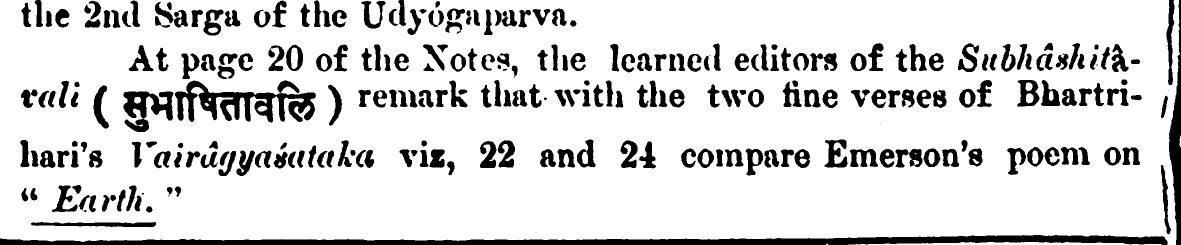
The same thought is again enlarged upon in verses 9 to 11 of the 2nd Sarga of the Udyógaparva.


Gopinath1896
all
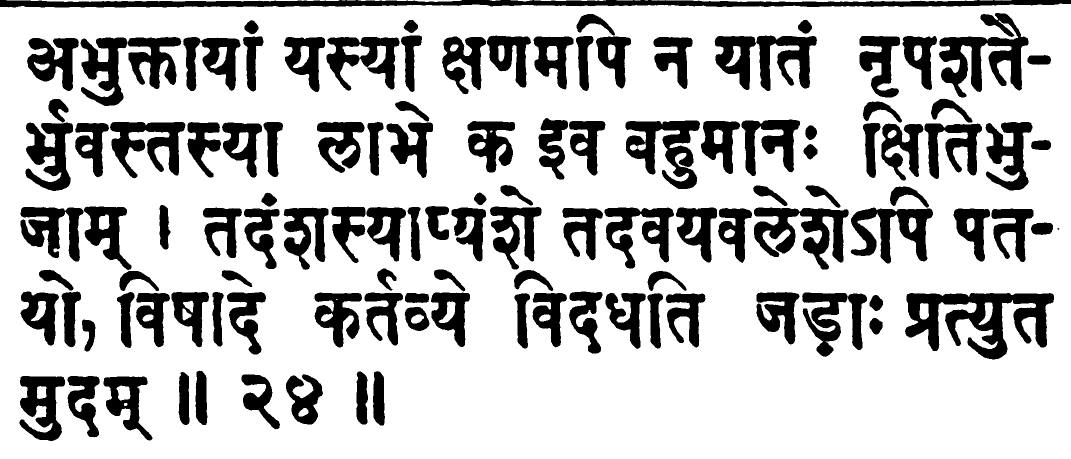
अभुक्तायां यस्यां क्षणमपि न यातं नृपशतै-
र्भुवस्तस्या लाभ क इव बहुमानः क्षितिभु-
जाम् । तदंशस्याप्यंशे तदवयवलेशेऽपि पत-
यो, विषादे कर्तव्ये विदधति जड़ाः प्रत्युत
मुदम् ॥ २४ ॥
शतशः राजाओंने जिस पृथ्वीको क्षणमात्रभी अभुक्त नहीं छोड़ी उस अनेक भूपालोंकी भोगी हुई भूमिका लाभ करके भूमिपालोंका इस कदर अभिमान करना सर्वथा अनुचित है, परंतु कष्टका विषय है कि इस सारी पृथ्वी अंशांशके छोटेसे अंशके एक मात्र खंडके स्वामी भी आज दिन मुर्खता के हेतु विषाद करने के बदले फूले अंग नहीं समाते हैं ! ॥ २४ ॥
What magnanimous chiefs can pride over the possession of this poor earth which has been continually enjoyed from its very existence by hundreds of kings that are now no more ? But, alas ! those who can claim only a nominal portion of a part of its part do now delight in calling themselves as kings. From this we must infer that the foolish are generally prone to be happy where, on the contrary, they ought to be sadly grieved.

Cf. - " कारतिर्भूरिभोग्यायां, गणिकायामिवक्षितौ ।
भाग्यहीनं पतिं त्यक्त्वा, रज्यते भाग्यभाजिया ॥ १४ ॥


Kosambi
all
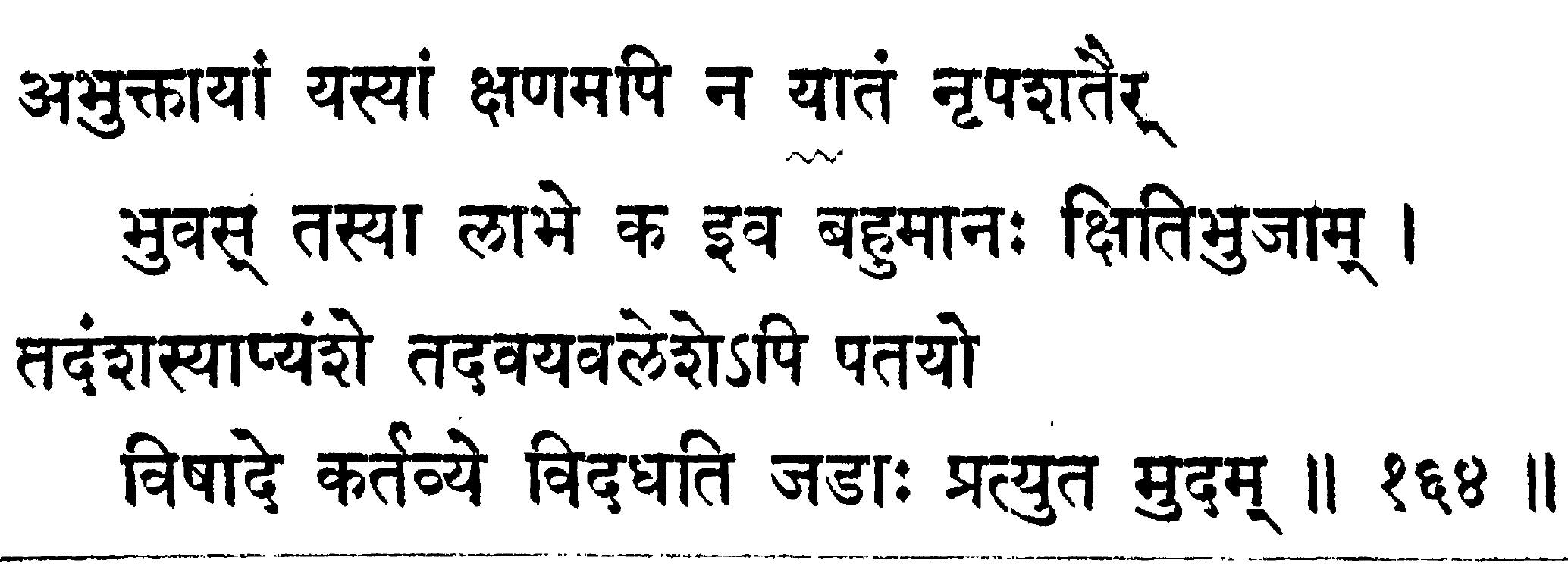
अभुक्तायां यस्यां क्षणमपि न यातं नृपशतैर्
भुवसू तस्या लाभे क इव बहुमानः क्षितिभुजाम् ।
तदंशस्याप्यंशे तदवयवलेशेऽपि पतयो
विषादे कर्तव्ये विदधति जडाः प्रत्युत मुदम् ॥ १६४ ॥
Footnote
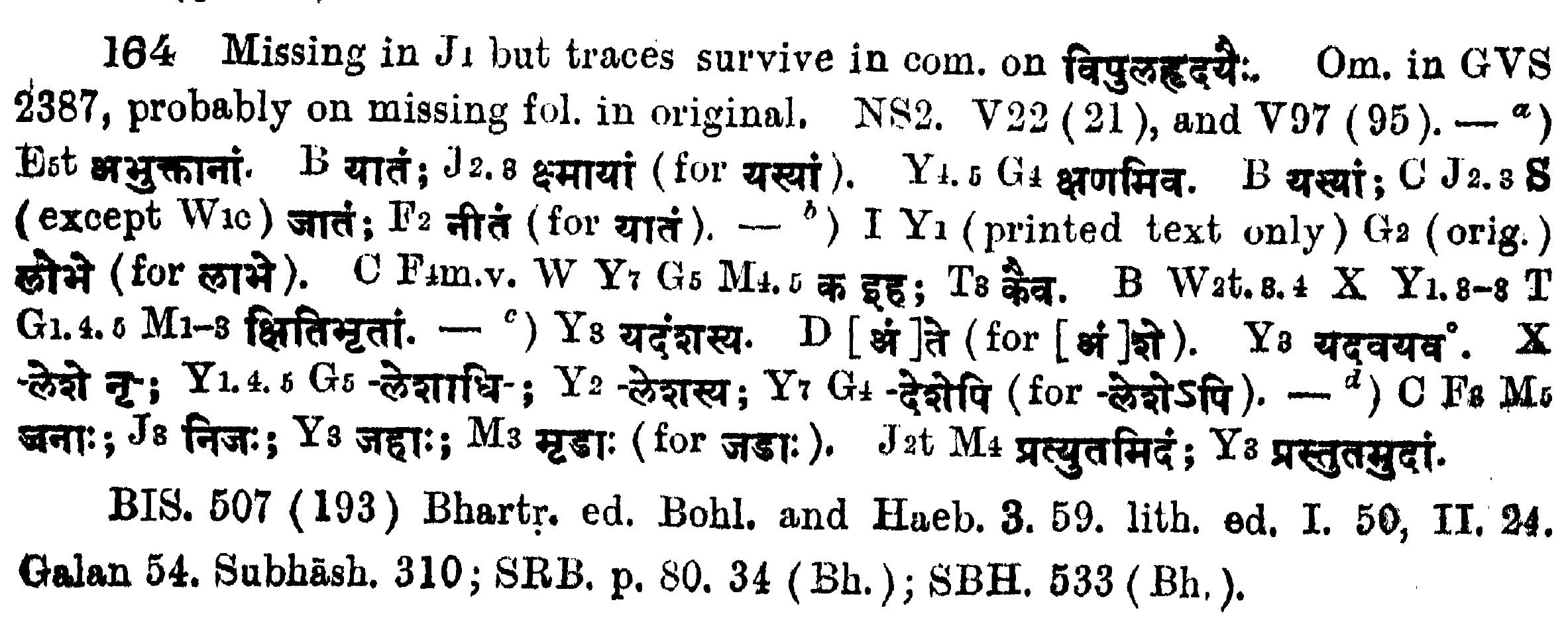
164 Missing in J1 but traces survive in com . on विपुलहृदयैः Om . in GVs
2387 , probably on missing fol . in original . NS2 . V22 ( 21 ) , and V97 ( 95 ) . — ª a ) )
ist अभुक्तानां . B यातं ; J2.8 क्षमायां ( for यस्यां ) . Y 1.5G क्षणमिव B यस्यां ; C J2 . 38
( except Wic ) जातं ; P2 F2 नीतं नीतं ( ( for for यातं यातं ) ) . . - Bing 1 ) I Y1 ( printed text only ) Ga ( orig . )
लोभे ( for लाभे ) . CFam.v. W Y7 G5 M० क इह ; T3 कैव . B Wat . 8.4 X Y1.4-4 T
G1.46 M1 - 3 क्षितिभृतां - " ) Y Y8 : यदंशस्य . D [ अं ] ते ( for [ ] शे ) . Ya यदवयव : X
" लेशे नृ ; Y1.4.5 Gs -लेशाधि ; Y 2 -लेशस्य ; Yr G + - देशेपि ( for -लेशेऽपि ) . - 2 ) CFs Mo
जनाः ; J8 निजः ; Y3 जहा :; M3 मृडा : ( for जडा : ) . Jat M4 प्रत्युतमिदं ; X 3 प्रस्तुतमुदां .
BIS . 507 ( 193 ) Bhartr ed . Bohl . and Hueb . 3. 59. lith ed . I. 50 , II . 24 .
Galan 54. Subhāsh . 310 ; SRB . p . 80.34 ( Bh . ) ; SBH . 533 ( Bh , ) .
Commentary