Tawney
Those do not lead an easy life who fall into the power
Of one in whom the seed of vice matures in perfect flower,
Who with a herd of fawning rogues delights t' engird his throne,
Whose lawless will no bonds of faith nor ties of blood doth own.
Telang
all
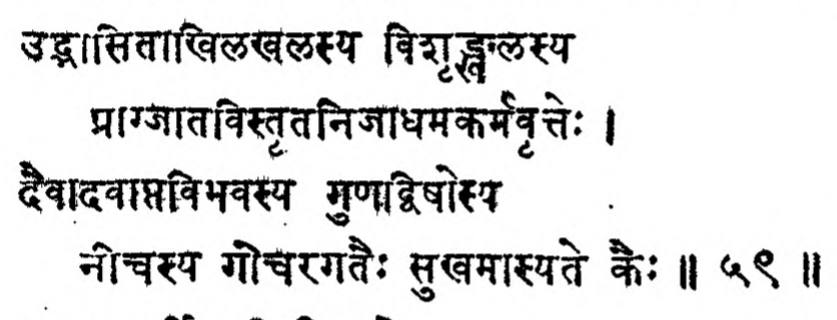
उद्भासिताखिलखलस्य विशृङ्खलस्य
प्राग्जातविस्तृतनिजाधमकर्मवृत्तेः ।
दैवादवाप्तविभवस्य गुणद्विषोस्य
नीचस्य गोचरगतैः सुखमास्यते कैः ॥ ५९ ॥
Notes
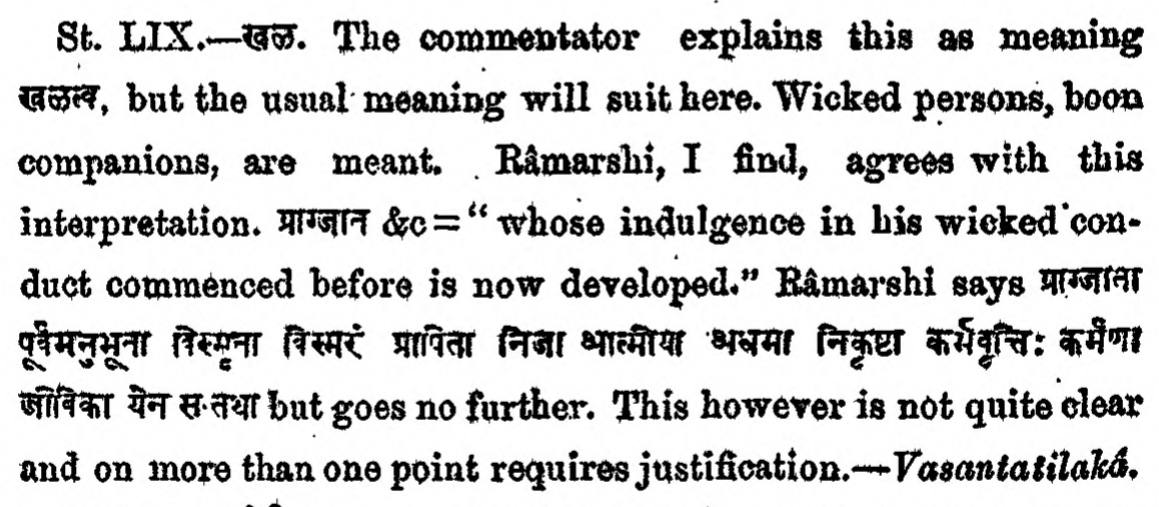
St. LIX.—खल. The commentator explains this as meaning खलत्व, but the usual meaning will suit here. Wicked persons, boon companions, are meant. Râmarshi, I find, agrees with this interpretation. प्राग्जात &c = “whose indulgence in his wicked conduct commenced before is now developed.” Râmarshi says प्राग्जाता पूर्वमनुभूता विस्मृता विस्मरं प्रापिता निजा आत्मीया अधमा निकृष्टा कर्मवृत्तिः कर्मणा जीविका येन स तथा but goes no further. This however is not quite clear and on more than one point requires justification.—Vasantatilakâ.

Kale
all

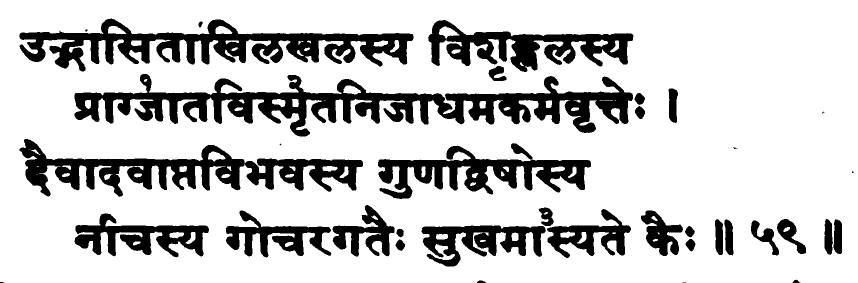
उद्भासिताखिलखलस्य विशृङ्खलस्य
प्राग्जातविस्मृतनिजाधमकर्मवृत्तेः ।
दैवादवाप्तविभवस्य गुणद्विषोस्य
नीचस्य गोचरगतैः सुखमास्यते कैः ॥ ५९ ॥
Translation
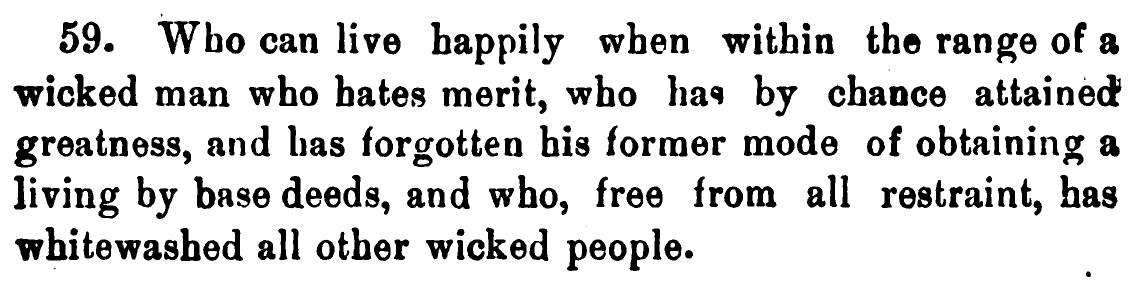
59. Who can live happily when within the range of a wicked man who hates merit, who has by chance attained greatness, and has forgotten his former mode of obtaining a living by base deeds, and who, free from all restraint, has whitewashed all other wicked people.
Notes
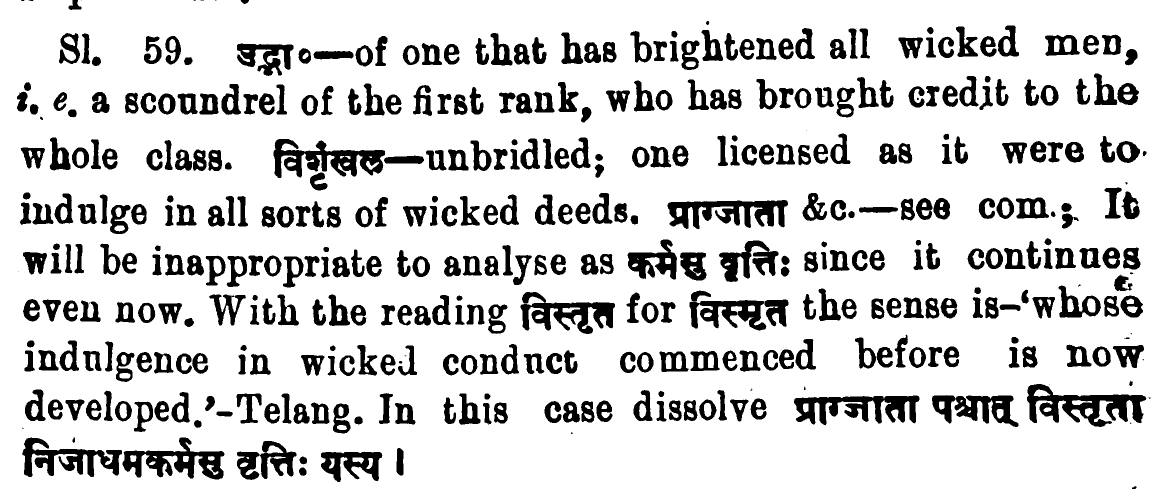
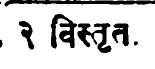
Sl. 59. उद्भा०—of one that has brightened all wicked men, i. e. a scoundrel of the first rank, who has brought credit to the whole class. विशृंखल—unbridled; one licensed as it were to indulge in all sorts of wicked deeds. प्राग्जाता &c.—see com.; It will be inappropriate to analyse as कर्मसु वृत्तिः since it continues even now. With the reading विस्तृत for विस्मृत the sense is–‘whose indulgence in wicked conduct commenced before is now developed.’–Telang. In this case dissolve प्राग्जाता पश्चात् विस्तृता निजाधमकर्मसु वृत्तिः यस्य ।
Gopinath1914
all
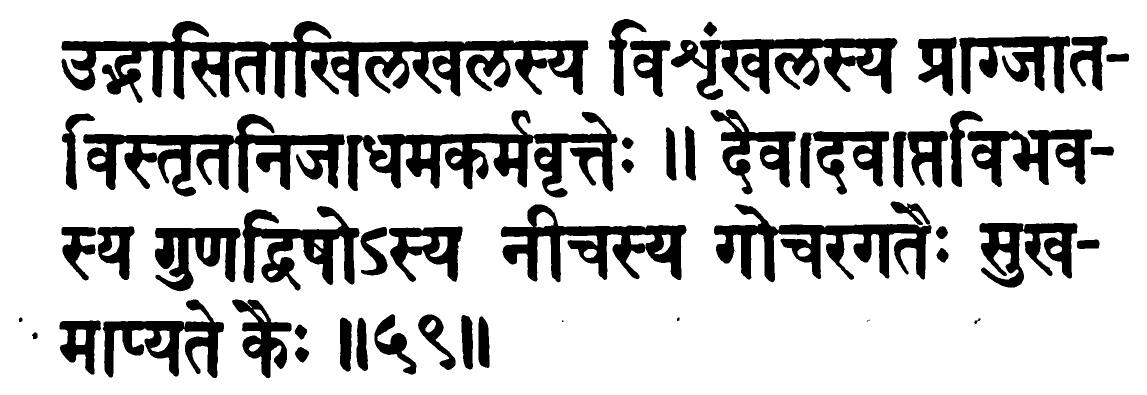
उद्भासिताखिलखलस्य विशृंखलस्य प्राग्जात-
विस्तृतनिजाधमकर्मवृत्तेः ॥ दैवादवाप्तविभव-
स्य गुणद्विषोऽस्य नीचस्य गोचरगतैः सुख-
माप्यते कैः ॥५९॥
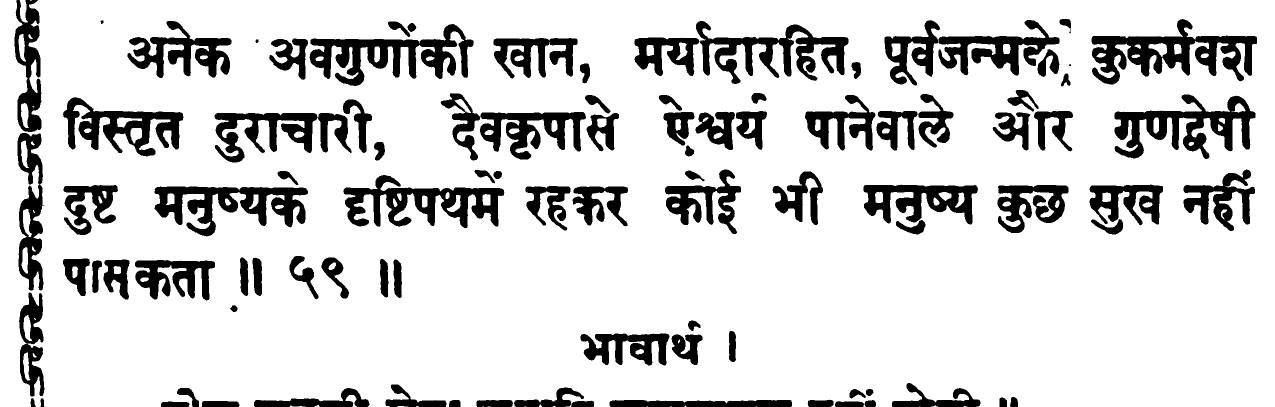
अनेक अवगुणोंकी खान, मर्यादारहित, पूर्वजन्मके, कुकर्मवश विस्तृत दुराचारी, दैवकृपासे ऐश्वर्य पानेवाले और गुणद्वेषी दुष्ट मनुष्यके दृष्टिपथमें रहकर कोई भी मनुष्य कुछ सुख नहीं पासकता ॥ ५९ ॥
Gopinath1896
all
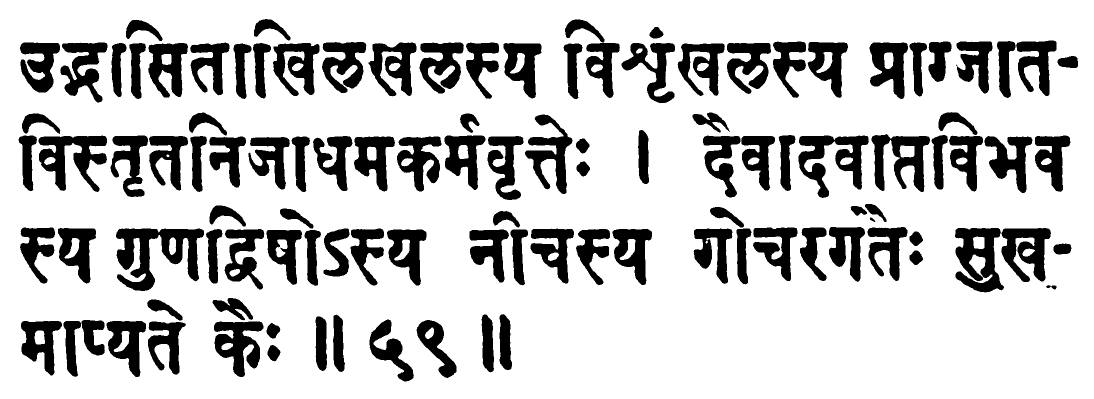
उद्भासिताखिलखलस्य विशृंखलस्य प्राग्जात-
विस्तृतनिजाधम कर्मवृत्तेः । दैवादवाप्तविभव
स्य गुणद्विषोऽस्य नीचस्य गोचरगतैः सुख-
माप्यते कैः ॥ ५९ ॥
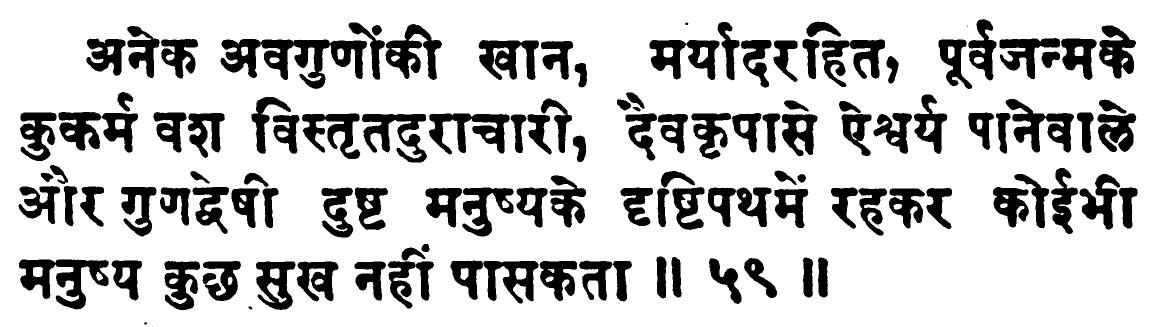
अनेक अवगुणोंकी खान, मर्यादरहित, पूर्वजन्म के कुकर्म वश विस्तृतदुराचारी, दैवकृपासे ऐश्वर्य पानेवाले और गुणद्वेषी दुष्ट मनुष्यके दृष्टिपथमें रहकर कोईभी मनुष्य कुछ सुख नहीं पासकता ॥ ५९ ॥
Kosambi
all
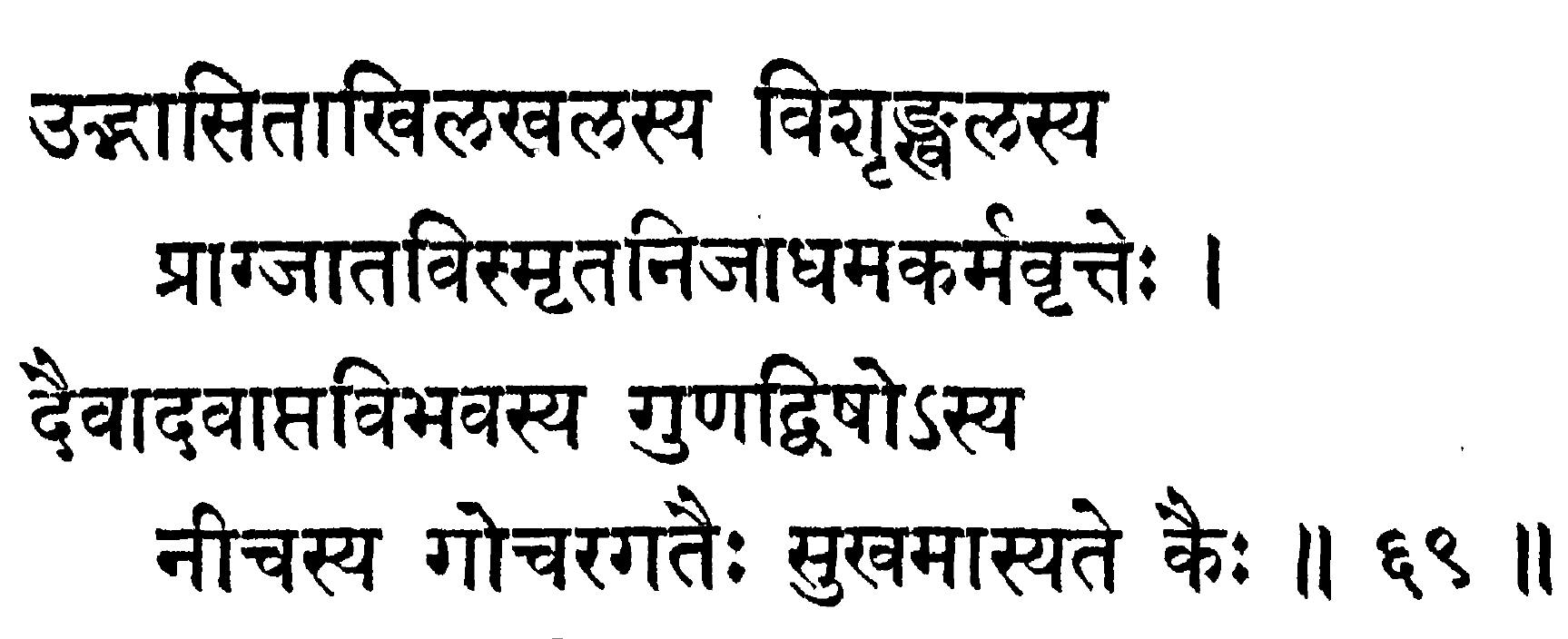
उद्भासिताखिलखलस्य विशृङ्खलस्य
प्राग्जातविस्मृत निजाधम कर्मवृत्तेः ।
दैवादवाप्तविभवस्य गुणद्विषोऽस्य
नीचस्य गोचरगतैः सुखमास्यते कैः ॥ ६ ९ ॥
Footnote
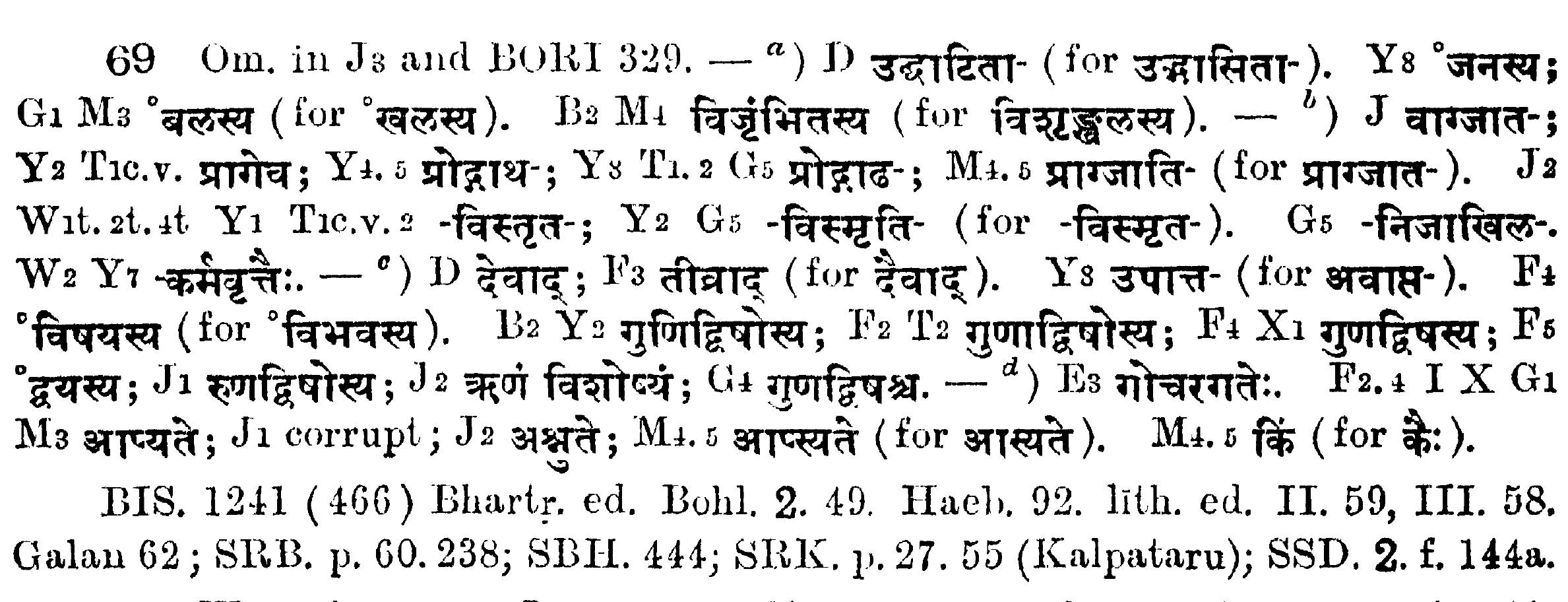
69 Om in J3 and BORI 329. - a ) J I ) ) उद्घाटिता ( for उद्भासिता- ) . X8 जनस्य ;
G1 M3 ° बलस्य ( for ° खलस्य ) . B2 M4 विजृंभितस्य ( for विशृङ्खलस्य ) . – ४ ) J वाग्जात- ;
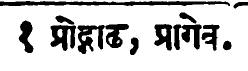
Ya T1c.v. प्रागेव ; Y + 5 प्रोद्दाथ ; YT1 2 G5 प्रोगाढ - ; M1.5 प्राग्जाति ( for प्राग्जात- ) . Ja
Wit . 2t , it Y1 Tic . v . 2 विस्तृत ; X 2 G5 - विस्मृति ( for विस्मृत- ) . G5 -निजाखिल
W2 Y1 कर्मवृत्तै :. - ● ) ID देवाद ; 13 तीव्राद् ( for दैवादू ) . Y ९ उपात्त- ( for अवाप्त- ) . F +
' विषयस्य ( for ' विभवस्य ) . B2 Y : गुणिद्विषोस्य ; PF 12 गुणाद्विषोस्य ; F + X1 गुणद्विषस्य ; Fs
° द्वयस्य ; J1 रुणद्विषोस्य ; J2 ऋणं विशोष्यं ; G + गुणद्विषश्च – d 2 ) Es गोचरगते :. F 2. 4 I X G1
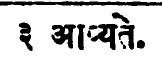
M3 आप्यते ; J1 corrupt ; J2 अनुते ; M. आप्स्यते ( for आस्यते ) . M. किं ( for कैः ) .
BIS . 1241 ( 466 ) Bhartr . ed . Bohl . 2. 49. Hael ) 92. līth ed . II . 59 , III . 58 .
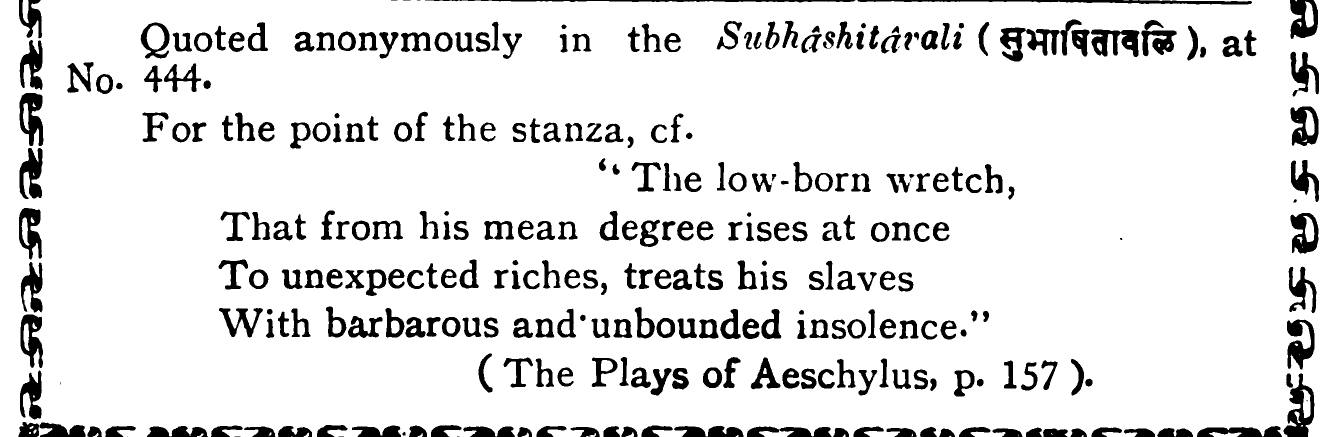
Galan 62 ; SRB . p . 60.238 ; SBH 444 ; SRK , p . 27.55 ( Kalpataru ) ; SSD . 2. f . 144a .
Commentary