Tawney
Fame, might, the power to give and spend,
To nourish Brahmans, help a friend,
These blessings are a courtier's lot;
What boots his toil who gains them not?
Telang
all
आज्ञा कीर्तिः पालनं ब्राह्मणानां
दानं भोगो मित्रसंरक्षणं च ।
येषामेते षड्गुणा न प्रवृत्ताः
कोर्थस्तेषां पार्थिवोपाश्रयेण ॥ ४८ ॥
Notes
St. XLVIII.—आज्ञा is here equivalent to power to command. Râmarshi says येनोक्तं स सर्वैः सर्वैर्विधीयते. Comp. St. 103 below गुण = good things, benefits. Compare Stanza 7. ब्राह्मणानामित्युपलक्षणं सर्वलोकानां पालनमित्यर्थः Râmarshi.—S'âlinî.

Kale
all

आज्ञा कीर्तिः पालनं ब्राह्मणानां दानं भोगो मित्रसंरक्षणं च ।
येषामेते षड्गुणा न प्रवृत्ताः कोर्थस्तेषां पार्थिवोपाश्रयेण ॥ ४८ ॥

Translation
48. What is the use of those men becoming the king’s, servants ( lit. resorting to the king ) who do not possess the six qualities, viz. the power to command, fame, the protection of Bràhmaṇas, charity, the enjoyment of pleasures and the protection of friends.
Notes
Sl. 48. आज्ञा—power to enforce command. Râmrshi considers the word ब्राह्मणानाम् to be an उपलक्षण i. e. as including all people. The Brâhmaṇas are specially mentioned as most deserving help and protection, their priestly avocation making it impossible for them to defend themselves with arms &c. येषां एते &c. who have not gained these six qualities (special advantages ). पार्थिवोपाश्रय—taking shelter with a king i. e. becoming royal servants or favourites. Or पार्थिव may be taken as Voc. singular; in this case तेषां may refere to kings; what is the use of resorting to those kings who do not &c.

Gopinath1914
all
आज्ञा कीर्तिः पालनं ब्राह्मणानां दानं भोगो
मित्रसंरक्षणं च । येषामेते सद्गुणा न प्रवृत्ताः
कोऽर्थस्तेषां पार्थिवोपाश्रयेण ॥ ४८ ॥

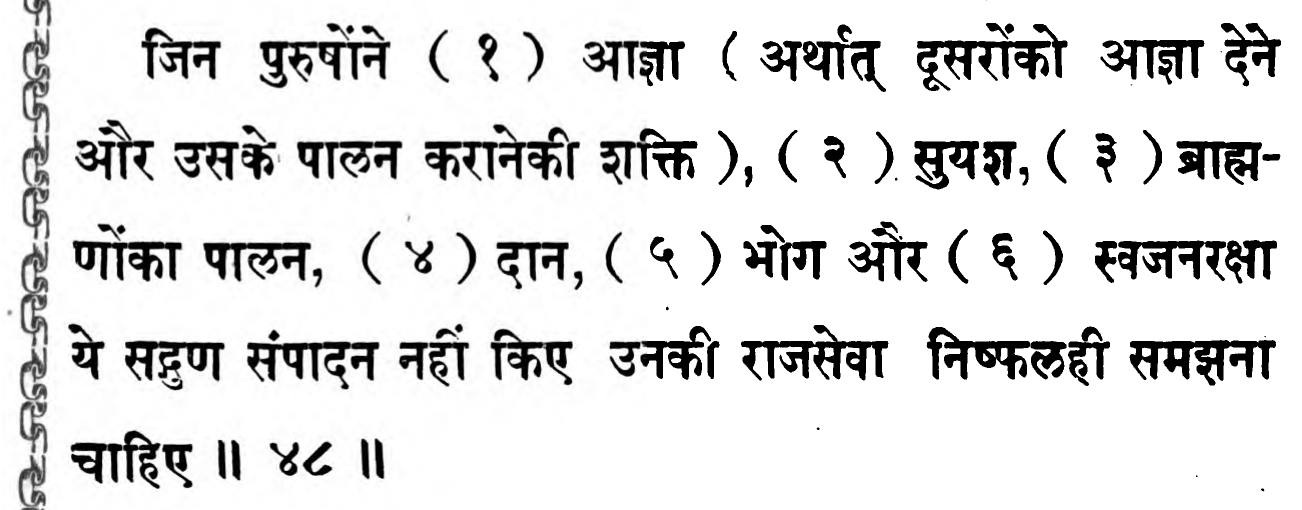
जिन पुरुषोंने ( १ ) आज्ञा ( अर्थात् दूसरोंको आज्ञा देने और उसके पालन करानेकी शक्ति ), ( २ ) सुयश, (३) ब्राह्मपालन, (४) दान, (५) भोग और ( ६ ) स्वजनरक्षा ये सद्गुण संपादन नहीं किए उनकी राजसेवा निष्फलही समझना चाहिए ॥ ४८ ॥
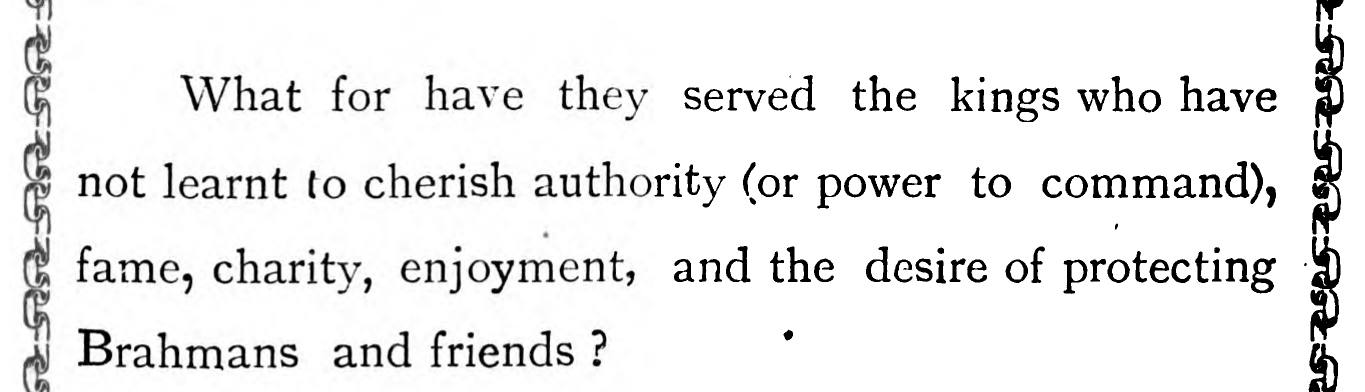
What for have they served the kings who have not learnt to cherish authority (or power to command), fameBrahmans , charityand , enjoymentfriends? , and the desire of protecting
Gopinath1896
all
आज्ञा कीर्त्तिः पालनं ब्राह्मणानां दानं भोगो
मित्रसंरक्षणं च । येषामेते सद्गुणा न प्रवृत्ताः
कोऽर्थस्तेषां पार्थिवोपाश्रयेण ॥ ४८ ॥

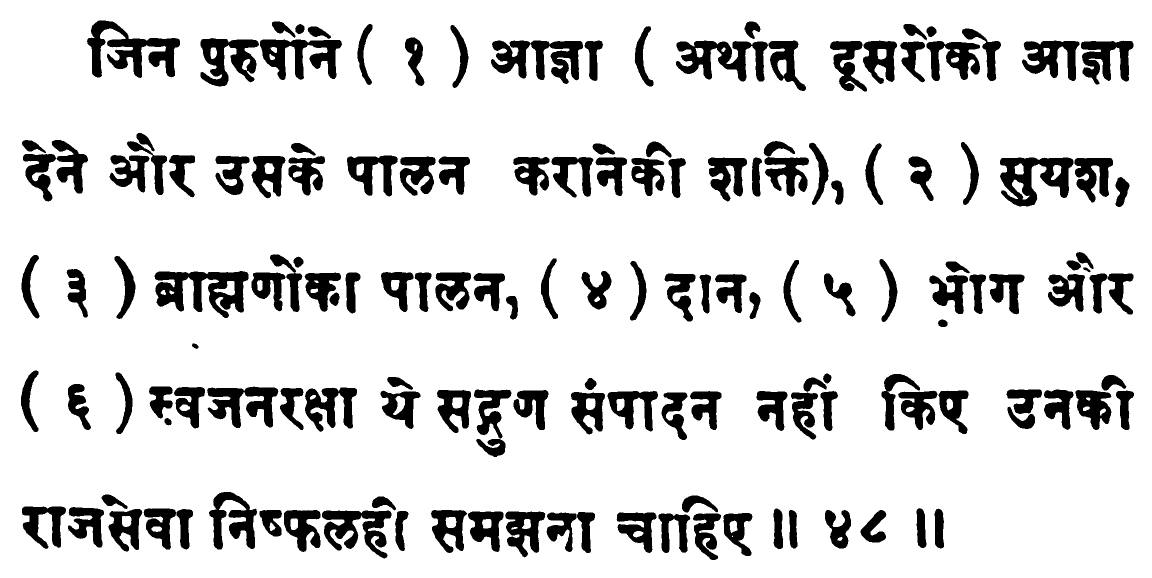
जिन पुरुषोंने ( १ ) आज्ञा ( अर्थात् दूसरोंको आज्ञा देने और उसके पालन कराने की शक्ति ), ( २ ) सुयश, (३) ब्राह्मणों का पालन, (४) दान, (५) भोग और (६) स्वजनरक्षा ये सद्गुण संपादन नहीं किए उनकी राजसेवा निष्फलहो समझना चाहिए ॥ ४८ ॥
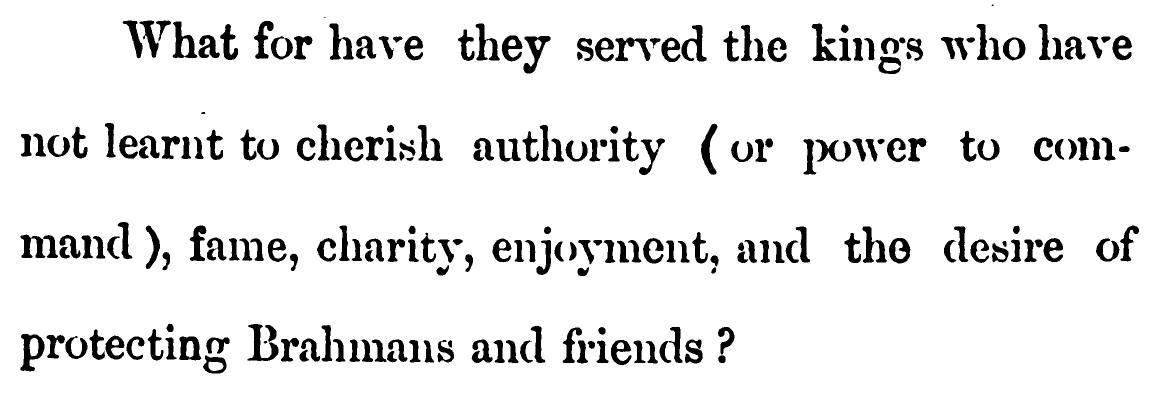
What for have they served the kings who have not learnt to cherish authority (or power to command), fame, charity, enjoyment, and the desire of protecting Brahmans and friends?
Footnote
This stanza is quoted anonymously by Ballabladeva in his Subhashitārali ( सुभाषितावलि ) ( No. 3229. B. S. S. No. XXXI.).


Kosambi
all
आज्ञा कीर्तिः पालनं ब्राह्मणानां दानं भोगो मित्रसंरक्षणं च ।
येषामेते षड् गुणा न प्रवृत्ताः कोऽर्थस् तेषां पार्थिवोपाश्रयेण ॥ ६६ ॥

Footnote
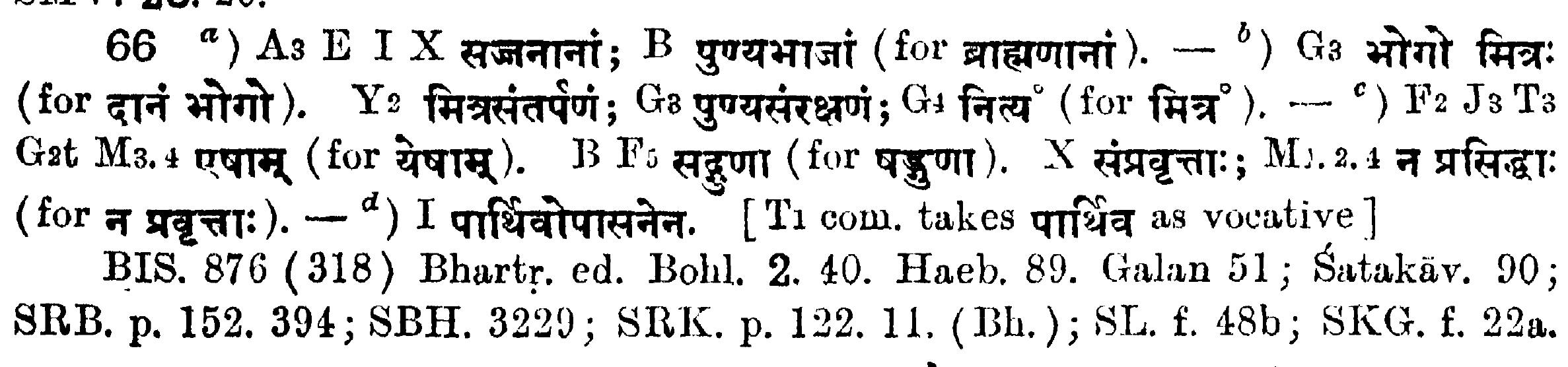
66 2 ) A3EI X सज्जनानां ; B पुण्यभाजां ( for ब्राह्मणानां ) . 8 ) G3 भोगो मित्रः
( for दानं भोगो ) . Y : मित्रसंतर्पणं ; Ga पुण्यसंरक्षणं ; G ) नित्य ( for मित्र ) . – ‘ ) IF2 J3 Js Ta
Gat M3 . + एषाम् ( for येषाम् ) . B Fs सद्हणा ( for षडणा ) . X संप्रवृत्ताः ; M..2.4 न प्रसिद्धाः
( for न प्रवृत्ताः ) . - a ) I पार्थिवोपासनेन . [ T1 com . takes पार्थिव as vocative ]
BIS 876 ( 318 ) Bhartr . ed . Bohl . 2. 40. Haeb 89. Galan 51 ; Satakav . 90 ;
SRB . p . 152394 ; SBH . 3229 ; SRK . p . 122 11 ( BL . ) ; SL . f . 48b ; SKG . f . 22a
Commentary