Tawney
Mercy's the ornament of power, of courage courteous rede,
Of learning modesty, of wealth bounty to those that need,
Of hermits gentleness and truth, longsuffering of a king,
Of all men virtuous character, whence all these glories spring.
Telang
all
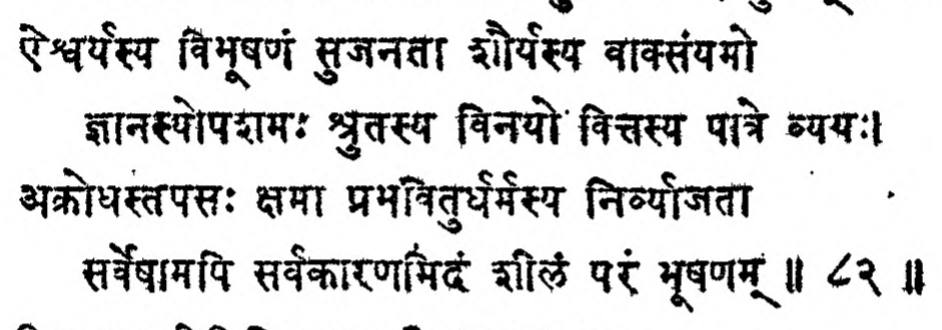
ऐश्वर्यस्य विभूषणं सुजनता शौर्यस्य वाक्संयमो
ज्ञानस्योपशमः श्रुतस्य विनयो वित्तस्य पात्रे व्ययः।
अक्रोधस्तपसः क्षमा प्रभवितुर्धर्मस्य निर्व्याजता
सर्वेषामपि सर्वकारणमिदं शीलं परं भूषणम् ॥ ८२ ॥
Notes
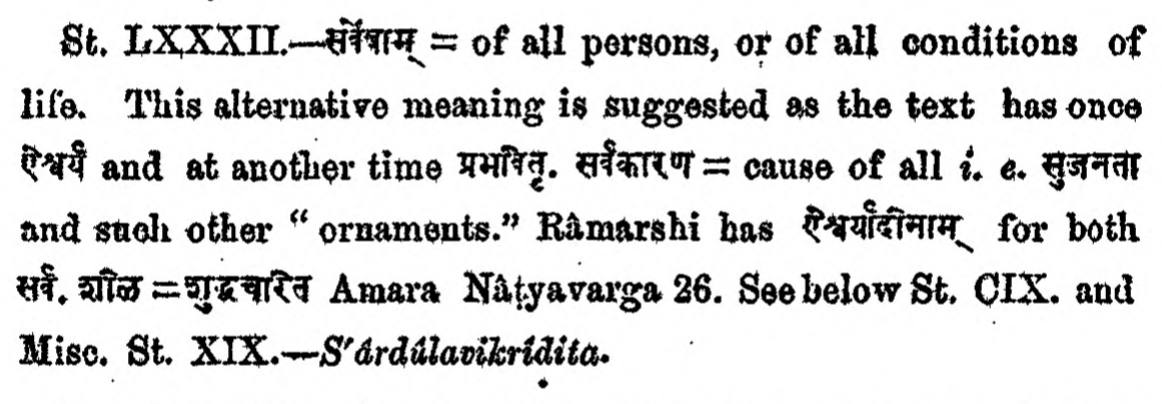
St. LXXXII.—सर्वेषाम् = of all persons, or of all conditions of life. This alternative meaning is suggested as the text has once ऐश्वर्य and at another time प्रभवितृ. सर्वकारण = cause of all i. e. सुजनता and such other “ornaments.” Râmarshi has ऐश्वर्यादीनाम् for both सर्व. शील = शुद्धचरित Amara Nâṭyavarga 26. See below St. CIX. and Misc. St. XIX.—S'ârdûlavikrîḍita.

Kale
all

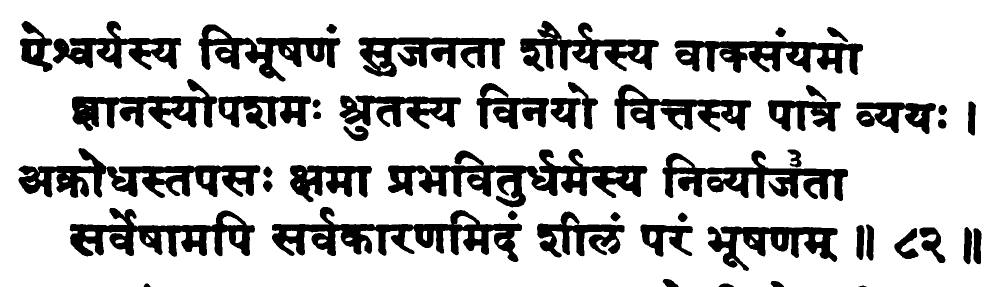
ऐश्वर्यस्य विभूषणं सुजनता शौर्यस्य वाक्संयमो
ज्ञानस्योपशमः श्रुतस्य विनयो वित्तस्य पात्रे व्ययः ।
अक्रोधस्तपसः क्षमा प्रभवितुर्धर्मस्य निर्व्याजता
सर्वेषामपि सर्वकारणमिदं शीलं परं भूषणम् ॥ ८२ ॥
Translation
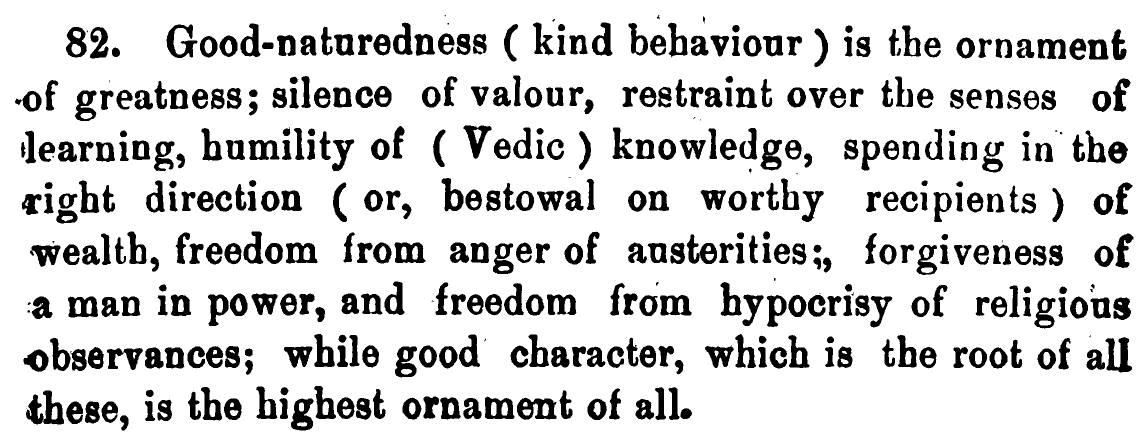
82. Good-naturedness ( kind behaviour ) is the ornament of greatness; silence of valour, restraint over the senses of learning, humility of ( Vedic ) knowledge, spending in the right direction ( or, bestowal on worthy recipients ) of wealth, freedom from anger of austerities;, forgiveness of a man in power, and freedom from hypocrisy of religious observances; while good character, which is the root of all these, is the highest ornament of all.
Notes
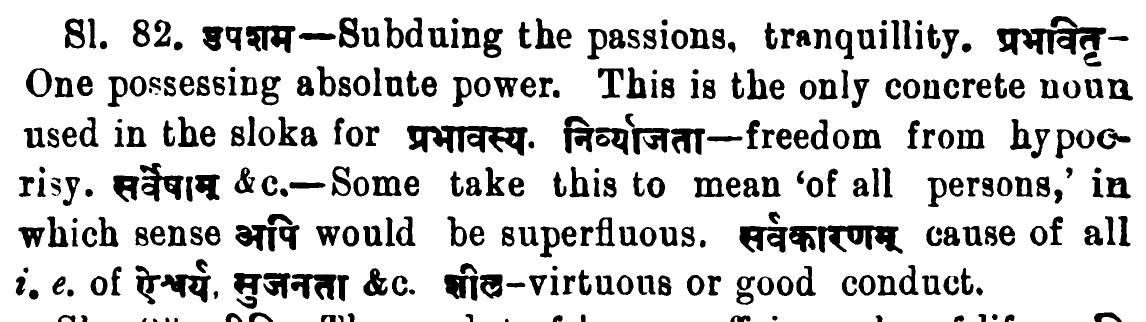
Sl. 82. उपशम—Subduing the passions, tranquillity. प्रभवितृ– One possessing absolute power. This is the only concrete noun used in the sloka for प्रभावस्य. निर्व्याजता—freedom from hypocrisy. सर्वेषाम् &c.—Some take this to mean ‘of all persons,’ in which sense अपि would be superfluous. सर्वकारणम् cause of all i. e. of ऐश्वर्य, सुजनता &c. शील–virtuous or good conduct.
Gopinath1914
all
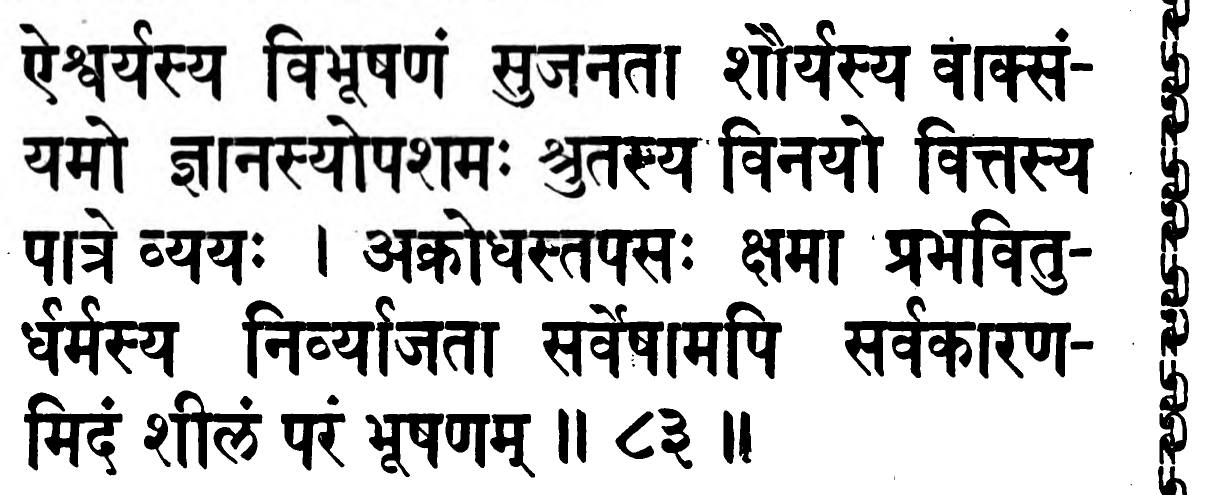
ऐश्वर्यस्य विभूषणं सुजनता शौर्यस्य वाक्सं-
यमो ज्ञानस्योपशमः श्रुतस्य विनयो वित्तस्य
पात्रे व्ययः । अक्रोधस्तपसः क्षमा प्रभवितु-
धर्मस्य निर्व्याजता सर्वेषामपि सर्वकारण-
मिदं शीलं परं भूषणम् ॥ ८३ ॥
ऐश्वर्यका आभूषण सज्जनता, शूरवीरताका वाक्संयम, ज्ञानका शांतिभाव, शास्त्रका विनय, धनका पात्रदान, तपका भूषण क्रोधका न होना, सामर्थ्यवानका क्षमा और धर्मका भूषण निष्कापट्य हैं । परंतु सुशील सब मनुष्यों के लिए समस्त आभरणोंका मूलकारण और उत्तमोत्तम आभूषण है ॥ ८३ ॥
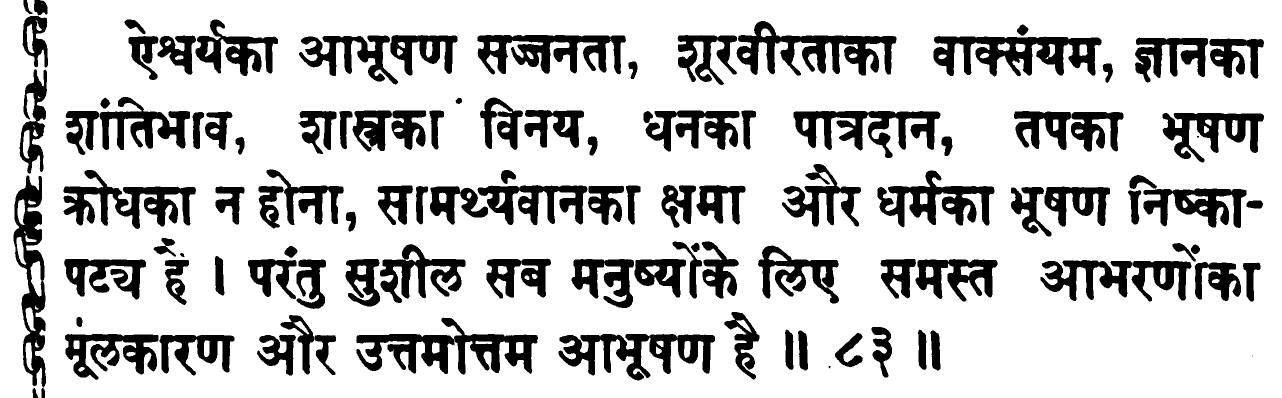
The value of prosperity is much increased by gentlemanliness, that of personal valour by proper control of speech, that of knowledge by calmness, that of learning by humility, that of wealth by due charity, that of religious devotions by calmness (lit. absence of anger), that of power by forgiveness, and that of virtue by candour and sincerity of heart; but good conduct is the best ornament for all, because it heightens the worth of all the aforesaid merits.


Footnote
Cf. (a ) " वचो हि सत्यं परमं विभूषणं गंजाङ्गनायाः कृशता कटौ तथा । द्विमस्य विचैव पुनस्तथा क्षमा शीलं हि (सुभाषितरत्नभांडा सर्वस्य नरस्य भूषणम् गारः ) ॥ "


Gopinath1896
all
ऐश्वर्यस्य विभूषणं सुजनता शौर्यस्य वाक्सं
यमो, ज्ञानस्योपशमः श्रुतस्य विनयो वित्तस्य
पात्रेव्ययः । अक्रोध स्तपसः क्षमा प्रभवितु-
धर्मस्य निर्व्याजता, सर्वेपामपि सर्वकारण -
मिदं शीलं परं भूषणम् ॥ ८३ ॥
ऐश्वर्यका आभूषण सज्जनता, सूरवीरताका वाक्संयम, ज्ञानका शांति भाव, शास्त्रका विनय, धनका पात्र दान, तपका भूषण कोधका नहोना, सामर्थ्यवान का क्षमा, और धर्मका भूषण निष्कापट्य है । परंतु सुशील सब मनुष्यों के लिए समस्त आभरणों का मूलकारण और उत्तमोत्तम आभूषण है ॥ ८३ ॥
The value of prosperity is much increased by gentlemanliness, that of personal valour by proper control of speech, that of knowledge by calmness, that of learning by humility, that of wealth by due charity, that of religious devotions by calmness ( lit. absence of angar), that of power by forgiveness, and that of virtue by candour and sincerity of heart; but good conduct is the best ornament for all, because it heightens the worth of all the aforesaid merits.
Footnote
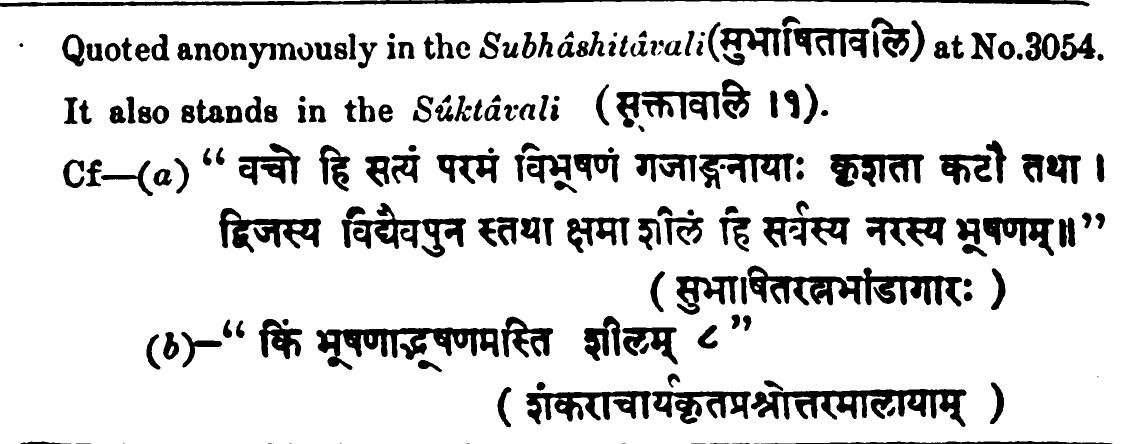
Quoted anonymously in the Subhashitårali (मुभाषितावलि) at No. 3054. It also stands in the Saktárali ( सुक्तावलि 19 ). Cf – (a ) " वचो हि सत्यं परमं विभूषणं गजाङ्गनायाः कृशता कटौ तथा । द्विजस्य विधैवपुनस्तथा क्षमा शीलं हि सर्वस्य नरस्य भूषणम् ॥” ( सुभाषितरत्नभांडागारः ) (b) - " किं भूषणाद्भूषणमस्ति शीलम् ८ " ( शंकराचार्यकृतप्रश्नोत्तरमालायाम् )
Kosambi
all
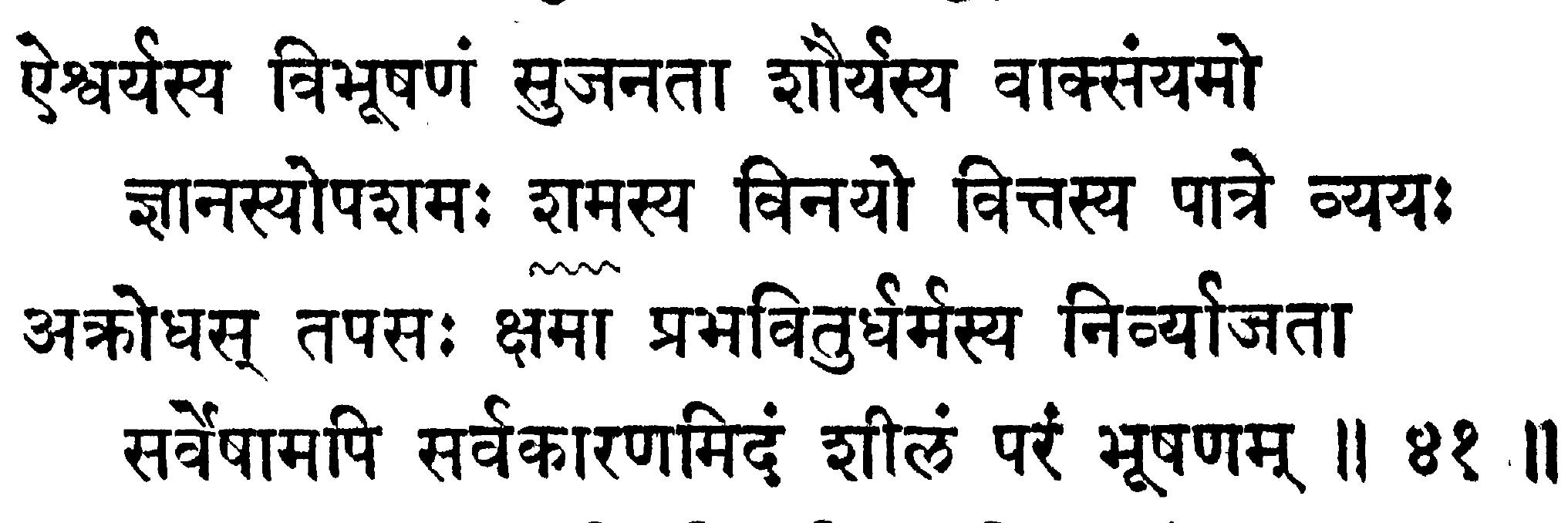
ऐश्वर्यस्य विभूषणं सुजनता शौर्यस्य वाक्संयमो
ज्ञानस्योपशमः शमस्य विनयो वित्तस्य पात्रे व्ययः
अक्रोधस् तपसः क्षमा प्रभवितुर्धर्मस्य निर्व्याजता
सर्वेषामपि सर्वकारणमिदं शीलं परं भूषणम् ॥ ४१ ॥
Footnote
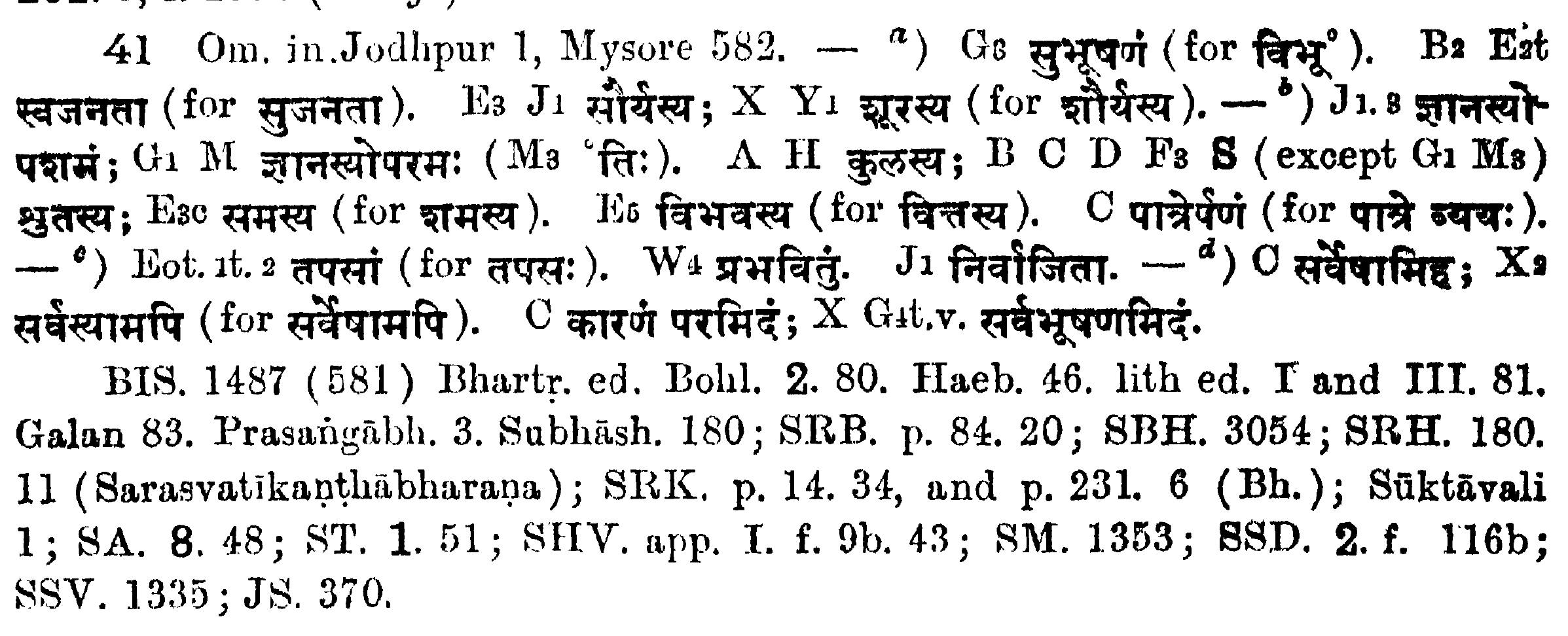
41 Om . in Jodhpur 1 , Mysore 582 - 2 ) Gs सुभूषणं ( for विभू ) . Ba Eat
स्वजनता ( for सुजनता ) . E3 J1 सौर्यस्य ; X Y 1 शूरस्य ( for शौर्यस्य ) . - 6 ) J 1. 8 ज्ञानस्यो
पशमं ; G1 M ज्ञानस्योपरमः ( M3 ' तिः ) . AH कुलस्य ; B C D F3 S ( except G1 M3 )
E3e समस्य ( for शमस्य ) . 126 विभवस्य ( for वित्तस्य ) . C पात्रेपणं ( for पात्रे व्ययः ) .
श्रुतस्य ;
- ● ) Eot . 1t . 2 तपसां ( for तपसः ) . W4 प्रभवितुं . J 1 निर्वाजिता . - 2 ) 0 सर्वेषामिह ; X
सर्वस्यामपि ( for सर्वेषामपि ) . C कारणं परमिदं ; X Gst.v. सर्वभूषणमिदं .
BIS . 1487 ( 581 ) Bhartr . ed . Bohl . 2. 80. Haeb . 46. lith ed . I and III . 81 .
Galan 83. Prasangabh 3 Subhāsh . 180 ; SRB . p . 84.20 ; SBH . 3054 ; SRH . 180 .
11 ( Sarasvatikanthabharana ) ; ; SRK p . 14. 34 , and p . 231. 6 ( Bh ) ; Sūktāvali
1 ; SA . 8. 48 ; ST . 1. 51 ; SHV . app . I. f . 9b . 43 ; SM . 1353 ; 8SD . 2. f . 116b ;
SSV . 1335 ; JS . 370 .
Commentary