

Kale
all

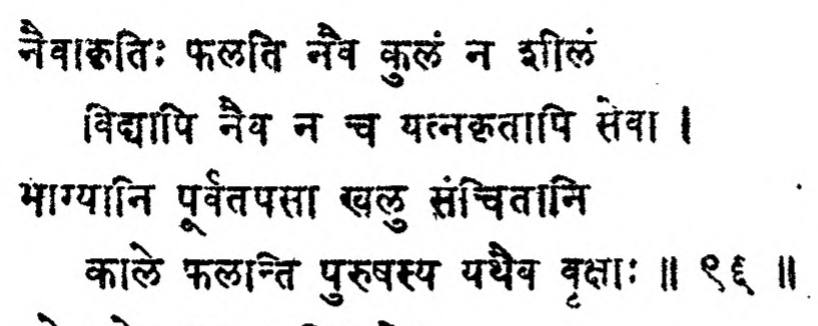
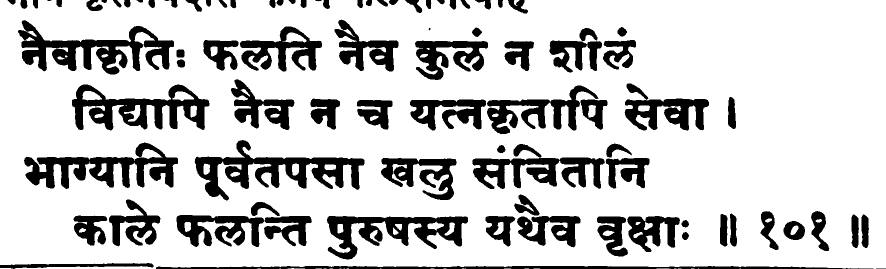
नैवाकृतिः फलति नैव कुलं न शीलं
विद्यापि नैव न च यत्नकृतापि सेवा ।
भाग्यानि पूर्वतपसा खलु संचितानि
काले फलन्ति पुरुषस्य यथैव वृक्षाः ॥ १०१ ॥
Translation
101. A handsome form avails not; neither does descent nor character; not even learning, nor service assiduously rendered. Good luck, the result of ( lit stored by ) past religious performances fructifies for man seasonably, as do trees.


Gopinath1914
all
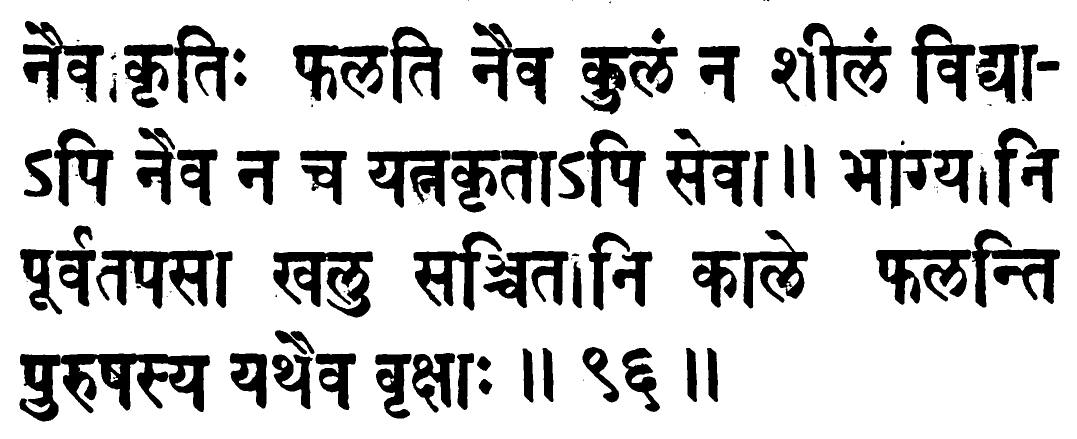
नैव कृतिः फलति नैव कुलं न शीलं विद्या-
Sपि नैव न च यत्नकृताऽपि सेवा ॥ भाग्यानि
पूर्वतपसा खलु सञ्चितानि काले फलन्ति
पुरुषस्य यथैव वृक्षाः ॥ ९६ ॥
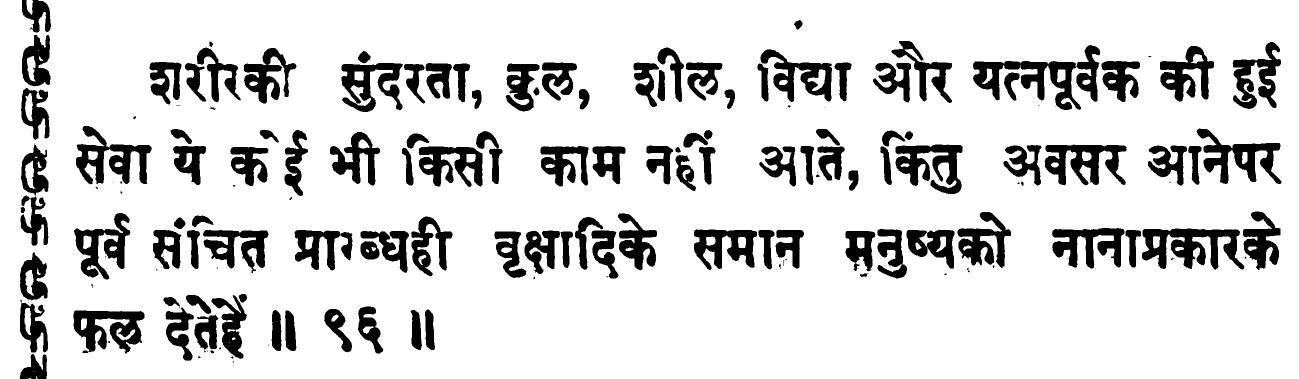
शरीर की सुंदरता, कुल, शील, विद्या और यत्नपूर्वक की हुई सेवा ये कोई भी किसी काम नहीं आते, किंतु अवसर आनेपर पूर्व संचित प्रारब्धही वृक्षादिके समान मनुष्यको नानाप्रकार के फल देते हैं ॥ ९६ ॥
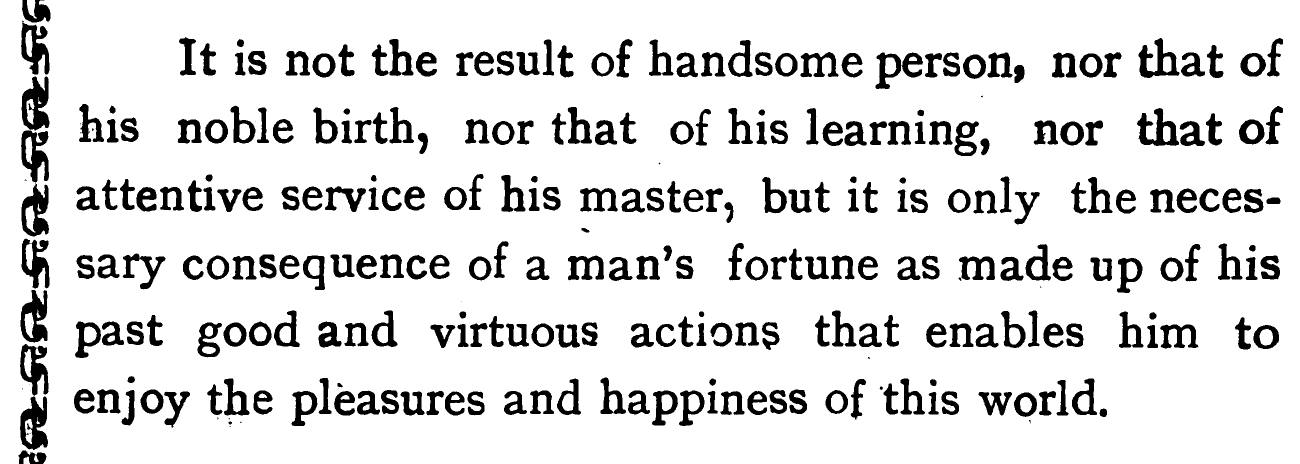
It is not the result of handsome person, nor that of his noble birth, nor that of his learning, nor that of attentive service of his master, but it is only the necessary consequence of a man's fortune as made up of his past good and virtuous actions that enables him to enjoy the pleasures and happiness of this world.
Footnote
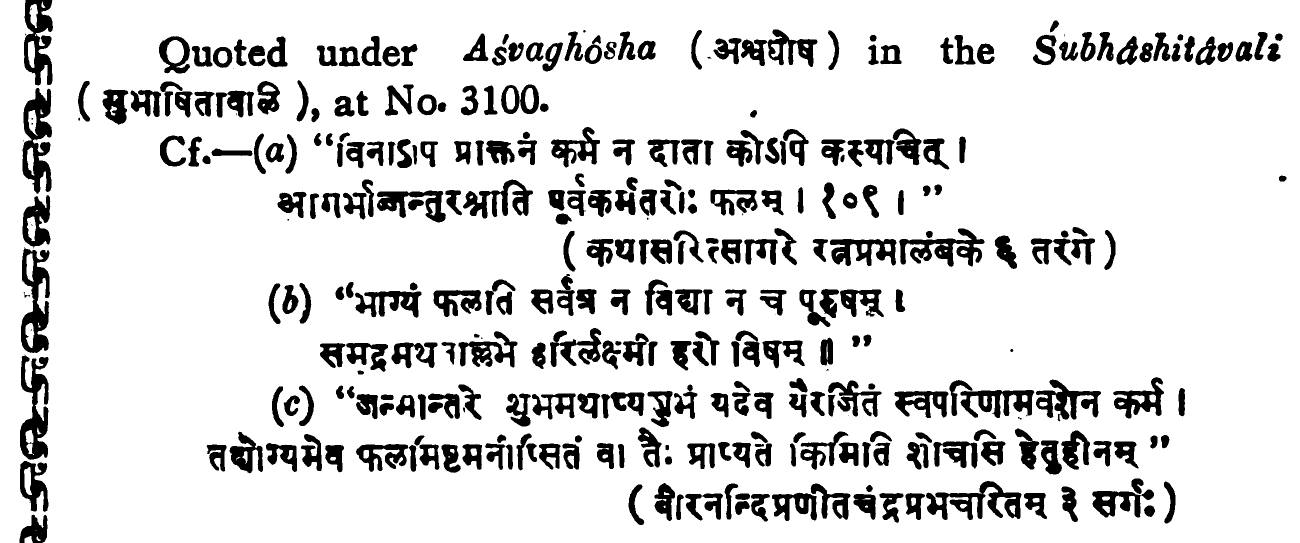
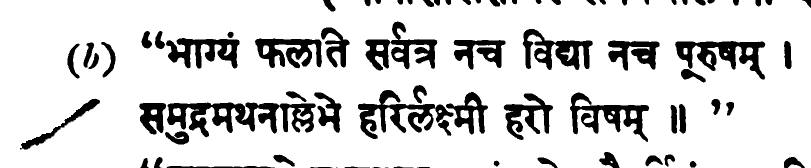
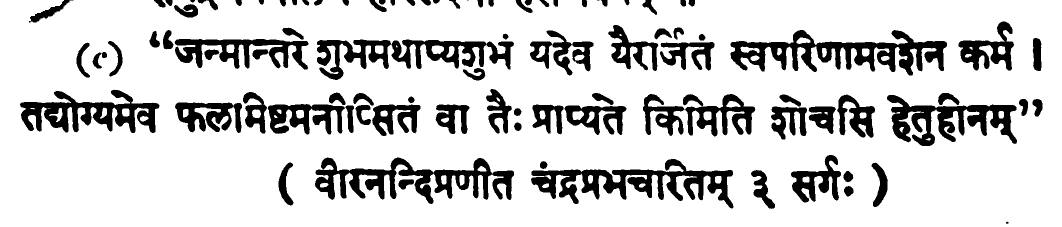
Quoted under Asvaghosha (अश्वघोष ) in the śubhashitavali ( सुभाषितावाले ), at No. 3100. Cf. (a) “विना ।प प्राक्तनं कर्म न दाता कोऽपि कस्यचित् । आगर्भान्नन्तुरनाति पूर्वकर्मतरोः फलम् । १०९ । " (कथासरित्सागरे रत्नप्रभालंबके ६ तरंगे ) (b) "भाग्यं फलति सर्वत्र न विद्या न च पूरुषम् । समुद्रमथ मे हरिर्लक्ष्मी हरी विषम् ॥ " (c) "जन्मान्तरे शुभमथाप्य शुभं यदेव यैरर्जितं स्वपरिणामवशेन कर्म । तद्योग्यमेव फलामष्टमनीप्सितं वा तैः प्राप्यते किमिति शोचसि हेतुहीनम् " (बारनन्दिप्रणीत चंद्रप्रभचरितम् ३ सर्गः )
Gopinath1896
all
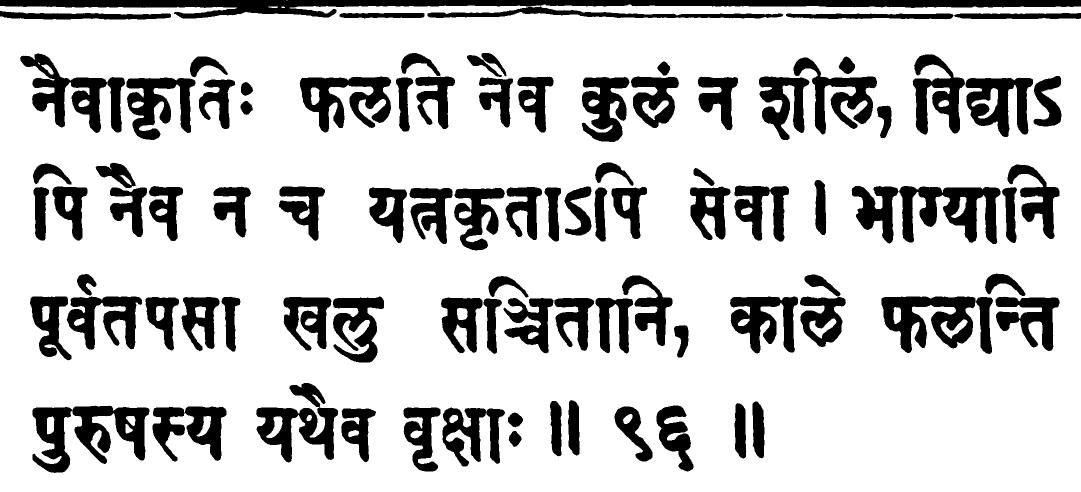
नैवाकृतिः फलति नैव कुलं न शीलं, विद्याऽ
पिनैव न च यत्नकृताऽपि सेवा । भाग्यानि
पूर्वतपसा खलु सञ्चितानि काले फलन्ति
पुरुषस्य यथैव वृक्षाः ॥ ९६ ॥
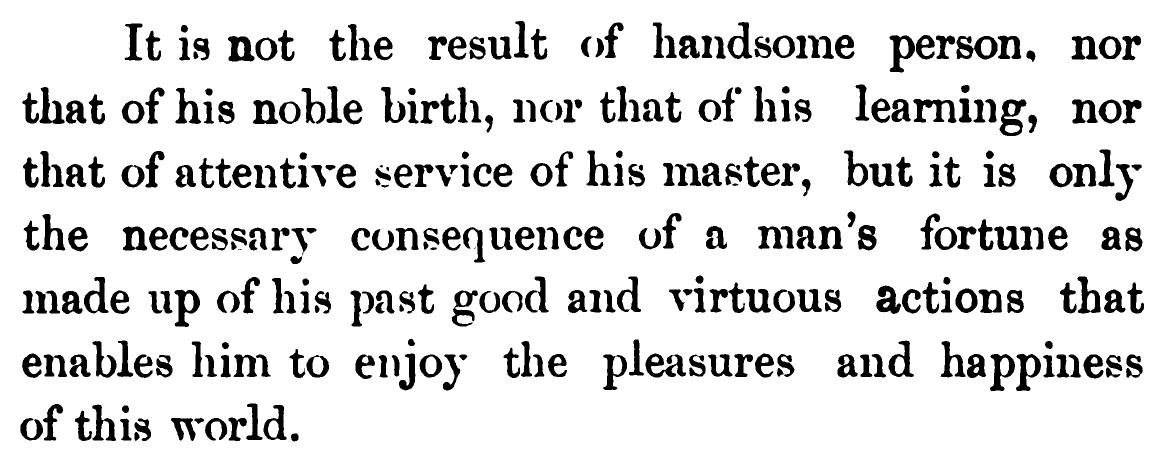
शरीरकी सुंदरता, कुल, शील, विद्या और यत्नपूर्वक की हुई सेवा ये कोई भी किसी काम नहीं आते, किंतु अवसर आनेपर पूर्व संचित प्रारब्धही वृक्षादिके समान मनुष्यको नानाप्रकारके फल देते हैं ॥ ९६ ॥
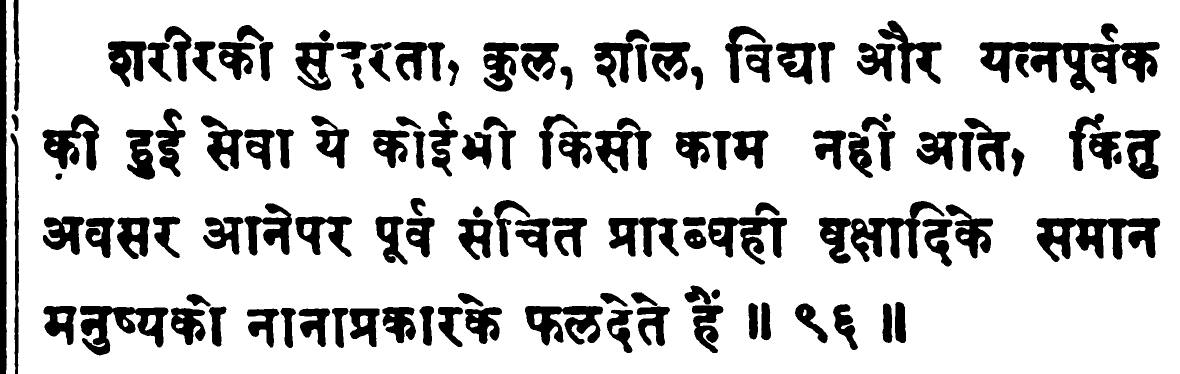
It is not the result of handsome person, nor that of his noble birth, nor that of his learning, that of attentive service of his master, but it is only nor the necessary consequence of a man's fortune as made up of his past good and virtuous actions that enables him to enjoy the pleasures and happiness of this world.

Footnote
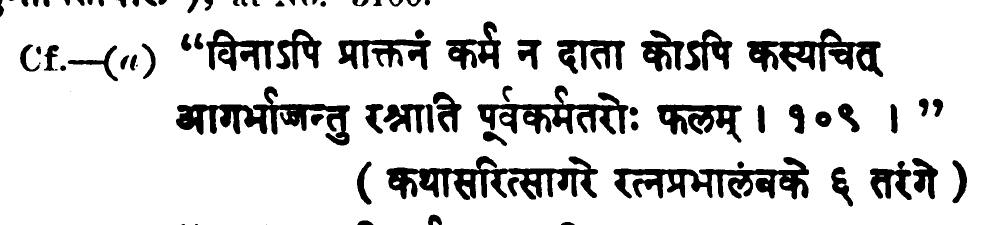
. () “ विनाऽपि प्राक्तनं कर्म न दाता कोऽपि कस्यचित् आगर्भाज्जन्तु रश्राति पूर्वकर्मतरोः फलम् । १०९ । ” ( कथासरित्सागरे रत्नप्रभालंबके ६ तरंगे )
Kosambi
all
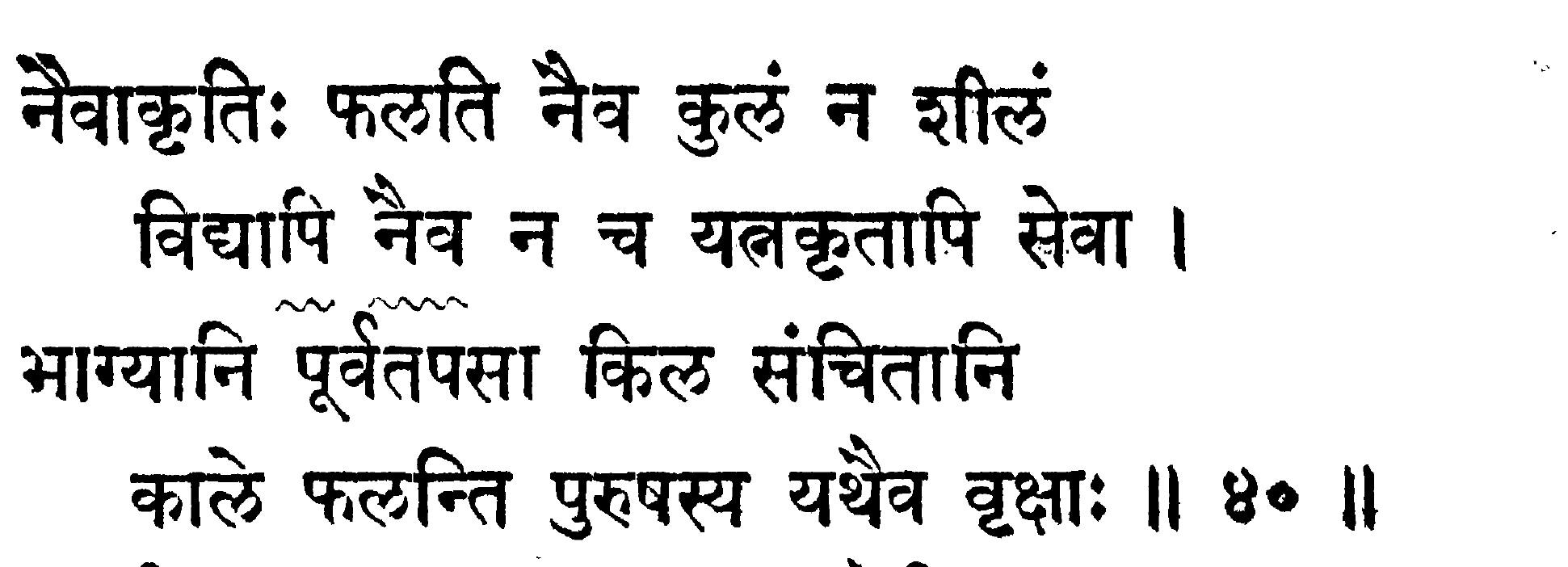
नैवाकृतिः फलति नैव कुलं न शीलं ?
विद्यापि नैव न च यत्नकृतापि सेवा ।
भाग्यानि पूर्वतपसा किल संचितानि
काले फलन्ति पुरुषस्य यथैव वृक्षाः ॥ ४० ॥
Footnote
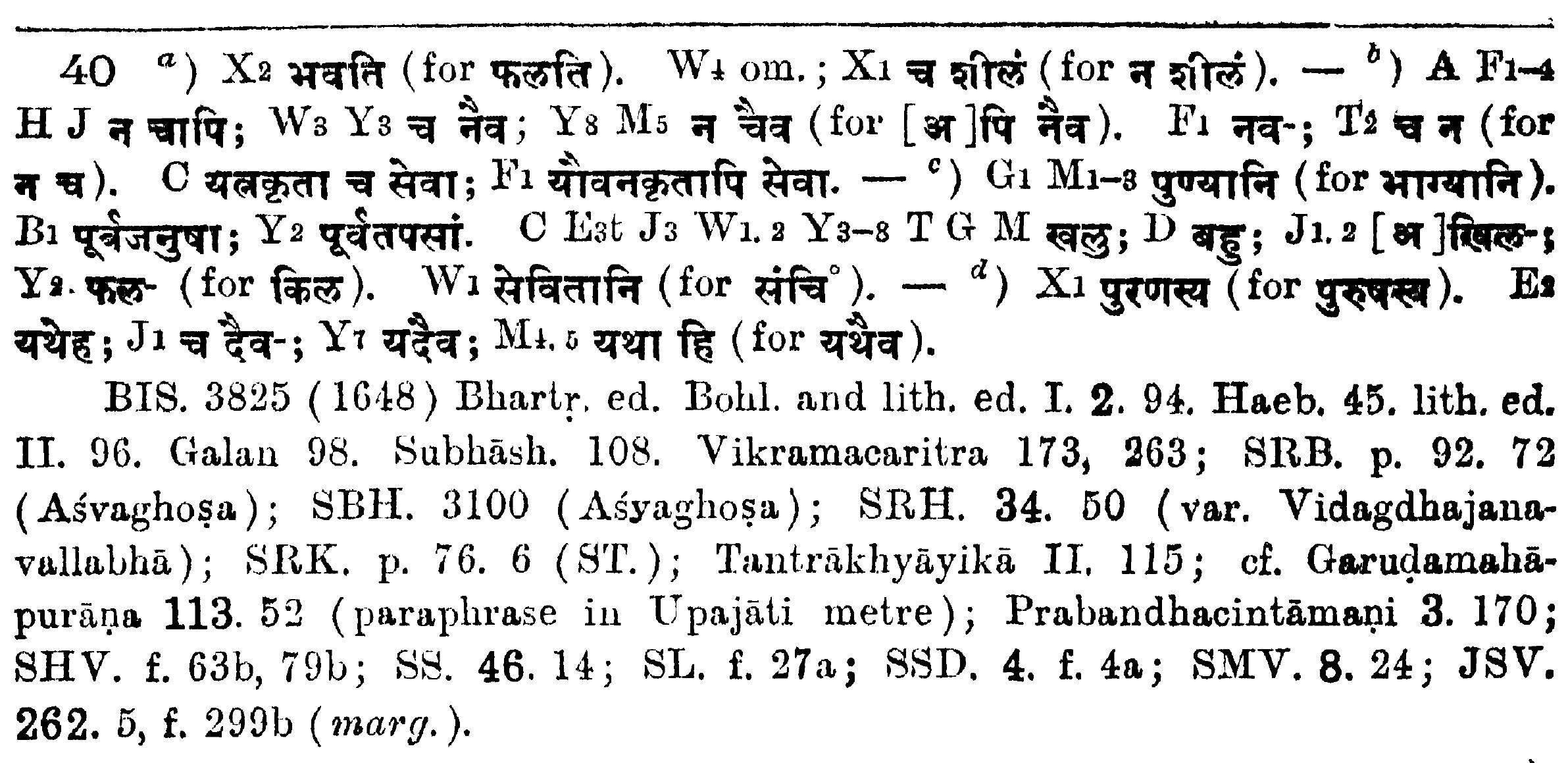
40 ) X 2 भवति ( for फलति ) . Wom .; X1 च शीलं ( for न शीलं ) . 6 ) AF14
HJ न चापि ; W3 Y3 च नैव ; Y8 M5 न चैव ( for [ अ ] पि नैव ) . F 1 नव - ; T2 च न ( for
न च ) . C यत्रकृता च सेवा ; F1 यौवनकृतापि सेवा . ● ) G1 M1 - 8 पुण्यानि ( for भाग्यानि ) .
B1 पूर्वजनुषा ; X 2 पूर्वतपसां C Est J3 W1 . 2 Y 3 – 4_T G_M खलु ; D बहु ; J1.2 [ अ ] खिल -1
Ya . फल- ( for किल ) . W1 सेवितानि ( for संचि ) . 4 ) X1 पुरणस्य ( for पुरुषस्य ) . Es
यथेह ; J1 च दैव- ; X7 यदैव ; M. o यथा हि ( for यथैव ) .
BIS . 3825 ( 1648 ) Bhartṛ , ed . Bohl . and lith . ed . I. 2. 94. Haeb . 45. lith . ed .
II . 96. Galan 98. Subhāsh . 108 Vikramacaritra 173 , 263 ; SRB . p . 92.72
( Aśvaghoṣa ) ; SBH . 3100 ( Aśyaghoṣa ) ; SRH . 34. 50 ( var . Vidagdhajana
vallabhā ) ; SRK . p . 76 6 ( ST . ) ; Tantrākhyāyikā II , 115 ; cf. Garudamaha
purāņa 113. 52 ( paraphrase in Upajati metre ) ; Prabandhacintāmani 3. 170 ;
SHV . f . 63b , 79b ; SS . 46. 14 ; SL . f . 27a ; SSD . 4. f . 4 & ; SMV . 8. 24 ; JSV .
262. 5 , f . 299b ( marg . ) .
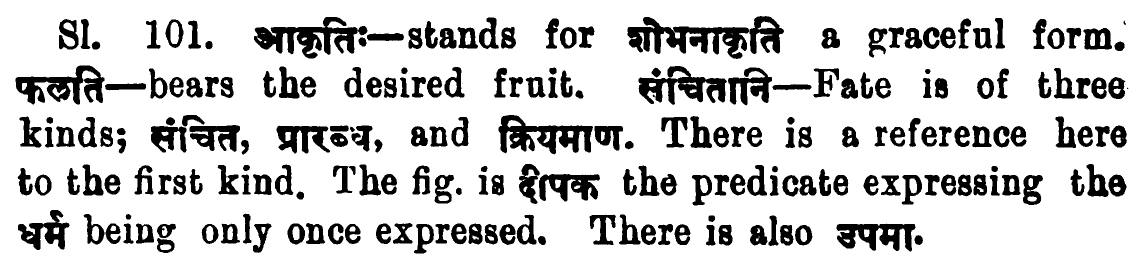
Commentary