Tawney
Treachery is of crimes the blackest,
Avarice is a world of vice,
Truth is nobler far than penance,
Purity than sacrifice.
Charity's the first of virtues,
Dignity doth most adorn,
Knowledge triumphs unassisted,
Better death than public scorn.
Telang
all
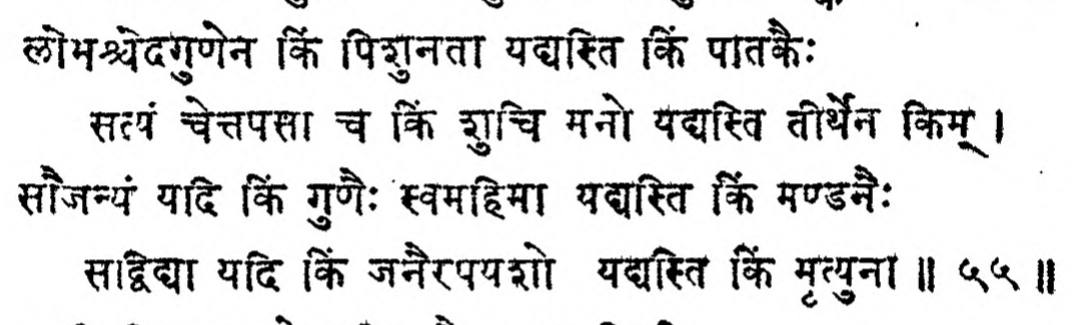
लोभश्चेदगुणेन किं पिशुनता यद्यस्ति किं पातकैः
सत्यं चेत्तपसा च किं शुचि मनो यद्यस्ति तीर्थेन किम् ।
सौजन्यं यदि किं गुणैः स्वमहिमा यद्यस्ति किं मण्डनैः
सद्विद्या यदि किं जनैरपयशो यद्यस्ति किं मृत्युना ॥ ५५ ॥
Notes
St. LV.—Comp. St. XXI., and see note there तपसा = महोपवासादिव्रतेन. Râmarshi. The Stanza occurs at Kâvyasangraha. p. 3.— S'ârdûlavikrîḍita.


Kale
all

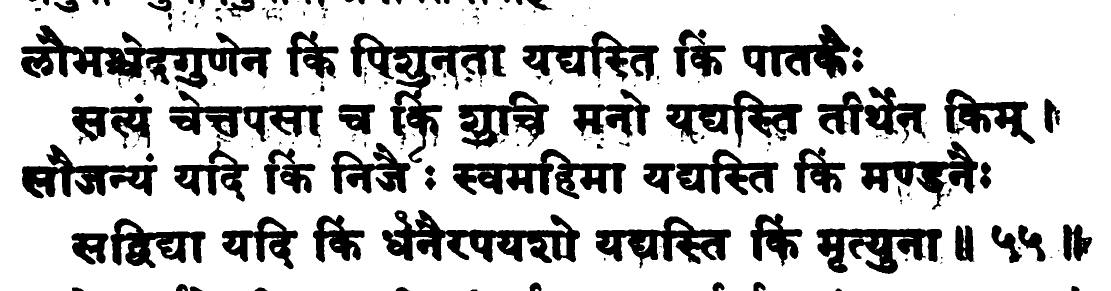
लोभश्चेदगुणेन किं पिशुनता यद्यस्ति किं पातकैः
सत्यं चेत्तपसा च किं शुचि मनो यद्यस्ति तीर्थेन किम् ।
सौजन्यं यदि किं निजैः स्वमहिमा यद्यस्ति किं मण्डनैः
सद्विद्या यदि किं धनैरपयशो यद्यस्ति किं मृत्युना ॥ ५५ ॥
Translation
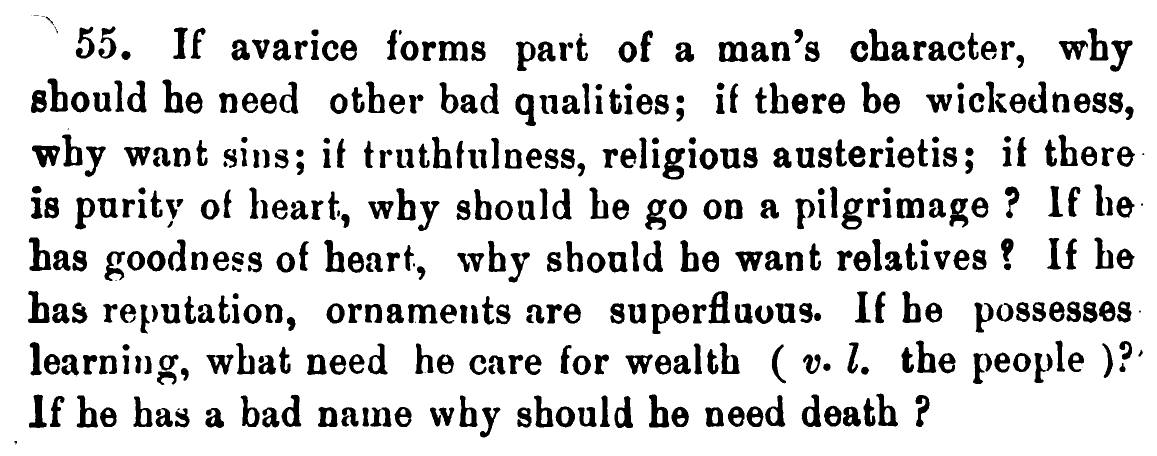
55. If avarice forms part of a man's character, why should he need other bad qualities; if there be wickedness, why want sins; if truthfulness, religious austerietis; if there is purity of heart, why should he go on a pilgrimage ? If he has goodness of heart, why should he want relatives ? If he has reputation, ornaments are superfluous. If he possesses learning, what need he care for wealth ( v. l. the people ) ? If he has a bad name why should he need death ?
Notes
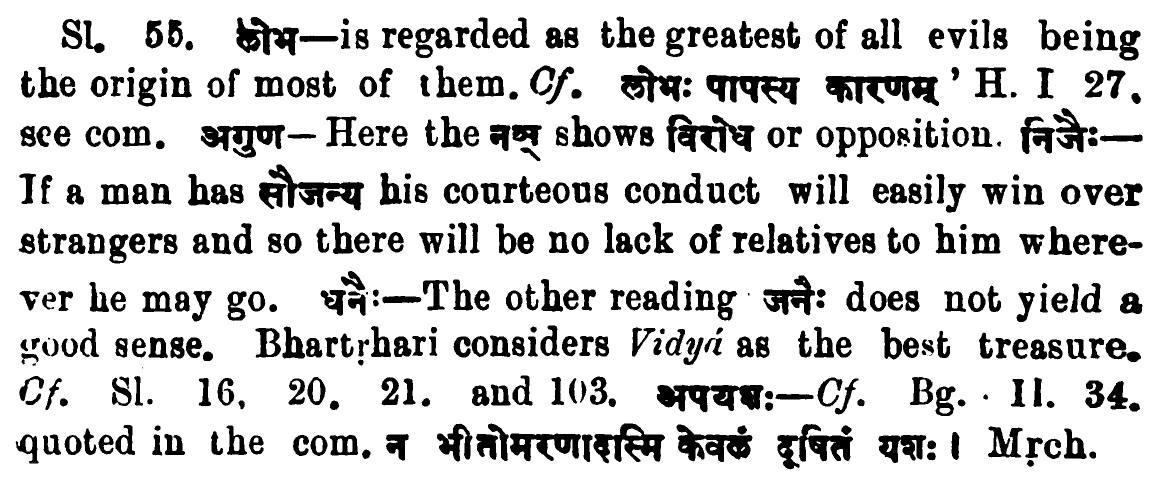
Sl. 55. लोभ—is regarded as the greatest of all evils being the origin of most of them. Cf. लोभः पापस्य कारणम् ’ H. I 27. see com. अगुण—Here the नञ् shows विरोध or opposition. निजैः— If a man has सौजन्य his courteous conduct will easily win over strangers and so there will be no lack of relatives to him wherever he may go. धनैः—The other reading जनैः does not yield a good sense. Bhartṛhari considers Vidyá as the best treasure. Cf. Sl. 16. 20. 21. and 103. अपयशः—Cf. Bg. II. 34. quoted in the com. न भीतोमरणादस्मि केवलं दूषितं यशः । Mṛch.


Gopinath1914
all
लोभश्वेदगुणेन किं पिशुनता यद्यस्ति किं
पातकैः सत्यं चेत्तपसा च किं शुचि मनो
यद्यस्ति तीर्थेन किम् । सौजन्यं यदि
किं निजैः सुमहिमा यद्यस्ति किं मण्डनैः
सद्विद्या यदि किं धनैरपयशो यद्यस्ति
किं मृत्युना ॥ ५५ ॥
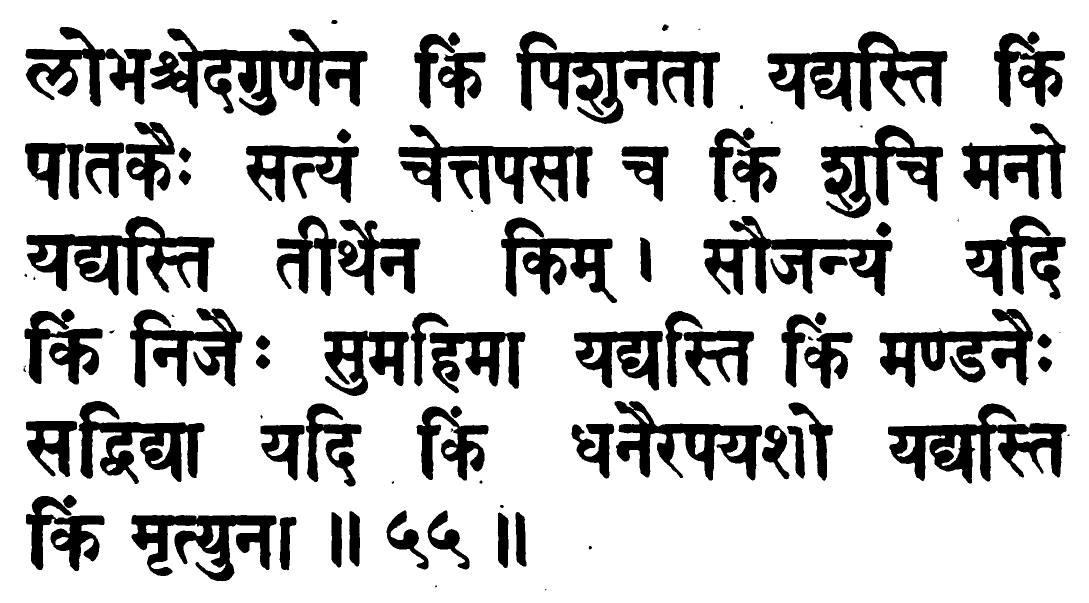
लोभ होनेपर अवगुणोंका, दुष्टता होनेपर पातकोंका, सत्य होनेपर तपका, शुद्ध मन होनेपर तीर्थयात्राका, सौजन्य होनेपर स्वजनोंका, सुयश होनेपर आभूषणोंका, उत्तम विद्या होनेपर धनका और अपशय होनेपर मृत्युका होना न होना बराबरही । अर्थात् लोभादिकका होनाही अवगुणादिक होनेके समान समझना चाहिए ॥ ५५ ॥
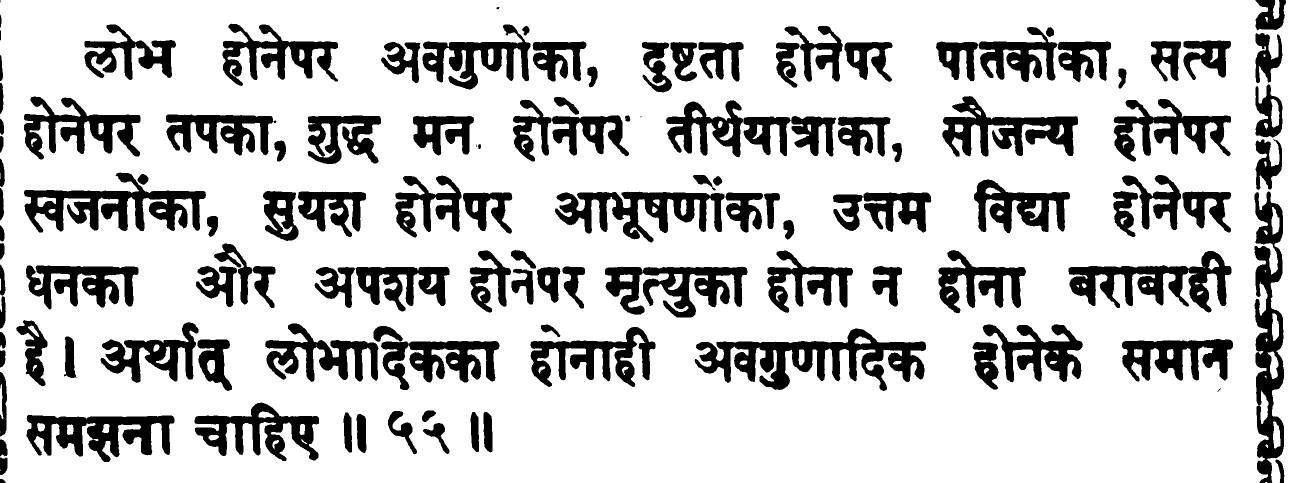
Any kind of vice is more than compensated by sin by deceit, penance by truth, pilgrimages by purity avariceof , heart, relatives by goodness, ornaments by fame, wealth by sound learning and death by disrepute.
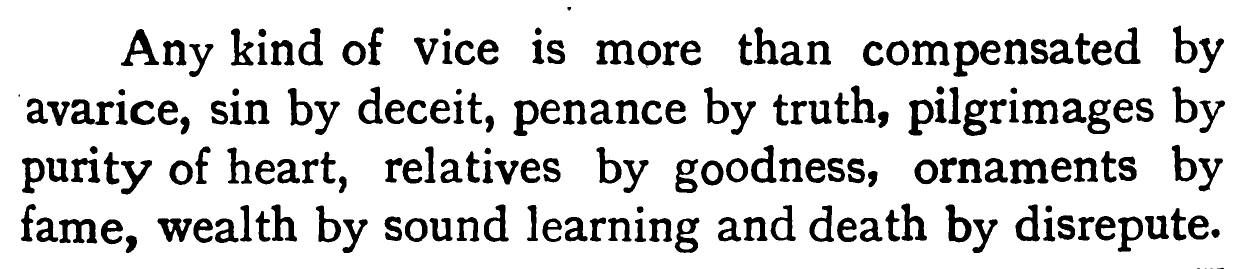
Footnote
This stanza which is quoted anonymonsly in the the Sarngadhara Shadratna paddhati ( शार्ङ्गधरपद्धति । १५५३) is also found in (षडूव । ६)

Footnote
For " लोभश्चेदगुणेन किं, " : cf. " यशो यशस्विनां शुद्धं श्लाध्या ये गुणिनां गुणाः । लोभः स्वल्पोऽपि तान्हन्ति श्वित्रो रूपमिवेप्सितम् ॥ " ( श्रीभागवते ).

Gopinath1896
all
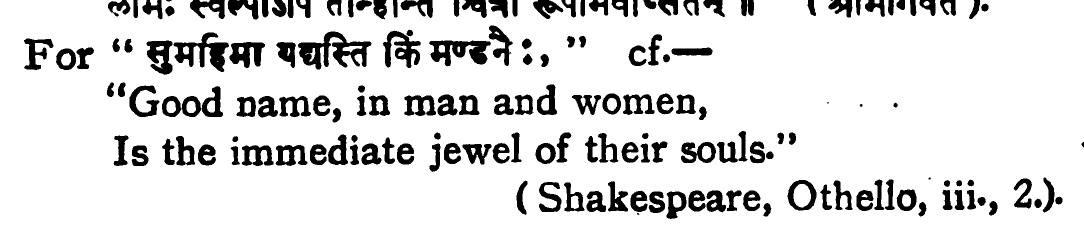
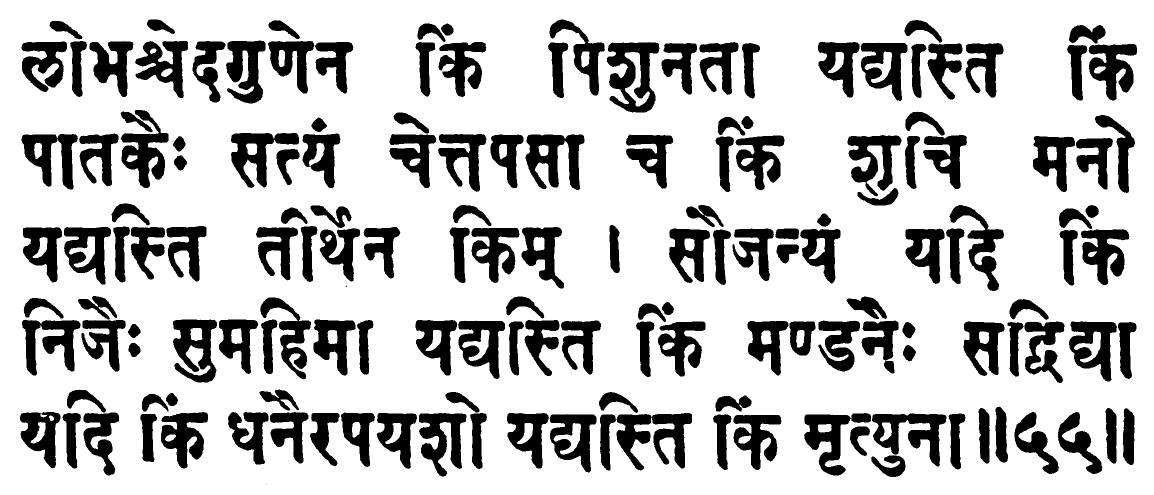
लोभश्चेदगुणेन किं पिशुनता यद्यस्ति किं
पातकैः सत्यं चेत्तपसा च किं शुचि मनो
यद्यस्ति तीर्थेन किम् । सौजन्यं यदि किं
निजैः सुमहिमा यद्यस्ति किं मण्डनैः सद्विद्या
यदि किं धनैरपयशो यद्यस्ति किं मृत्युना ॥ ५५ ॥
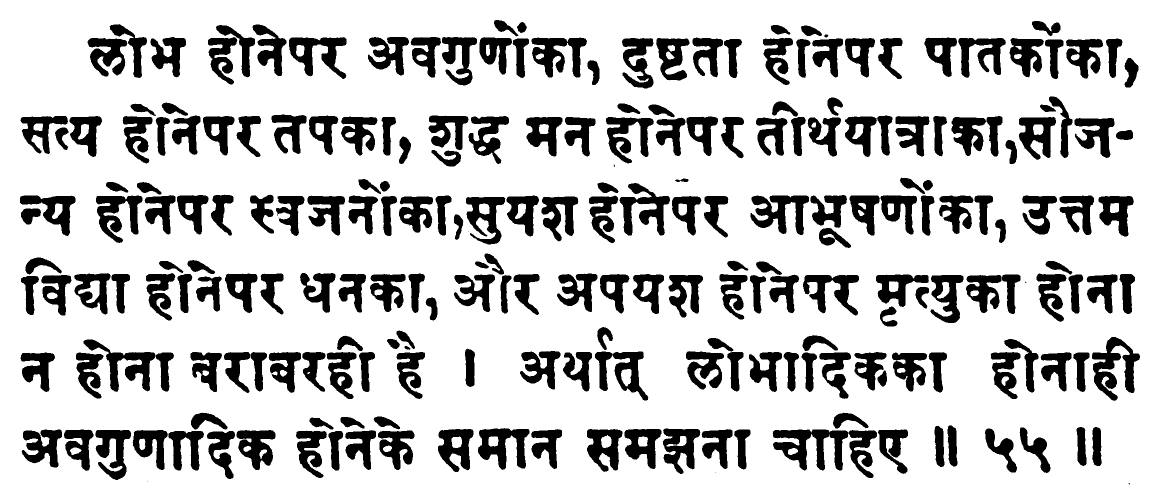
लोभ होनेपर अवगुणोंका, दुष्टता होनेपर पातकोंका, सत्य होनेपर तपका, शुद्ध मन होनेपर तीर्थयात्राका, सौजन्य होनेपर स्वजनोंका, सुयश होनेपर आभूषणों का, उत्तम विद्या होनेपर धनका, और अपयश होने पर मृत्युका होना न होना वरावरही है । अर्थात् लोभादिकका होनाही अवगुणादिक होने के समान समझना चाहिए ॥ ५५ ॥
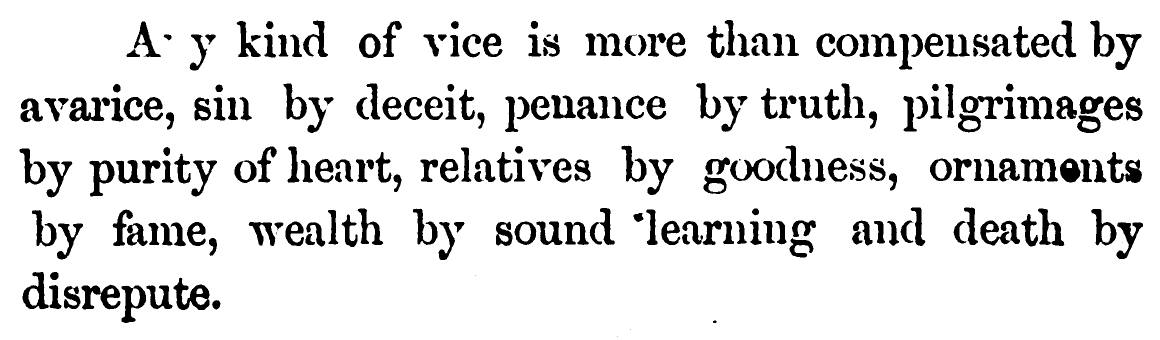
Ay kind of vice is more than compensated by avarice, sin by deceit, penance by truth, pilgrimages by purity of heart, relatives by goodness, ornaments by fame, wealth by sound learning and death by disrepute.
Footnote
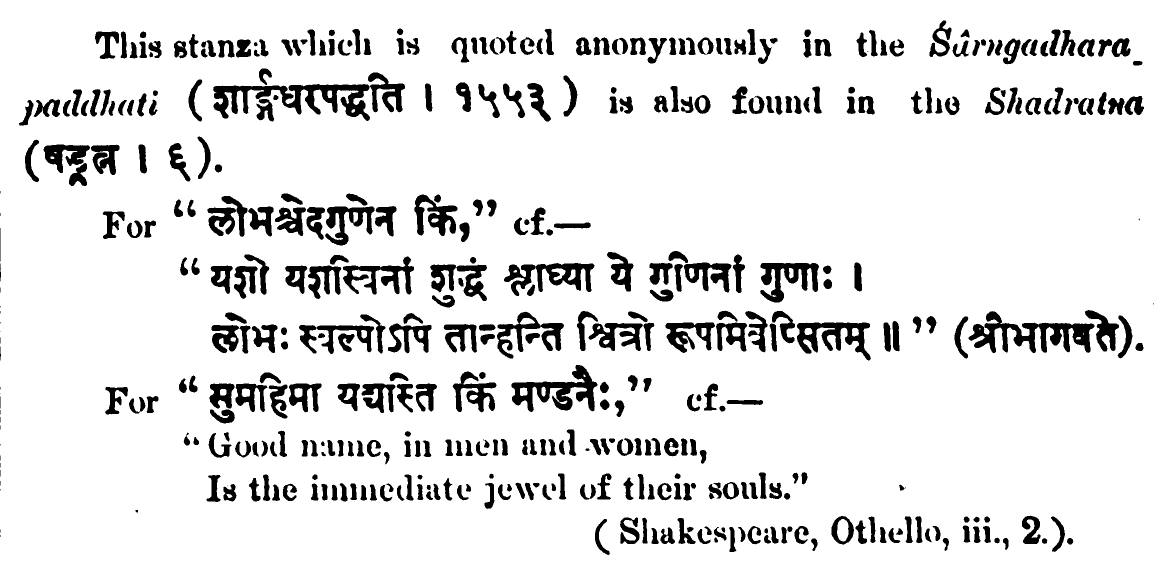
This stanza which is quoted anonymously in the Sûrngadhara_ paddhati ( शार्ङ्गधरपद्धति । १५५३ ) is also found in tho Shadratre (षडूल । ६). For " लोभश्चेदगुणेन किं," cf. “ यशो यशस्विनां शुद्धं श्लाघ्या ये गुणिनां गुणाः । लोभः स्वल्पोऽपि तान्हन्ति श्वित्रो रूपमिवेप्सितम् ॥ " (श्रीभागवते). For " सुमहिमा यद्यस्ति किं मण्डनैः, " cf.― "Good name, in men and women, Is the immediate jewel of their souls." ( Shakespeare, Othello, iii., 2.).
Kosambi
all
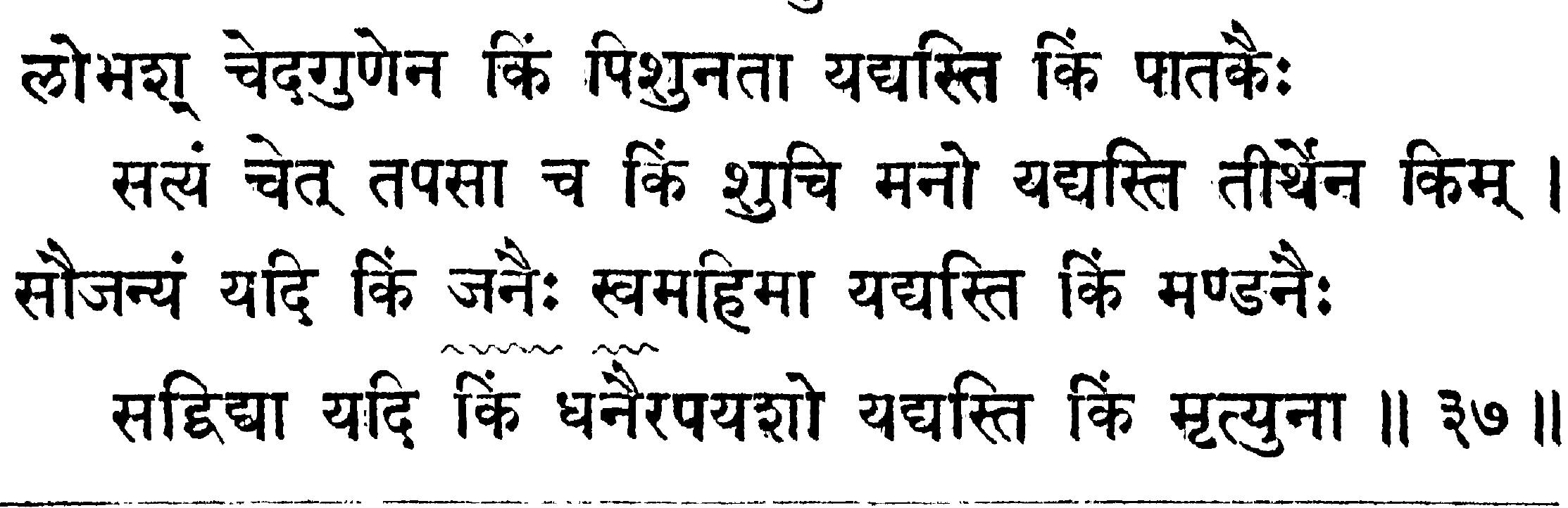
लोभशू चेदगुणेन किं पिशुनता यद्यस्ति किं पातकैः
सत्यं चेत् तपसा च किं शुचि मनो यद्यस्ति तीर्थेन किम् ।
सौजन्यं यदि किं जनैः स्वमहिमा यद्यस्ति किं मण्डनैः
सहिया यदि किं धनैरपयशो यद्यस्ति किं मृत्युना ॥ ३७ ॥
Footnote
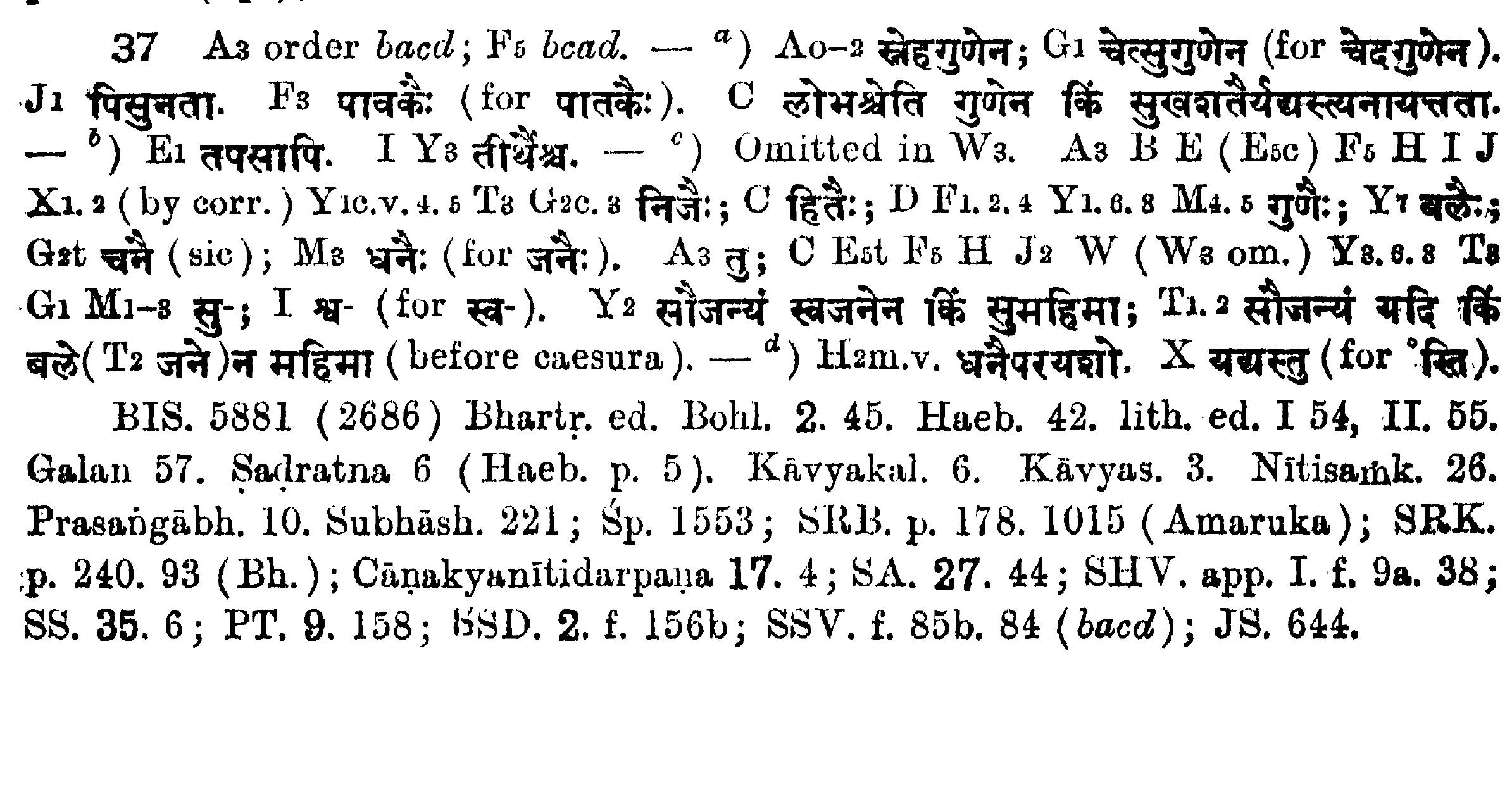
37 A3 order bacd ; Fs bead . -- ) a A0 - 2 स्नेहगुणेन ; G1 चेत्सुगुणेन ( for चेदगुणेन ) .
.J1 पिसुमता . Fs पावकै : ( for पातकै : ) . C लोभश्वेति गुणेन किं सुखशतैर्यग्रस्त्यनायत्तता .
6 ) E1 तपसापि . I Y3 तीर्थेश्च - ● ) Omitted in W3 . A3 B E ( E5c ) F5 H I J
X1.2 ( by corr . ) Yie.v. 4. 6 T3 42c . 8 निजैः ; C हितैः ; DF 1.2.4 Y1.6.8 M4.6 गुणैः ; Yr बलै ,
Gat चनै ( sic ) ; M3 धनैः ( for जनैः ) . A3 तु ; CEst Fs H_J2 W ( W3 om . ) Ÿ4.4.4 Ta
G1 M1-4 सु- ; I श्व- ( for स्व- ) . Y2 सौजन्यं स्वजनेन किं सुमहिमा ; T1 . 2 सौजन्यं यदि किं
बले ( T2 जने ) न महिमा ( before caesura ) . - d ) Ham.v. धनैपरयशो . X यद्यस्तु ( for : स्ति ) .
BIS . 5881 ( 2686 ) Bhartr . ed . Bohl . 2. 45. Haeb . 42. lith ed . I 54 , II . 55 .
Galan 57. Salratna 6 ( Haeb . p . 5 ) . Kāvyakal . 6. Kāvyas . 3. Nitisarhk . 26 .
Prasañgābh . 10. Subhāsh 221 ; Sp . 1553 ; SRB . p . 178 1015 ( Amaruka ) ; SRK .
; p . 240.93 ( Bh . ) ; Cāņakyanitidarpalia 17. 4 ; SA . 27 • 44 ; SHV ● app . I. f . 9a . 38 ;
ISS . 35. 6 ; PT . 9. 158 ; BSD . 2. f . 156b ; SSV f . 85b . 84 ( bacd ) ; JS , 644 ,
Commentary