Tawney
The world conspires to honour those
Who rise by gentle arts,
Who show their own heroic strain
By praising others' parts,
Who patiently reproaches bear,
Nor scorned revile again,
Who still to selfish ends prefer
The good of other men.
Telang
all
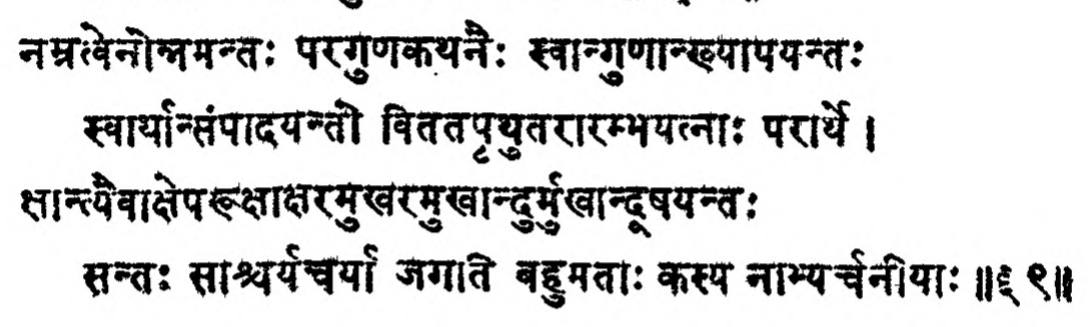
नम्रत्वेनोन्नमन्तः परगुणकथनैः स्वान्गुणान्ख्यापयन्तः
स्वार्थान्संपादयन्तो विततपृथुतरारम्भयत्नाः परार्थे ।
क्षान्त्यैवाक्षेपरूक्षाक्षरमुखरमुखान्दुर्मुखान्दूषयन्तः
सन्तः साश्चर्यचर्या जगति बहुमताः कस्य नाभ्यर्चनीयाः ॥६९॥
Notes
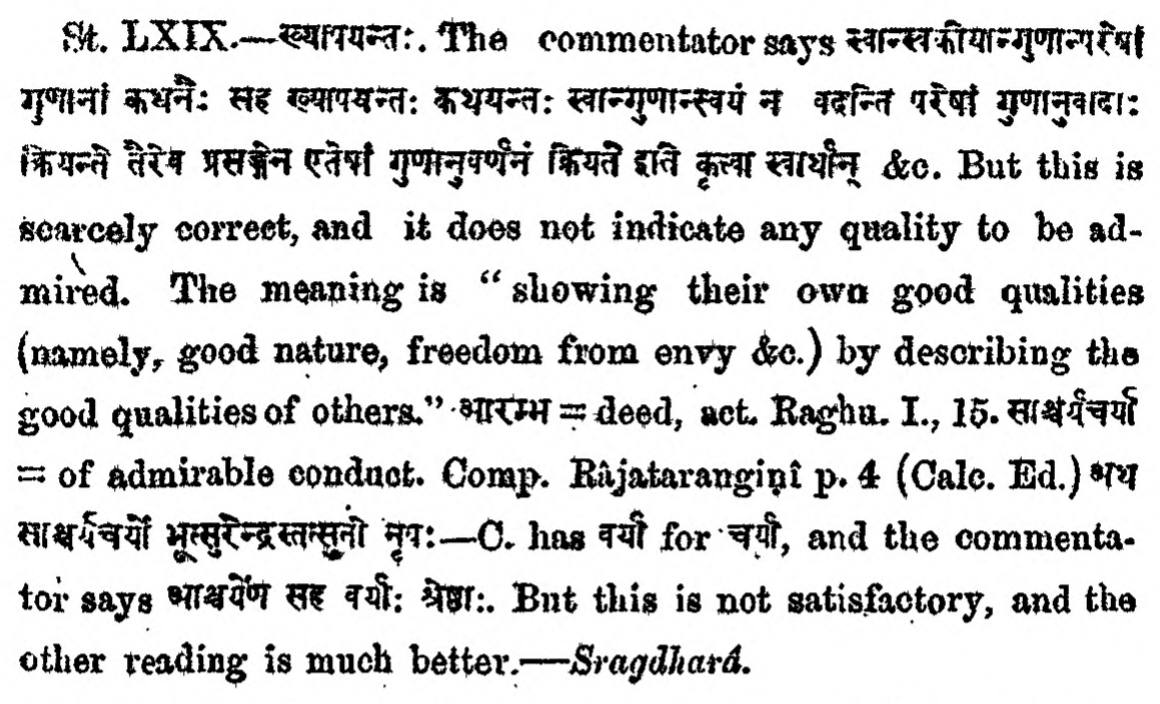
St. LXIX.—ख्यापयन्तः. The commentator says स्वान्स्वकीयान्गुणान्परेषां गुणानां कथनैः सह ख्यापयन्तः कथयन्तः स्वान्गुणान्स्वयं न वदन्ति परेषां गुणानुवादाः क्रियन्ते तैरेव प्रसङ्गेन एतेषां गुणानुवर्णनं क्रियते इति कृत्वा स्वार्थान् &c. But this is scarcely correct, and it does not indicate any quality to be admired. The meaning is “showing their own good qualities (namely, good nature, freedom from envy &c.) by describing the good qualities of others.” आरम्भ = deed, act. Raghu. I., 15. साश्चर्यचर्या = of admirable conduct. Comp. Râjatarangiṇî p. 4 (Calc. Ed.) अथ साश्चर्यचर्यो भूसुरेन्द्रस्तत्सुतो नृपः—C. has वर्या for चर्या, and the commentator says आश्चर्येण सह वर्याः श्रेष्ठाः. But this is not satisfactory, and the other reading is much better.—Sragdharâ.

Kale
all

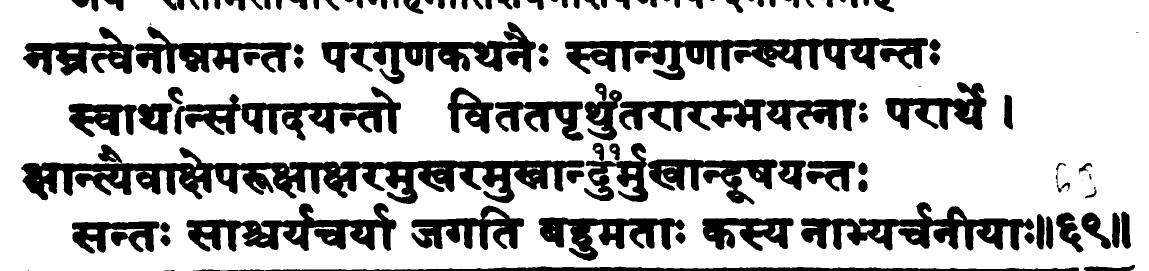
नम्रत्वेनोन्नमन्तः परगुणकथनैः स्वान्गुणान्ख्यापयन्तः
स्वार्थान्संपादयन्तो विततपृथुतरारम्भयत्नाः परार्थे ।
क्षान्त्यैवाक्षेपरूक्षाक्षरमुखरमुखान्दुर्मुखान्दूषयन्तः
सन्तः साश्चर्यचर्या जगति बहुमताः कस्य नाभ्यर्चनीयाः॥६९॥
Translation
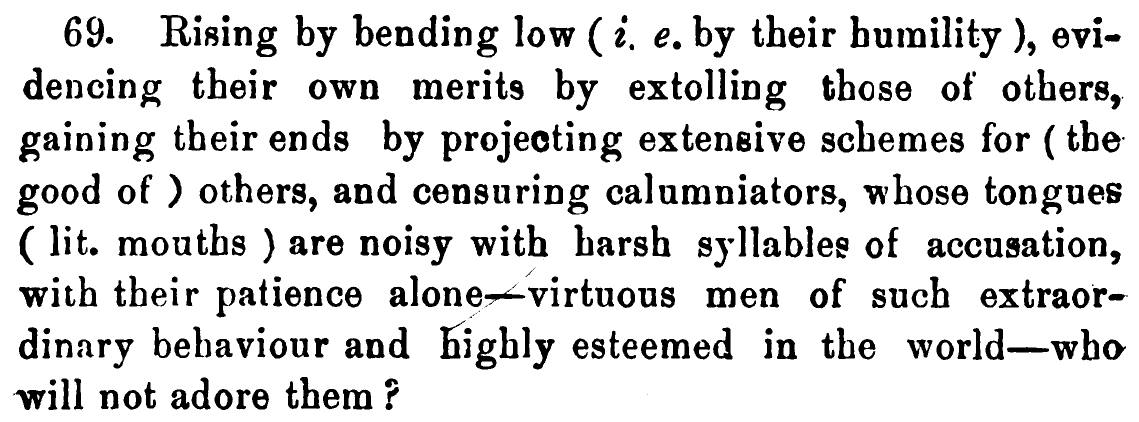
69. Rising by bending low ( i. e. by their humility ), evidencing their own merits by extolling those of others, gaining their ends by projecting extensive schemes for ( the good of ) others, and censuring calumniators, whose tongues ( lit. mouths ) are noisy with harsh syllables of accusation, with their patience alone—virtuous men of such extraordinary behaviour and highly esteemed in the world—who will not adore them ?
Notes
Sl. 69. नम्रत्वेनोन्नमन्तः—rising to greatness by humility. ख्यापयन्तः—pres. p. of the causal of ख्या. Their appreciation of other people’s merits is in itself a sign of their possessing merits. वितत०—दूषयन्तः—rebuking. Contemptuous silence is the best treatment of a calumniator. साश्चर्यचर्याः—आश्चर्यसहिता admirable, चर्या ( चरितम् ) येषां ते. The fig. here is विरोधाभास.



Gopinath1914
all
नम्रत्वेनोन्नमन्तः परगुणकथनैः स्वान्गुणा-
न्ख्यापयन्तः स्वार्थान्सम्पादयन्तो वितत-
पृथुतरारम्भयत्नाः परार्थे । क्षान्त्यैवाऽक्षेपरू-
क्षाक्षर मुखरमुखान्दुमुखान्दूषयन्तः सन्तः
साश्चर्यचर्या जगति बहुमताः कस्य नाभ्यर्च-
नीया: ॥ ७० ॥
नम्रतासे उन्नत होनेवाले, परपुरुषाक गुणानुवादसे निजगुणकी प्रसिद्धि करनेवाले, परहितसाधनमें दत्तचित्त होकर स्वार्थ संपादन करनेवाले, निंदायुक्त कुवचन बोलनेवाले दुष्ट पुरुषोंके मुखको अपनी असाधारण क्षान्तिसे कलंकित करनेवाले, आश्चर्यजनक आचरणोंसे विभूषित और जगत् के माननीय सन्तजन किस मनुष्यके पूजनयोग्य नहीं होते ? ॥ ७० ॥
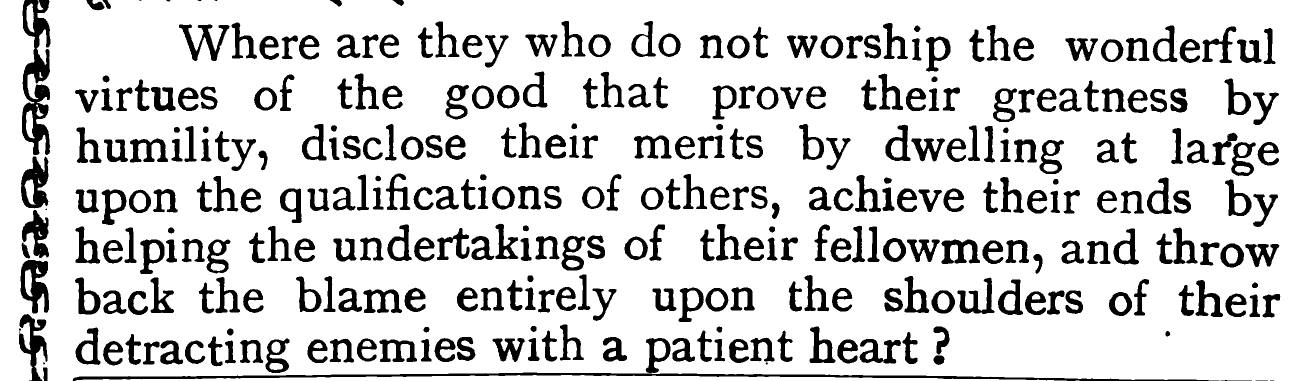
Where are they who do not worship the wonderful virtues of the good that prove their greatness by humility, disclose their merits by dwelling at large upon the qualifications of others, achieve their ends by helping the undertakings of their fellowmen, and throw back the blame entirely upon the shoulders of their detracting enemies with a patient heart?

Footnote
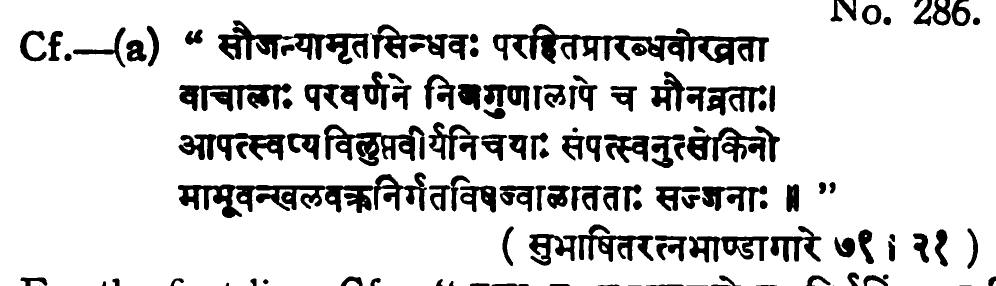
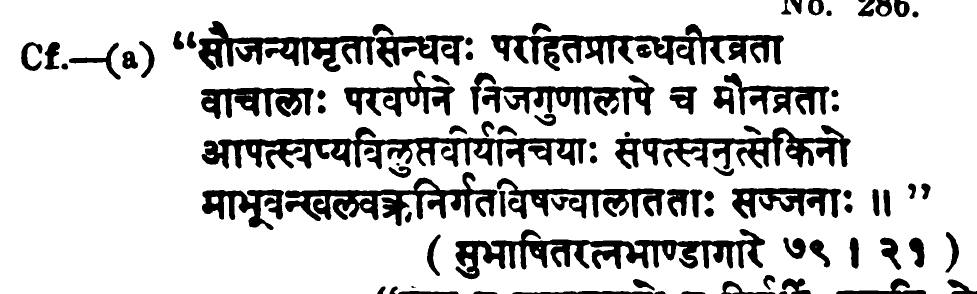
Cf. — (a) “ " सौजन्यामृत सिन्धवः परहितप्रारब्धवोखता वाचालाः परवर्णने निजगुणालापे च मौनव्रताः। आपत्स्वप्य विलुप्तवीर्यनिचयाः संपत्स्वनुत्से किनो माभूवन्खलवऋनिर्गतविषज्वाळातताः सज्जनाः ॥ ” ( सुभाषितरत्नभाण्डागारे ७९ । २१ )
Footnote
For the first line, Cf. – " गुणा न गृह्णन्सुजनो न निर्वृतिं प्रयाति दोषानवदन्न दुर्जन: " ७ (वीरनन्दिप्रणीते चन्द्रप्रभचरिते १ सर्गे ).


Gopinath1896
all
नम्रत्वेनोन्नमन्तः परगुणकथनैः स्वान्गुणा
न्ख्यापयन्तः, स्वार्थान्सम्पादयन्तो वितत
पृथुतरारम्भयत्नाः परार्थे । क्षान्त्यैवाऽक्षेपरू
क्षाक्षरमुखरमुखान्दुर्मुखान्दूषयन्तः सन्तः सा-
श्वर्यचर्या जगति बहुमताः कस्य नाभ्यर्च
नीयाः ॥ ७० ॥
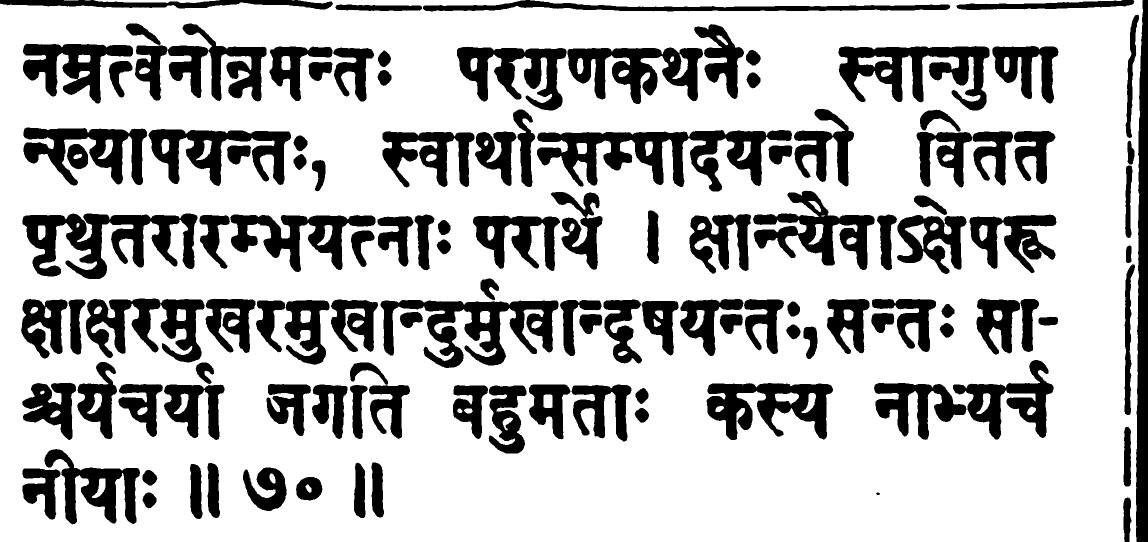
नम्रतासे उन्नत होने वाले, परपुरुषों के गुणानुवादसे निजगुणकी प्रसिद्धि करने वाले, परहितसाधन में दत्तचितहोकर स्वार्थ संपादन करने वाले, निंदायुक्त कुवचन बोलनेवाले दुष्ट पुरुषों के मुखको अपनी असाधारण क्षान्तिसे कलंकित करने वाले, आश्चर्यजनक आचरणोंसे विभूषित और जगत् के माननीय सन्तजन किसमनुष्य के पूजन योग्य नहीं होते ? ॥ ७० ॥
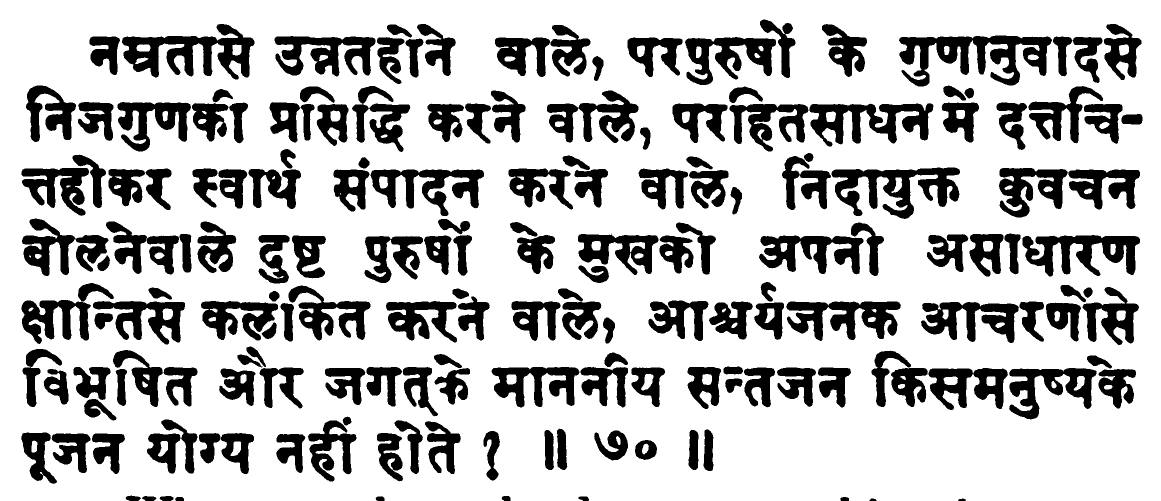
Where are they who do not worship the wonderful virtues of the good that prove their greatness by humility, disclose their merits by dwelling at large upon the qualifications of others, achieve their ends by helping the undertakings of their fellowmen, and throw back the blame entirely upon the shoulders of their detracting enemies with a patient heart?

Footnote
Cf. - ( a ) " सौजन्यामृतसिन्धवः परहितप्रारब्धवीरव्रता वाचालाः परवर्णने निजगुणालापे च मौनव्रताः आपत्स्वप्यविलुप्तवीर्यनिचयाः संपत्स्वनुत्सेकिनो माभूवन्खलवऋनिर्गतविषज्वालातताः सज्जनाः ॥ " ( सुभाषितरत्नभाण्डागारे ७९ । २१ )
Footnote
For the first line, Cf- " गुणा न गृह्णन्सुजनो न निर्वृर्ति, प्रयाति दोषा नवदन्न दुर्जनः " ७ ( वीरनन्दिप्रणीते चन्द्रप्रभचरिते १ सर्गे )


Kosambi
all
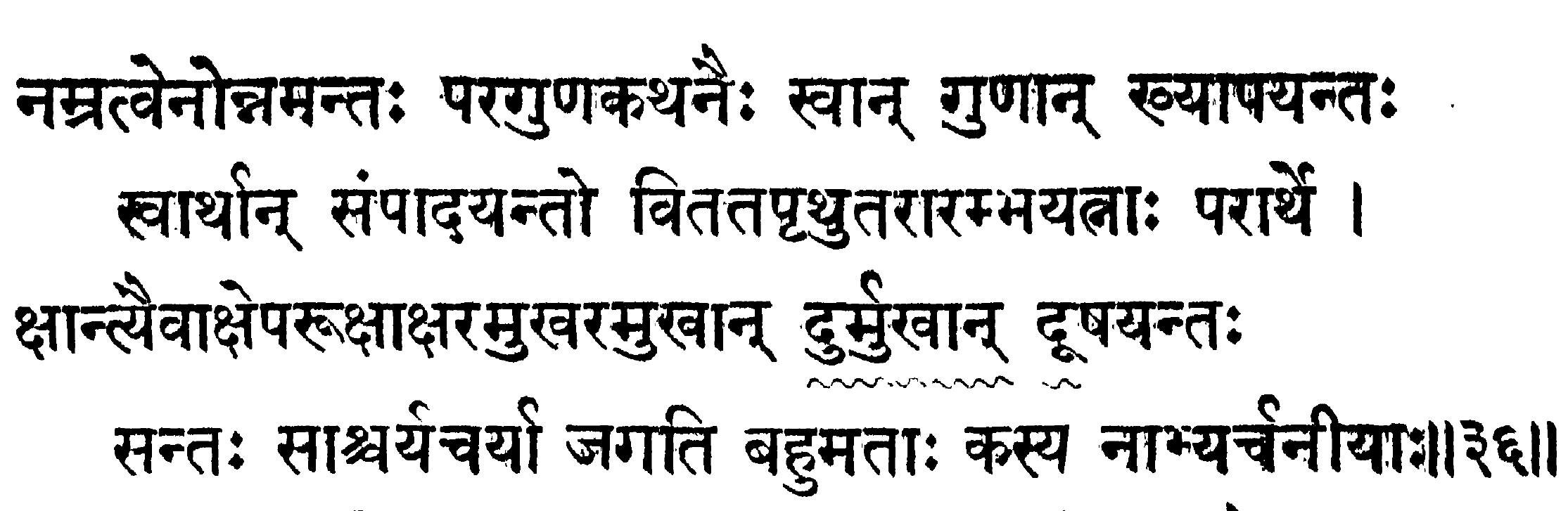
नम्रत्वेनोन्नमन्तः परगुणकथनैः खान् गुणान् ख्यापयन्तः
स्वार्थान् संपादयन्तो विततपृथुतरारम्भयत्नाः परार्थे ।
क्षान्त्यैवाक्षेपरूक्षाक्षर मुखरमुखान् दुर्मुखान् दूषयन्तः
सन्तः साश्चर्यचर्या जगति बहुमताः कस्य नाभ्यर्चनीयाः ॥३६ ॥
Footnote
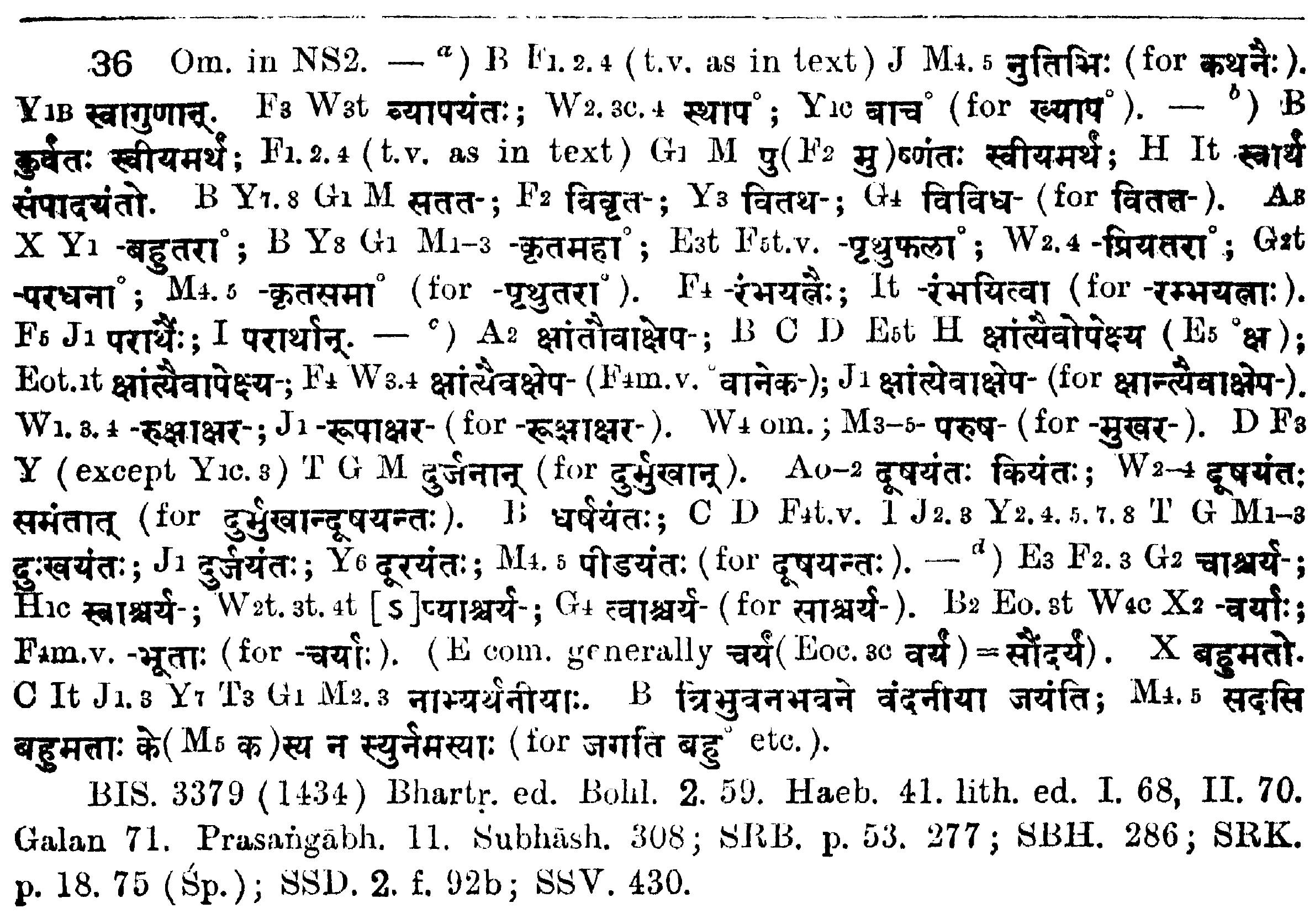
.36 Om . in NS2 . “ ) B F1.2 . 4 ( t.v , as in text ) J Mi 5 नुतिभिः ( for कथनैः ) .
Y1B स्वागुणान् F3 F3 Wst Wst व्यापर्यंत व्यापयंत :; ; W2 W2.30 . 30. . + + स्थाप स्थाप ' ; ; Y0 बाच O ( for ख्याप ) . - 0 ) B
कुर्वतः स्वीयमर्थ ; F1 . 2. 4 ( t.v. as in text ) G1 Mg ( 2 मु ) ष्णतः स्वीयमर्थ ; H It स्वार्थ
संपादयंतो . BY7.8 G1 M सतत - ; F2 विवृत ; Y3 वितथ ; + विविध ( for वितत - ) . As
X X1 - बहुतरा ; BY8 G1 M1 - 3 -कृतमहा ; Est Fst.v. पृथुफला ; W2 . 4 -प्रियतरा ; Gat
-परधना ; M45 -कृतसमा ( for पृथुतरा ) . F + -रंभयत्रैः ; It -रंभयित्वा ( for रम्भयत्नाः ) .
F6 J1 परार्थैः ; I परार्थान् – ● ) A2 क्षांतीवाक्षेप- ; B C D Est H क्षांत्यैवोपेक्ष्य ( Es ) ;
Eot.it क्षांत्यैवापेक्ष्य ; F + W3 . क्षांत्यैवक्षेप- ( F + m.v . " वानेक- ) ; J1 क्षांत्येवाक्षेप- ( for क्षान्त्यैवाक्षेप- ) .
W1 . 3. 4 -रुक्षाक्षर- ; J1 रूपाक्षर- ( for- रूक्षाक्षर - ) . Wom . ; M3 - 5 - परुष - ( for मुखर - ) . D F3
Y ( except Yic . 4 ) TGM दुर्जनान् ( for दुर्मुखान् ) . A0 - 2 दूषयंतः कियंतः ; W2- दूषयंतः
समंतात् ( for दुर्मुखान्दूषयन्तः ) . B धर्षयंतः ; CDFat.v . 1 J2.3_Y2 . 4. 5.7.8 ' T ' GM1-3
दुःखयंतः ; J1 दुर्जयंतः ; Yo दूरयंतः ; M1.5 M4.6 पीडयंत : ( for दूषयन्तः ) . - d 6 ) E3 F2 . 3 G2 चाश्चर्य ;
Hic स्वाश्चर्य ; W2t . 3t st [ 5 ] प्याश्चर्य ; त्वाश्चर्य ( for साश्चर्य ) . B2 Eo . st Wac X2 वर्याः ;
Fam.v. - भूताः ( for -चर्याः ) . ( E com . generally चर्य ( Eoc . 30 वर्य ) = सौंदर्य ) . X बहुमतो .
C It J1 . 3 ®Y7 T3 G1_M2 . 3 नाभ्यर्थनीयाः B त्रिभुवनभवने वंदनीया जयंति ; M18 सदसि
बहुमता : के ( Ms क ) स्थ न स्युर्नमस्या : ( for जगति बहु etc. ) .
BIS . 3379 ( 1434 ) Bhartr ed . Boil . 2.59 . Haeb . 41. lith ed . I. 68 , II . 70 .
Galan 71. Prasangabh . 11. Subhash . 308 ; SRB . p . 53. 277 ; SBH . 286 ; SRK .
p . 18.75 ( Śp . ) ; SSD . 2. f . 92b ; SSV . 430 .
Commentary