Tawney
Raindrops on heated iron flung dissolve in airy steam,
The same on lotus-leaflets hung like rows of diamonds gleam,
In sea-shells, if Arcturus shine, they harden into pearl,—
E'en so doth intercourse refine and elevate the churl.
Telang
all
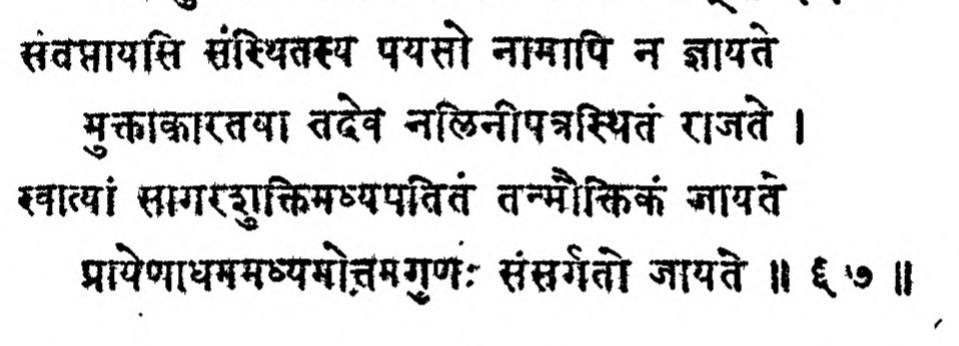
संतप्तायसि संस्थितस्य पयसो नामापि न ज्ञायते
मुक्ताकारतया तदेव नलिनीपत्रस्थितं राजते ।
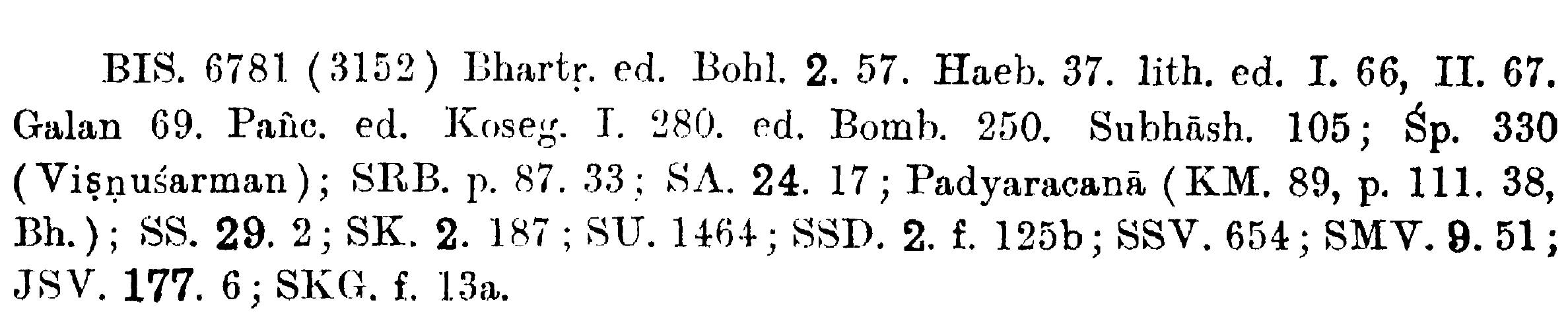
स्वात्यां सागरशुक्तिमध्यपतितं तन्मौक्तिकं जायते
प्रायेणाधममध्यमोत्तमगुणः संसर्गतो जायते ॥ ६७ ॥
Notes
St. LXVII.—स्वात्याम् = (See Varâhamihira chap. XV., 13) स्वातीसंज्ञनक्षत्रे सूर्ये स्थिते सति (commentary). Comp. Mâlavikâgnimitra p. 7. (Bombay Sans. Class.).—S'ârdûlavikrîḍita.


Kale
all

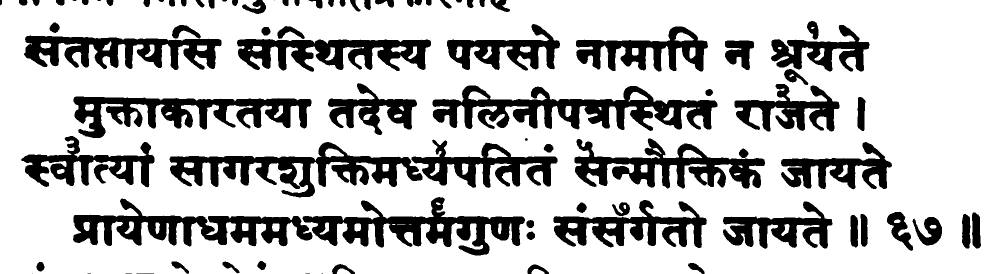
संतप्तायसि संस्थितस्य पयसो नामापि न श्रूयते
मुक्ताकारतया तदेव नलिनीपत्रस्थितं राजते ।
स्वात्यां सागरशुक्तिमध्यपतितं सन्मौक्तिकं जायते
प्रायेणाधममध्यमोत्तमगुणः संसर्गतो जायते ॥ ६७ ॥
Translation
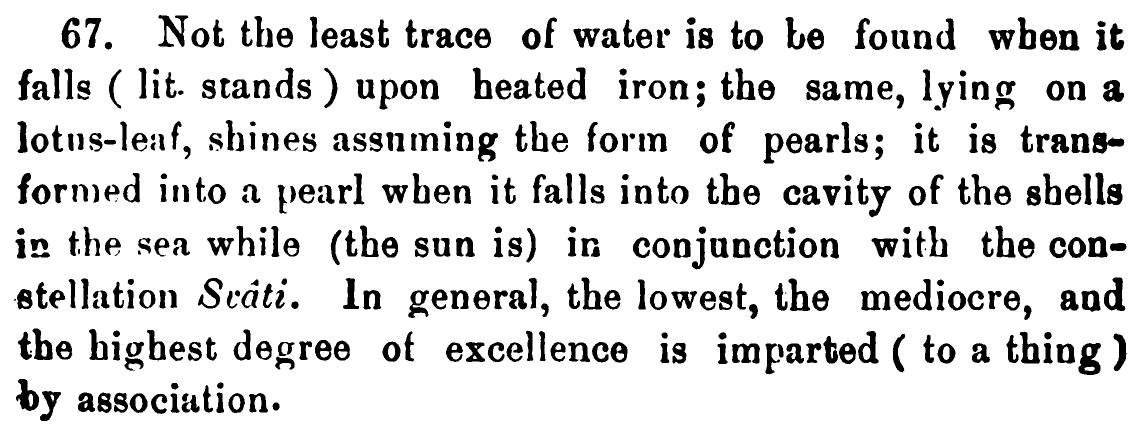
67. Not the least trace of water is to be found when it falls ( lit. stands ) upon heated iron; the same, lying on a lotus-leaf, shines assuming the form of pearls; it is transformed into a pearl when it falls into the cavity of the shells in the sea while (the sun is) in conjunction with the constellation Svâti. In general, the lowest, the mediocre, and the highest degree of excellence is imparted ( to a thing ) by association.
Notes
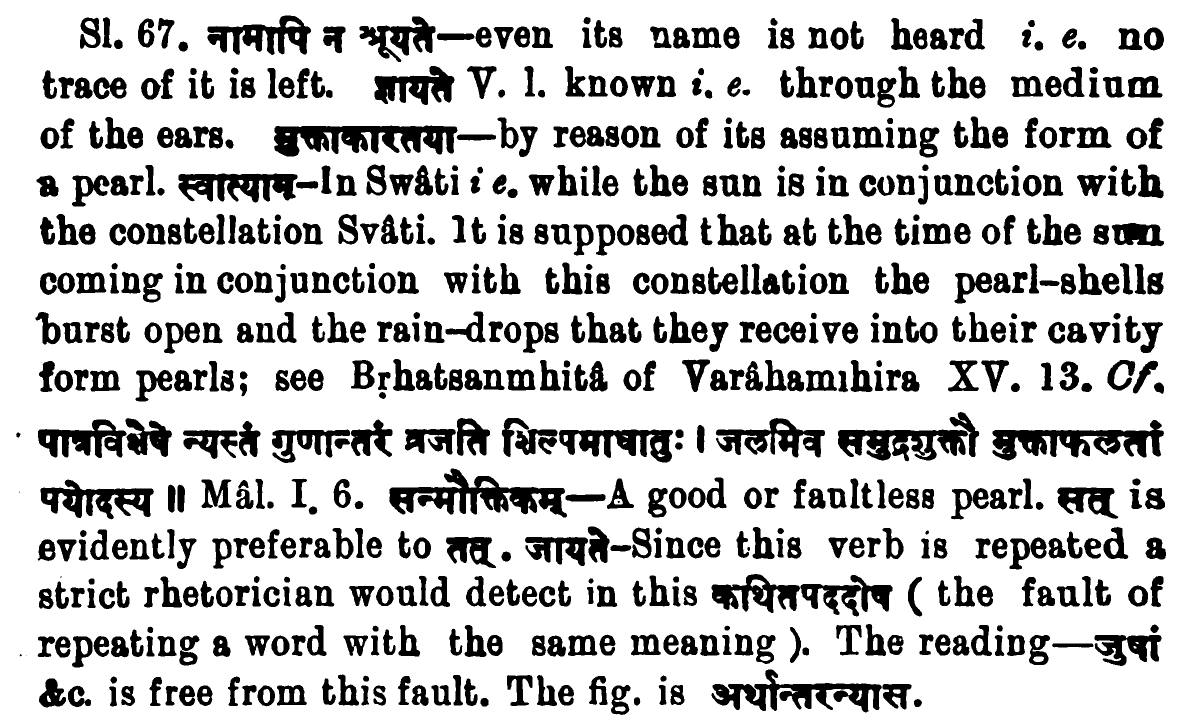
Sl. 67. नामापि न श्रूयते—even its name is not heard i. e. no trace of it is left. ज्ञायते V. l. known i. e. through the medium of the ears. मुक्ताकारतया—by reason of its assuming the form of a pearl. स्वात्याम्–In Swâti i e. while the sun is in conjunction with the constellation Svâti. It is supposed that at the time of the sun coming in conjunction with this constellation the pearl-shells burst open and the rain-drops that they receive into their cavity form pearls; see Bṛhatsanmhitâ of Varâhamihira XV. 13. Cf. पात्रविशेषे न्यस्तं गुणान्तरं व्रजति शिल्पमाधातुः । जलमिव समुद्रशुक्तौ मुक्ताफलतां पयोदस्य ॥ Mâl. I. 6. सन्मौक्तिकम्—A good or faultless pearl. सत् is evidently preferable to तत्. जायते–Since this verb is repeated a strict rhetorician would detect in this कथितपददोष ( the fault of repeating a word with the same meaning ). The reading—जुषां &c. is free from this fault. The fig. is अर्थान्तरन्यास.

Gopinath1914
all
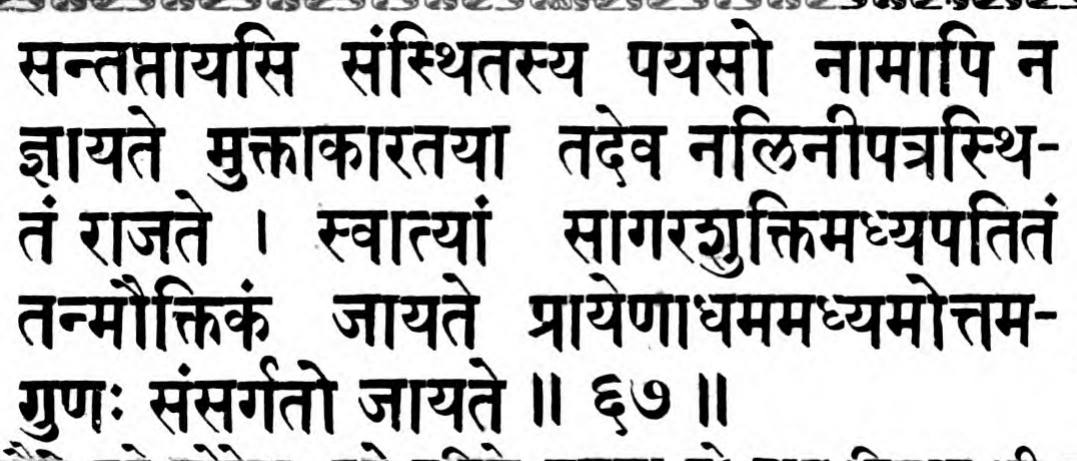
सन्तप्तायसि संस्थितस्य पयसो नामापि न
ज्ञायते मुक्ताकारतया तदेव नलिनीपत्रस्थि-
तं राजते । स्वात्यां सागरशुक्तिमध्यपतितं
तन्मौक्तिकं जायते प्रायेणाधममध्यमोत्तम-
गुणः संसर्गतो जायते ॥ ६७ ॥
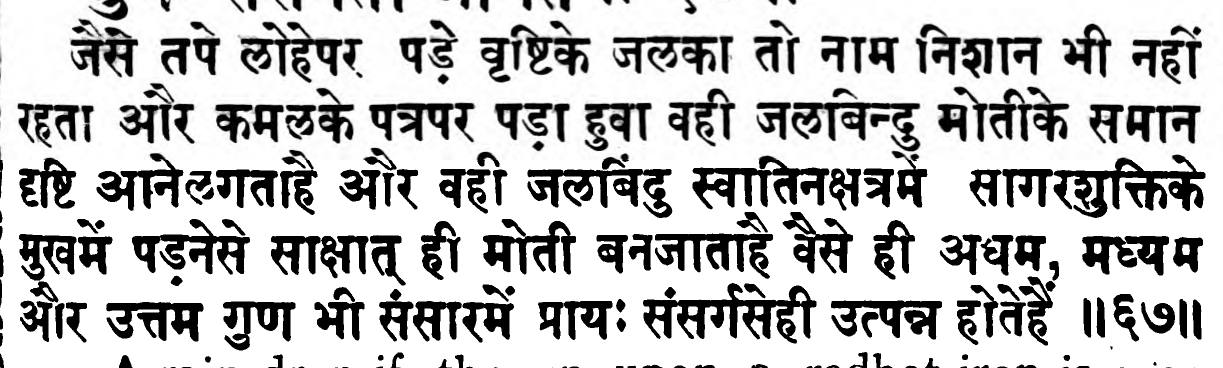
जैसे तपे लोहेपर पड़े वृष्टिके जलका तो नाम निशान भी नहीं रहता और कमलके पत्रपर पड़ा हुवा वही जलबिन्दु मोतीके समान दृष्टि आने लगता है और वही जलबिंदु स्वातिनक्षत्र में सागरशुक्तिके मुखमें पड़ने से साक्षात् ही मोती बन जाता है वैसे ही अधममध्यम और उत्तम गुण भी संसारमें प्रायः संसर्गसेही उत्पन्न होते हैं , ॥६७॥
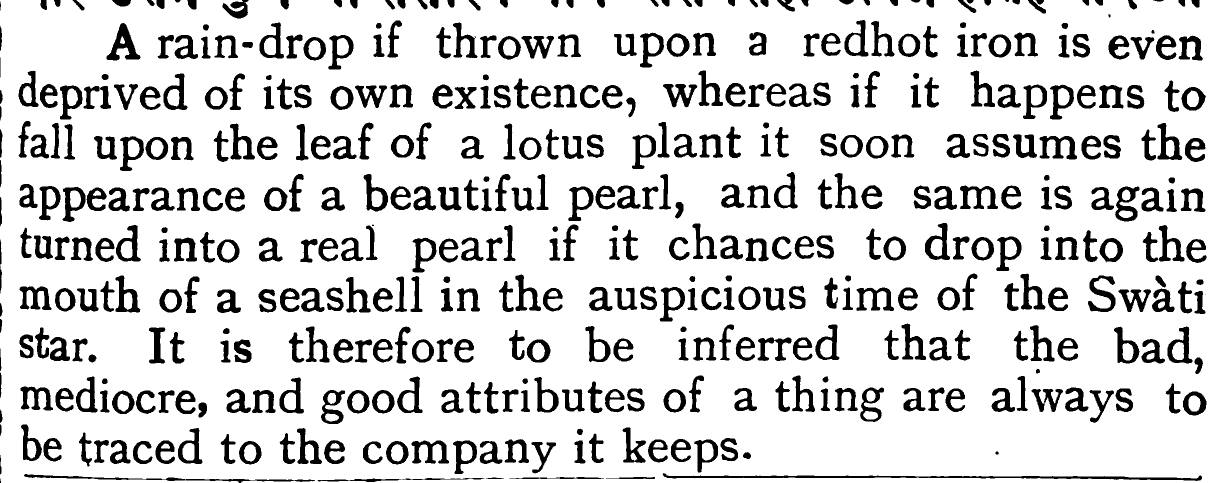
A rain-drop if thrown upon a redhot iron is even deprived of its own existence, whereas if it happens to fall upon the leaf of a lotus plant it soon assumes the appearance of a beautiful pearl, and the same is again turned into a real pearl if it chances to drop into the mouth of a seashell in the auspicious time of the Swàti star. It is therefore to be inferred that the bad, mediocre, and good attributes of a thing are always to be traced to the company it keeps.
Footnote
The verse stands in the Panchatantra (पंचतंत्र । १ । २५० ॥ ), and is quoted from " that work by शार्ङ्गधर at No. 330.

Footnote
Cf. ( a ) पुण्यं स्वातिजलं सरिस्म पतितं शक्तासु मुक्ताजळ कर्पूरं कदलीदलेषु गरलं व्याले स्थले कर्दमः । क्षीरं क्षीरनिधौ तदम्बु पतितं क्षारोदकं सागरे इच्छादानपरोपकारकरणं पात्रानुसारं फलम् " ( सुभाषितरत्नभाण्डागारे '


Footnote
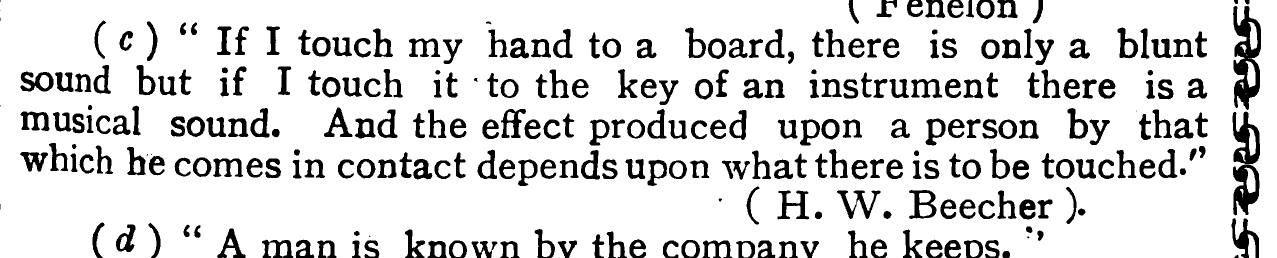
(c) " If I touch my hand to a board, there is only a blunt sound but if I touch it to the key of an instrument there musical sound. And the effect produced upon a person by that is a which he comes in contact depends upon what there is to be touched." (H. W. Beecher ).
Footnote
(d) "A man is known by the company he keeps. ( N. V. Bâpat's Beauties of English literature. )


Gopinath1896
all
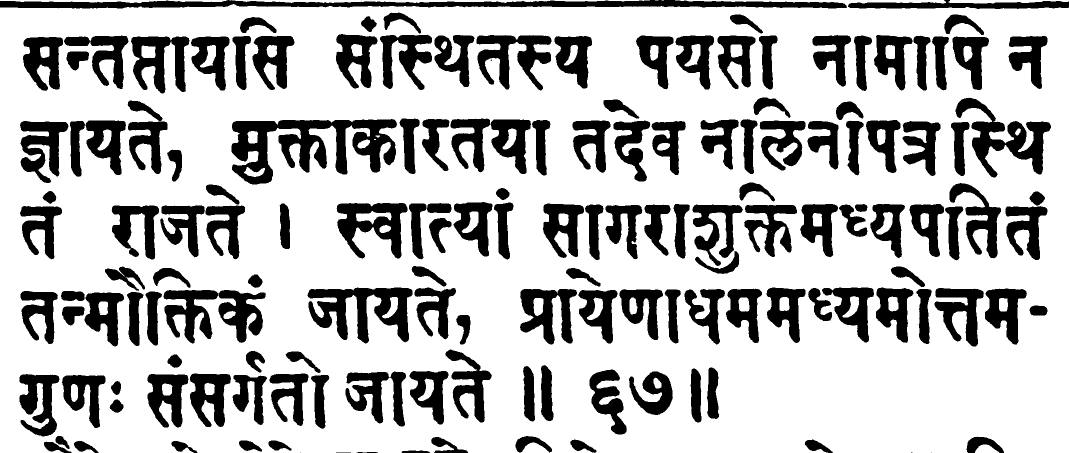
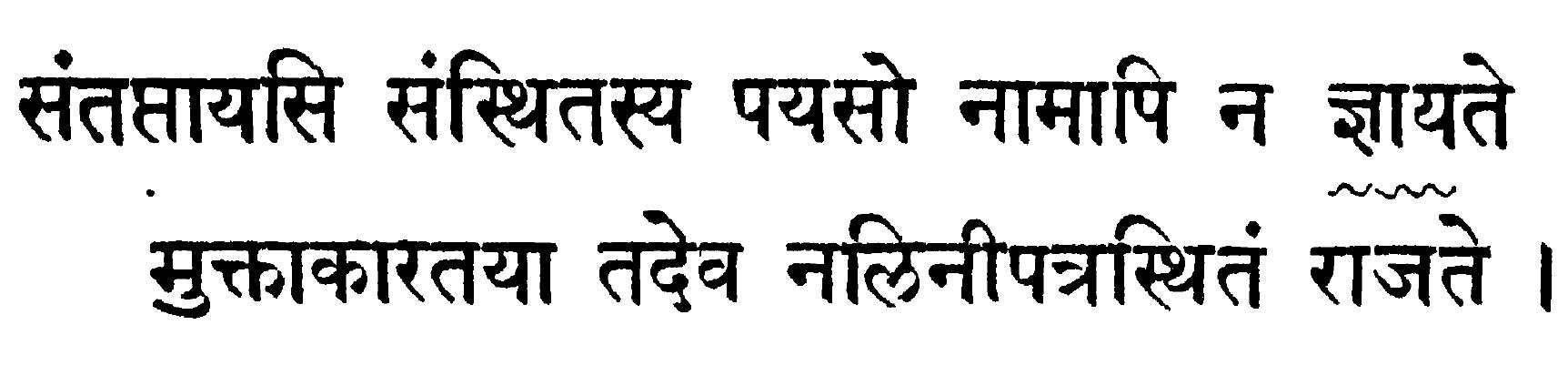
सन्तप्तायसि संस्थितस्य पयसो नामापि न
ज्ञायते, मुक्ताकारतया तदेव नलिनीपत्र स्थि
तं राजते । स्वात्यां सागराशुक्तिमध्यपतितं
तन्मौक्तिकं जायते, प्रायेणाधममध्यमोत्तम-
गुणः संसर्गतो जायते ॥ ६७ ॥
जैसे तपे लोहे पर पड़े वृष्टि के जलका तो नाम निशानभी नहीं रहता और कमलकेपत्र पर पड़ा हुवा वही जलबिन्दु मोतीक समान दृष्टि आनेलगता है और वही जलबिंदु स्वाति नक्षत्र में सागरशुक्ति के मुखमें पड़ने से साक्षात् ही मोती बनजाता है वैसे ही अधम मध्यम और उत्तम गुणभी संसार में प्रायः संसर्गसेही उत्पन्न होते हैं॥ ६७॥
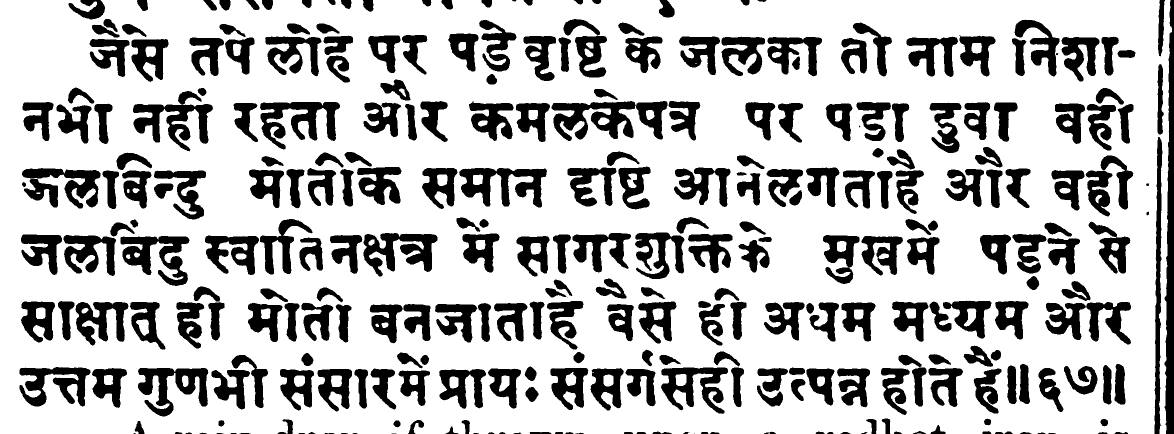
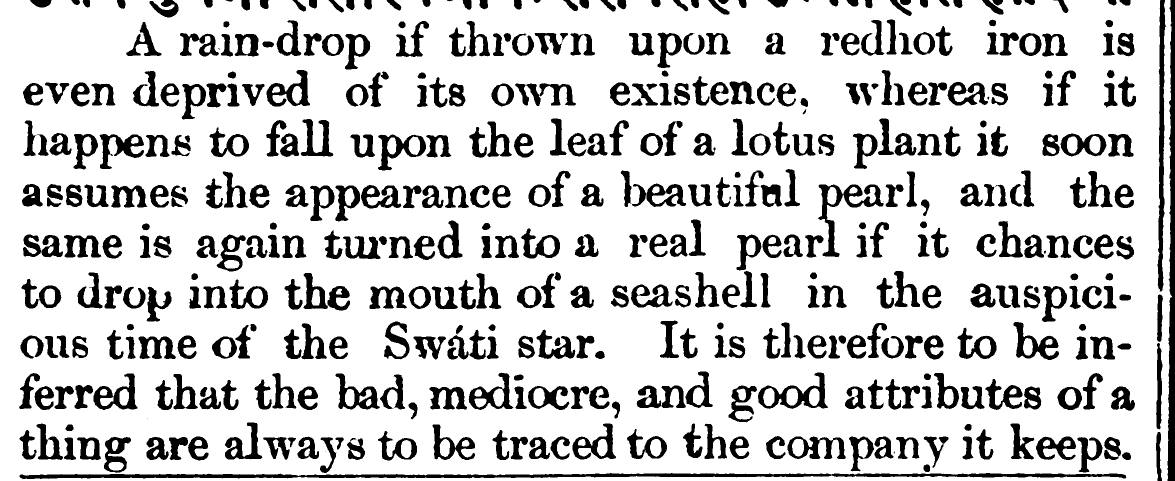
A rain-drop if thrown upon a redhot iron is even deprived of its own existence, whereas if it happens to fall upon the leaf of a lotus plant it soon assumes the appearance of a beautiful , and the pearl same is again turned into a real pearl if it chances to drop into the mouth of a seashell in the auspicious time of the Swáti star. It is therefore to be inferred that the bad, mediocre, and good attributes of a thing are always to be traced to the company it keeps.
Footnote
The verse stands in ths Panchatantra ( पंचतंत्र । १ । २५० ॥ ), and is qnoted from that work by शार्ङ्गधर at No. 330.

Footnote
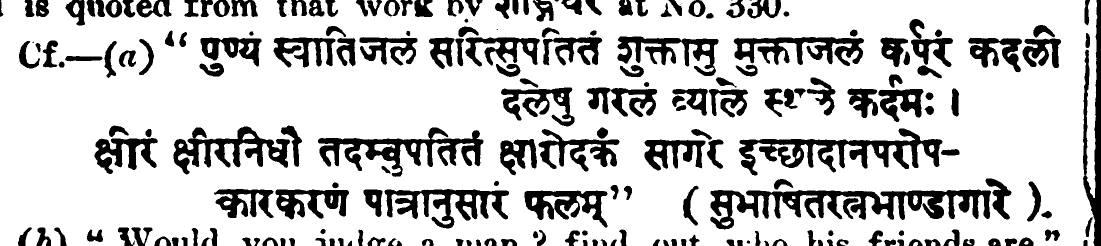
- (a) " पुण्यं स्वातिजलं सरित्सुपतितं शुक्तामु मुक्ताजलं कर्पूरं कदली दलेषु गरलं व्याले स्थळे कर्दमः । क्षीरं क्षीरनिधौ तदम्बुपतितं क्षारोदकं सागरे इच्छादानपरोपकारकरणं पात्रानुसारं फलम् " ( सुभाषितरत्नभाण्डागारे ).

Footnote
soundc) "If I touch touch my hand to the to key a of boardan , instrument there is only there a blunt is a ; but if I it musical sound. And the effect produced upon a person by that which he comes in contact depends upon what there is to be touched." H. W. Beeeher ).

Footnote
he (d) " A man is known by the company keeps." ( N. V. Bápat's Beauties of English literatnre. )


Kosambi
all
Footnote
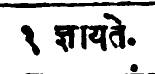
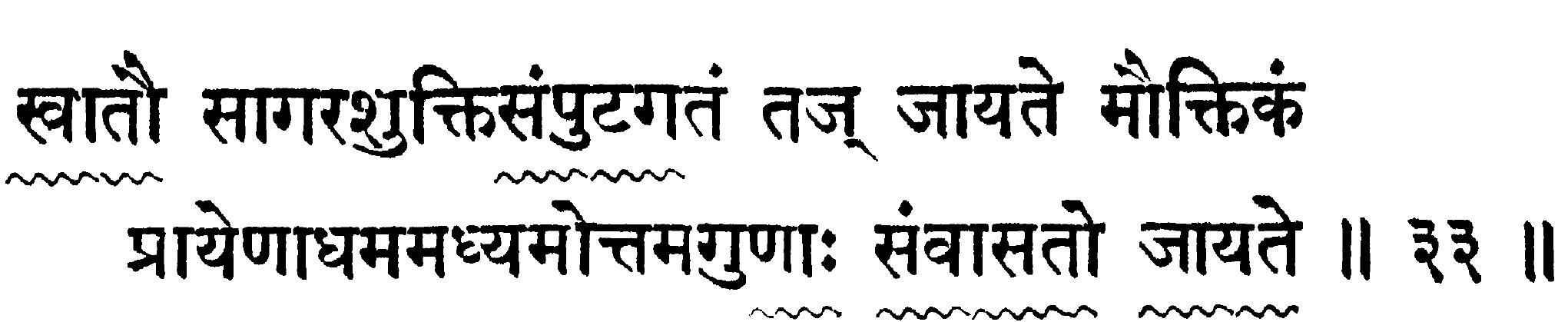
33 Order in A3 is acbd . a ● ) D F3 J S ( except W ) श्रूयते ( for ज्ञायते ) .
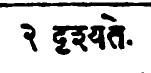
– 8 ) Ms बिसिनी ( for नलिनी ० ) . DJ Y2 . 4 – 8 T G1 - 36 M1 . 2 दृश्यते ; G + जायते ; M3 - 6
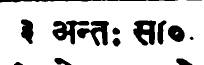
लक्ष्यते ( for राजते ) . ¬ ) 1 ) F W X Y 1.8 G + t . v . स्वात्यां ; J Y 2. 4 - 8T GM अंत : - ( for
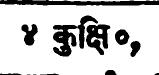
स्वातौ ) . A3 सूक्तिसंपुटगतं ; C D F I J3 W Y2 . 36.7 T G3t 4 5 M4 ° शुक्तिमध्यपतितं ; J1.2 Y4.5
G1.2,80 M1 - 3.5 ° शुक्तिकुक्षिपतितं ( for ' शुक्तिसंपुटगतं ) . C D F3 J Wit , 4t Y2-4 TG_M
तन्मौक्तिकं जायते ; Fs We C मुक्ताफलं जायते ; W 2. 3 तन्मौक्ति संजायते ( for तज्जायते मौक्तिकं ) .
– 4 ) AC D Eo.1.2t.6 F1.8 Wa- गुण : ( for - गुणा : ) . A3C D F1-4 W ( com . gloss or
reading ) X Y1 संसर्गतो ( for संवासतो ) . E3 संवासतो ( gloss संसर्गतो ) . H X Y 1 देहिनां ;
W1 ज्ञायते ( for जायते ) . Fs I प्रायेणोत्तममध्यमाधमगुणाः ( I॰ ण :) संसर्गतो भूयते ( I संवासतो
जायते ) ; J Y2 - 8 T GM प्रायेणाधममध्यमोत्तमजुषामेवंविधा वृत्तयः .
Footnote
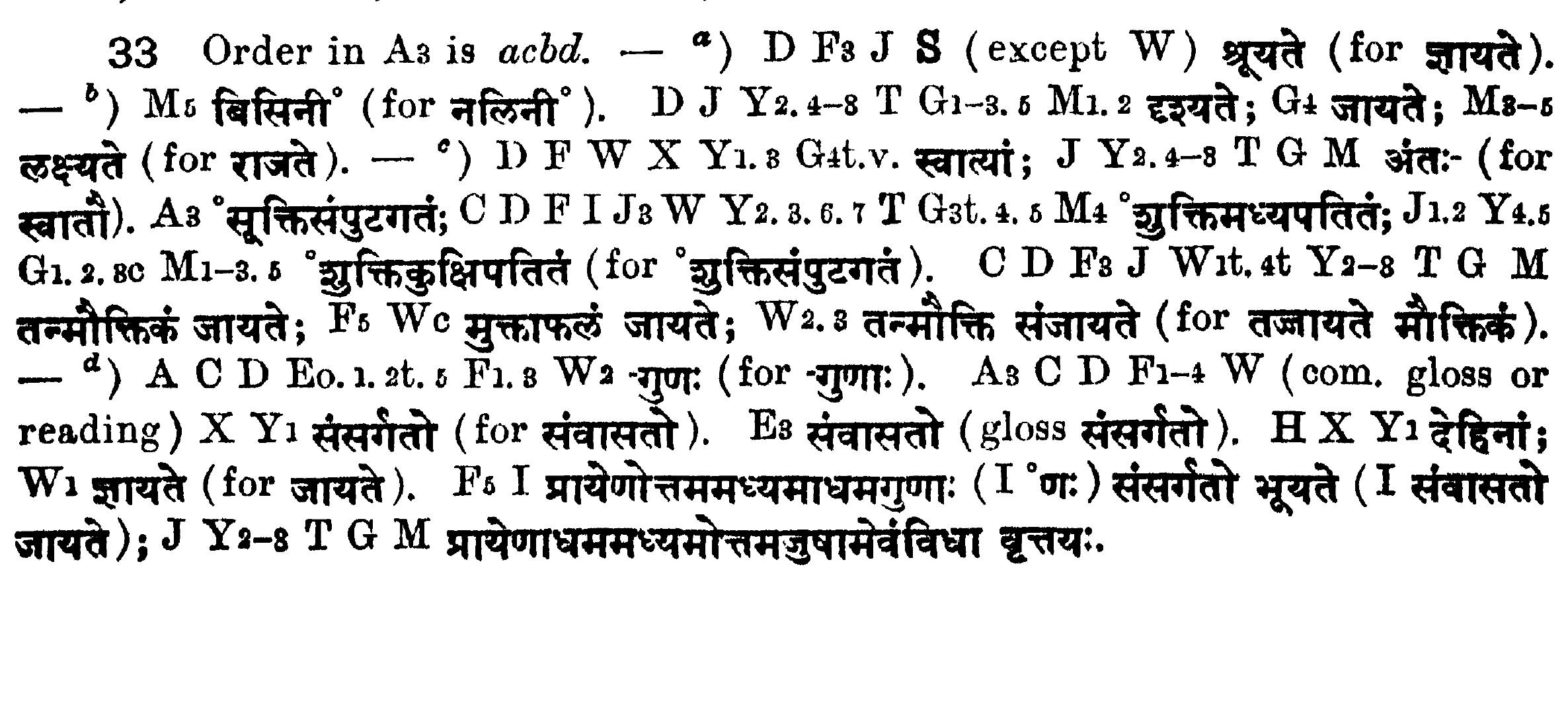
BIS . 6781 ( 3152 ) Bhartr . ed . Bobl . 2. 57. Haeb . 37. lith ed . I. 66 , II . 67 .
Galan 69. Pañe . ed . Koseg . I. 280. ed . Bomb . 250. Subhāsh . 105 ; Sp . 330
( Visnuśarman ) ; SRB . p . 87. 33 ; SA . 24. 17 ; Padyaracanā ( KM . 89 , p . 111. 38 ,
Bh . ) ; SS . 29. 2 ; SK . 2. 187 ; SU . 1464 ; SSD . 2. f . 125b ; SSV 654 ; SMV . 8.51 ;
JSV . 177. 6 ; SKG . f . 13a .
Commentary