Ryder
WHY?
The deer, the fish, the good man hunger
For grass, for water, for content;
Yet hunter, fisher, scandalmonger
Pursue each harmless innocent.
Brough
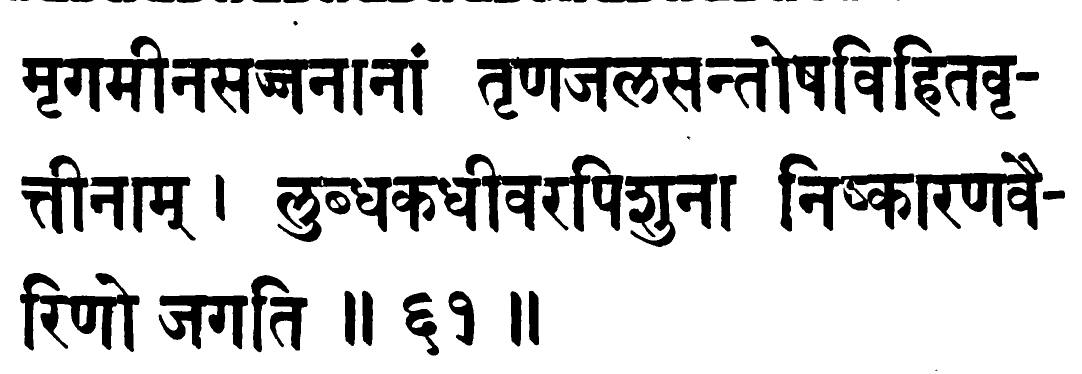
Deer and fish and good men live
On grass and water and content:
No cause for hatred do they ever give
To hunters, fishers, or to men malevolent.
Tawney
Hunters entrap the harmless deer,
Fishers the finny brood,
So bad men causeless interfere
To persecute the good.
Telang
all

Notes
St. LXI.—संतोष. The commentator says सज्जना यदृच्छया लाभेन संतुष्टाः.—which is no doubt the meaning. But it is noteworthy that संतोष is co-ordinated with तृण and जल.—Âryâ


Kale
all


Translation
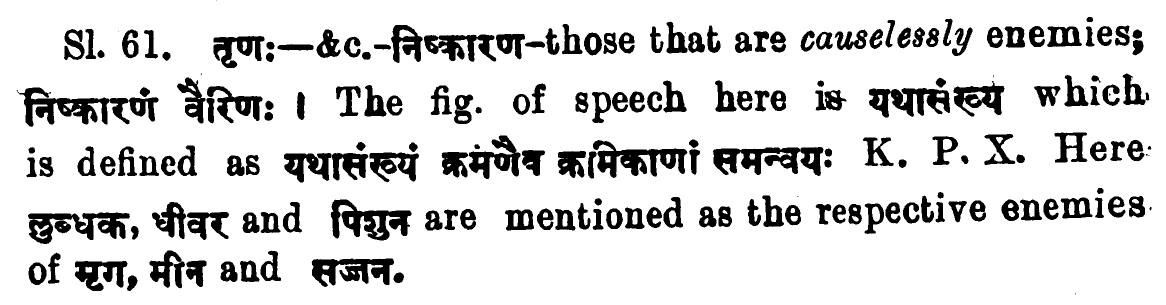
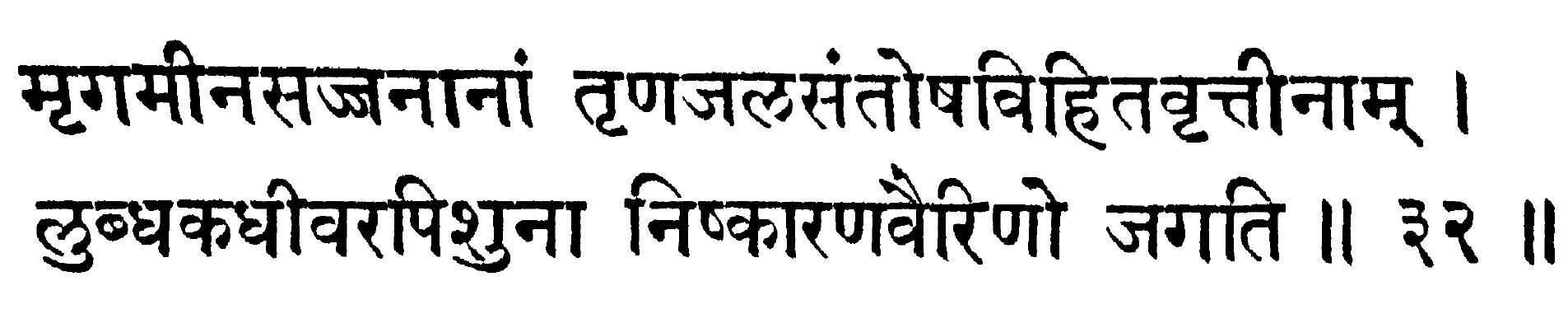
61. The deer, the fish, and the virtuous, living on grass, water and contentment respectively ( find ) in this world unprovoked enemies ( in ) the hunter, the fisherman, and the wicked.

Gopinath1914
all
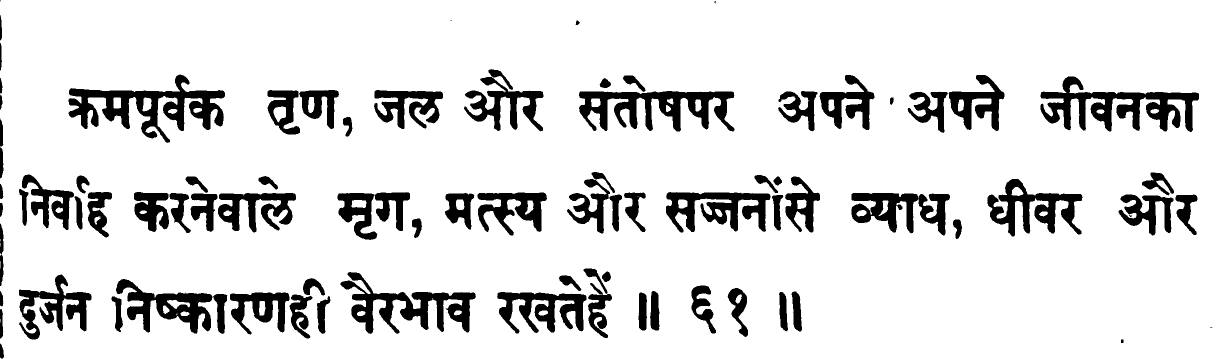
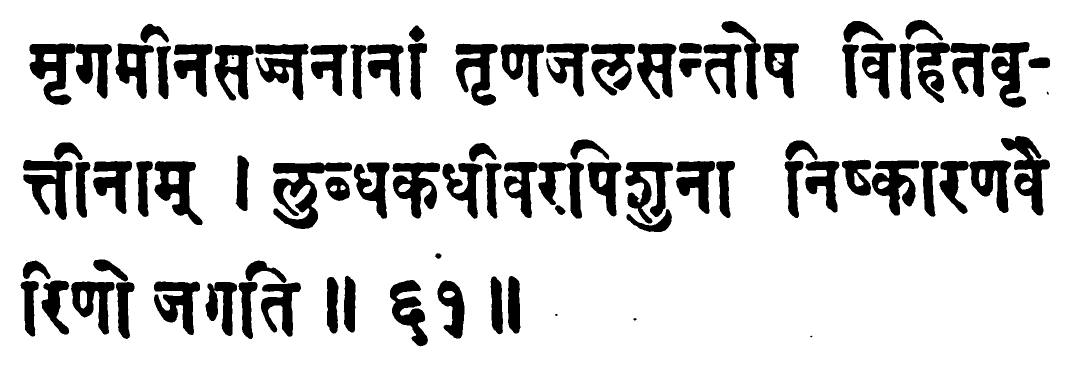
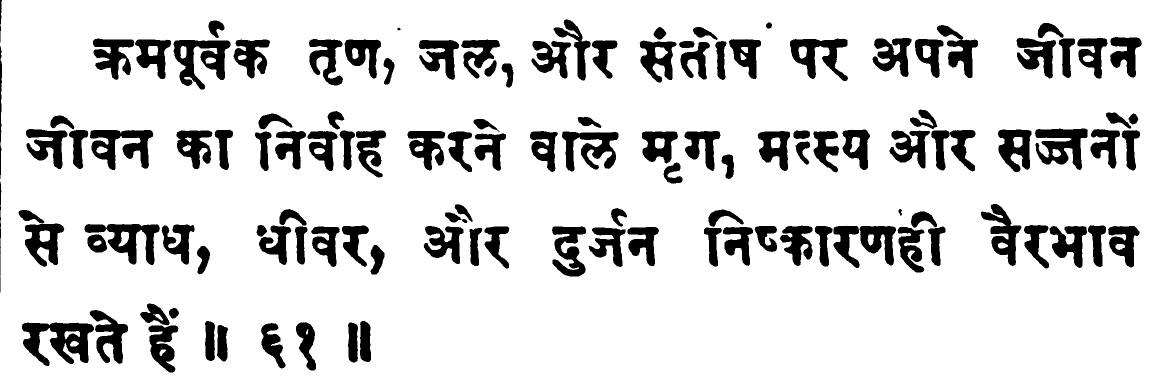
क्रमपूर्वक तृण, जल और संतोषपर अपने ' अपने जीवनका निर्वाह करनेवाले मृग, मत्स्य और सज्जनोंसे व्याध, धीवर और दुर्जन निष्कारणही वैरभाव रखते हैं ॥ ६१ ॥
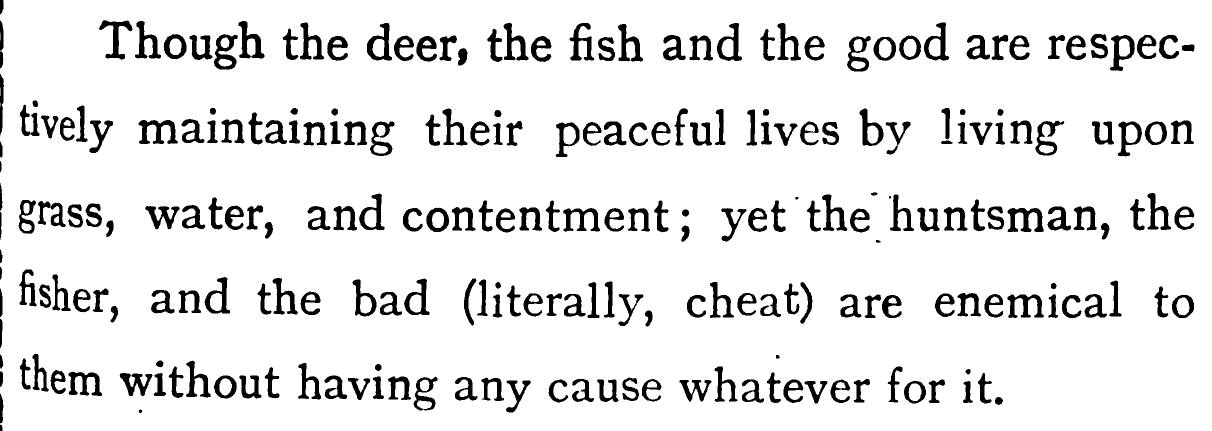
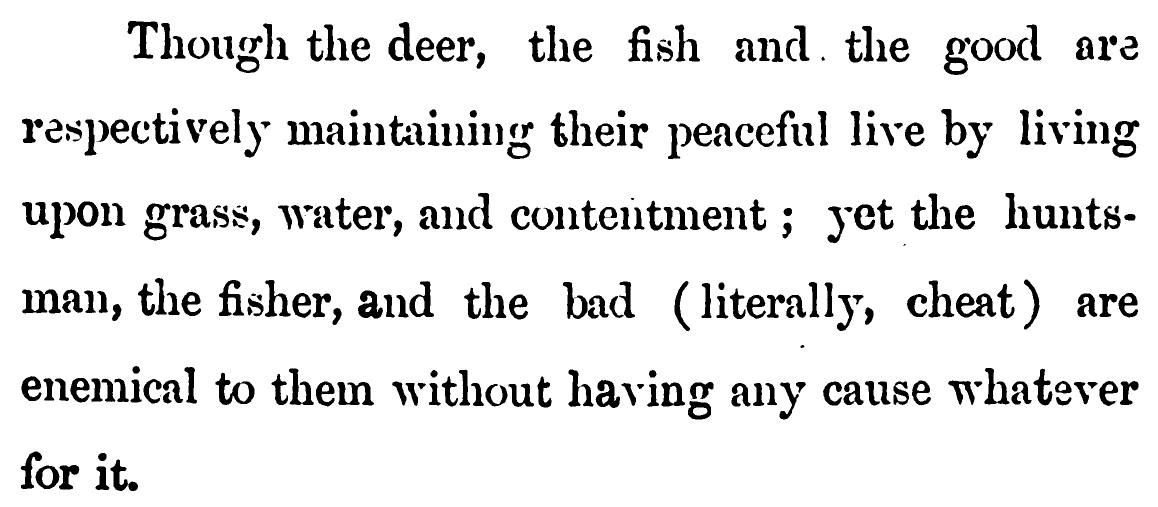
Though the deer, the fish and the good are respectively maintaining their peaceful lives by living upon grass, water, and contentment; yet the huntsman, the fisher, and the bad (literally, cheat) are enemical to them without having any cause whatever for it.
Gopinath1896
all
क्रमपूर्वक तृण, जल, और संतोष पर अपने जीवन जीवन का निर्वाह करने वाले मृग, मत्स्य और सज्जनों से व्याध, धीवर, और दुर्जन निष्कारणही वैरभाव रखते हैं ॥ ६१ ॥
Though the deer, the fish and the good are respectively maintaining their peaceful live by living upon grass, water, and contentment; yet the huntsman, the fisher, and the bad ( literally, cheat) are enemical to them without having any cause whatever for it.
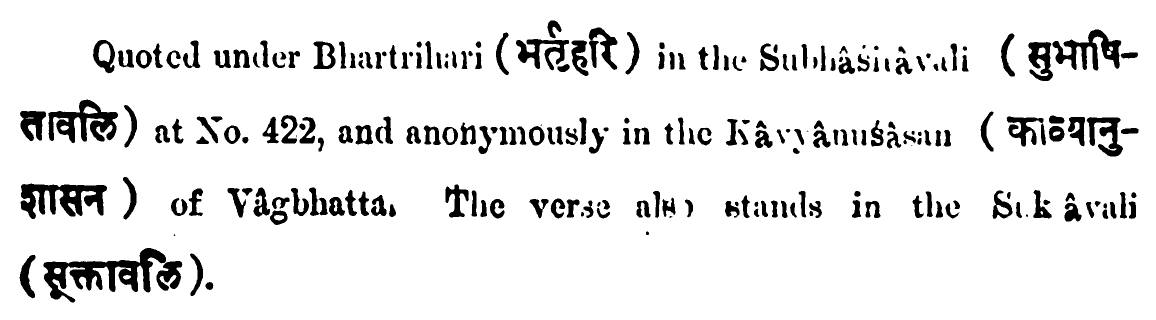
Kosambi
all
Footnote
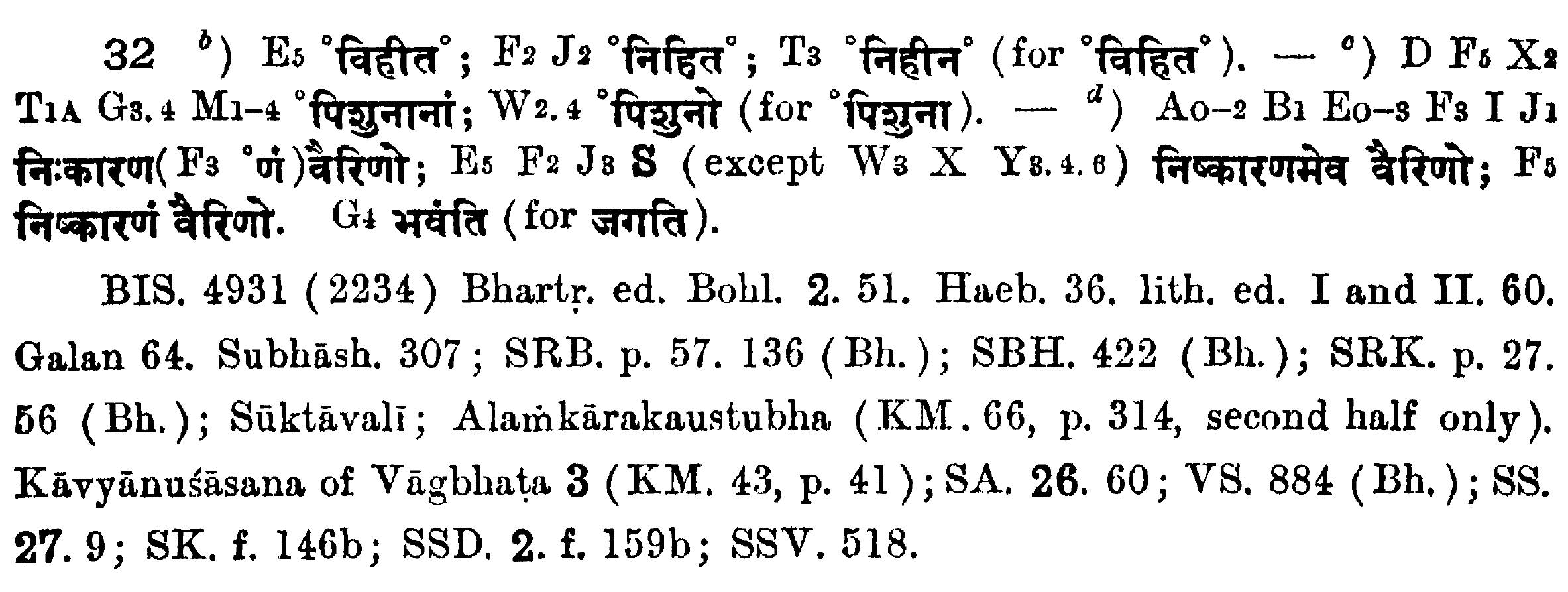
32 6 ) Es ' विहीत ; F2 J2 ° निहित ; T3 ' निहीन ' ( for ' विहित ) – ● ) D Fs X
T1A G8 . 4 M1 - 4 ° पिशुनानां ; W2.4 ° पिशुनो ( for ° पिशुना ) . a ) A0 - 2 B1 E0 -4 F3 I J1
निःकारण ( F3 णं ) वैरिणो ; Es F2 J8 S ( except W3 X Y8 . 4. 6 ) निष्कारणमेव वैरिणो ; Fs
निष्कारणं वैरिणो . G½ भवंति ( for जगति ) .
BIS . 4931 ( 2234 ) Bhartr . ed . Bohl . 2. 51. Haeb . 36. lith ed . I and II . 60 .
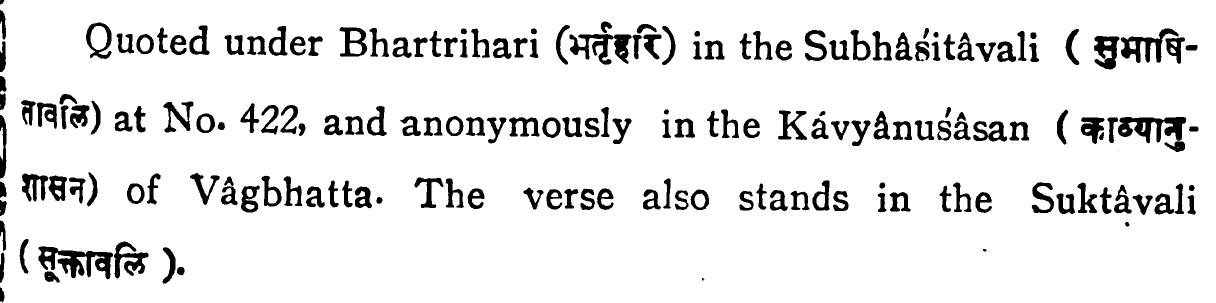
Galan 64. Subhāsh . 307 ; SRB . p . 57.136 ( Bh . ) ; SBH 422 ( Bh . ) ; SRK . p . 27 .
56 ( Bh . ) ; Sūktāvalī ; Alaṁkārakaustubha ( KM . 66 , p . 314 , second half only ) .
Kāvyānuśāsana of Vägbhaṭa 3 ( KM . 43 , p . 41 ) ; SA . 26. 60 ; VS. 884 ( Bh . ) ; SS .
27.9 ; SK f . 146b ; SSD . 2. f . 159b ; SSV 518 .
Commentary