Tawney
See that _pariah_ making off there with a filthy greasy bone,
How he'll mumble and enjoy it when he finds himself alone!
Not, if Indra's self reproved him, would he blush and leave his treat,
For the mean abhor no meanness if it only yield them meat.
Telang
all
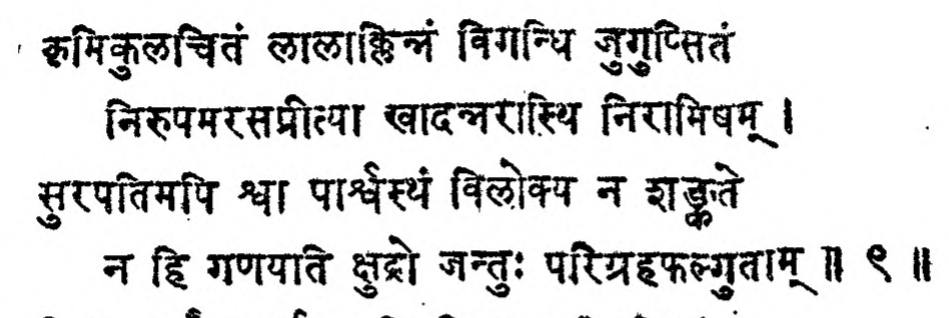
कृमिकुलचितं लालाक्लिन्नं विगन्धि जुगुप्सितं
निरुपमरसप्रीत्या खादन्नरास्थि निरामिषम् ।
सुरपतिमपि श्वा पार्श्वस्थं विलोक्य न शङ्कते
न हि गणयति क्षुद्रो जन्तुः परिग्रहफल्गुताम् ॥ ९ ॥
Notes
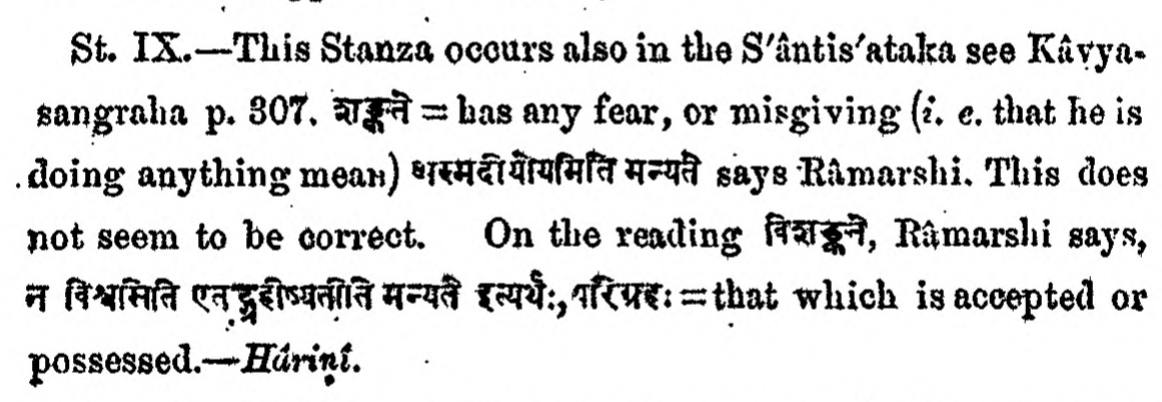
St. IX.—This Stanza occurs also in the S′ântis′ataka see Kâvyasangraha p. 307. शङ्कते = has any fear, or misgiving (i. e. that he is doing anything mean) अस्मदीयोयमिति मन्यते says Râmarshi. This does not seem to be correct. On the reading विशङ्कते, Râmarshi says, न विश्वसिति एतद्ग्रहीष्यतीति मन्यते इत्यर्थः, परिग्रहः = that which is accepted or possessed.—Hâriṇî.

Kale
all

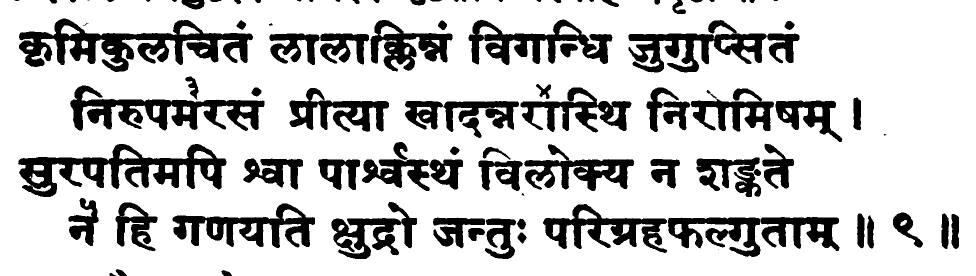
कृमिकुलचितं लालाक्लिन्नं विगन्धि जुगुप्सितं
निरुपमरसं प्रीत्या खादन्नरास्थि निरामिषम् ।
सुरपतिमपि श्वा पार्श्वस्थं विलोक्य न शङ्कते
न हि गणयति क्षुद्रो जन्तुः परिग्रहफल्गुताम् ॥ ९ ॥
Translation
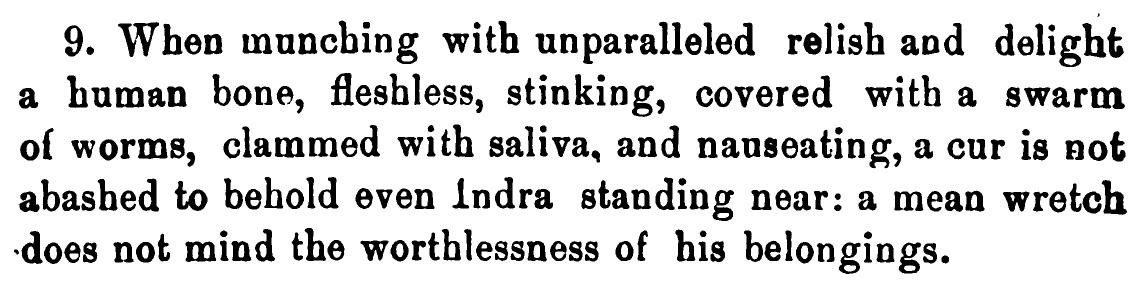
9. When munching with unparalleled relish and delight a human bone, fleshless, stinking, covered with a swarm of worms, clammed with saliva, and nauseating, a cur is not abashed to behold even Indra standing near: a mean wretch does not mind the worthlessness of his belongings.
Notes
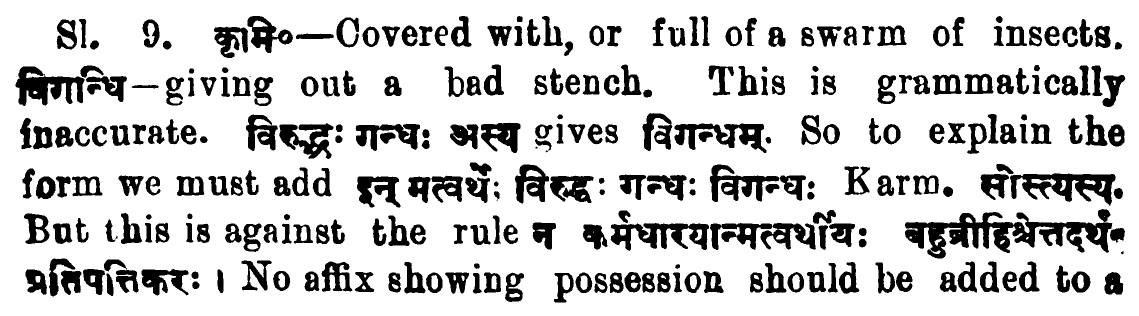
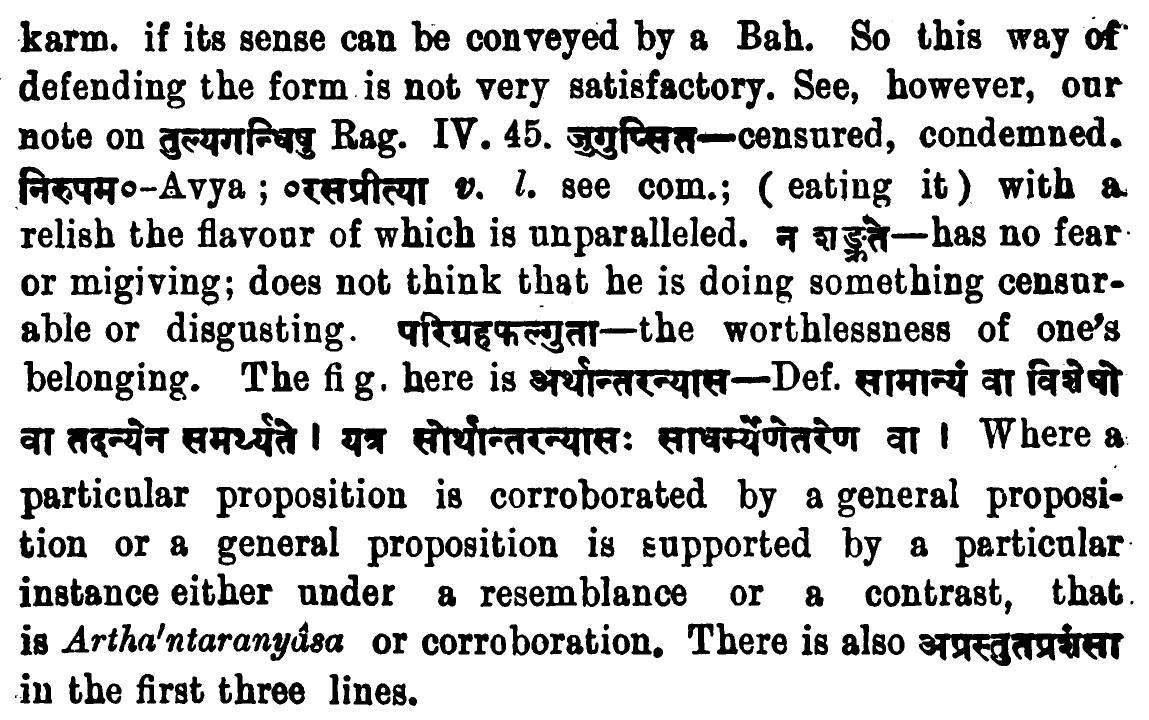
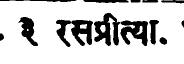
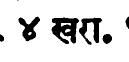
Sl. 9. कृमि०—Covered with, or full of a swarm of insects. विगन्धि—giving out a bad stench. This is grammatically inaccurate. विरुद्धः गन्धः अस्य gives विगन्धम्. So to explain the form we must add इन् मत्वर्थे; विरुद्धः गन्धः विगन्धः Karm. सोस्त्यस्य. But this is against the rule न कर्मधारयान्मत्वर्थीयः बहुव्रीहिश्चेत्तदर्थप्रतिपत्तिकरः । No affix showing possession should be added to a karm. if its sense can be conveyed by a Bah. So this way of defending the form is not very satisfactory. See, however, our note on तुल्यगन्धिषु Rag. IV. 45. जुगुप्सित—censured, condemned. निरुपम०–Avya ; ०रसप्रीत्या v. l. see com.; ( eating it ) with a relish the flavour of which is unparalleled. न शङ्कते—has no fear or migiving; does not think that he is doing something censurable or disgusting. परिग्रहफल्गुता—the worthlessness of one's belonging. The fi g. here is अर्थान्तरन्यास—Def. सामान्यं वा विशेषो वा तदन्येन समर्थ्यते । यत्र सोर्थान्तरन्यासः साधर्म्येणेतरेण वा । Where a particular proposition is corroborated by a general proposition or a general proposition is supported by a particular instance either under a resemblance or a contrast, that is Artha'ntaranyâsa or corroboration. There is also अप्रस्तुतप्रशंसा in the first three lines.

Gopinath1914
all
कृमिकुलचितं लालाक्किन्नं विगन्धि जुगुप्सितं
निरुपमरसं प्रीत्या खादन्नरास्थि निरामिषम् ।
सुरपतिमपि वा पार्श्वस्थं विलोक्य न शङ्कते
नहि गणयति क्षुद्रो जन्तुः परिग्रहफल्गुताम् ॥९ ॥
जैसे अनेककडोंसे परिपूर्ण, लारसे युक्त, दुर्गंधसहित, घृणायोग्य, अत्यंत विरस ' और मांसरहित मनुष्यकी हड्डीको प्रीतिपूर्वक खाताहुवा कूकर अपने समीपवर्ती देवराज इंद्रकीभी कुछ शंका (लाज ) नहीं करता वैसेही स्वार्थपरायण नीचमनुष्यभी परिग्रहकी तुच्छताको कदापि नहीं जान सकता ॥ ९ ॥
Footnote
stanza is same as stanza in Śântiśataka Part This 8 II. ( शान्तिशतकं अत्यन्त विरस द्वितीयपरिच्छेदthough : not ). exactly निरुपमरसं


Gopinath1896
all
कृमिकुलचितं लालाकिनं विगन्धि जुगुप्सितं
निरुपमरसं प्रीत्या खादन्नरास्थि निरामिषम् ।
सुरपतिमपि वा पार्श्वस्थं विलोक्यन शङ्कते
नहि गणयति क्षुद्रो जन्तुः परिग्रहफल्गुताम् ९ ॥
जैसे अनेक कीडोंसे परिपूर्ण, लारसे युक्त, दुर्गंधसहित, घृणायोग्य, अत्यंत विरस और मांसरहित मनुष्यकी हड्डीको प्रीतिपूर्वक खाताहुवा कूकर अपने समीपवर्ती देवराज इंद्रकीभी कुछ शंका ( लाज ) नहीं करता वैसेही स्वार्थपरायण नीचमनुष्य भी परिग्रहकी तुच्छ ताको कदापि नहीं जान सकता ॥ ९ ॥


Kosambi
all
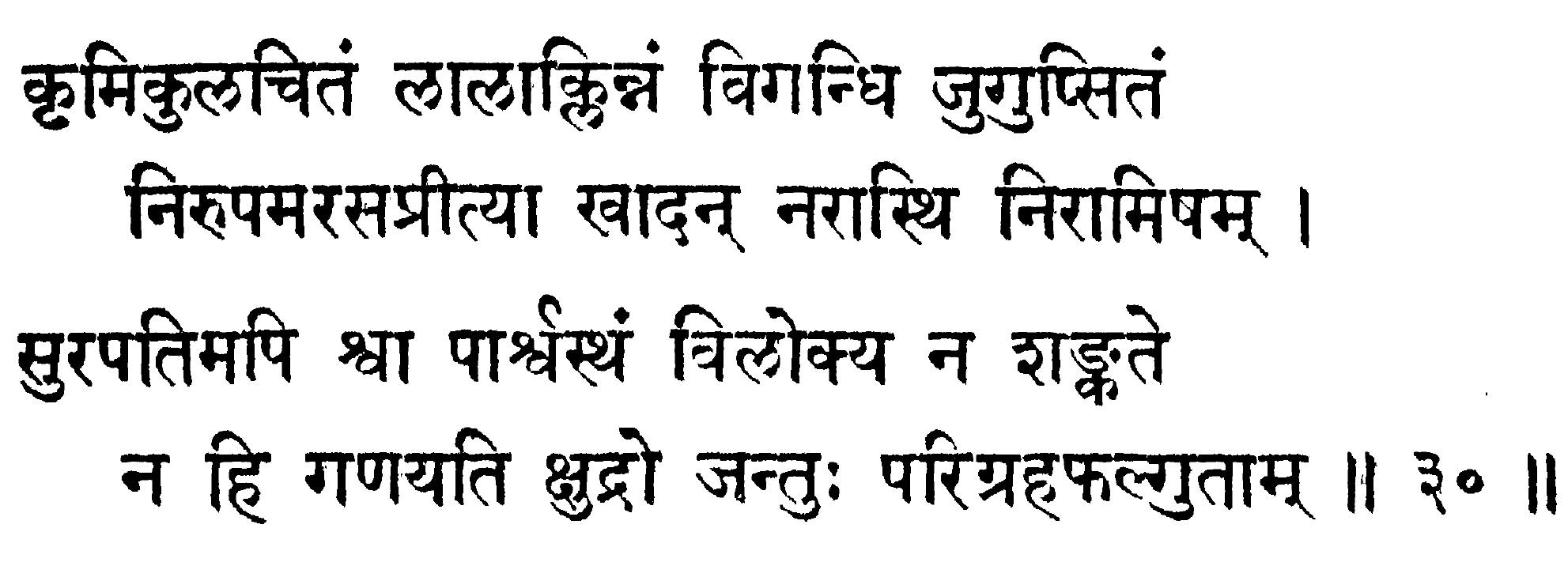
कृमिकुलचितं लालाक्लिन्नं विगन्धि जुगुप्सितं
निरुपमरसप्रीत्या खादन् नरास्थि निरामिषम् ।
सुरपतिमपि श्वा पार्श्वस्थं विलोक्य न शङ्कते
न हि गणयति क्षुद्रो जन्तुः परिग्रहफल्गुताम् ॥ ३० ॥
Footnote
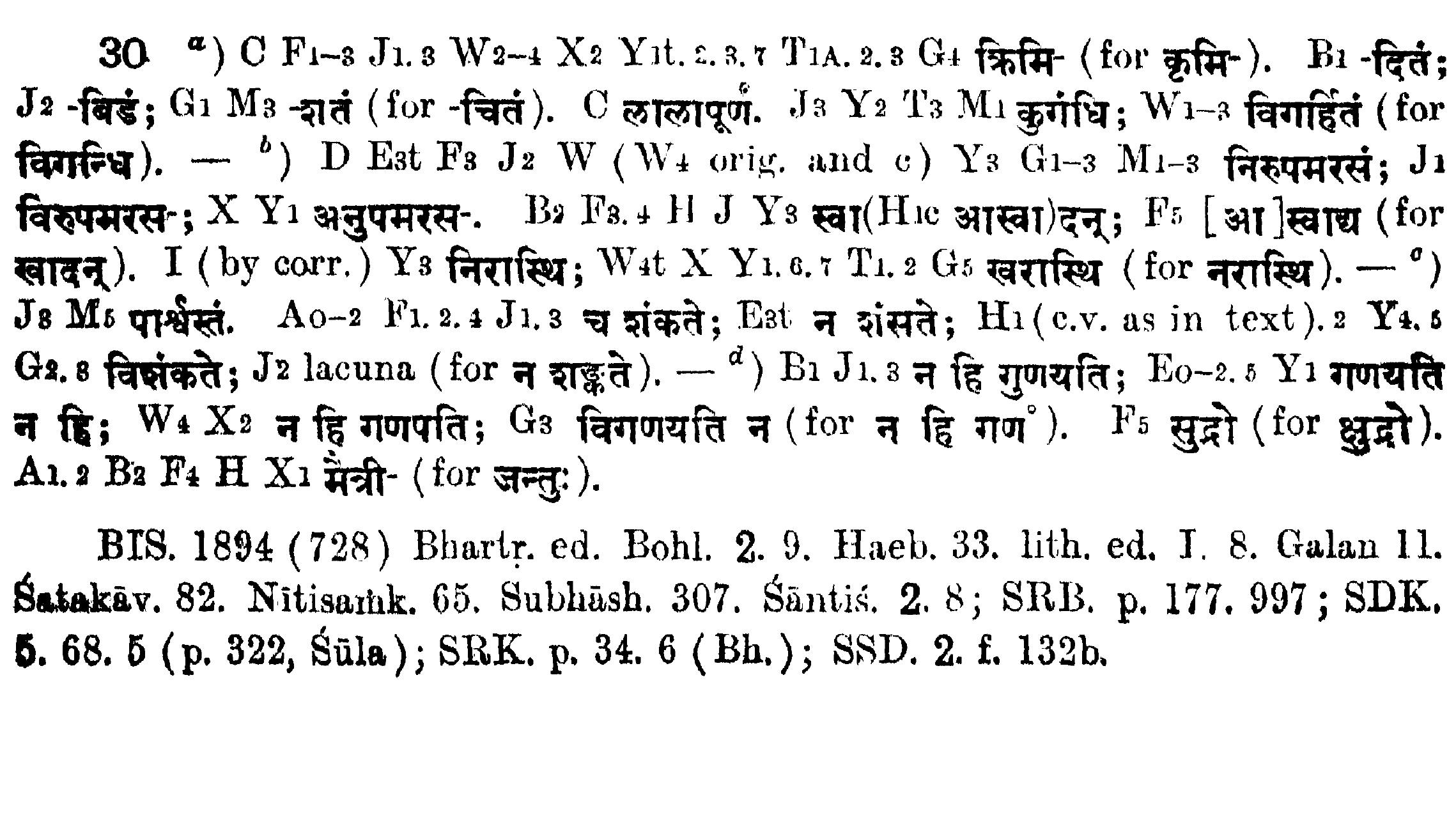
3Q a ) CF1 ~ 4 J1 3 W2-4 X2 Yit . 2. 3.7T1A 2.3G + क्रिमि- ( for कृमि - ) . B1 -दितं ;
J2 - बिर्ड ; G1 M3 शतं ( for - चितं ) . C लालापूर्णं . J 3 Y2 13 M1 कुगंधि ; W1-3 विगर्हितं ( for
विगन्धि ) . 4 ) D Est F3 J2 W ( W + orig . and c ) Y3 G1 - 3M 1 - 3 निरुपमरसं ; Ji
विरुपमरस ; X Y 1 अनुपमरस Ba F3 + HJ Y : स्वा ( Hie आस्वा ) दन् ; Fs [ आ ] स्वाथ ( for
खादन् ) . I ( by corr . ) Y3 निरास्थि ; W ‡ t X Y1.6.7 T1 . 2 G : खरास्थि ( for नरास्थि ) . - )
J8 Ms पार्श्वस्तं . A0 - 2 F1 . 2. 4 J1.3 च शंकते ; Eat न शंसते ; H1 ( c . v . as in text ) . 2 Yas
G2 . 8 विशंकते ; J2 lacuna ( for न शङ्कते ) . – d ) B1 J1.3 न हि गुणयति ; Eo - 2.5 Y1 गणयति
न हि ; W » X 2 न हि गणपति ; G3 विगणयति न ( for न हि गण ) . Fs सुद्रो ( for क्षुद्रो ) .
A1 . 2 B2 F4 H X 1 मैत्री - ( for जन्तु : ) .
BIS . 1894 ( 728 ) Bhartr . ed . Bohl . 2. 9. Haeb . 33. lith ed . I. 8. Galan 11 .
Sataksv . 82. Nitisarthk . 65. Subhash 307. Santis . 2. 8 ; SRB p . 177. 997 ; SDK ,
6. 68. 5 ( p . 322 , Sūla ) ; SRK . p . 34. 6 ( Bb . ) ; SSD . 2. f . 132b .
Commentary