Tawney
What though the scoundrel learned be, avoid him, cut him dead:
Men shudder at the snake that wears a jewel in his head.



Kale
all


Translation
53. Though adorned with learning a wicked man should be avoided. Is not a serpent dangerous ( although it is ) bedecked with a jewel ?

Notes
Sl. 53. Every serpent of a particular species is supposed to have in its crest a jewel which shines by night. ‘ The verse is attributed to Chánakya. See Kâvyasangraha p. 293. and S'árngadhara p. 63, ’ Telang. The fig. is दृष्टान्त by साधर्म्य. There is however a mixture of वस्तुप्रतिवस्तुभाव also.
Gopinath1914
all

विद्वान् होनेपर भी दुष्ट मनुष्य तो सवथा परित्याग करनेके योग्य है । क्योंकि जैसे मणि धारण करनेसे सर्पका भयंकरपन दूर नहीं होसकता, वैसेही विद्या संपादन करलेनेसे दुर्जनों की स्वाभाविक दुष्टताका नाशभी कदापि नहीं होता ॥ ५३ ॥
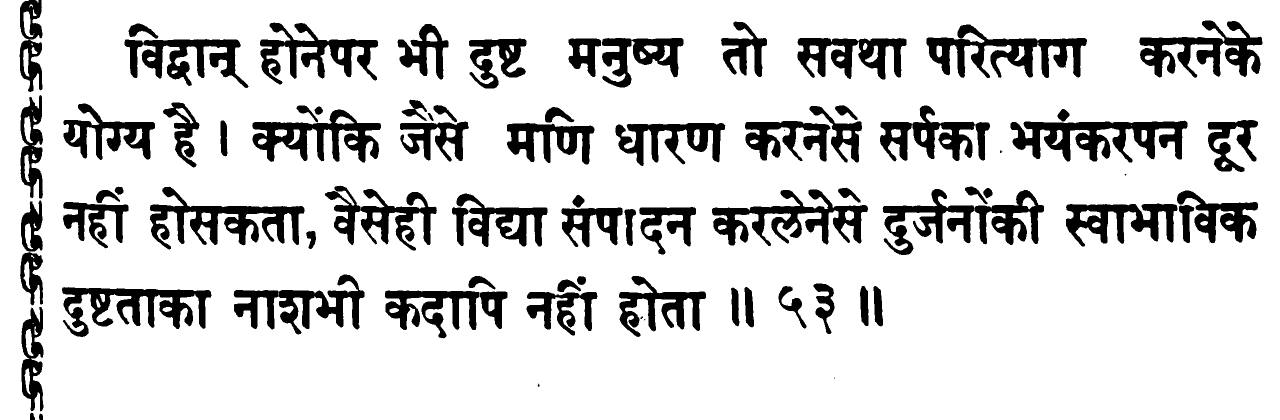
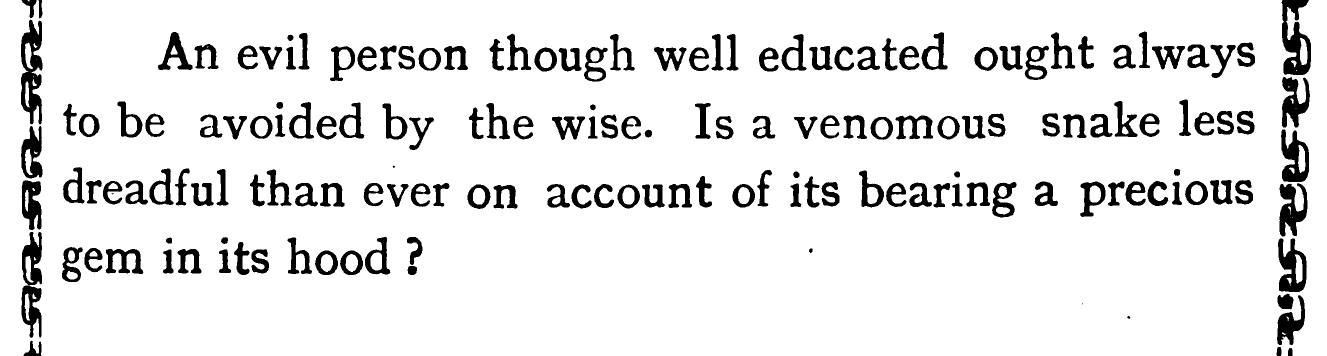
An evil person though well educated ought always to be avoided by the wise. Is a venomous snake less dreadful than ever on account of its bearing a precious gem in its hood ?
Footnote
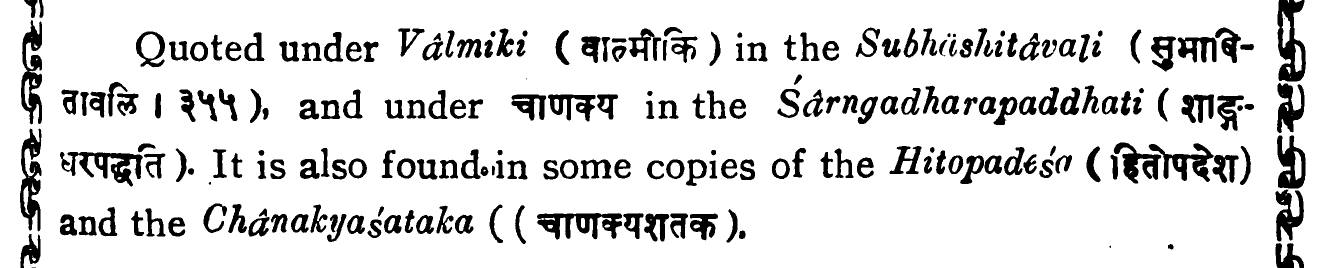
Quoted under Valmiki (वाल्मीकि ) in the Subhüshitavali ( सुभाषितावलि । ३५५ ), and under चाणक्य in the Sarngadharapaddhati ( शाङ्गधरपद्धति ). It is also found in some copies of the Hitopadeśa (हितोपदेश) and the Chanakyaśataka ( ( चाणक्यशतक ).
Footnote
Cf. - (a ) " निष्णातेऽपि च वेदान्ते साधुत्वं नैति दुर्जनः । चिरं जलनिधौ मग्नो मैनाक इव मार्दवम् ॥ ८२ ॥ " ' (भामिनीविलासेभ्यो क्तयुल्ला से ).

Footnote
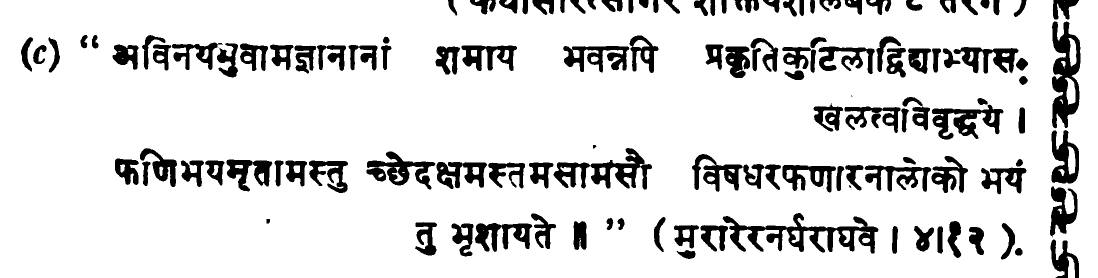
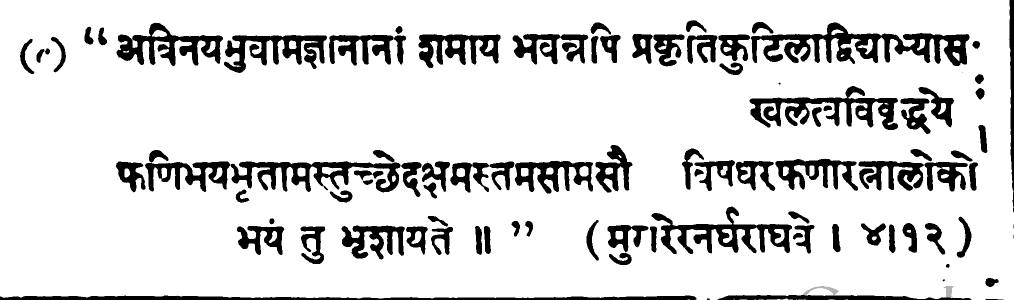
(b) " दुर्जने कृष्णसर्वे च कुतो विश्वासतः सुखम् ॥ १५४ ॥ " (कथासरित्सागरे शक्तियशोलंबके ८ तरंगे )

Gopinath1896
all

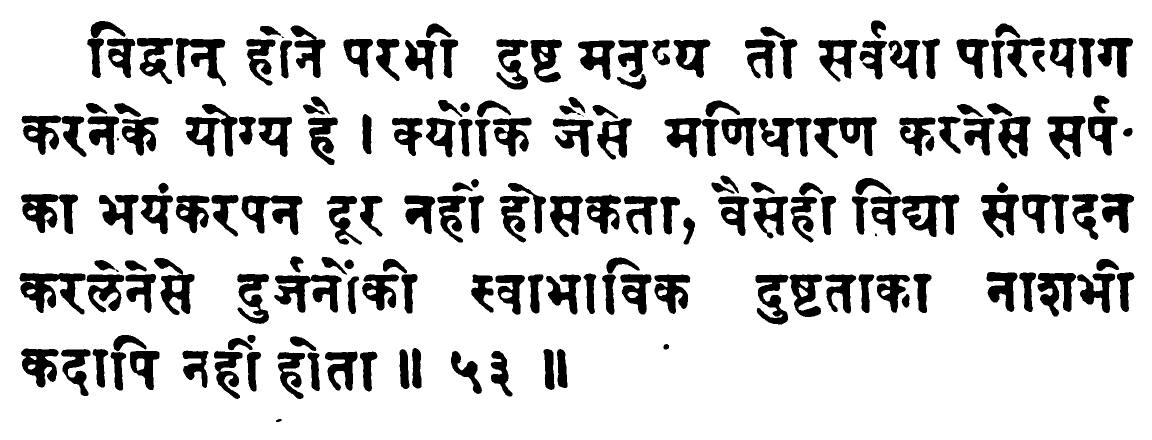
विद्वान् होने परभी दुष्ट मनुष्य तो सर्वथा परित्याग करने के योग्य है । क्योंकि जैसे मणिधारण करने से सर्पका भयंकरपन दूर नहीं हो सकता, वैसेही विद्या संपादन करलेनेसे दुर्जनों की स्वाभाविक दुष्टताका नाशभी कदापि नहीं होता ॥ ५३ ॥
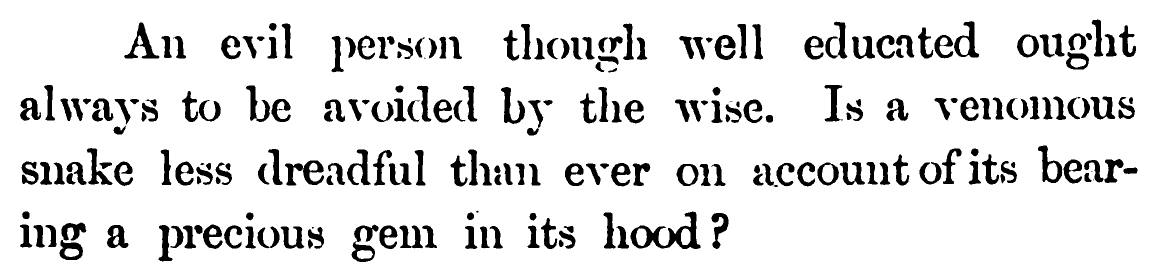
An evil person though well educated ought always to be avoided by the wise. Is a venomous snake less dreadful than ever on account of its bearing a precious gem in its hood?
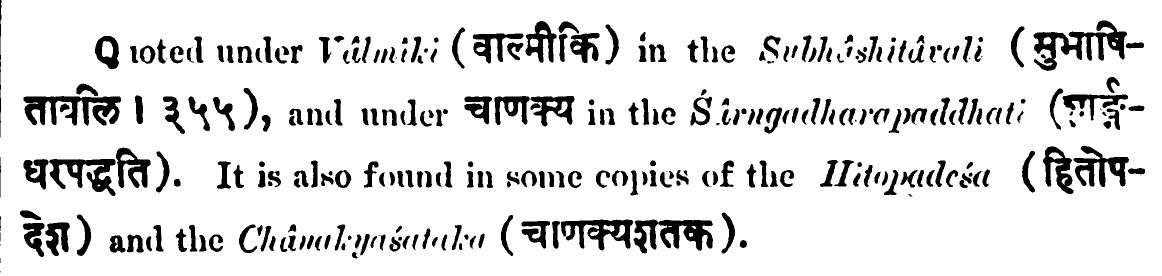
Q noted under Vålmiki (वाल्मीकि) in the Subhashitdrali ( सुभाषितावलि। ३५५), and under चाणक्य in the Sirngadharapaddhati (ज़ाईधरपद्धति). It is also found in some copies of the Hitopadeśa (हितोपदेश) and the Chánaliyasatda (चाणक्यशतक).
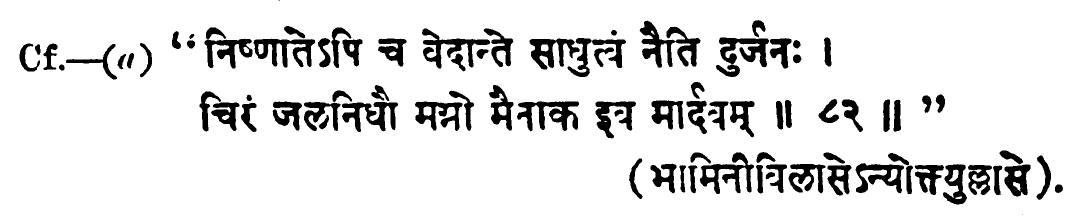
Cf. () “ निष्णातेऽपि च वेदान्ते साधुत्वं नैति दुर्जनः ।
चिरं जलनिधौ मनो मैनाक इव मार्दवम् ॥ ८२ ॥ "
(भामिनीविलासेऽन्योक्तयुल्ला से ).

Kosambi
all

Footnote
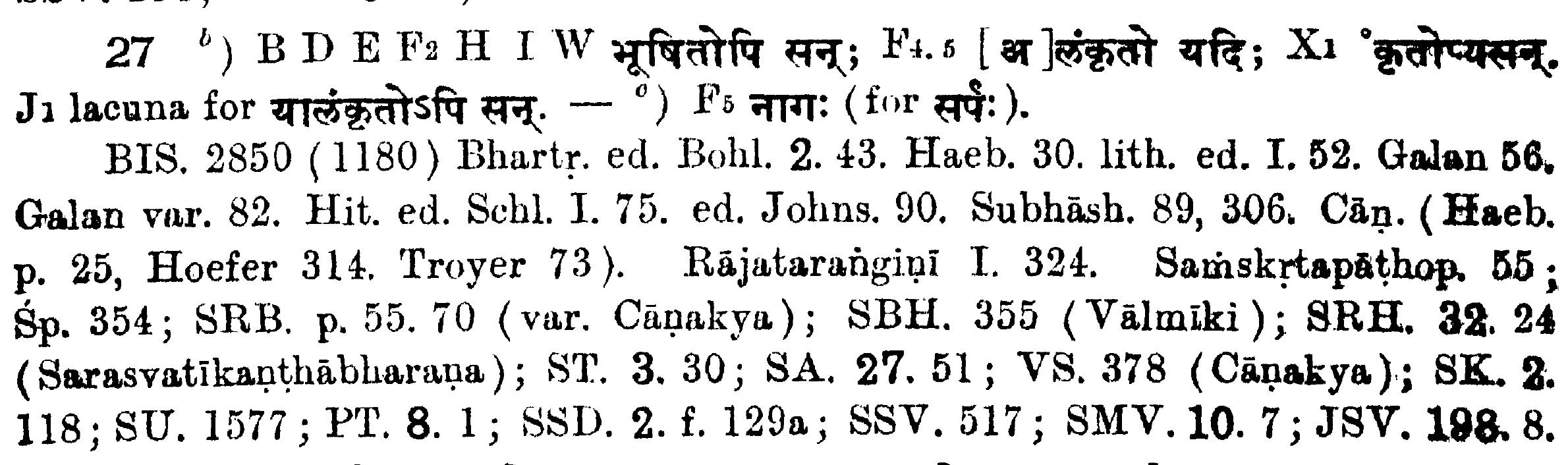
27 4 ) B DEF1HI W भूषितोपि सन् ; 45 [ अ ] लंकृतो यदि ; X1 कृतोप्यसन् .
J1 lacuna for यालंकृतोऽपि सन् . ° ) Fs नागः ( for सर्पः ) .
BIS . 2850 ( 1180 ) Bhartr ed . Bohl . 2. 43. Haeb 30 lith ed . I. 52. Galan 56 .
Galan var . 82. Hit . ed . Schl . I. 75. ed . Johns . 90. Subhash . 89 , 306. Cảṇ . ( Haeb .
p . 25 , Hoefer 314. Troyer 73 ) . Rajatarangini I. 324. Samskrtapāthop . 55 ;
Sp . 354 ; SRB . p . 55.70 ( var . Canakya ) ; SBH . 355 ( Valmiki ) ; SRH , 32.24
( Sarasvatikanthābharana ) ; ST . 3. 30 ; SA . 27.51 ; VS. 378 ( Canakya ) ; SK . 2 .
118 ; SU . 1577 ; PT . 8. 1 ; SSD . 2. f . 129a ; SSV . 517 ; SMV . 10. 7 ; JSV . 1988 .
Commentary