Tawney
Here Vishnu sleeps, and there his foes,
Yonder the suppliant hills repose,
Here lurk the quenchless fires of doom,—
Ocean's broad breast for all hath room.
Telang
all
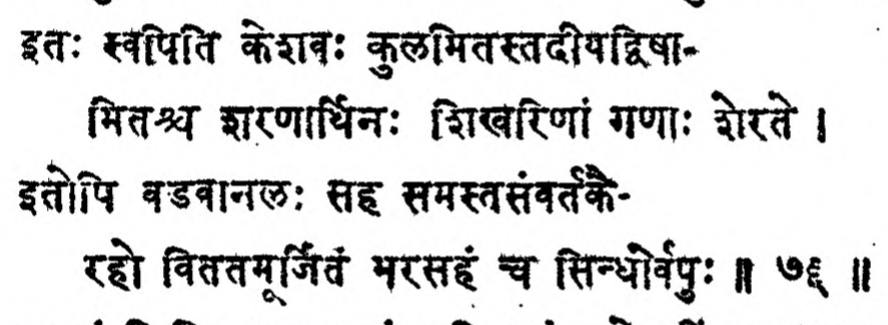
इतः स्वपिति केशवः कुलमितस्तदीयद्विषा-
मितश्च शरणार्थिनः शिखरिणां गणाः शेरते ।
इतोपि वडवानलः सह समस्तसंवर्तकै-
रहो विततमूर्जितं भरसहं च सिन्धोर्वपुः ॥ ७६ ॥
Notes
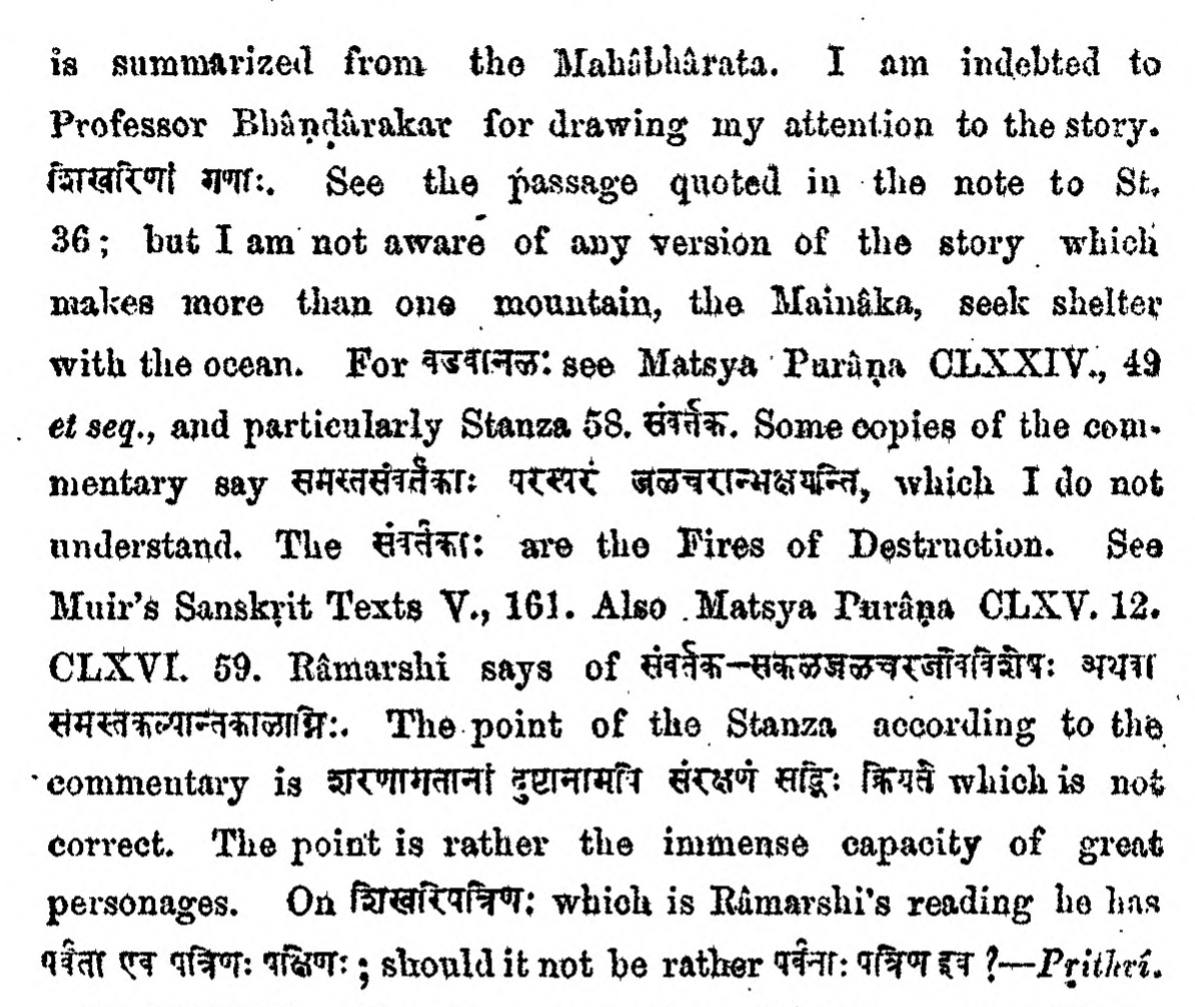
St. LXXVI.—For तक्षीयद्विषः (i. e. demons) see the Departmental Second Book p. 58 (2nd Ed.) where the story alluded to here is summarized from the Mahâbhârata. I am indebted to Professor Bhânḍârakar for drawing my attention to the story. शिखरिणां गणाः. See the passage quoted in the note to St. 36; but I am not aware of any version of the story which makes more than one mountain, the Mainâka, seek shelter with the ocean. For वडवानलः see Matsya Purâṇa CLXXIV., 49 et seq., and particularly Stanza 58. संवर्तक. Some copies of the commentary say समस्तसंवर्तकाः परस्परं जलचरान्भक्षयन्ति, which I do not understand. The संवर्तकाः are the Fires of Destruction. See Muir’s Sanskṛit Texts V., 161. Also Matsya Purâṇa CLXV. 12. CLXVI. 59. Râmarshi says of संवर्तक—सकलजलचरजीवविशेषः अथवा समस्तकल्पान्तकालाग्निः. The point of the Stanza according to the commentary is शरणागतानां दुष्टानामपि संरक्षणं सद्भिः क्रियते which is not correct. The point is rather the immense capacity of great personages. On शिखरिपत्रिणः which is Râmarshi’s reading he has पर्वता एव पत्रिणः पक्षिणः; should it not be rather पर्वताः पत्रिण इव ?—Pṛithvî.


Kale
all
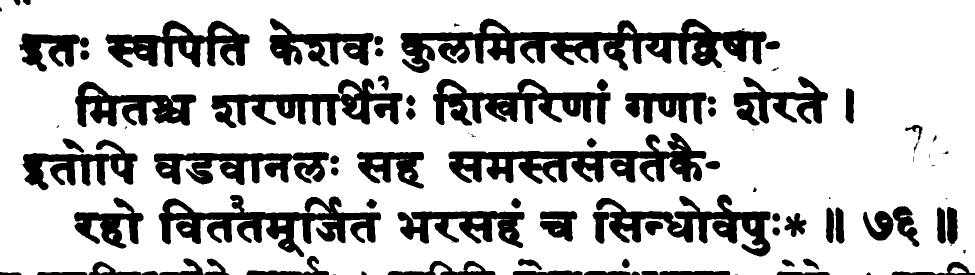
इतः स्वपिति केशवः कुलमितस्तदीयद्विषा-
मितश्च शरणार्थिनः शिखरिणां गणाः शेरते ।
इतोपि वडवानलः सह समस्तसंवर्तकै-
रहो विततमूर्जितं भरसहं च सिन्धोर्वपुः ॥ ७६ ॥
Translation
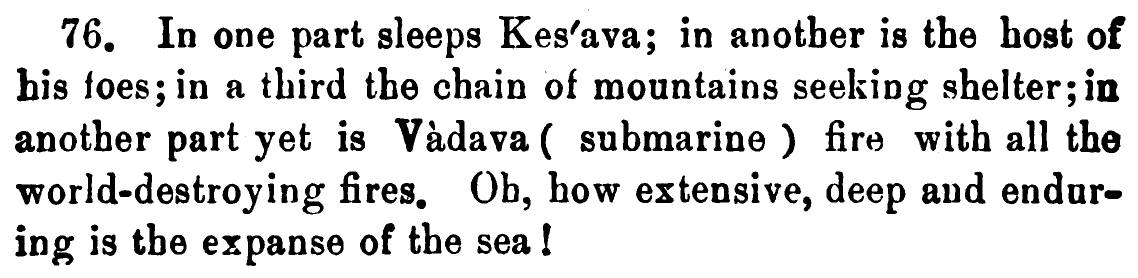
76. In one part sleeps Kes'ava; in another is the host of his foes; in a third the chain of mountains seeking shelter; in another part yet is Vàḍava ( submarine ) fire with all the world-destroying fires. Oh, how extensive, deep and enduring is the expanse of the sea !
Notes
Sl. 76. इतः—when repeated this has the sense of here-there, in one place, in another केशव or विष्णु is called जलशायी ( Amara ) and क्षीराब्धिनिवासी. कुलं-family, a host of (सजातीयैः कुलम् ). तदीयद्विषाम्—Of Kes'ava’s enemies, the demons. For the account of the Kâlakeyas hiding themselves in the sea, see Mah. Bhar. Van. P. 101, 105. शरणार्थिनः &c.—chains of mountains seeking shelter ( scil. from the wrath of Indra ). See notes on sl. 36. Comp. पक्षच्छिदा गोत्रभिदात्तगन्धाः शरण्यमेनं शतशो महीध्राः । नृपा इवोपप्लविनः परेभ्यो धर्मोत्तरं मध्यममाश्रयन्ते ॥ According to the Hariv. Mainâka appears to be the only mountain that took refuge in the sea. The poets speak of more mountains as having taken refuge probably only to magnify the greatness of the sea. संवर्तकैः—with the fires that destroy the world at the end of the creation. The commentator Rámarshi gives to this word the sense सकलजलचरजीवविशेष, in addition, but this is quite obscure. संवर्त is also a particular cloud though it is not intended here. For वडवानल see Matsya Puràṇa CLXXIV. 49. et. seq. and Mis. sl. 9. भर०—सहते इति सहं भरस्य सहं भर० able to bear a great load, mighty. This may be looked upon as an instance of अप्रस्तुतप्रशंसा the अप्रस्तुत not being directly mentioned.

Gopinath1914
all
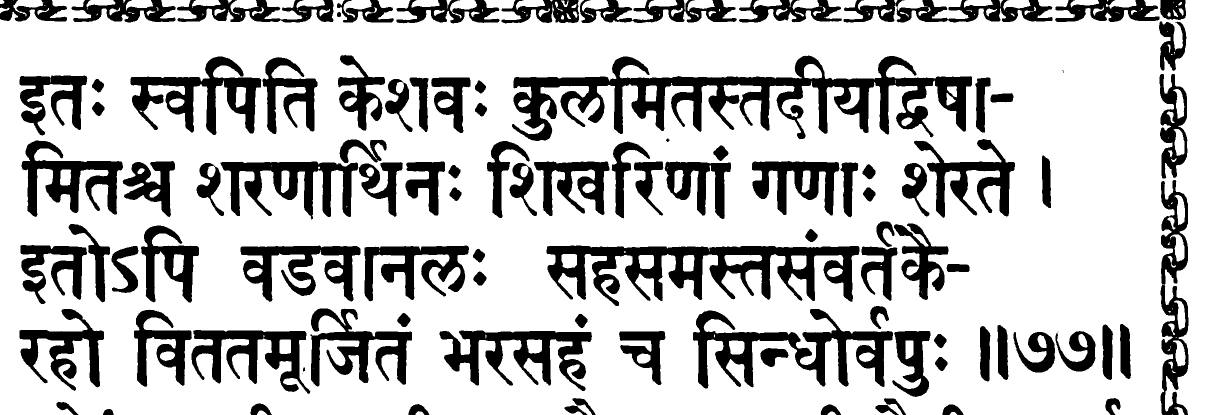
इतः स्वपिति केशवः कुलमितस्तदीयद्विषा-
मितश्च शरणार्थिनः शिखरिणां गणाः शेरते ।
इतोऽपि वडवानलः सहसमस्तसंवर्त कै-
रहो विततमूर्जितं भरसहं च सिन्धोर्वपुः ॥७७॥
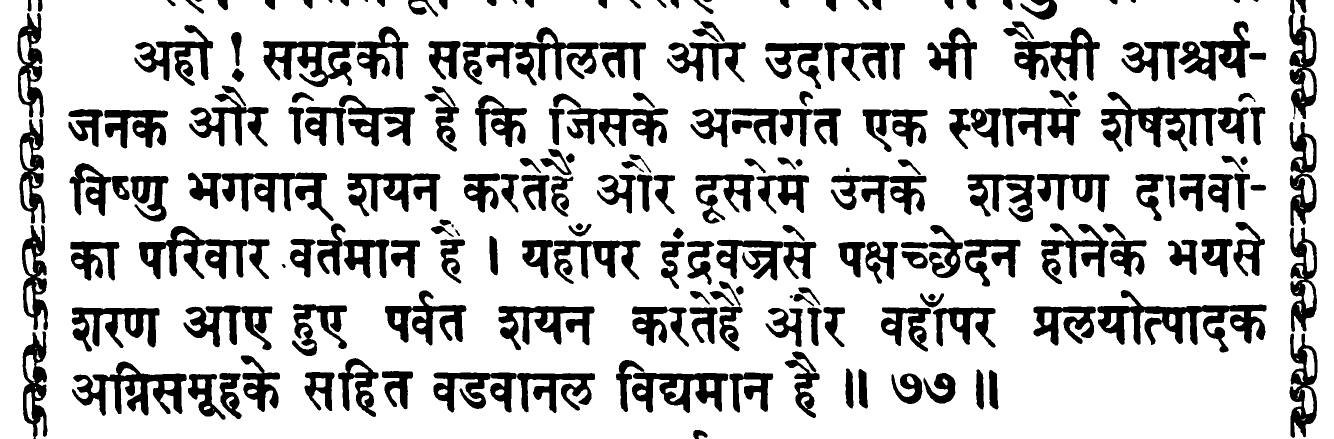
अहो ! समुद्रकी सहनशीलता और उदारता भी कैसी आश्चर्यजनक और विचित्र है कि जिसके अन्तर्गत एक स्थानमें शेषशायी विष्णु भगवान् शयन करते हैं और दूसरेमें उनके शत्रुगण दानवोंका परिवार वर्तमान है । यहाँपर इंद्रवज्रसे पक्षच्छेदन होनेके भय से शरण आए हुए पर्वत शयन करते हैं और वहाँपर प्रलयोत्पादक अग्निसमूह के सहित वडवानल विद्यमान है ॥ ७७ ॥
Footnote
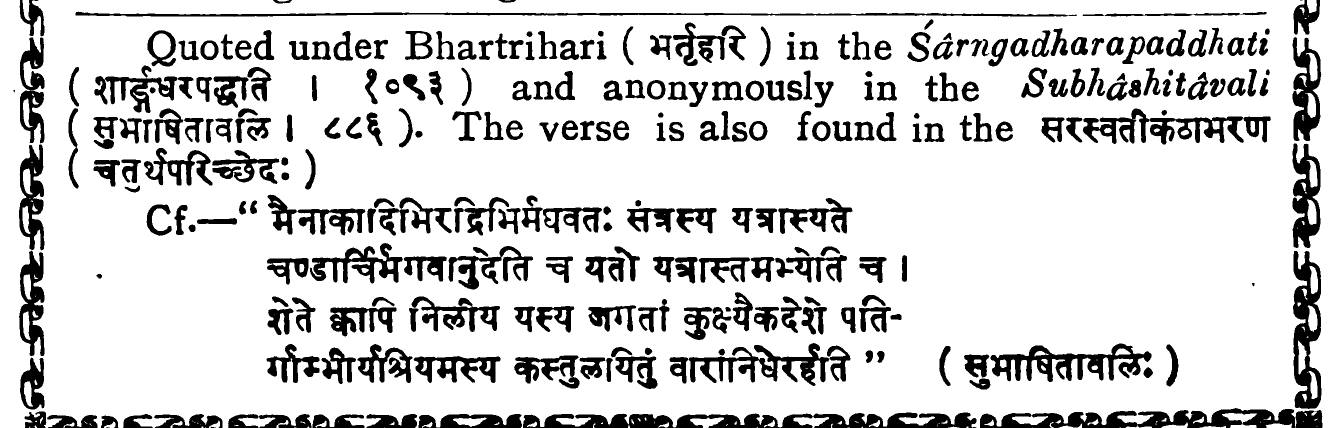
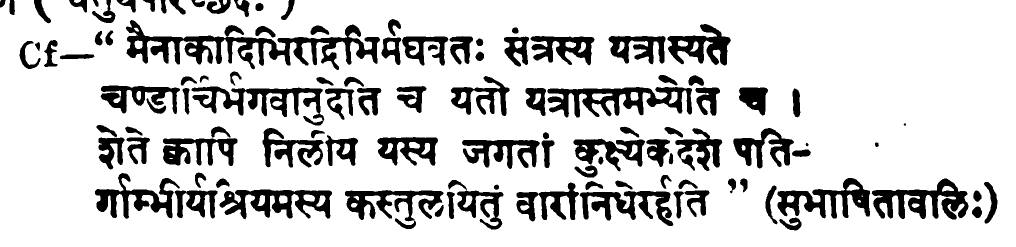
Quoted under Bhartrihari (H) in the Sarngadhara paddhati शार्ङ्गधर पद्धति । १०९३ ) and anonymously in the Subhashitavali सुभाषितावलि | ८८६ ). The verse is also found in the सरस्वतीकंठाभरण चतुर्थपरिच्छेदः ) Cf.—“ मैनाकादिभिरद्रिभिर्मघवतः संत्रस्य यत्रास्यते चण्डार्चिभगवानुदेति च यतो यत्रास्तमभ्येति च । शेते क्वापि निलीय यस्य जगतां कुक्ष्यैकदेशे पतिगम्भीर्यश्रियमस्य कस्तुलयितुं वारांनिधेरर्हति " ( सुभाषितावलिः)
Gopinath1896
all
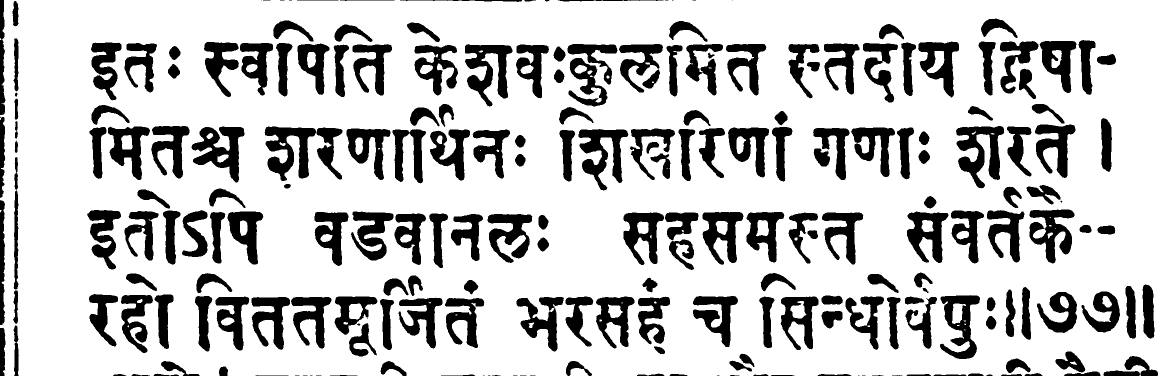
इतः स्वपिति केशवःकुलमित स्तदीय द्विषा-
मितश्च शरणार्थिनः शिखरिणां गणाः शेरते ।
इतोऽपि वडवानलः सहसमस्त संवर्तक- --
रहो विततमूर्जितं भरसहं च सिन्धोर्वपुः ॥ ७७ ॥
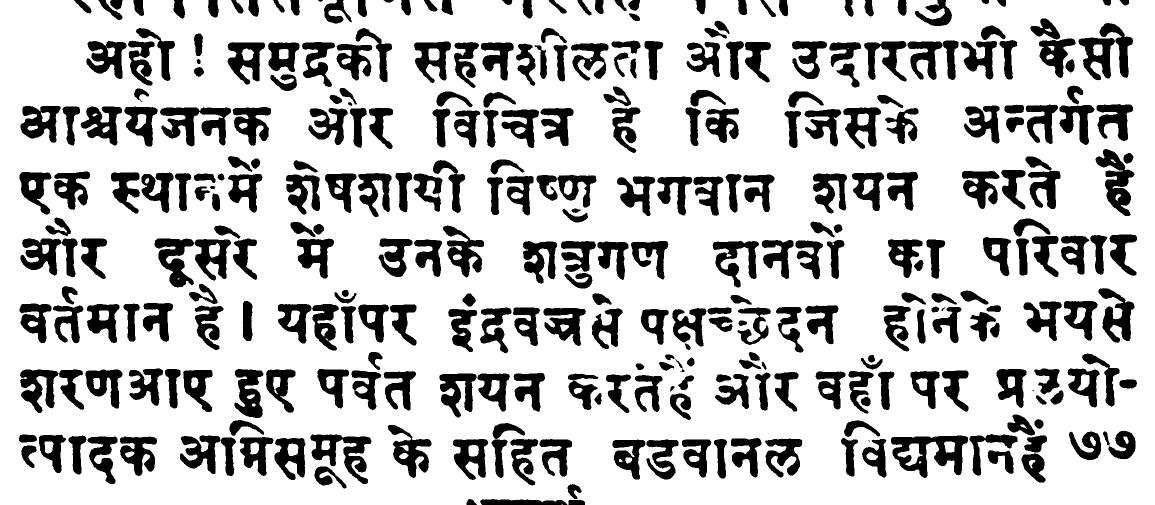
अहो ! समुद्रकी सहनशीलता और उदारताभी कैसी आश्चर्यजनक और विचित्र है कि जिसके अन्तर्गत एक स्थानमें शेषशायी विष्णु भगवान शयन करते हैं और दूसरे में उनके शत्रुगण दानवों का परिवार वर्तमान है । यहाँपर इंद्रवज्र से पक्षच्छेदन होनेके भय से शरणआए हुए पर्वत शयन करते हैं और वहाँ पर प्रयोत्पादक अभिसमूह के सहित बडवानल विद्यमान हैं ७७
Footnote
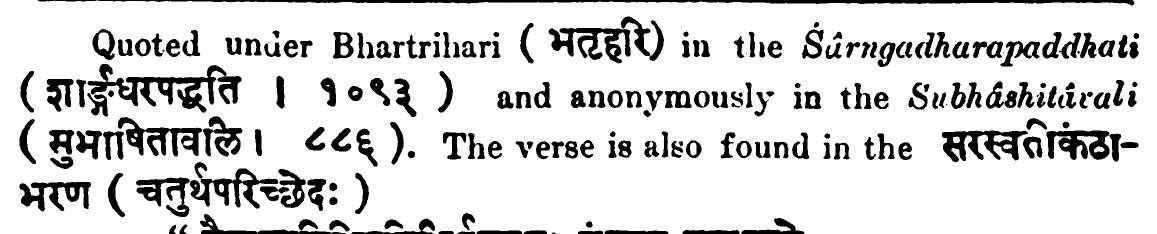
Quoted under Bhartrihari (Hi) in the Sûrngadharapaddhati ( शार्ङ्गधरपद्धति । १०९३ ) and anonymously in the Subhashitárali ( सुभाषितावलि | ८८६ ). The verse is also found in the सरस्वतीकंठाभरण ( चतुर्थपरिच्छेदः)
Kosambi
all
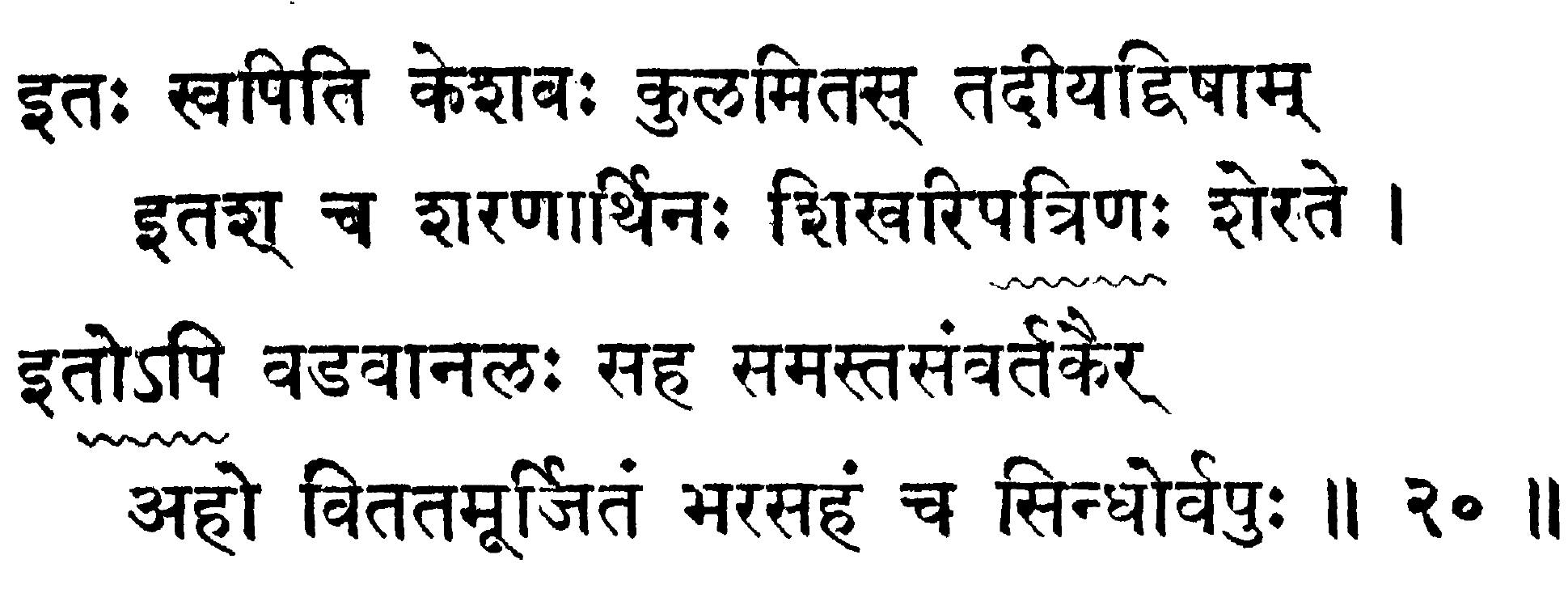
इतः स्वपिति केशवः कुलमितस् तदीयद्विषाम्
इतश् च शरणार्थिनः शिखरिपत्रिणः शेरते ।
इतोऽपि वडवानलः सह समस्तसंवर्तकैर्
अहो विततमूर्जितं भरसहं च सिन्धोर्वपुः ॥ २० ॥
Footnote
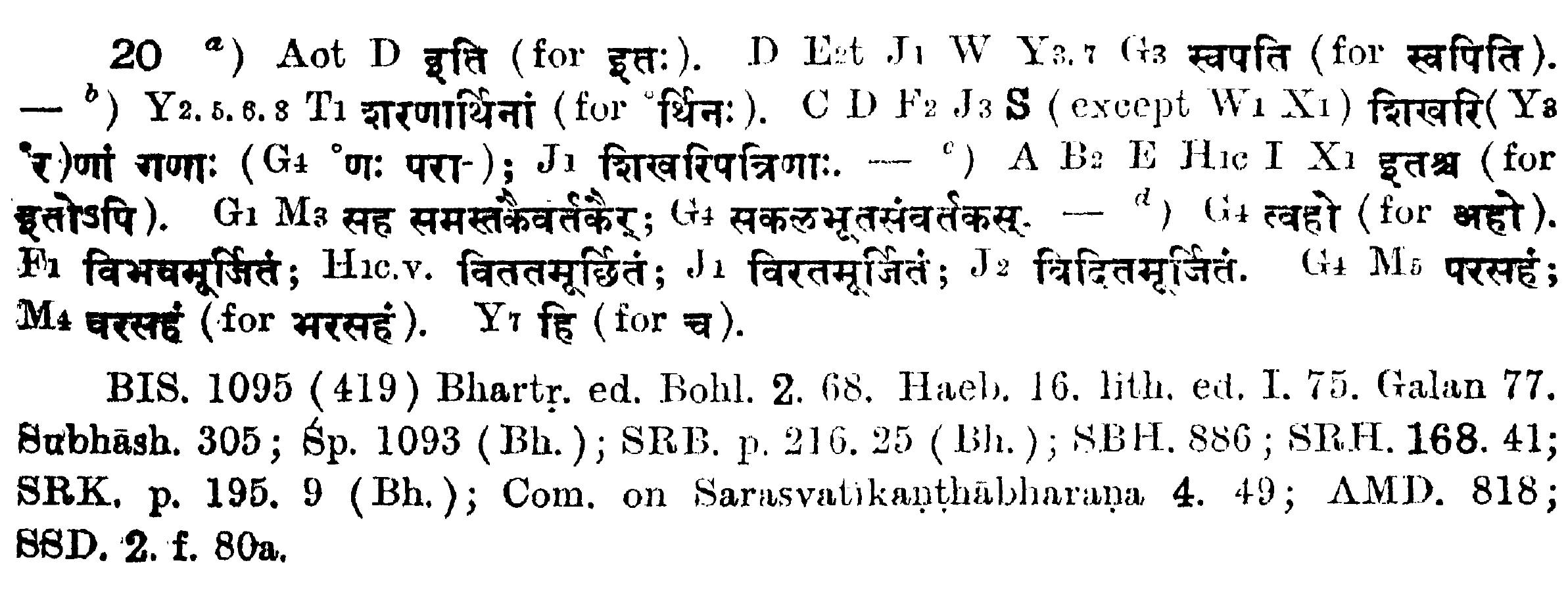
20 ) Aot D इति ( for इतः ) . D Eat Ji W Y37 ( 13 स्वपति ( for स्वपिति ) .
6 ) Y2.6.6.8T1 शरणार्थिनां ( for ' थिन :) . C D F2 J3 S ( except W1X1 ) शिखरि ( Ya
' र ) णां गणाः ( G1 ° णः परा - ) ; J1 शिखरिपत्रिणा . ● ) A B2 E H ‡ e I X 1 इतश्च ( for
इसो s पि ) . G1 Ms सह समस्तकैवर्तकर् ; ( ++ सकलभूतसंवर्तकस् . - ) G + त्वहो ( for अहो ) .
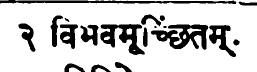
F1 विभवमूर्जितं ; Hac.v. विततमूर्छितं ; J2 विरतमूर्जितं ; J2 विदितमृर्जितं . G + M5 परसहं ;
M4 घरसह ( for भरसहं ) . Y1 हि ( for च ) .
BIS . 1095 ( 419 ) Bhartr ed . Bohl . 2. 68. Haeb 16 lith ed . I. 75. Galan 77 .
Subhash 305 ; 6p . 1093 ( Bh . ) ; SRB . p . 216.25 ( Bh . ) ; SBH . 886 ; SR.H. 168. 41 ;
SRK . p . 195 9 ( Bh . ) ; Com on Sarasvatikanthābharana 4. 49 ; AMD . 818 ;
SSD . 2.f. 808 ,
Commentary