Tawney
Firmness when fall'n on evil days, restraint when fortune smiles,
Courage to look with steady eye on war's embattled files,
Persuasive speech in council, and a burning thirst for fame,
Joined with a love of holy writ, th' heroic soul proclaim.
Telang
all
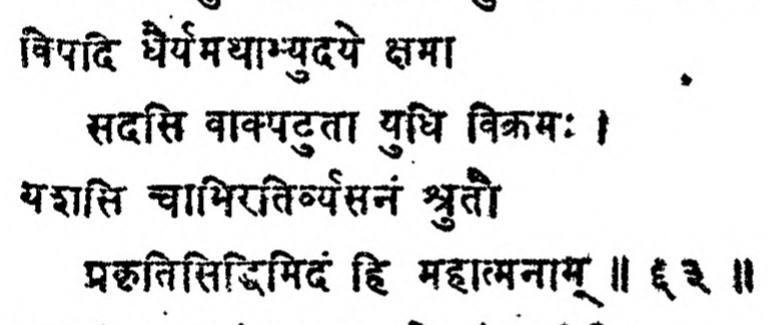
विपदि धैर्यमथाभ्युदये क्षमा
सदसि वाक्पटुता युधि विक्रमः ।
यशसि चाभिरतिर्व्यसनं श्रुतौ
प्रकृतिसिद्धमिदं हि महात्मनाम् ॥ ६३ ॥
Notes
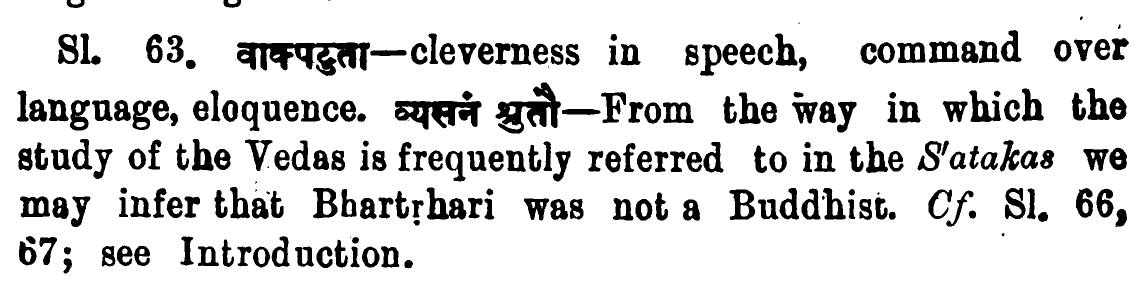
St. LXIII.—वाक्पटुता = पक्षपातराहित्येन वादित्वम् says Râmarshi but it simply means cleverness in speaking. Râmarshi's idea is not necessarily involved in the word.—Drutavilambita.


Kale
all

विपदि धैर्यमथाभ्युदये क्षमा
सदसि वाक्पटुता युधि विक्रमः ।
यशसि चाभिरतिर्व्यसनं श्रुतौ
प्रकृतिसिद्धमिदं हि महात्मनाम् ॥ ६३ ॥

Translation
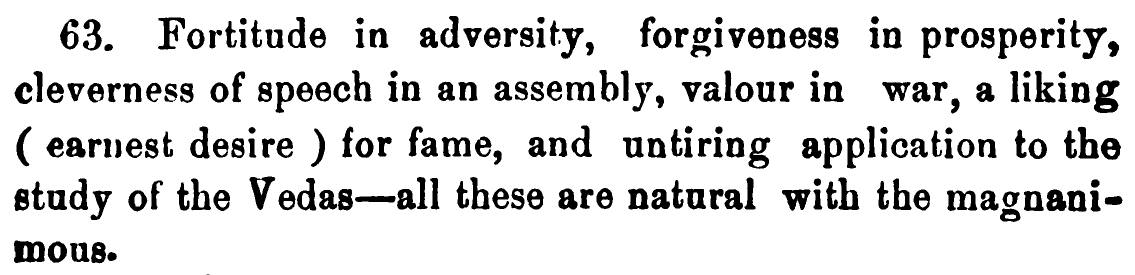
63. Fortitude in adversity, forgiveness in prosperity, cleverness of speech in an assembly, valour in war, a liking ( earnest desire ) for fame, and untiring application to the study of the Vedas—all these are natural with the magnanimous.
Notes
Sl. 63. वाक्पटुता—cleverness in speech, command over language, eloquence. व्यसनं श्रुतौ—From the way in which the study of the Vedas is frequently referred to in the S'atakas we may infer that Bhartṛhari was not a Buddhist. Cf. Sl. 66, 67; see Introduction.


Gopinath1914
all
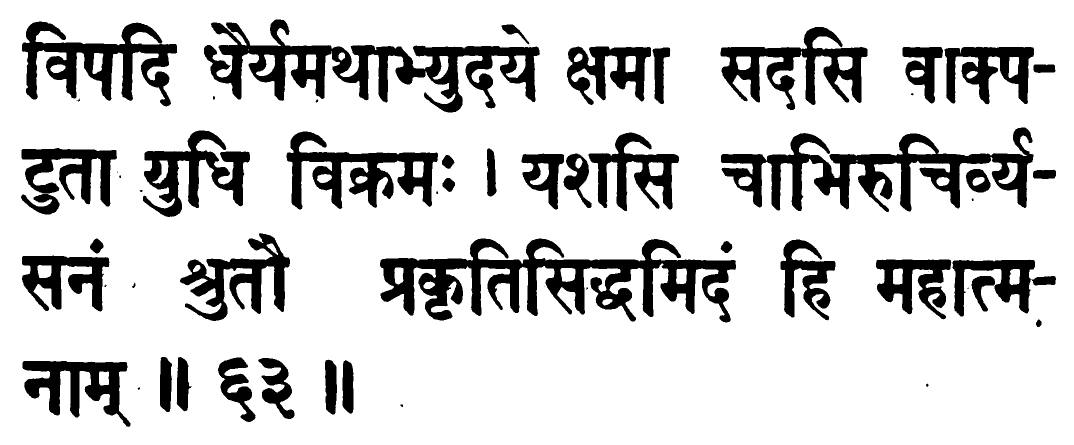
विपदि धैर्यमथाभ्युदये क्षमा सदसि वाक्प-
टुता युधि विक्रमः । यशसि चाभिरुचिर्व्य-
सनं श्रुतौ प्रकृतिसिद्धमिदं हि महात्म
नाम् ॥ ६३ ॥
विपत्तिकाल में धैर्य, ऐश्वर्यके समय में क्षमा, सभामें वचनचातुरी, युद्धमें पराक्रम, सुयशमें प्रीति और शास्त्रमें व्यसन महात्माओंके स्वाभाविक लक्षण हैं ॥ ६३ ॥
Fortitude in adversity, humbleness in prosperity, eloquence in council, bravery in war, strong desire for fame, and warm attachment to Sastraic learning, are the natural attributes of noble-minded (greatminded ) persons.
Footnote
The Sarngadharapaddhati ( शार्ङ्गधरपद्धतिः । २०९ ) quotes it under Bhartrihari (भर्तृहरि ), and the Subhashitavali ( सुभाषितावलिः | २६७) under Mendhaka ( मेण्डक). The sloka is also found in the Hitopadeśa. LANANANN (हितोपदेशः । १।२४ ).
Gopinath1896
all
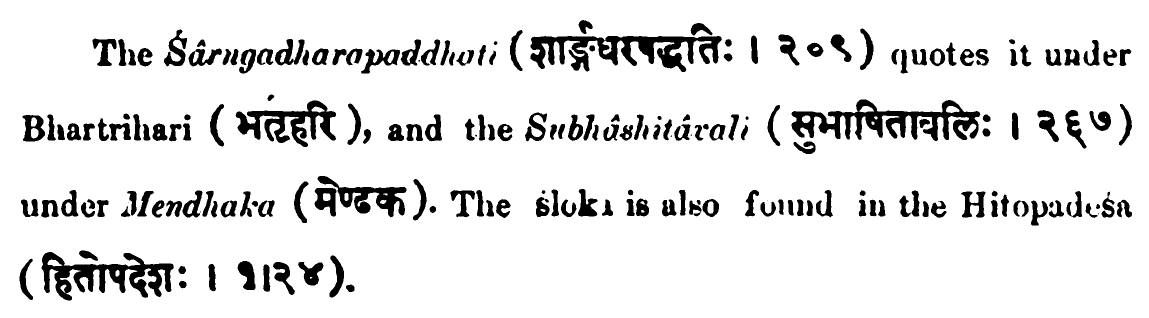
विपदि धैर्यमथा भ्युदयेक्षमा, सदसि वाक्प
टुता युधि विक्रमः । यशसि चाभिरुचिर्व्य-
सनं श्रुतौ प्रकृतिसिद्धमिदं हि महात्म-
नाम् ॥ ६३ ॥
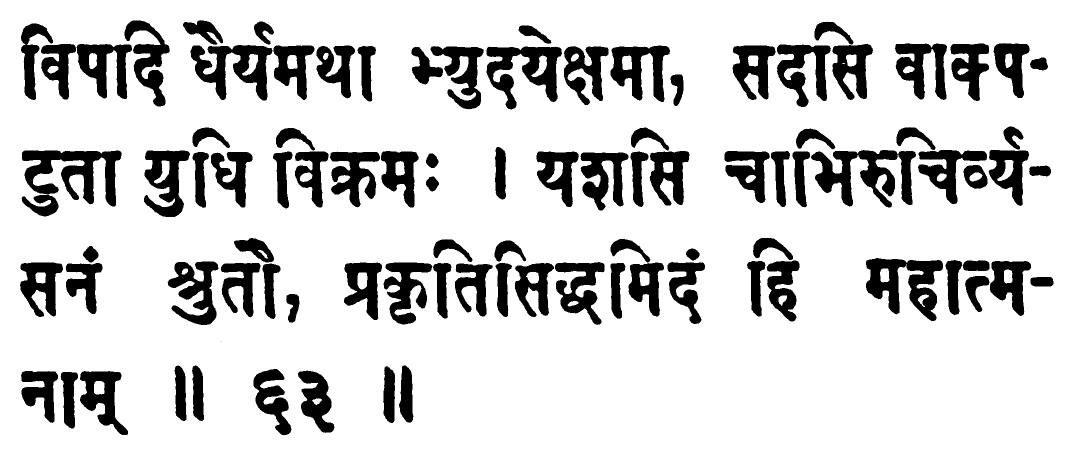
विपत्ति काल में धैर्य, ऐश्वर्य के समय में क्षमा, सभा में वचन चातुरी, युद्ध में पराक्रम, सुयशमें प्रीति और शास्त्र में व्यसन, महात्माओं के स्वाभाविक लक्षण हैं ॥ ६३ ॥
Fortitude in adversity, humbleness in prosperity, eloquence in council, bravery in war, strong desire for fame, and warm attachment to Sastraic learning, are the natural attributes of noble-minded ( greatminded ) persons.
The Sárngadharapaddhati (शार्ङ्गधरषद्धतिः । २०९) quotes it under Bhartrihari ( भतृहरि ), and the Subhashitárali ( सुभाषितावलिः । २६७) under Mendhaka (मेण्टक). The sloka is also found in the Hitopadeśa (हितोपदेशः । १।२४).


Kosambi
all


Footnote
14 • ) A1 . 3 H2 क्षमा : ( for क्षमा ) . tr © ) DE2 F2 4 5 H I J 2 X Y 14 , 8 चाभिरुचिर्
( for रतिर् ) . Y1 विनयः ( for व्यसनं ) . I श्रुते ( for श्रुतौ ) .

Footnote
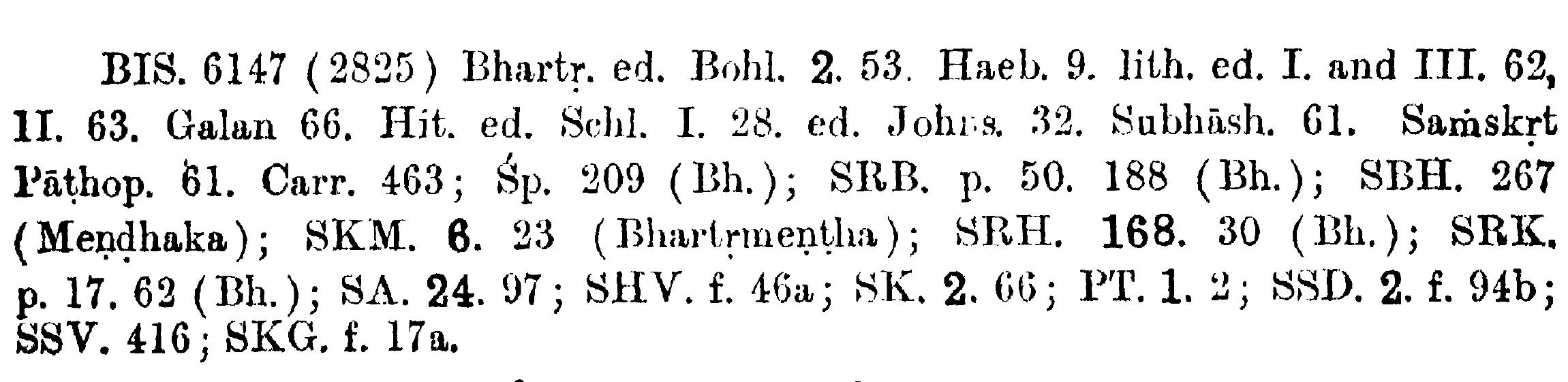
BIS . 6147 ( 2825 ) Bhartr . ed . Bohi . 2. 53. Haeb 9 lith ed . I. and III . 62 ,
II . 63. Galan 66. Hit . ed . Schl . I. 28. ed . Johrs 32. Subhash . 61. Samskrt
Pathop . 61. Carr . 463 ; Sp . 209 ( Bh . ) ; SRB . p . 50. 188 ( Bh . ) ; SBH . 267
( Mendhaka ) ; SKM . 6. 23 ( Bhartymentha ) ; SRH . 168. 30 ( Bh . ) ; SRK .
p . 17.62 ( Bh . ) ; SA . 24. 97 ; SHV . f . 46 ; SK . 2.66 ; PT . 1. 2 ; SSD . 2. f . 94b ;
SSV . 416 ; SKGf.17a
Commentary