Tawney
The man of firm and constant soul,
Who nought possessing, nought desires,
Nor burns with passion's raging fires,
Finds happiness from pole to pole.

Kale
all

Translation
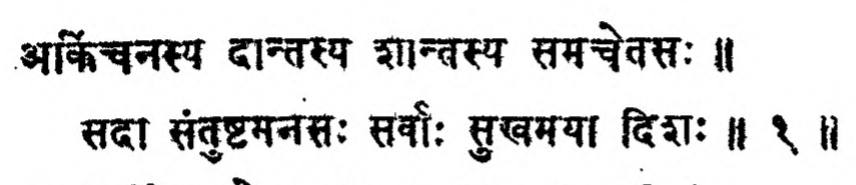
16 Every thing gives happiness ( lit. all directions are full of happiness ) to a man who is poor, self-restrained, peaceful, of an equilibrating mind, and ever content at heart.

Notes
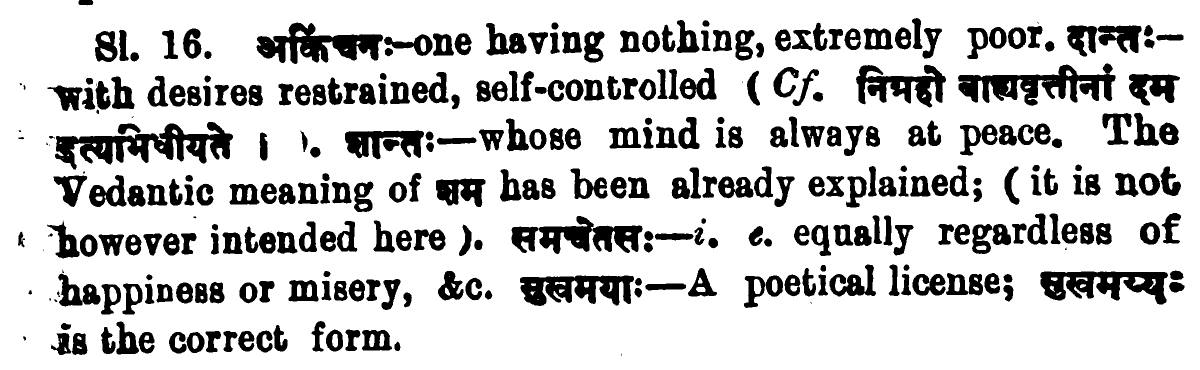
Sl. 16. अकिंचनः—one having nothing, extremely poor. दान्तः— with desires restrained, self-controlled ( Cf. निग्रहो बाह्यवृत्तीनां दम इत्यभिधीयते । ). शान्तः—whose mind is always at peace. The Vedantic meaning of शम has been already explained; ( it is not however intended here ). समचेतसः—i. e. equally regardless of happiness or misery, &c. सुखमयाः—A poetical license; सुखमय्यः is the correct form.
Commentary