Tawney
He only can be called a son who gratifies his sire,
She only is a wife who doth to please her lord aspire,
He only is a friend who bides the same in weal and woe,—
These blessings three the righteous gods on virtuous men bestow.
Telang
all
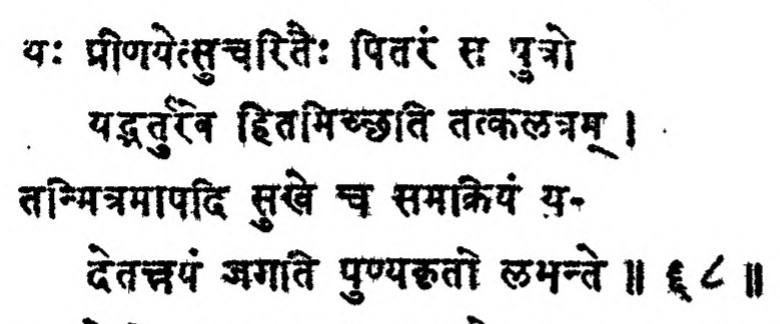
यः प्रीणयेत्सुचरितैः पितरं स पुत्रो
यद्भर्तुरेव हितमिच्छति तत्कलत्रम् ।
तन्मित्रमापदि सुखे च समक्रियं य-
देतत्त्रयं जगति पुण्यकृतो लभन्ते ॥ ६८ ॥
Notes
St. LXVIII.—एव is better construed with हितम् than with भर्तुः. Râmarshi says पत्युरेव हितमिच्छति but adds न रूपादिमदि( त्त्वमि ?) त्यर्थः.— Vasantatilakâ.


Kale
all

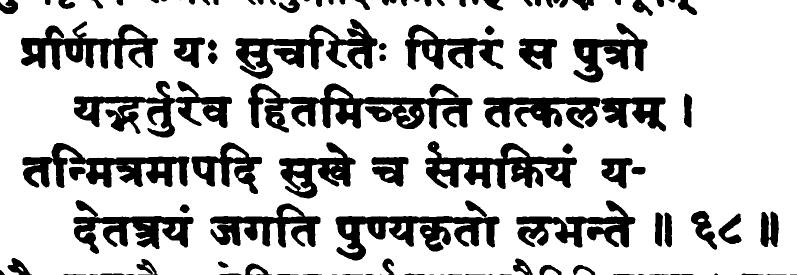
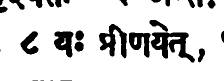
प्रीणाति यः सुचरितैः पितरं स पुत्रो
यद्भर्तुरेव हितमिच्छति तत्कलत्रम् ।
तन्मित्रमापदि सुखे च समक्रियं य-
देतत्त्रयं जगति पुण्यकृतो लभन्ते ॥ ६८ ॥
Translation
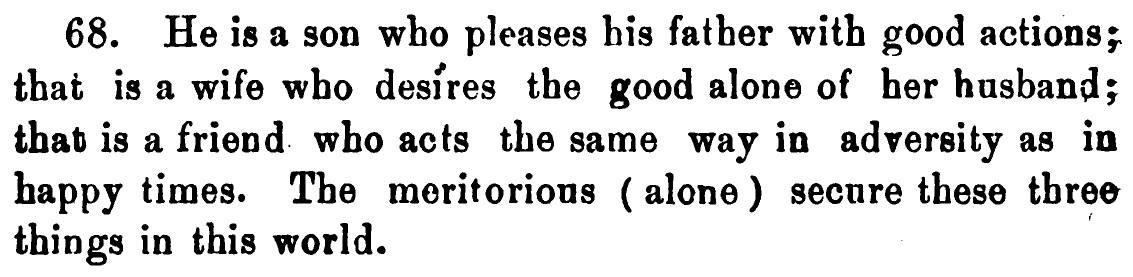
68. He is a son who pleases his father with good actions; that is a wife who desires the good alone of her husband; that is a friend who acts the same way in adversity as in happy times. The meritorious ( alone ) secure these three things in this world.
Notes
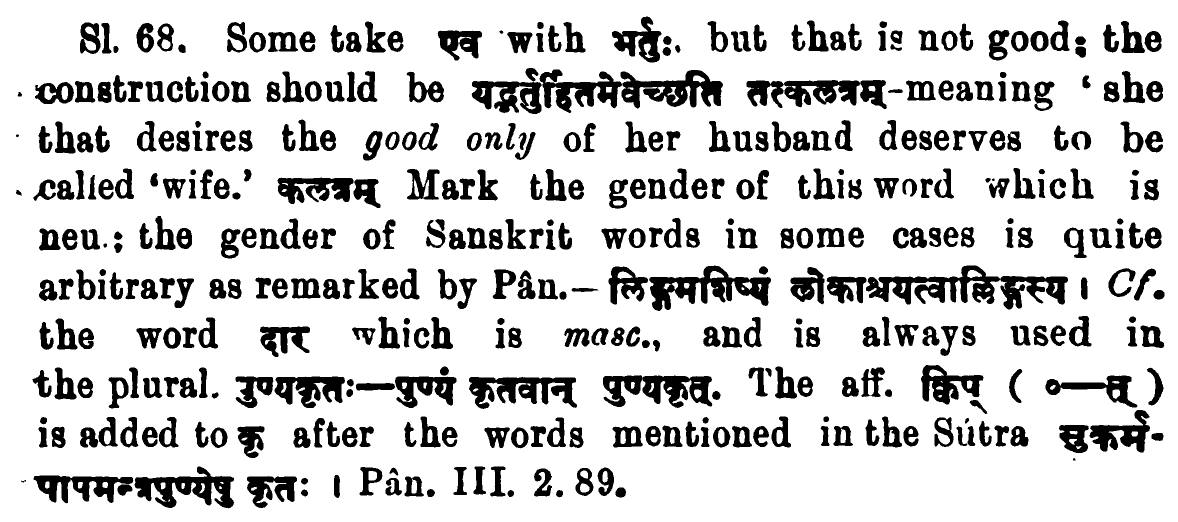
Sl. 68. Some take एव with भर्तुः. but that is not good; the construction should be यद्भर्तुर्हितमेवेच्छति तत्कलत्रम्–meaning ‘she that desires the good only of her husband deserves to be called ‘wife.’ कलत्रम् Mark the gender of this word which is neu.; the gender of Sanskrit words in some cases is quite arbitrary as remarked by Pân.– लिङ्गमशिष्यं लोकाश्रयत्वाल्लिङ्गस्य । Cf. the word दार which is masc., and is always used in the plural. पुण्यकृतः—पुण्यं कृतवान् पुण्यकृत्. The aff. क्विप् ( ०—त् ) is added to कृ after the words mentioned in the Sûtra सुकर्मपापमन्त्रपुण्येषु कृतः । Pân. III. 2. 89.
Gopinath1914
all
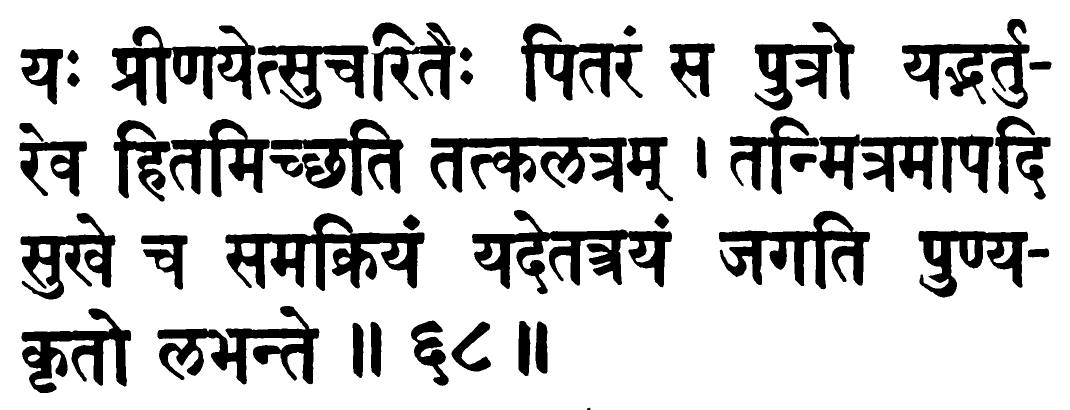
यः प्रीणयेत्सुचरितैः पितरं स पुत्रो यद्भर्तु -
रेव हितमिच्छति तत्कलत्रम् । तन्मित्रमापदि
सुखे च समक्रियं यदेतत्रयं जगति पुण्य-
कृतो लभन्ते ॥ ६८ ॥
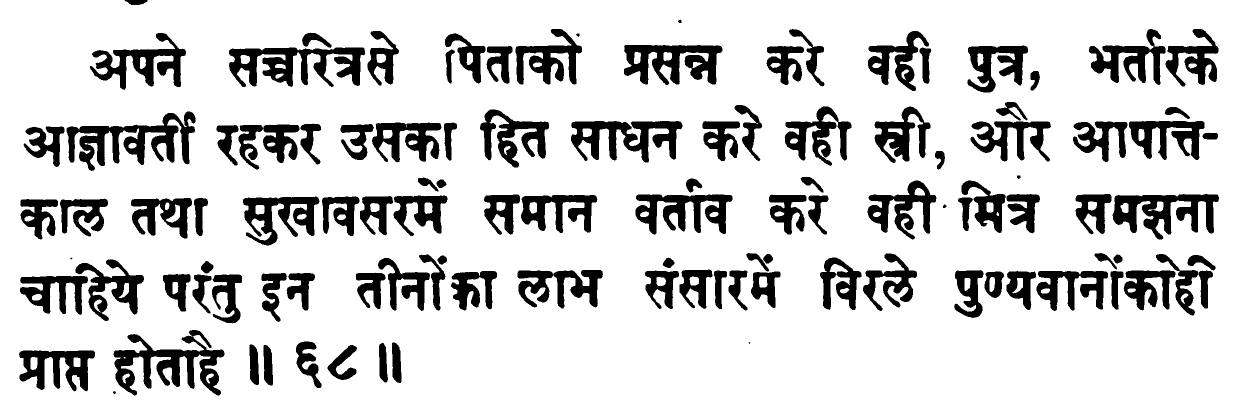
अपने सच्चरित्र से पिताकों प्रसन्न करे वही पुत्र, भर्तारके आज्ञावर्ती रहकर उसका हित साधन करे वही स्त्री, और आपत्ति काल तथा सुखावसरमें समान वर्ताव करे वही . मित्र समझना चाहिये परंतु इन तीनों का लाभ संसार में विरले पुण्यवानोंकाही प्राप्त होताहै ॥ ६८ ॥
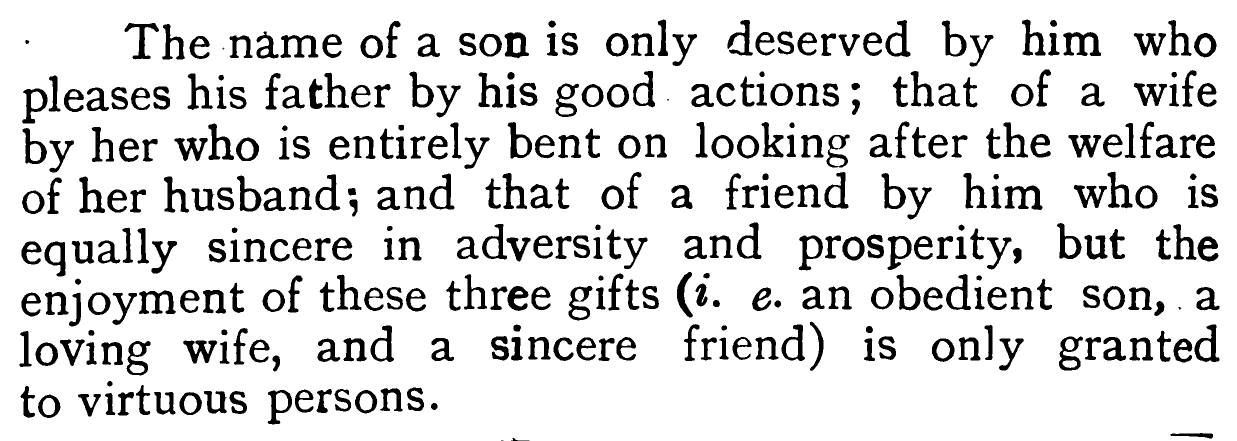
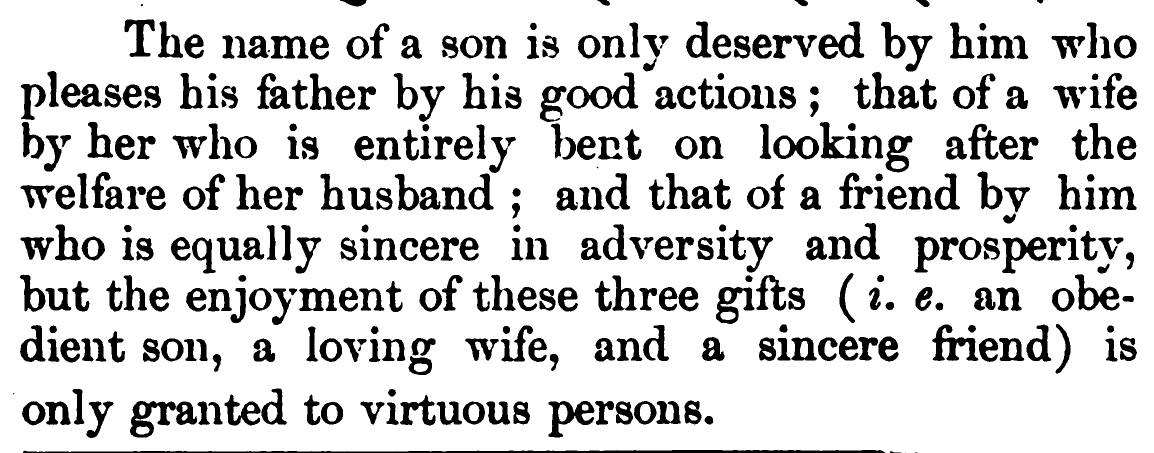
The name of a son is only deserved by him who pleases his father by his good actions; that of a wife by her who is entirely bent on looking after the welfare of her husband; and that of a friend by him who is equally sincere in adversity and prosperity, but the enjoyment of these three gifts (i. e. an obedient son, a loving wife, and a sincere friend) is only granted to virtuous persons.

Footnote
Cf.—स सुहृद्व्यसने यः स्पात्सपुत्रो यस्तु भक्तिमान् । स भृत्यो यो विधेयज्ञः सा भार्या यत्र निवृत्ति ॥ ( पंचतंत्र । १ । ३३७ '

Footnote
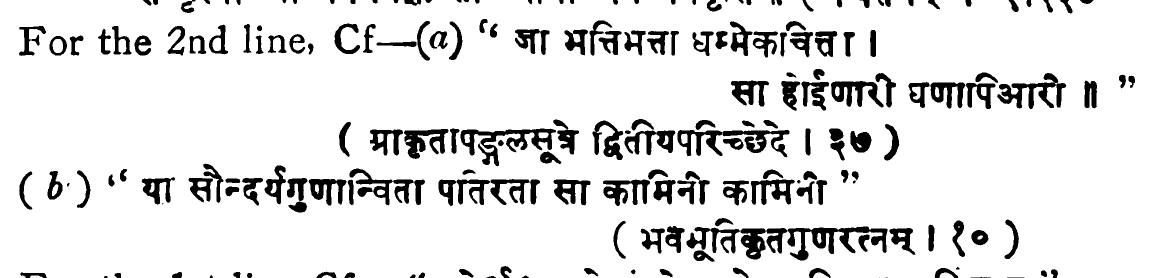
For the 2nd line, Cf – ( a ) " जा भत्तिभत्ता धम्मेकचित्ता । सा होईणारी घणापिआरी ॥ " ( प्राकृतापङ्गलसूत्रे द्वितीयपरिच्छेदे । ३७ ) (b ) " या सौन्दर्यगुणान्विता पतिरता सा कामिनी कामिनी " ( भवभूतिकृतगुणरत्नम् । १० )
Footnote
For the 1st line Cf. - " कोऽर्थः पुत्रणे जातेन यो न विद्वान्न भक्तिमान् ( पंचतंत्रम् । १ । ४ ।)


Gopinath1896
all
यः प्रीणयेत्सुचरितैः पितरं स पुत्रो, यद्भर्तु
रेव हितमिच्छति तत्कलत्रम् । तन्मित्रमाप-
दि सुखे च समक्रियंय, देतत्रयं जगति पुण्य
कृतो लभन्ते ॥ ६८ ॥
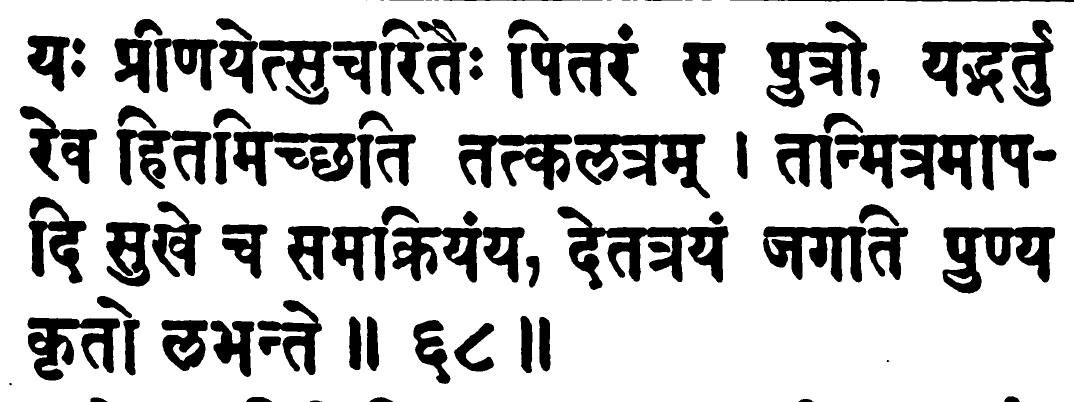
अपने सच्चरित्रसे पिता को प्रसन्न करे वही पुत्र, भर्तार के आज्ञावर्ती रहकर उसका हित साधन करे वही स्त्री, और आपत्तिकाल तथा सुखावसरमें समान वर्ताव करे वही मित्र समझना चाहिये परंतु इन तीनों का लाभ संसार में विरले पुण्यवानोंकोही प्राप्त होता है ॥ ६८ ॥
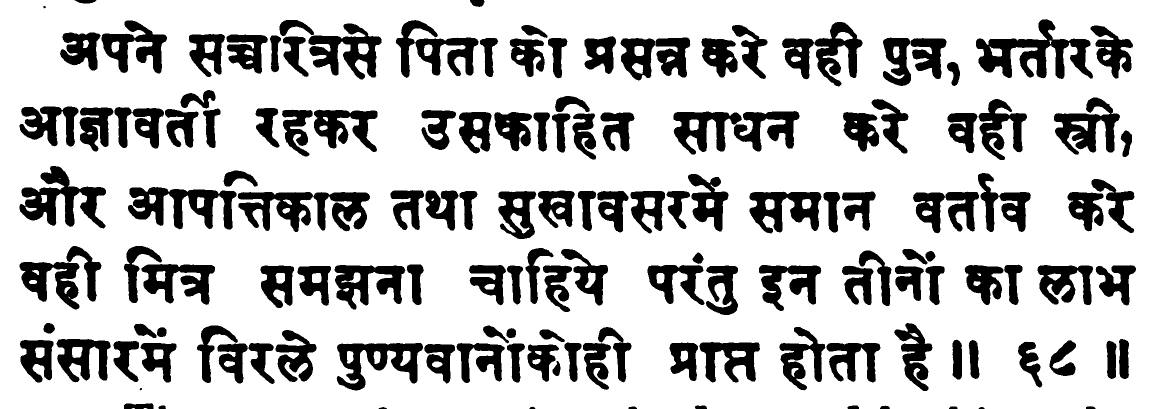
The name of a son is only deserved by him who pleases his father by his good actions; that of a wife by her who is entirely bent on looking after the welfare of her husband; and that of a friend by him who is equally sincere in adversity and prosperity, but the enjoyment of these three gifts (i. e. an obedient son, a loving wife, and a sincere friend ) is only granted to virtuous persons.

Footnote
CE. " स सुहृद्व्यसने यः स्यात्सपुत्रो यस्तु भक्तिमान् । सभृत्यो यो विधेयज्ञः सा भार्या यत्र निर्वृतिः ॥ (पंचतंत्रम् । १ ।३३७)

Footnote
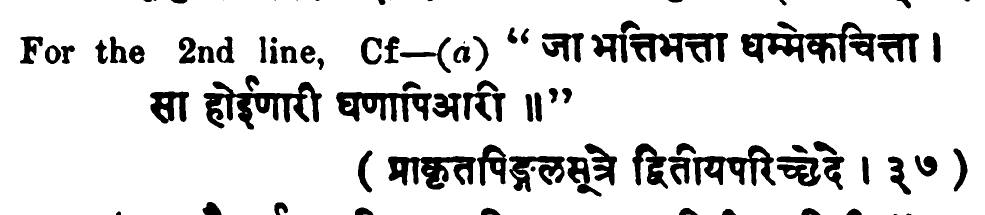
For the 2nd_line, Cf – (a ) " जा भत्तिभत्ता धम्मेकचित्ता । सा होईणारी घणापिआरी ॥” ( प्राकृतपिङ्गलसूत्रे द्वितीयपरिच्छेदे । ३७ )

Footnote
For the 1st line, Cf.—“कोऽर्थः पुत्रेण जातेन यो न विद्वान्न भक्तिमान् ” ( पंचतंत्रम् । १ । ४ । )



Kosambi
all
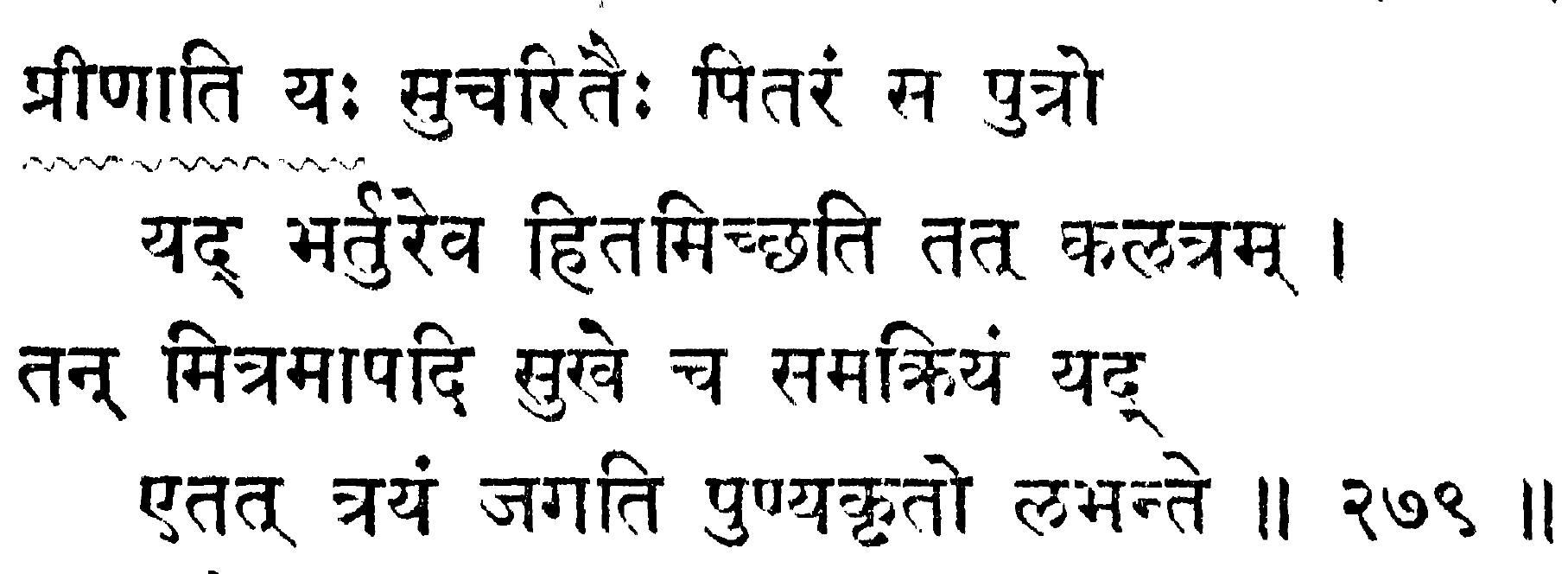
प्रीणाति यः सुचरितैः पितरं स पुत्रो
यद् भर्तुरेव हितमिच्छति तत् कलत्रम् |
तन् मित्रमापदि सुखे च समक्रियं यद्
एतत् त्र्यं जगति पुण्यकृतो लभन्ते ॥ २७ ९ ॥
Footnote
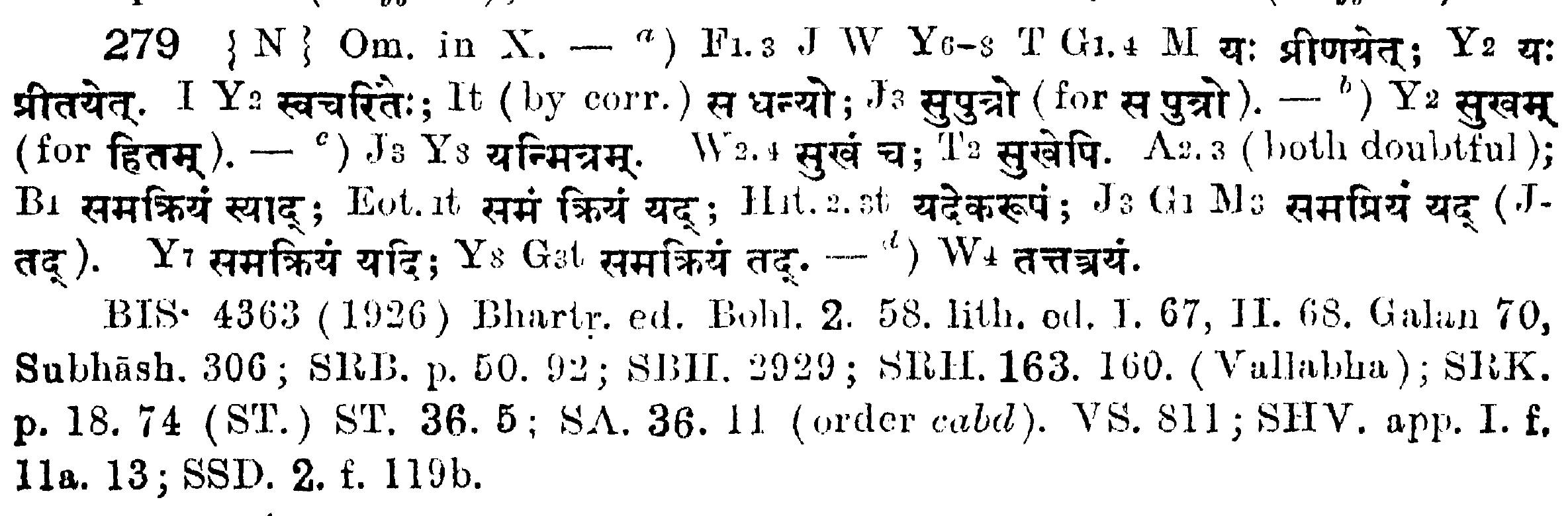
279 } N } Om . in X. « ) F1.3 J W Yc - 8 I G1 + M यः श्रीणयेत् ; Y2 यः
प्रीतयेत् . I Y : स्वचरितैः ; It ( by corr . ) स धन्यो ; J सुपुत्रो ( for स पुत्रो ) . – 1 ) Y2 सुखम्
( for हितम् ) . c ) Js Xs यन्मित्रम् . V2 . 1 सुखं च ; 12 सुखेपि . A2 3 ( hoth doubtful ) ;
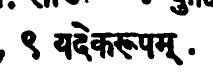
B1 समक्रियं स्याद् ; Eot.it समं क्रियं यद् ; Hit . 2. यदेकरूपं ; Js G1 Mo समप्रियं यद् ( J
तद् ) . Y7 समक्रियं यदि ; Ys Gal समक्रियं तद् – ( ) W + तत्तत्रयं .
BIS · 4363 ( 1926 ) Bhartr ed . Bohl . 2. 58. lith . od . I. 67 , II . 6S . Galan 70 ,
Subhash 300 ; SRB p . 50. 92 ; SBIL . 2929 ; SRH 163 160. ( Vallabha ) ; SRK ,
p . 18.74 ( ST . ) ST . 36. 5 ; SA 36. 11 ( order cabd ) . VS. 811 ; SHV app . I. f ,
114 13 ; SSD . 2. f . 119b .
Commentary