Ryder
Since kings are peevish, and their lords
Like restive horses are,
I fix my wish and set my mind
On a high place and far;
Since age will snatch my body, and
There waits the final trial
Of death for all, naught else is wise
And right but self-denial.
Tawney
King's fancies swiftly pass like coursers in the race,
In vain to them we look for favour, wealth, and place.
Eld robs our frame of strength, death slays us at a blow,
None but the hermit's life can happiness bestow.
Mādhavānanda
दुराराध्याश्चामी तुरगचलचित्ता: क्षितिभुजो
वयं च स्थूलेच्छा: सुमहति फले बद्धमनस: ।
जरा देहं मृत्युर्हरति दयितं जीवितमिदं
सखे नान्यच्छ्रेयो जगति विदुषोऽन्यत्र तपस: ।।७७।।
77. These rulers of the world have minds restless like a horse and (therefore) are difficult to please, while we are ambitious with minds pitched on vast gain; age steals away bodily strength and death cuts short this dear life. Ah! friend, nothing is good for the wise in this world excepting the practice of austerities!
Telang
all
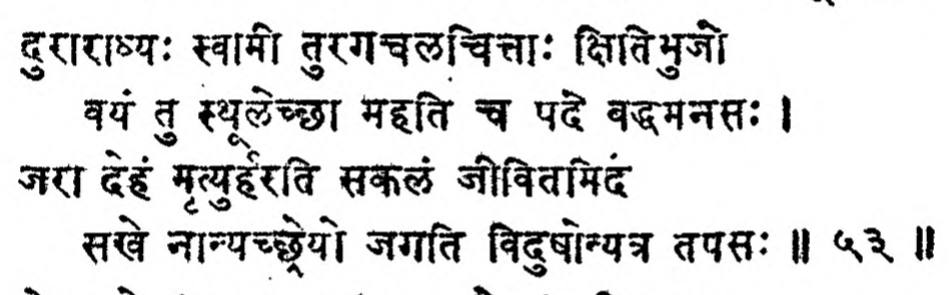
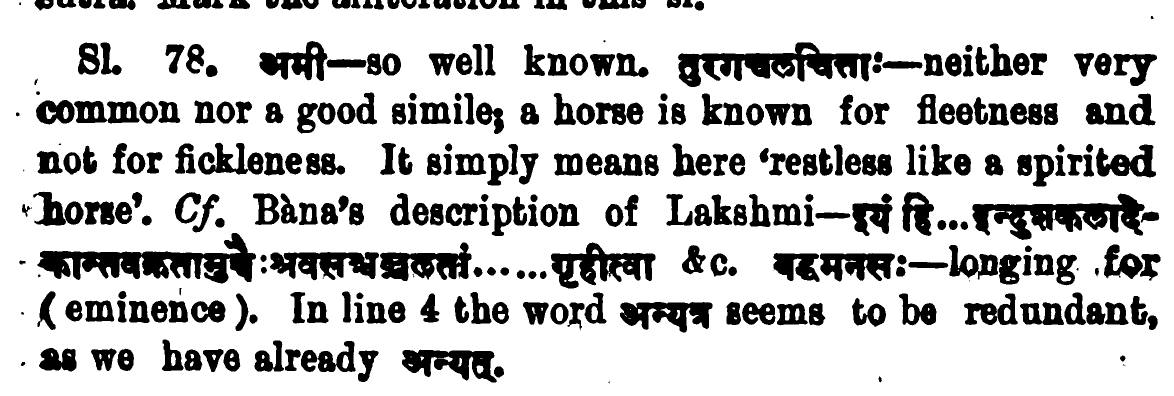
दुराराध्यः स्वामी तुरगचलचित्ताः क्षितिभुजो
वयं तु स्थूलेच्छा महति च पदे बद्धमनसः ।
जरा देहं मृत्युर्हरति सकलं जीवितमिदं
सखे नान्यच्छ्रेयो जगति विदुषोन्यत्र तपसः ॥ ५३ ॥
Notes
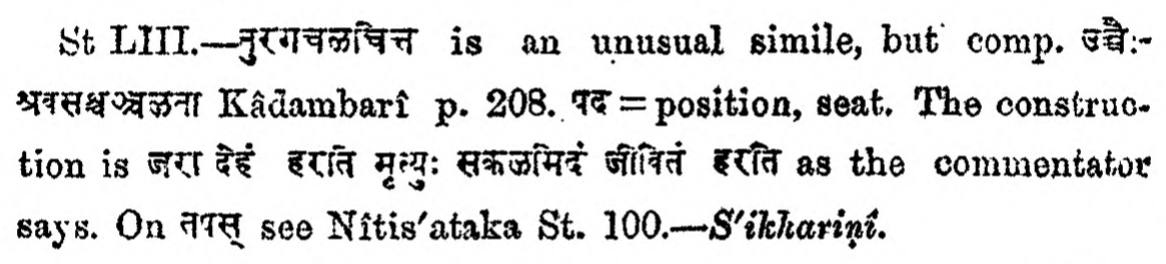
St LIII.—तुरगचलचित्त is an unusual simile, but comp. उच्चैःश्रवसश्चञ्चलता Kâdambarî p. 208. पद = position, seat. The construction is जरा देहं हरति मृत्युः सकलमिदं जीवितं हरति as the commentator says. On तपस् see Nîtis'ataka St. 100.—S'ikhariṇî.

Kale
all
दुराराध्याश्चामी तुरगचलचित्ताः क्षितिभुजो
वयं च स्थूलेच्छा महति च पदे बद्धमनसः ।
जरा देहं मृत्युर्हरति दयितं जीवितमिदं
सखे नान्यच्छ्रेयो जगति विदुषोन्यत्र तपसः ॥ ७८ ॥


Translation
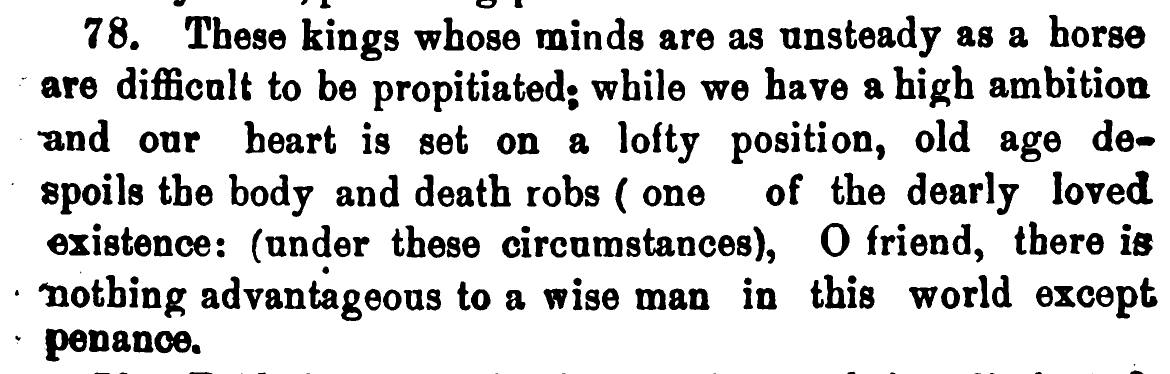
78. These kings whose minds are as unsteady as a horse are difficult to be propitiated; while we have a high ambition and our heart is set on a lofty position, old age despoils the body and death robs ( one of the dearly loved existence: (under these circumstances), O friend, there is nothing advantageous to a wise man in this world except penance.
Notes
Sl. 78. अमी—so well known. तुरगचलचित्ताः—neither very common nor a good simile; a horse is known for fleetness and not for fickleness. It simply means here ‘restless like a spirited horse’. Cf. Bàna’s description of Lakshmi—इयं हि...इन्दुशकलादेकान्तवक्रतामुच्चैःश्रवसश्चञ्चलतां......गृहीत्वा &c. बहुमनसः—longing for ( eminence ). In line 4 the word अन्यत्र seems to be redundant, as we have already अन्यत्.
Gopinath1914
all
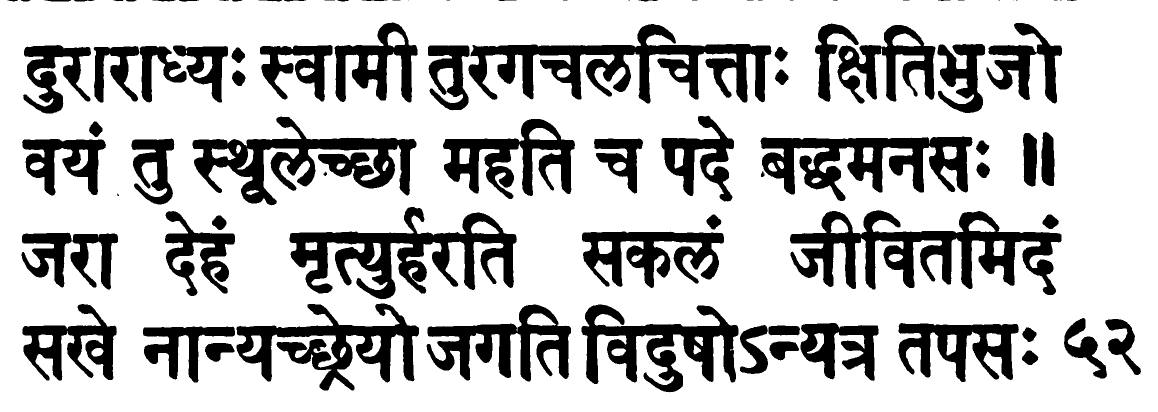
दुराराध्यः स्वामी तुरगचलचित्ताः क्षितिभुजो
वयं तु स्थूलेच्छा महति च पदे बद्धमनसः ॥
जरा देहं मृत्युर्हरति सकलं जीवितमिदं
सखे नान्यच्छ्रेयो जगति विदुषोऽन्यत्र तपसः ५२
चक्रवर्ती महाराजाओंका प्रसन्न करना असंभव है, अन्यान्य भूपालोंका चित्त घोड़ेके समान चंचल होता है और हमारा मनोरथ बहुत बड़ा है क्योंकि संसारके सर्वोत्तम पदका लाभ करनाही हमारा हार्दिक उद्देश्य है, और यह वृद्धावस्था हमारी देहका नाश किएदेती है, और मृत्यु तो हमारे सर्वस्व जीवनकाही हरण करलेती है । इसलिए हे मित्र ! विद्वान मनुष्यके लिए इस जगत में तपश्चरण करनेके सिवाय कल्याणकारक कर्म दूसरा कोई नहीं है ॥ ५२ ॥
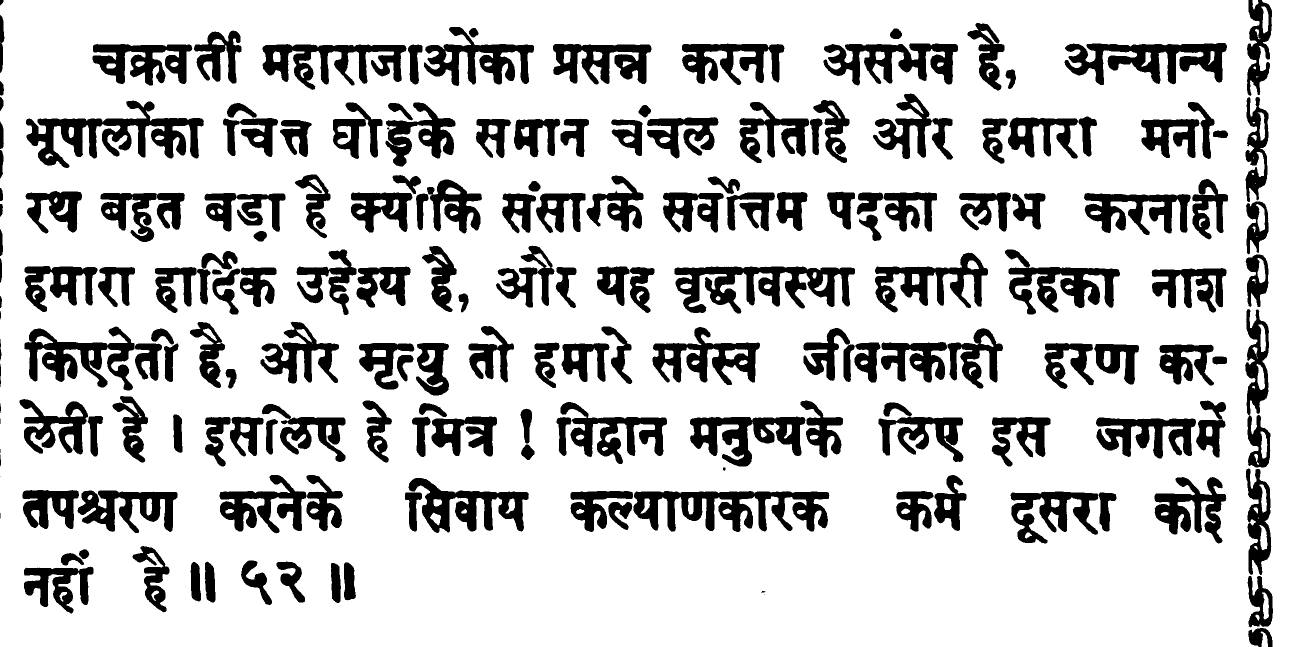
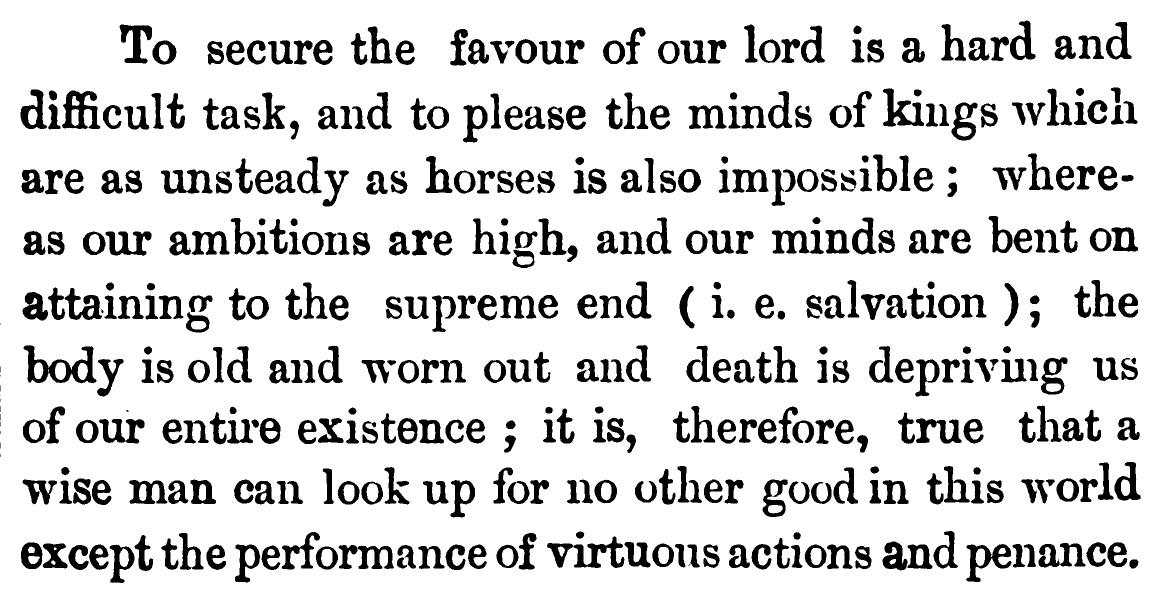
To secure the favour of our lord is a hard and difficult task, and to please the minds of kings which are as unsteady as horses is also impossible; whereas our ambitions are high, and our minds are bent on attaining to the supreme end (i. e. salvation ); the body is old and worn out and death is depriving us of our entire existence; it is, therefore, true that a wise man can look up for no other good in this world except the performance of virtuous actions and penance.

Gopinath1896
all
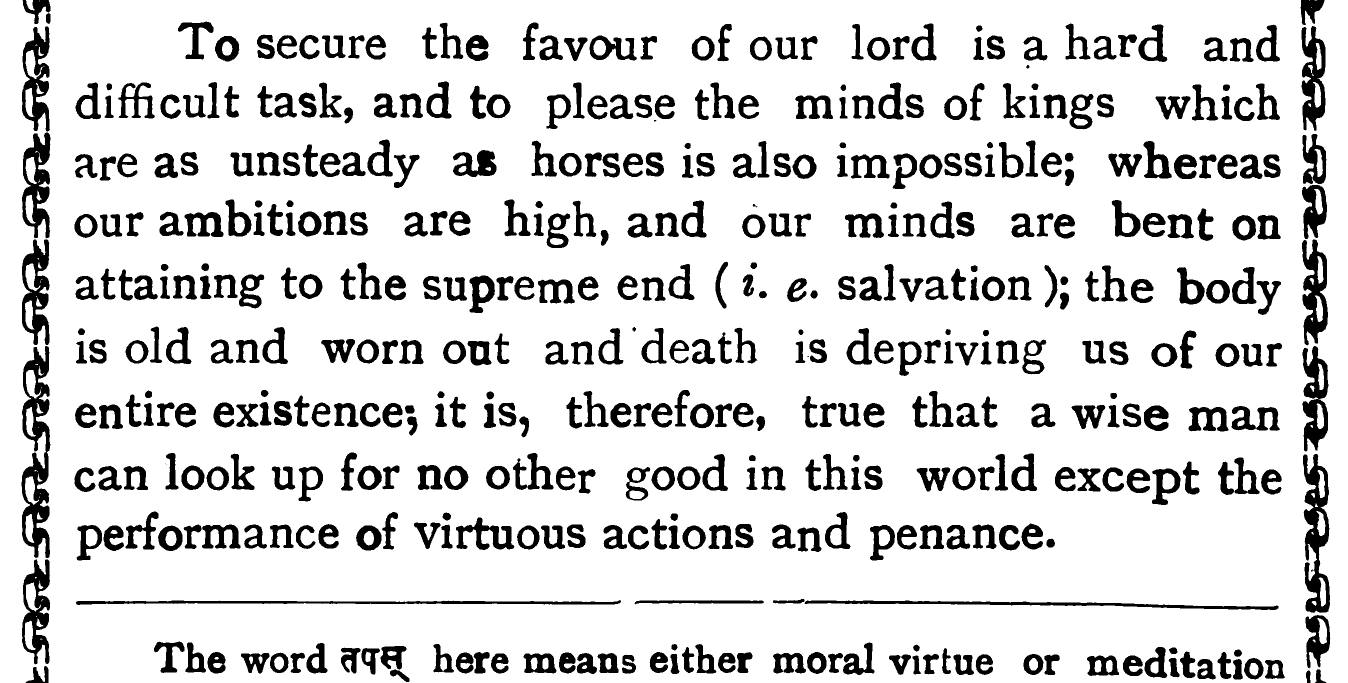
दुराराध्यः स्वामी तुरगचलचित्ताः क्षितिभुजो,
वयं तु स्थूलेच्छा महति च पदे बद्धमनसः ।
जरा देहं मृत्युईरति सकलं जीवितमिदं,
सखे नान्यच्छ्रेयो जगति विदुषोऽन्यत्र तपसः ५२
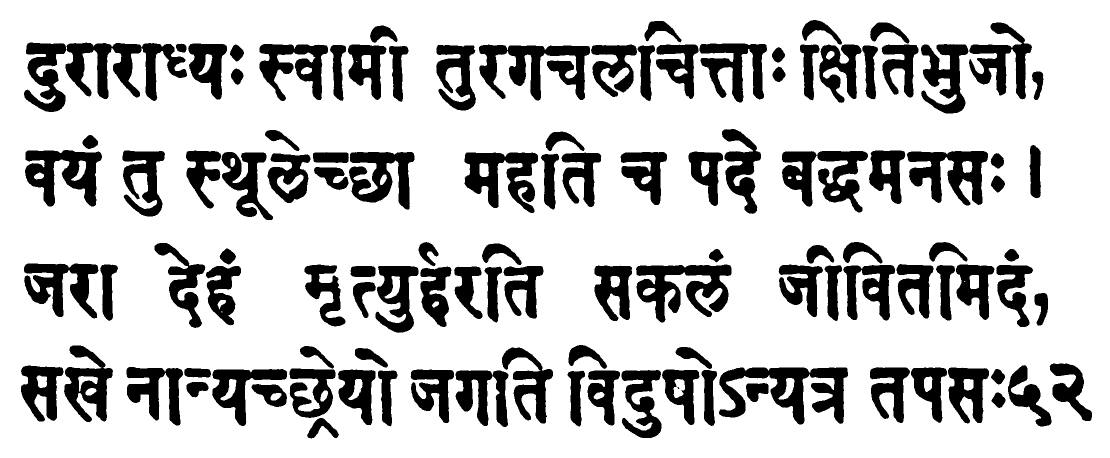
चक्रवर्ती महाराजाओंका प्रसन्न करना असंभव है, अन्यान्य भूपालोंका चित्त घोड़े के समान चंचल होता है और हमारा मनोरथ बहुत बड़ा है क्योंकि संसार के सर्वोत्तम पदका लाभ करनाही हमारा हार्दिक उद्देश्य है, और यह वृद्धावस्था हमारी देहका नाश किए देती है और मृत्यु तो हमारे सर्वस्व जीवनकाही हरा कर लेती है । इसलिए हे मित्र ! विद्वान मनुष्य के लिए इस जगत में तपश्चरण करनेके सिवाय कल्याणकारक कर्म दूसरा कोई नहीं है ॥ ५२ ॥
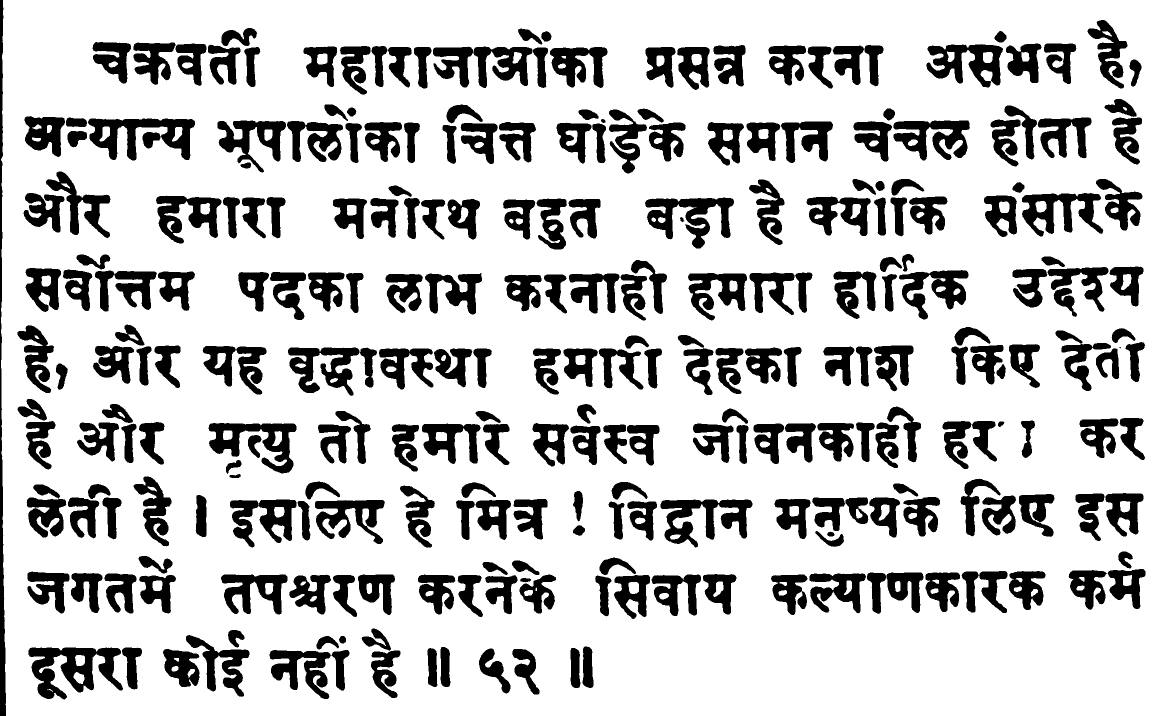
To secure the favour of our lord is a hard and difficult task, and to please the minds of kings which are as unsteady as horses is also impossible; whereas our ambitions are high, and our minds are bent on attaining to the supreme end (i. e. salvation); the body is old and worn out and death is depriving us of our entire existence; it is, therefore, true that a wise man can look up for no other good in this world except the performance of virtuous actions and penance.

Kosambi
all
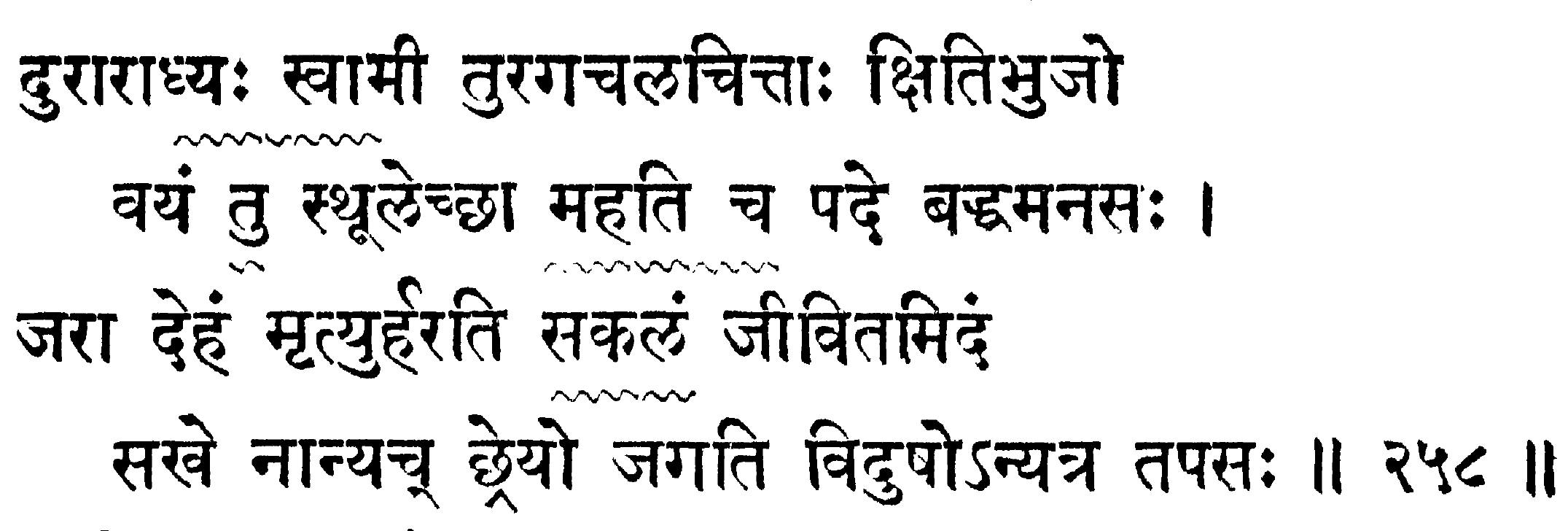
दुराराध्यः स्वामी तुरगचलचित्ताः क्षितिभुजो
वयं तु स्थूलेच्छा महति च पदे बद्धमनसः ।
जरा देहं मृत्युर्हरति सकलं जीवितमिदं
सखे नान्यच् छ्रेयो जगति विदुषोऽन्यत्र तपसः ॥ २५८ ॥
Footnote
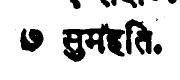
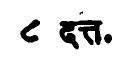
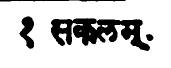
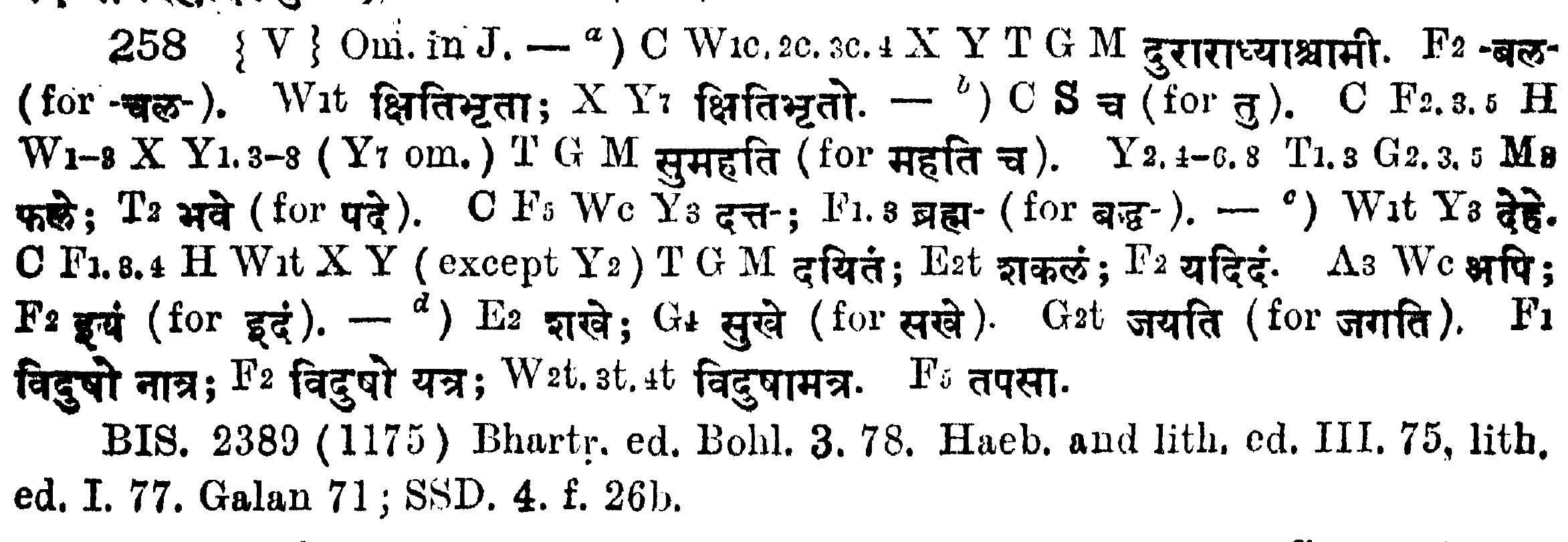
258 { V } Om . in J. ± ) C W10 , 20 , 3c . 4 X Y T TG GM दुराराध्याश्चामी . F2 -बल
( for -चल- ) . Wat क्षितिभृता ; X X7 क्षितिभृतो . 4 ) C S च ( for तु ) . C_F2.3.5 H
W1–4 X Y1 , 3−4 ( Y1 om . ) TGM सुमहति ( for महति च ) . Y24 - 6.8 T1.3 G2.35 Mg
फले ; T2 भवे ( for पदे ) . CFs We Y : दत्त - ; IF 1.3 ब्रह्म - ( for बद्ध - ) . ● ) Wat Y : देहे .
CF1.4.4 H W1t X Y ( except Y2 ) TGM दयितं ; Eat शकलं ; F2 यदिदं . 43 We अपि ;
F2 इयं ( for इदं ) . a ) E2 शखे ; G + सुखे ( for सखे ) . Gat जयति ( for जगति ) . F1
विदुषो नात्र ; F2 विदुषो यत्र ; Wat . st , st विदुषामत्र . F तपसा .
BIS . 2389 ( 1175 ) Bhartr ed . Bohl . 3. 78. Haeb and lith , ed . III . 75 , lith .
ed . I. 77. Galan 71 ; SSD 4. f . 26 .
Commentary