Ryder
THERE WAS A NOBLE CITY
There was a noble city old,
A mighty king, and vassals bold;
And there were gathered scholars true,
And moon-faced ladies not a few;
And there were princes proud and free,
And stories told, and minstrelsy:
A memory now; we mourn their fall
And honor Time, who levels all.
Brough
The pleasant city and its mighty king,
The tributary princes at his side,
The learned men that were the kingdom’s ride,
The minstrels with a ready song to sing.
The gracious ladies of the court, the ring
Of haughty nobles, arrogant of birth.
Are conquered by the Lord of all the earth,
Time, who makes memories of everything.
Tawney
We speak with awe of glorious kings, of haughty lords, and knights,
Of courtiers ranged in glittering rows, of triumphs and of fights,
Of tuneful bards that hymn their praise: who honours as he ought
That “eloquent and mighty Death” that sweeps them into nought?
Mādhavānanda
सा रम्या नगरी महान्स नृपति: सामन्तचक्रं च त-
त्पार्श्वे तस्य च सा विदग्धपरिषत्ताश्चन्द्रबिम्बानना: ।
उद्वृत्त: स च राजपुत्रनिवहस्ते बन्दिनस्ता: कथा:
सर्वं यस्य वशादगात् स्मृतिपथं कालाय तस्मै नम: ।।४१।।
41. That lovely city, that grand monarch, and that circle of feudatory kings at his side, that cabinet of shrewd counsellors of his and those beauties with moon like faces, that group of wayward princes, those court-minstrels and their songs of praise—under whose power all this fleeted away and became objects of memory, to that Kāla (time or the principle of change) salutation!
[उद्वृत्त: —Another reading is उद्रिक्त, which means ‘haughty’.]
Telang
all
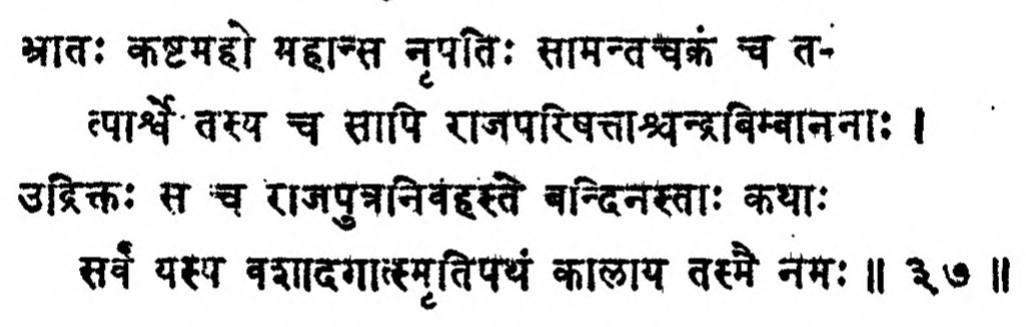
भ्रातः कष्टमहो महान्त्स नृपतिः सामन्तचक्रं च त-
त्पार्श्वे तस्य च सापि राजपरिषत्ताश्चन्द्रबिम्बाननाः ।
उद्रिक्तः स च राजपुत्रनिवहस्ते वन्दिनस्ताः कथाः
सर्वं यस्य वशादगात्स्मृतिपथं कालाय तस्मै नमः ॥ ३७ ॥
Notes
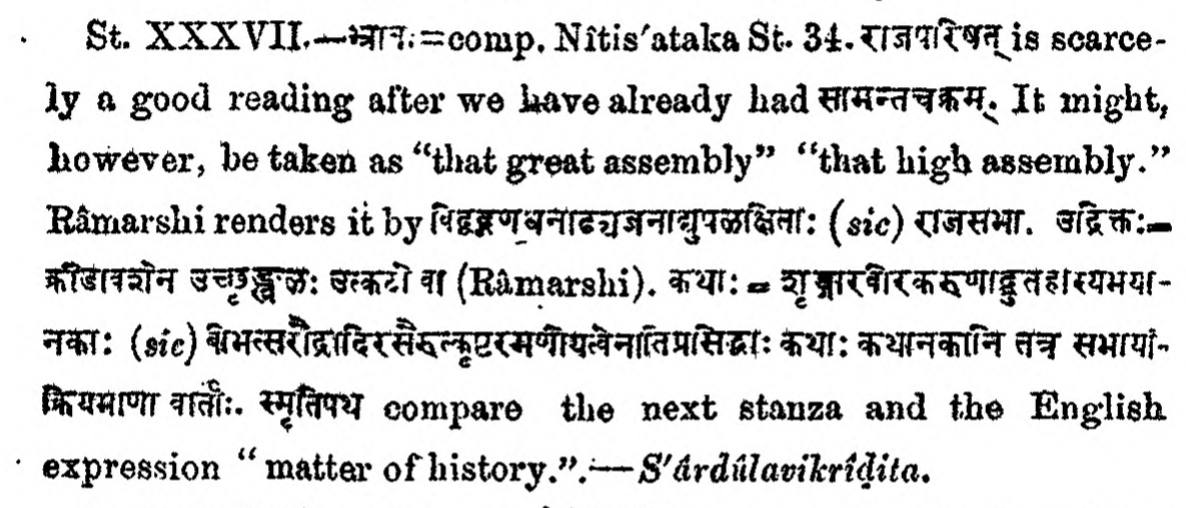
St. XXXVII.—भ्रातः = comp. Nîtis'ataka St. 34. राजपरिषत् is scarcely a good reading after we have already had सामन्तचक्रम्. It might, however, be taken as “that great assembly” “that high assembly.” Râmarshi renders it by विद्वद्गणधनाढ्यजनाद्युपलक्षिताः (sic) राजसभा. उद्रिक्तः = क्रीडावशेन उच्छृङ्खलः उत्कटो वा (Râmarshi). कथाः = शृङ्गारवीरकरुणाद्भुतहास्यभयानकाः (sic) बीभत्सरौद्रादिरसैरुत्कटेरमणीयत्वेनातिप्रसिद्धाः कथाः कथानकानि तत्र सभायां- क्रियमाणा वार्ताः. स्मृतिपथ compare the next stanza and the English expression “matter of history.”.—S'ârdûlavikrîḍita.

Kale
all
Introduction
अथ सर्वस्य कालवशत्वात्तन्महिमानं वर्णयति । तत्रादौ कालः कलयतामहम् इति भगवद्वचनात्कालः परमेश्वर एवेति मनसि कृत्वा तस्य सर्वनियामकत्वं च दर्शयन् तं नमस्करोति—

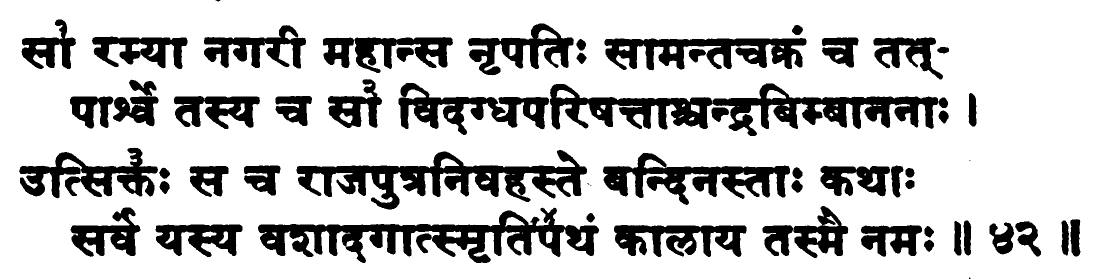
सा रम्या नगरी महान्स नृपतिः सामन्तचक्रं च तत्-
पार्श्वे तस्य च सा विदग्धपरिषत्ताश्चन्द्रबिम्बाननाः ।
उत्सिक्तः स च राजपुत्रनिवहस्ते बन्दिनस्ताः कथाः
सर्वं यस्य वशादगात्स्मृतिपथं कालाय तस्मै नमः ॥ ४२ ॥
Translation
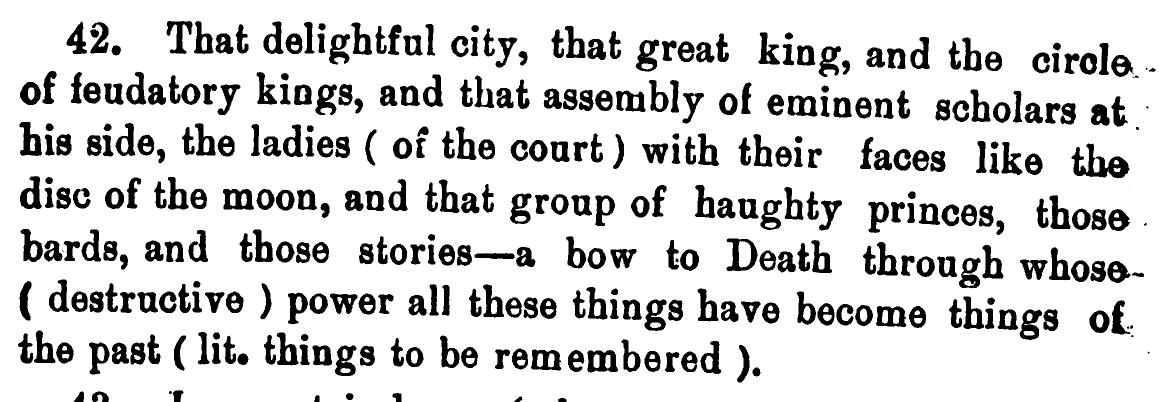
42. That delightful city, that great king, and the circle of feudatory kings, and that assembly of eminent scholars at his side, the ladies ( of the court ) with their faces like the disc of the moon, and that group of haughty princes, those bards, and those stories—a bow to Death through whose ( destructive ) power all these things have become things of the past ( lit. things to be remembered ).
Notes
Sl. 42. रम्या सा would be better for symmetry. सामन्त (सम्यगन्तः समन्तः border, frontier, तत्र भवः सामन्तः ) means a frontier king, a tributary prince. विदग्ध — a wise man. सापि राजपरिषद् v l. involves tautology since सामन्तचक्र has already occurred. उत्सिक्तः— swollen or puffed up with pride, proud. उद्रिक्त v. l. ( p p. of रिच् with उत् ) lit. exceeded, overflowed, hence haughty. निवह—a collection. स्मृतिपथमगात्—became a matter of memory i. e. history.


Gopinath1914
all
भ्रातः कष्टमहो महान्स नृपतिः सामन्तचक्रं
च तत्पार्श्वे तस्य च साऽपि राजपरिषत्ता-
चन्द्रबिम्बाननाः ॥ उद्रिक्तः स च राजपुत्रनिव-
हस्ते बन्दिनस्ताः कथाः सर्वं यस्य वशा-
दगात्स्मृतिपदं कालाय तस्मै नमः ॥ ३६ ॥
भाई! कैसे कष्टका विषय है कि हमारे देखते देखते ही वह प्रतापशाली राजा, उसके आधीन छोटे छोटे सामंत, उसकी वह राजसभा, वह विधुवदनी सुंदरियें, वह उन्मत्त राजकुमारोंका समूह, वह बंदीजन और वह गोष्ठी सबके सब जिस महाबली कालके कराल पेटमें समागए हैं उसे हमारा नमस्कार है ॥ ३६ ॥
Oh brother, I cannot but sorrowfully pay my humble obeisance to that Time through whose powerful influence (1) that mighty king, ( 2 ) his feudatory chiefs, (3) his magnificent court, (4) the moon-faced charming ladies of his seraglio, ( 5 ) the proud assembly of his princes, (6) his heraldic bards, and ( 7 ) the instructive tales recited in his court, have all become a matter of history existing only in the memory of survivors.
Footnote
Quoted under Bhartrihari in the Sarngadharapaddhati ( शार्ङ्गधरपद्धतेि । ४१६४ ), and under Sri Kamaláyudha in the Subhashitavali ( सुभाषितावलि ) at No. 3328.

Footnote
Cf. ((@ a) ) " पातयति महापुरुषान्सममेव बहूननादरेणैव " । परिवर्तमान एकः कालः शैलानिवानन्तः ॥ ( हर्षचरितम् । । पंचमोल्लासः).

Footnote
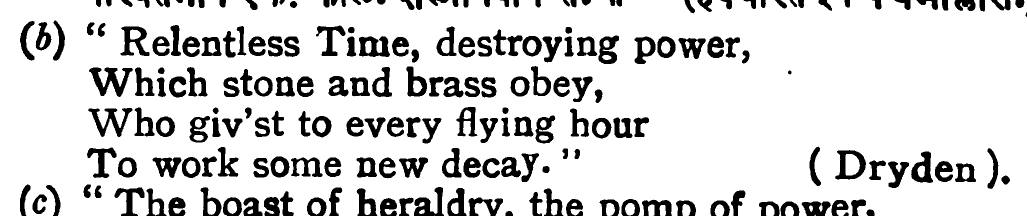
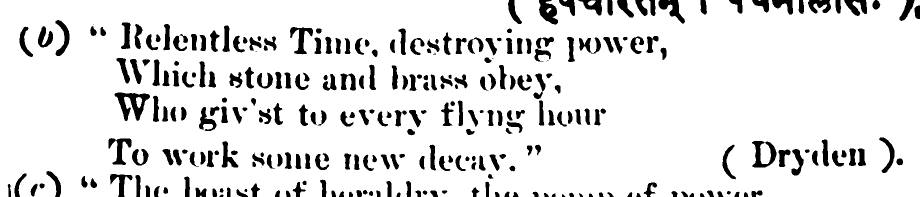
(b) " Relentless Time, destroying power, Which stone and brass obey, Who giv'st to every flying hour To “ work some new decay. " ( Dryden ).
Gopinath1896
all
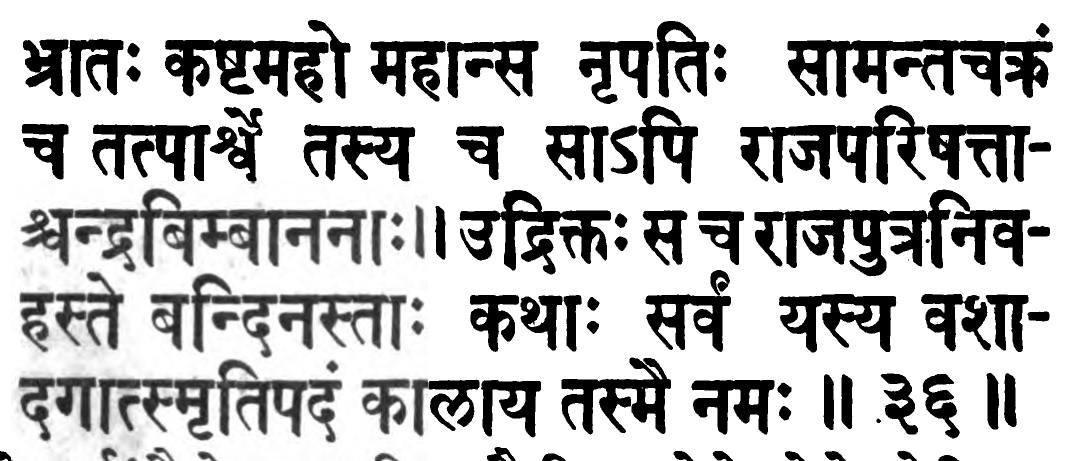
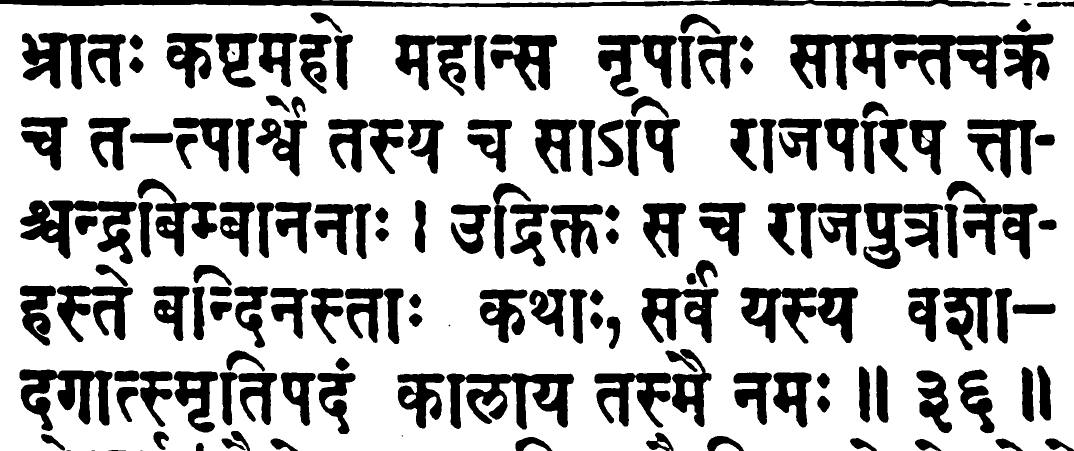
भ्रातः कष्टमहो महान्स नृपतिः सामन्तचक्रं
च त- त्पार्श्वे तस्य च साऽपि राजपरिषत्ता-
श्वन्द्रविम्बाननाः । उद्रिक्तः स च राजपुत्रनिव-
हस्ते बन्दिनस्ताः कथाः सर्वे यस्य वशा-
दगात्स्मृतिपदं कालाय तस्मै नमः ॥ ३६ ॥
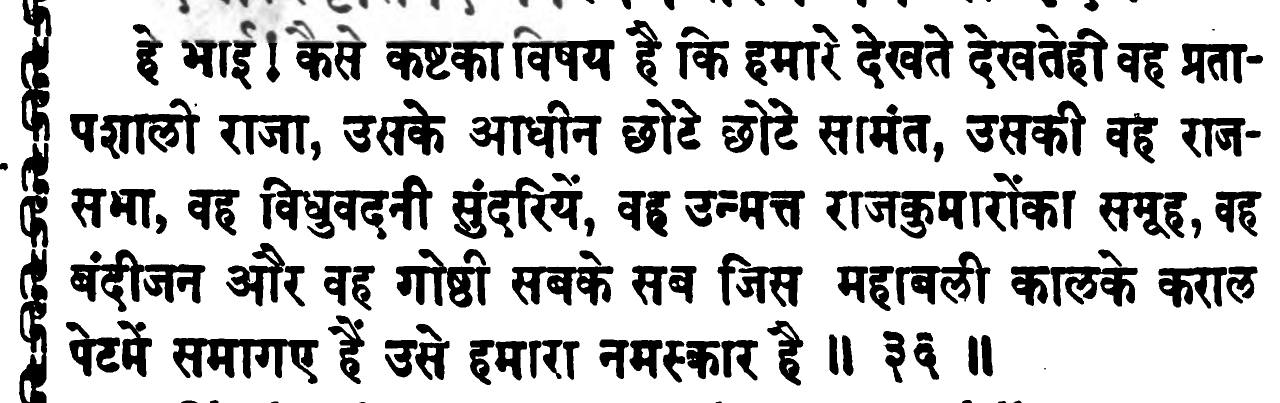
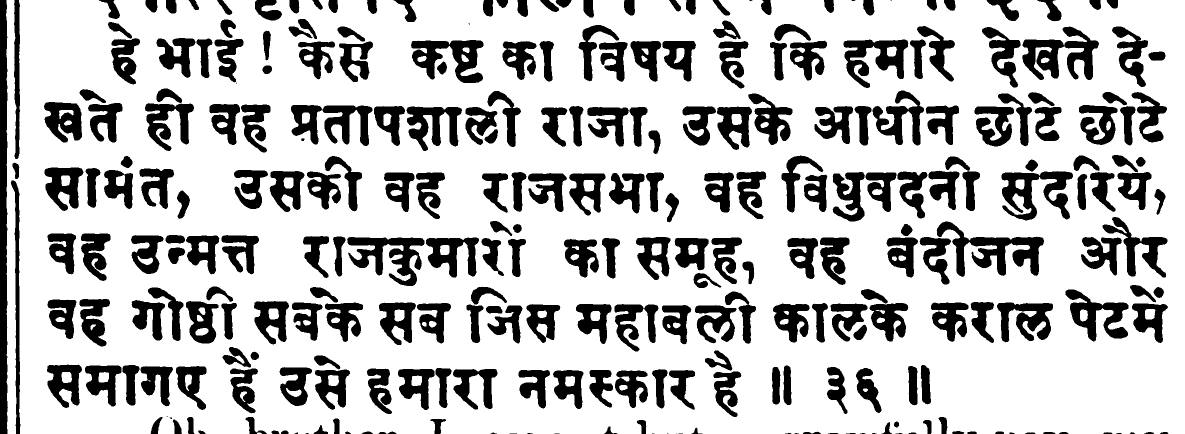
हे भाई! कैसे कष्ट का विषय है कि हमारे देखते देखते ही वह प्रतापशाली राजा, उसके आधीन छोटे छोटे सामंत, उसकी वह राजसभा, वह विधुवदनी सुंदरियें, वह उन्मत्त राजकुमारों का समूह, वह बंदीजन और वह गोष्ठी सबके सब जिस महाबली कालके कराल पेटमें समागए हैं उसे हमारा नमस्कार है ॥ ३६ ॥
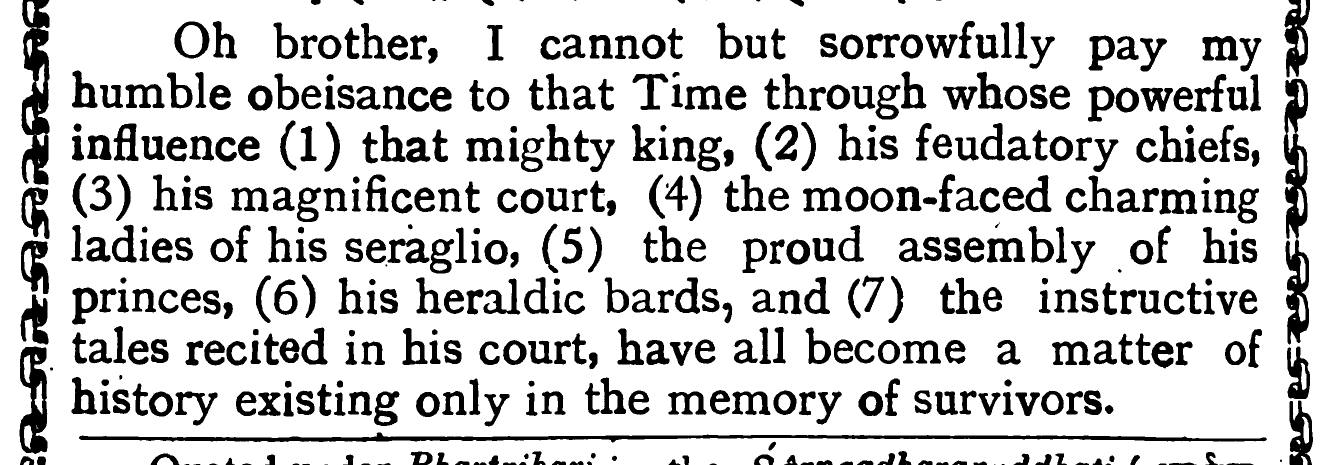
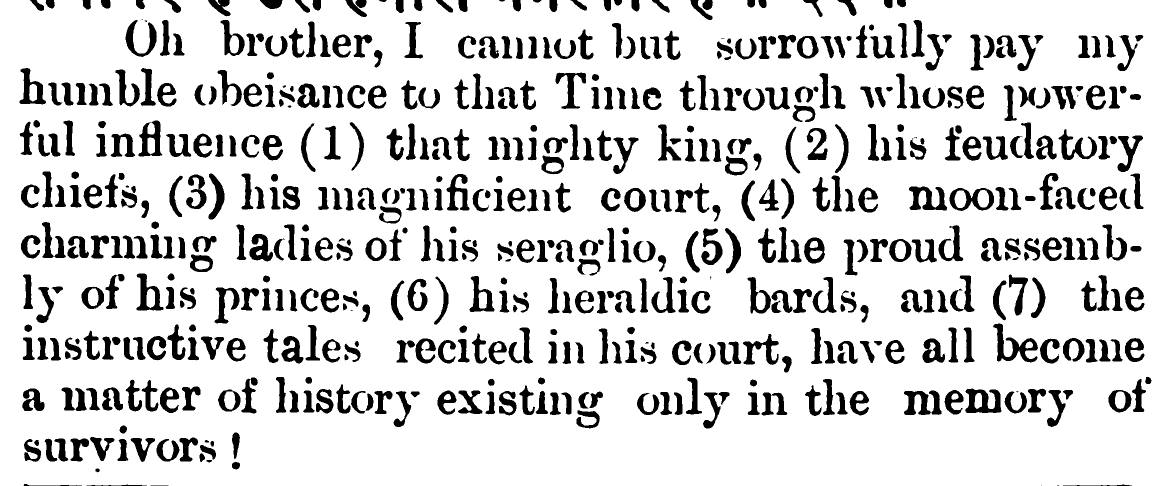
Oh brother, I cannot but sorrowfully pay my humble obeisance to that Time through whose powerful influence (1) that mighty king, (2) his feudatory chiefs, (3) his magnificient court, ( 4 ) the moon-faced charming ladies of his seraglio, (5) the proud assembly of his princes, ( 6 ) his heraldic bards, and ( 7 ) the instructive tales recited in his court, have all become a matter of history existing only in the memory of survivors!
Footnote
Qnoted under Bhartrihari in the Sárngadharapaddhati (शार्ङ्गधरपद्धति । ४१६४), and under SriKamalāyudha in the Sabhäshitärali ( सुभाषितावलि . ) at No. 3328.

Footnote
Cf. - (a) " पातयति महापुरुषान्सममेव बहूननादरेणैव । परिवर्तमान एकः , कालः शैलानिवानन्तः ॥ " ( हर्षचरितम् । पंचमोल्लासः ).

Footnote
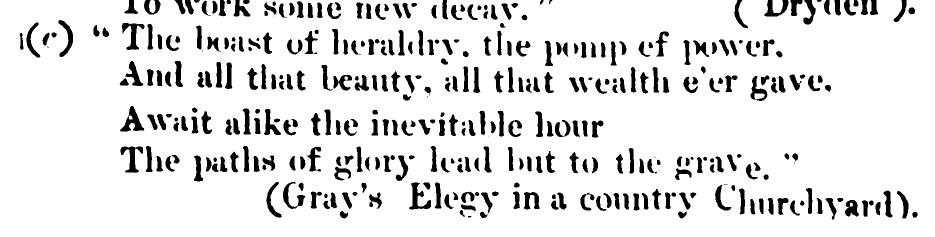
(0) "Relentless Time, destroying power, Which stone and brass obey, Who giv'st to every flyng hour To work some new decay." (Dryden ).
Kosambi
all
भ्रातः कष्टमहो महान् स नृपतिः सामन्तचक्रं च तत्
पार्श्वे तस्य च सापि राजपरिषत् ताश् चन्द्रबिम्बाननाः ।

उद्रिक्तः स च राजपुत्रनिवहस् ते बन्दिनस् ताः कथाः
सर्वं यस्य वशादगात् स्मृतिपदं कालाय तस्मै नमः ॥ १६ ९ ॥

Footnote
169 Om . in GVS 2387 , probably on a missing fol . in original . ISM .
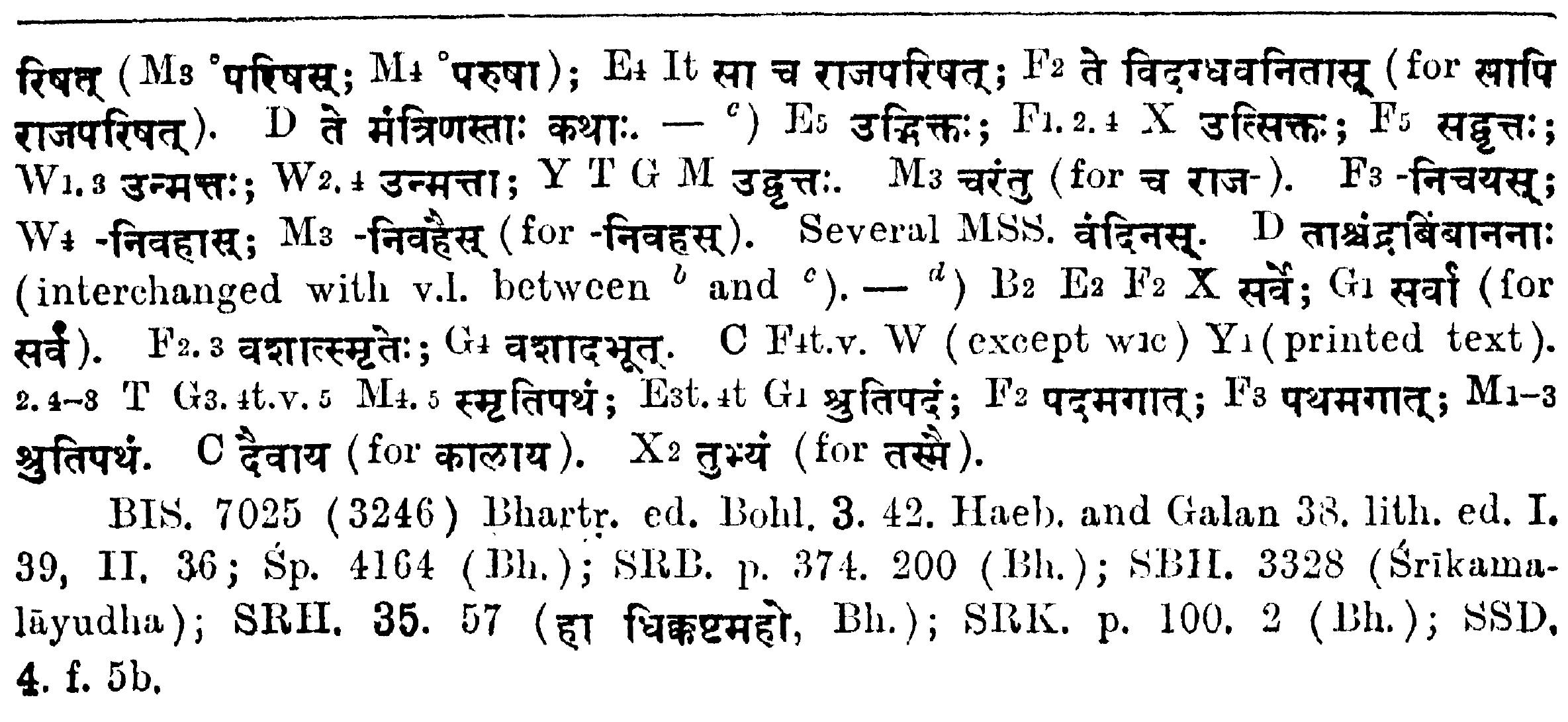
Kalañkar 195. V38 ( सा रम्या ) , V89 ( भ्रातः कष्ट - ) . NS3 . V31 ( सा रम्या ) , V111 ( extra ,
भ्रातः कष्ट - ) – 2 ) A F3 भ्रातः कुत्र गतो ; F1.2 भ्रांतं कष्टमहो ; J3 भ्रांतः कष्टमहो ; S सा रम्या नगरी
( for भ्रातः कष्टमहो ) . C गतः ( for महान् ) . M + -चक्रश ( for -चक्रं ) . Y3 यत् ( for तत् ) .
– 4 ) D F3 Y 3 यस्य ( for तस्य ) . BCDF3 . 4 ( m , vas in text ) 6 Io J 8 सा विदग्धप

Footnote
रिषत् ( Ms ' परिषस् ; M + परुषा ) ; E + It सा च राजपरिषत् ; F2 ते विदग्धवनितासू ( for सापि
राजपरिषत् ) . D ते मंत्रिणस्ताः कथा :. c ) Es उद्भिक्त ; F1.2.1 X उत्सिक्त ; F5 सद्वृत्तः ;
W1.3 उन्मतः ; W2 W2 . . ° 4 उन्मत्ता उन्मत्ता ; ; YT GM उद्वृत्त :. M3 चरंतु ( for च राज- ) . F3 - निचयस् ;
W + - निवहास ; M3 -निवहस् ( for -निवहस् ) . Several MSS . वंदिनस् . D ताश्चंद्रबिंबाननाः
( interchanged with v.l. between & and 2 c ) ) . — 4 d ) B2 E2 F2 X सर्वे ; G1 सर्वा ( for
सर्व ) . F 2. 3 वशात्स्मृतेः ; G + वशादभूत् . C Fit.v. W ( except wic ) Y1 ( printed text ) .
2.4-8 ' T G3.4tv.5M.5 स्मृतिपर्थ ; Est + t G1 श्रुतिपदं ; I2 पदमगात् ; Is पथमगातू ; M1 - 3
श्रुतिपथं दैवाय ( for कालाय ) . X 2 तुभ्यं ( for तस्मै ) .
BIS . 7025 ( 3246 ) Bhartr ed . Bohl . 3. 42. Hae ) and Galan 38. lith ed . I.
39 , II . 36 ; Śp . 4164 ( Bh . ) ; SRE . p . 374. 200 ( Bh . ) ; SBIH . 3328 ( Śrikama
lāyudha ) ; SRH . 35. 57 ( हा धिकष्टमहो , Bh . ) ; SRK , p . 100. 2 ( Bh . ) ; SSD ,
4. f . 5b .
Commentary