Ryder
THE BEASTS THAT DON'T EAT GRASS
Unschooled in music, poetry, and art,
Man is a beast, a hornless, tailless beast;
He doesn't eat the grass; for this at least
The other beasts may well be glad at heart.
Tawney
Deem him who verse and music scorns
A beast without the tail and horns;
What though he never feed on grass,
I hold him none the less an ass.
Telang
all
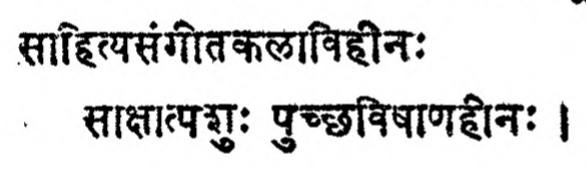
साहित्यसंगीतकलाविहीनः
साक्षात्पशुः पुच्छविषाणहीनः ।
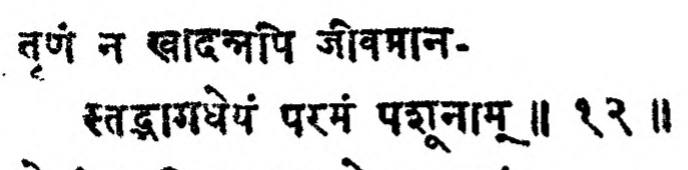
तृणं न खादन्नपि जीवमान-
स्तद्भागधेयं परमं पशूनाम् ॥ १२ ॥
Notes
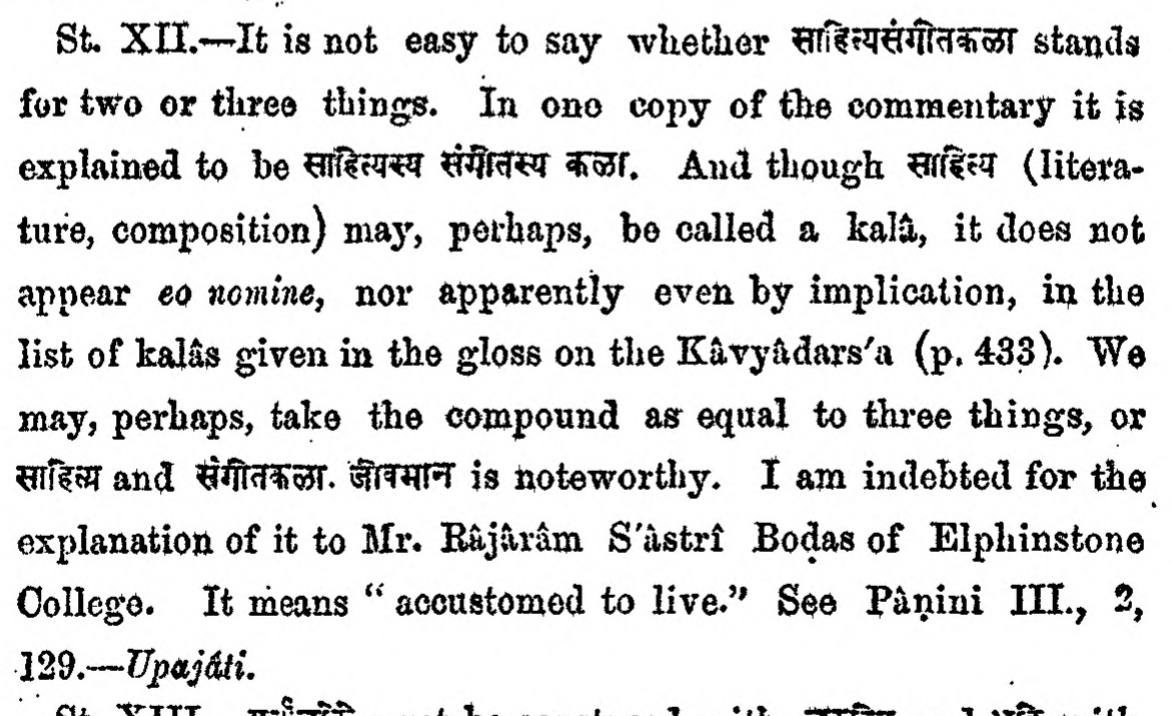
St. XII.—It is not easy to say whether साहित्यसंगीतकला stands for two or three things. In one copy of the commentary it is explained to be साहित्यस्य संगीतस्य कला. And though साहित्य (literature, composition) may, perhaps, be called a kalâ, it does not appear eo nomine, nor apparently even by implication, in the list of kalâs given in the gloss on the Kâvyâdars'a (p. 433). We may, perhaps, take the compound as equal to three things, or साहित्य and संगीतकला. जीवमान is noteworthy. I am indebted for the explanation of it to Mr. Râjârâm S'âstrî Boḍas of Elphinstone College. It means “accustomed to live.” See Pâṇini III., 2, 129.—Upajâti.

Kale
all
साहित्यसङ्गीतकलाविहीनः साक्षात्पशुः पुच्छविषाणहीनः ।
तृणं न खादन्नपि जीवमानस्तद्भागधेयं परमं पशूनाम् ॥ १२॥

Translation
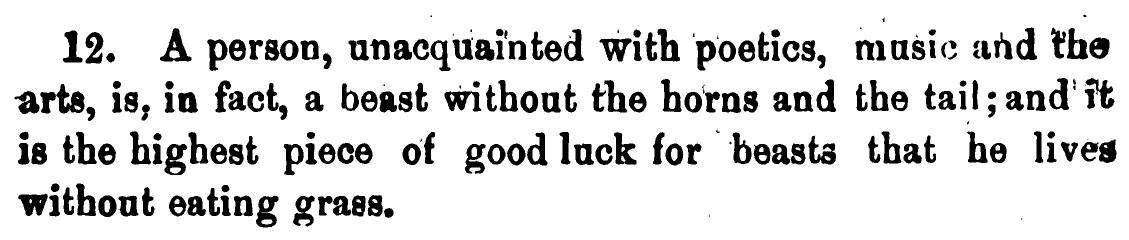
12. A person, unacquainted with poetics, music and the arts, is, in fact, a beast without the horns and the tail; and it is the highest piece of good luck for beasts that he lives without eating grass.
Notes
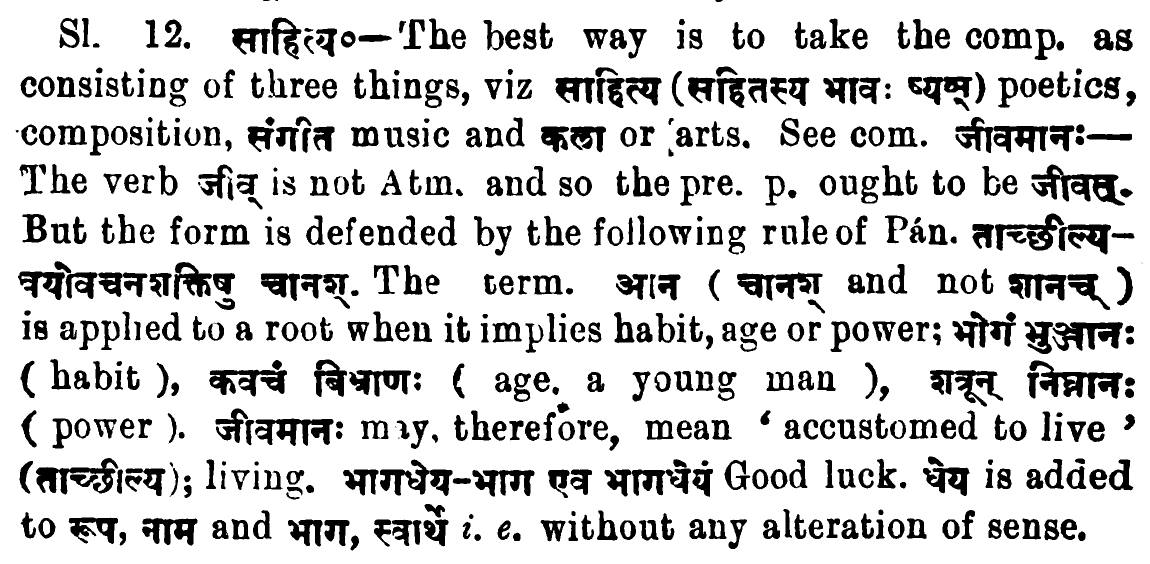
Sl. 12. साहित्य०—The best way is to take the comp. as consisting of three things, viz साहित्य (सहितस्य भावः ष्यञ्) poetics, composition, संगीत music and कला or arts. See com. जीवमानः— The verb जीव् is not Atm. and so the pre. p. ought to be जीवत्. But the form is defended by the following rule of Pán. ताच्छील्यवयोवचनशक्तिषु चानश्. The term. आन ( चानश् and not शानच् ) is applied to a root when it implies habit, age or power; भोगं भुञ्जानः ( habit ), कवचं बिभ्राणः ( age. a young man ), शत्रून् निघ्नानः ( power ). जीवमानः may, therefore, mean ‘ accustomed to live ’ (ताच्छील्य); living. भागधेय–भाग एव भागधेयं Good luck. धेय is added to रूप, नाम and भाग, स्वार्थे i. e. without any alteration of sense.
Gopinath1914
all
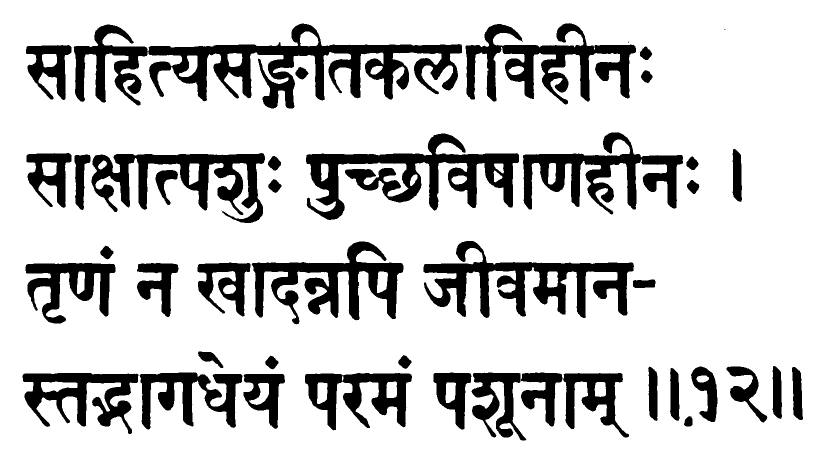
साहित्यसङ्गीतकलाविहीनः
साक्षात्पशुः पुच्छविषाणहीनः ।
तृणं न खादन्नपि जीवमान-
स्तद्भागधेयं परमं पशूनाम् ॥१२॥
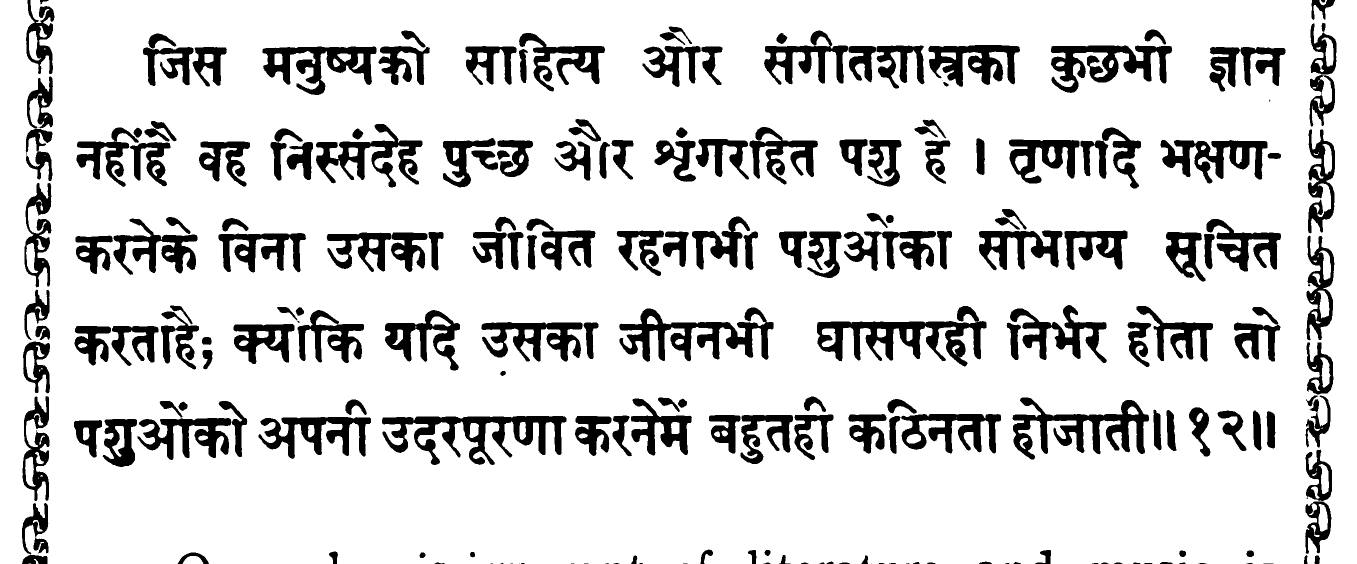
जिस मनुष्यको साहित्य और संगीतशास्त्रका कुछभी ज्ञान वह निस्संदेह पुच्छ और भृंगरहित पशु है । तृणादि भक्षणकरनेके विना उसका जीवित रहनाभी पशुओंका सौभाग्य सूचित करता है; क्योंकि यदि उसका जीवनभी घासपरही निर्भर होता तो पशुओंको अपनी उदरपूरणा करनेमें बहुतही कठिनता होजाती ॥ १२ ॥
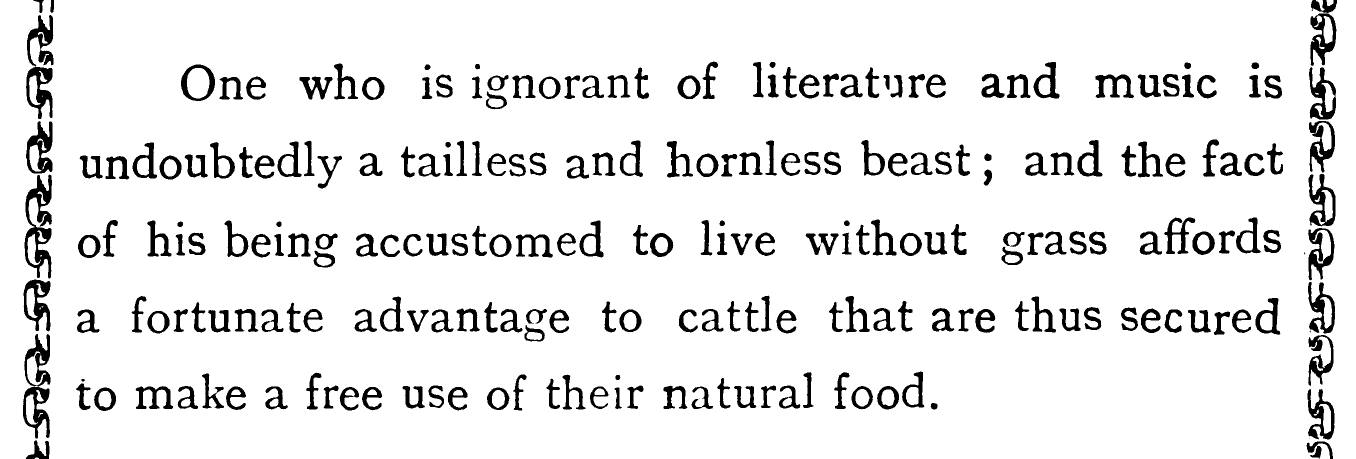
One who is ignorant of literature and music is undoubtedly a tailless and hornless beast; and the fact of his being accustomed to live without grass affords a fortunate advantage to cattle that are thus secured to make a free use of their natural food.
Footnote
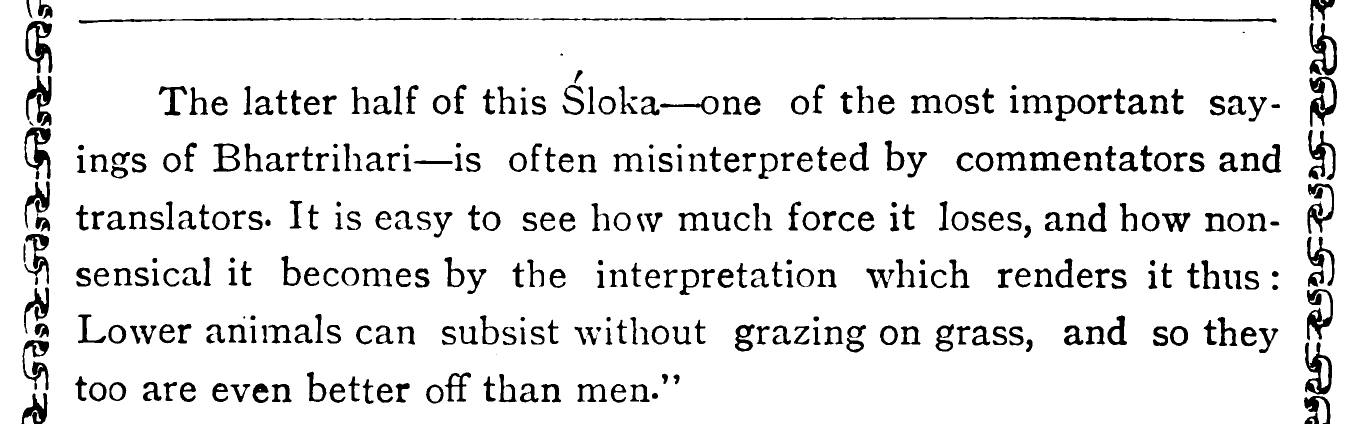
The latter half of this Śloka-one of the most important sayings of Bhartrihari-is often misinterpreted by commentators and translators. It is easy to see how much force it loses, and how nonsensical it becomes by the interpretation which renders it thus: Lower animals can subsist without grazing on grass, and so they too are even than men." better off
Gopinath1896
all
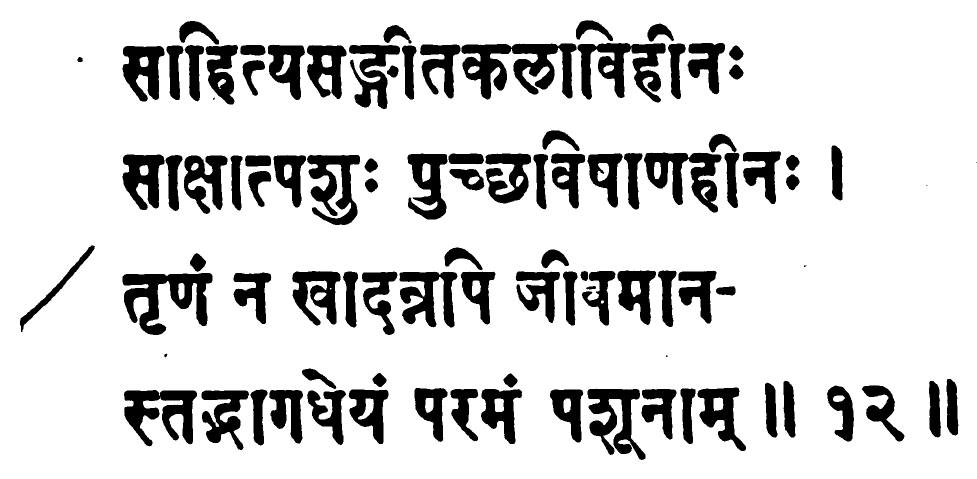
साहित्यसङ्गीतकलाविहीनः
साक्षात्पशुः पुच्छविषाणहीनः ।
/ तृणं न खादन्नपि जीवमान-
स्तद्भागधेयं परमं पशूनाम् ॥ १२ ॥
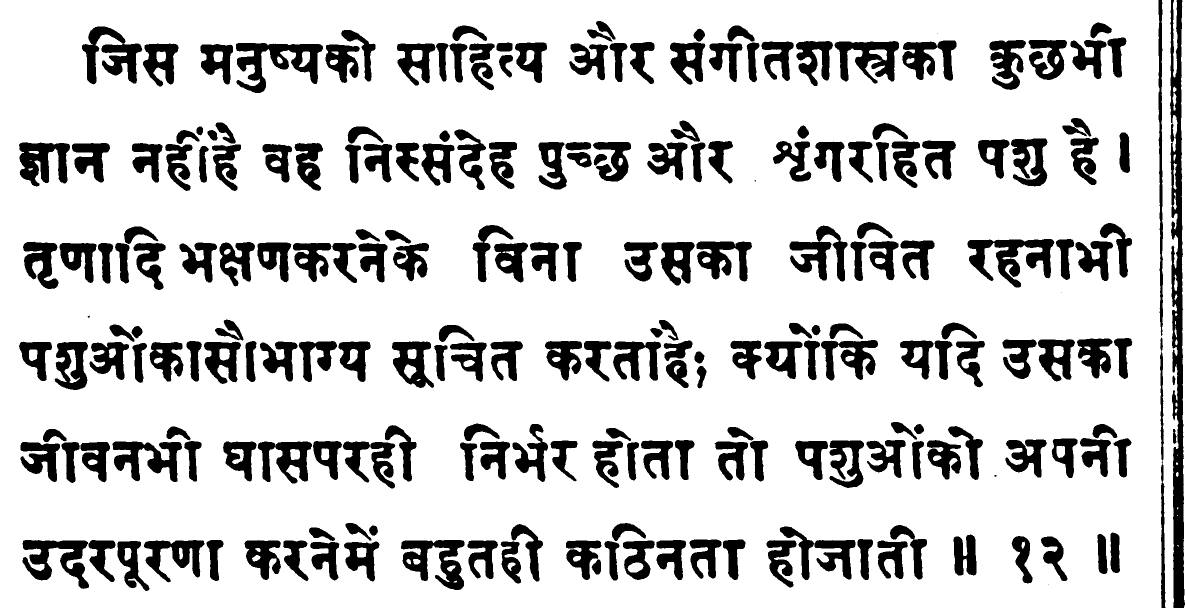
जिस मनुष्यको साहित्य और संगीतशास्त्रका कुछभी ज्ञान नहीं है वह निस्संदेह पुच्छ और भृंगरहित पशु है । तृणादि भक्षणकरने के विना उसका जीवित रहनाभी पशुओं का सौभाग्य सूचित करताहै; क्योंकि यदि उसका जीवनभी घासपरही निर्भर होता तो पशुओंको अपनी उदरपूरणा करने में बहुतही कठिनता होजाती ॥ १२ ॥
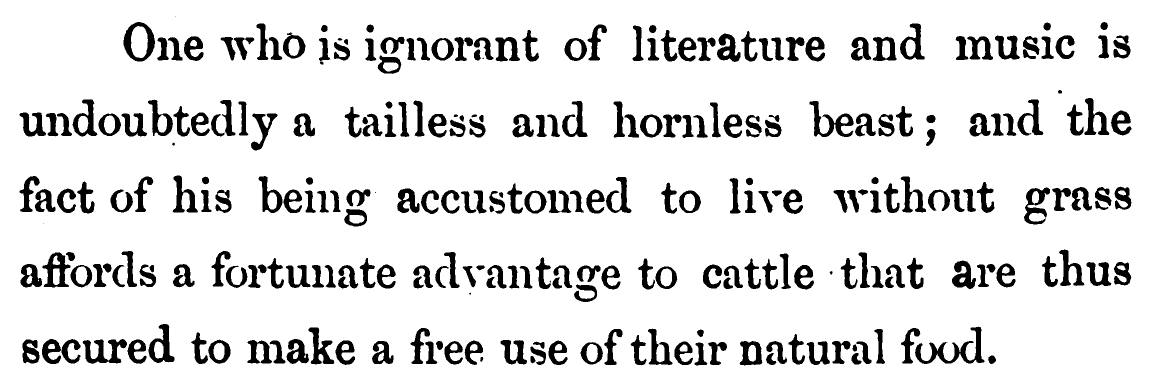
One who is ignorant of literature and music is undoubtedly a tailless and hornless beast; and the fact of his being accustomed to live without grass affords a fortunate advantage to cattle that are thus secured to make a free use of their natural food.
Footnote
The latter half of this Śloka-one of the most important sayings of Bhartrihari-is often misinterpreted by commentators and translators. It is easy to see how much force it loses, and how nonsensical it becomes by the interpretation which renders it thus: "Lower animals can subsist without grazing on grass, and so they too are even better off than men."
Commentary