Tawney
As knowledge grows, content expands, and fell desire abates;
But worldly joys, if long embraced, a baneful influence gain;
Thus Indra, like a mortal king, hopes, trembles, loves, and hates,
From having held through endless years an undisputed reign.
Telang
all

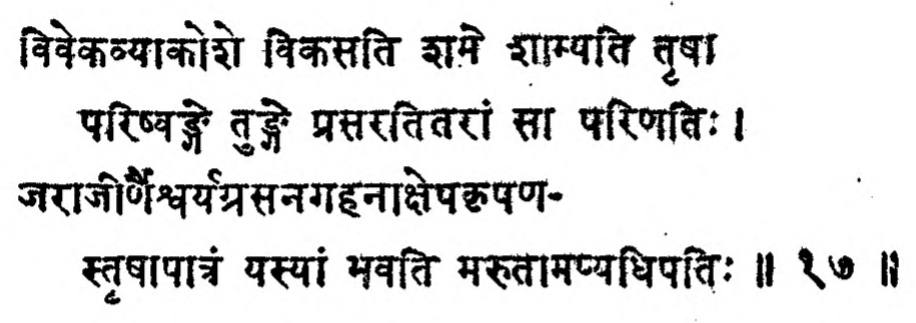
विवेकव्याकोशे विकसति शमे शाम्यति तृषा
परिष्वङ्गे तुङ्गे प्रसरतितरां सा परिणतिः ।
जराजीर्णैश्वर्यग्रसनगहनाक्षेपकॄपण-
स्तृषापात्रं यस्यां भवति मरुतामप्यधिपतिः ॥ १७ ॥
Notes
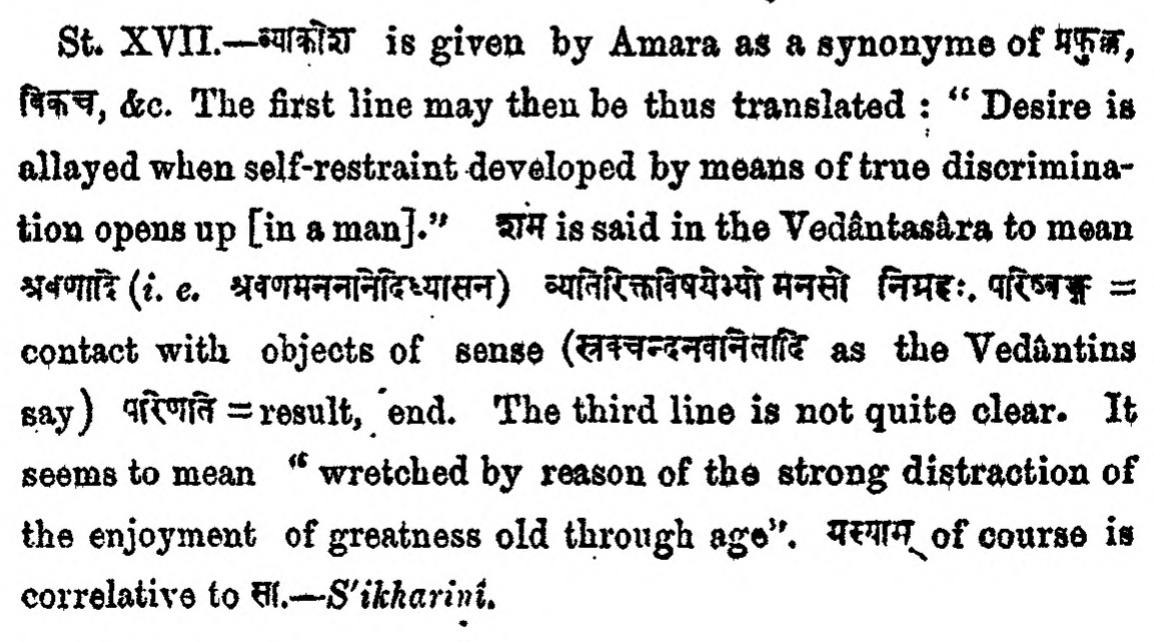
St. XVII.—व्याकोश is given by Amara as a synonyme of प्रफुल्ल, विकच, &c. The first line may then be thus translated : “Desire is allayed when self-restraint developed by means of true discrimination opens up [in a man].” शम is said in the Vedântasâra to mean श्रवणादि (i. e. श्रवणमनननिदिध्यासन) व्यतिरिक्तविषयेभ्यो मनसो निग्रहः. परिष्बङ्ग = contact with objects of sense (स्रक्चन्दनवनितादि as the Vedântins say) परिणति = result, end. The third line is not quite clear. It seems to mean “wretched by reason of the strong distraction of the enjoyment of greatness old through age”. यस्याम् of course is correlative to सा.—S'ikhariṇî.

Kale
all
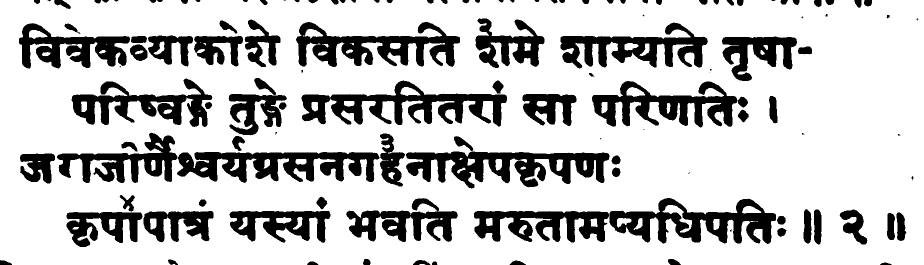
विवेकव्याकोशे विकसति शमे शाम्यति तृषा-
परिष्वङ्गे तुङ्गे प्रसरतितरां सा परिणतिः ।
जराजीर्णैश्वर्यग्रसनगहनाक्षेपकृपणः
कृपापात्रं यस्यां भवति मरुतामप्यधिपतिः ॥ २ ॥
Translation
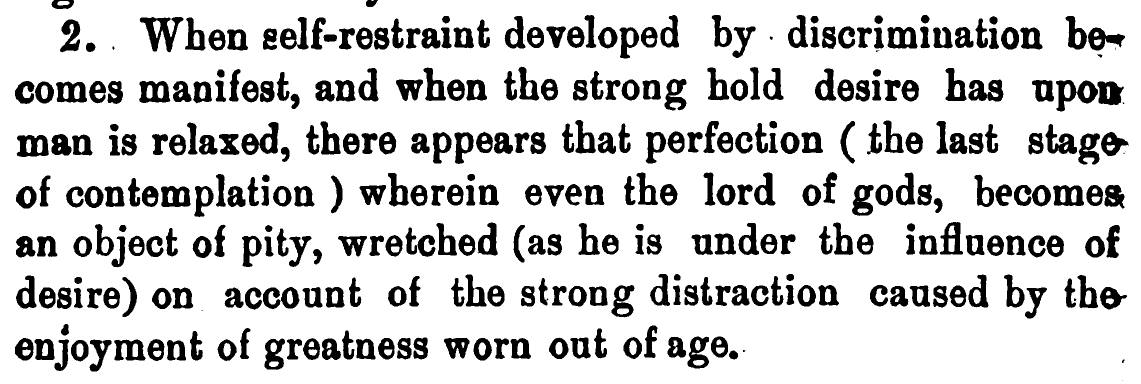
2. When self-restraint developed by discrimination becomes manifest, and when the strong hold desire has upon man is relaxed, there appears that perfection ( the last stage of contemplation ) wherein even the lord of gods, becomes an object of pity, wretched (as he is under the influence of desire) on account of the strong distraction caused by the enjoyment of greatness worn out of age.
Notes
Sl. 2. विवेकव्याकोशे—विवेक is the same as नित्यानित्यवस्तुविवेक discrimination of the real from the unreal. When one knows wherein lies permanent happiness, which alone can be called true happiness, he tries to acquire it. For this purpose शम and others ( शम-दमोपरतितितिक्षासमाधानश्रद्धाख्याः । Ved. Sá. ) are necessary. व्याकोश means ‘unfolding’ budding;’ hence development. When one has discrimination, one should try to acquire s`ama and others. शम is defined as शमस्तावत् श्रवणादिव्यतिरिक्तविषयेभ्यो मनसो निग्रहः i. e. restraining the mind from all other objects and devoting it to the hearing of the recital of holy texts &c. ( i. e. मनन, निदिध्यासन &c. ).—व्याकोश may also be taken as an adj: see com. विकसति when it blooms and so produces the wished for result, viz. the annihilation of all desires- तुङ्ग-lofty; hence strong attachment. सा परिणतिः—that well known perfection ( of contemplation ) viz. what is called जीवन्मुक्ति in which one enjoys the joy of Brahma.

Gopinath1914
all
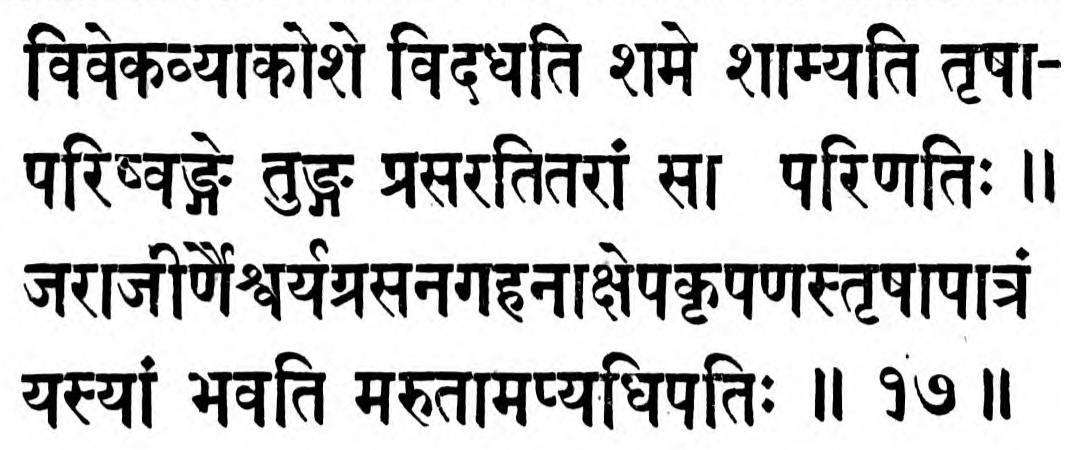
विवेकव्याकोशे विदधति शमे शाम्यति तृषा-
परिष्वङ्गे तुङ्ग प्रसरतितरां सा परिणतिः ॥
जराजीर्णैश्वर्यग्रसन गहनाक्षेपकृपणस्तृषापात्रं
यस्यां भवति मरुतामप्यधिपतिः ॥ १७ ॥
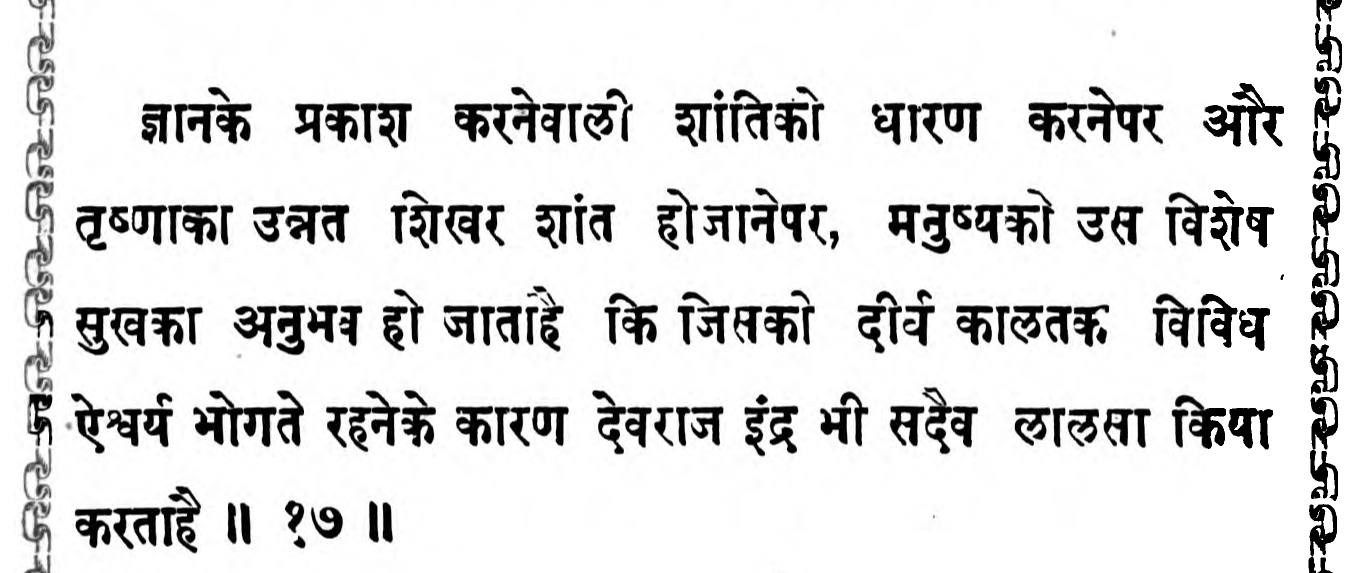
ज्ञानके प्रकाश करनेवाली शांतिको धारण करनेपर और तृष्णाका उन्नत शिखर शांत होजानेपर, मनुष्यको उस विशेष सुखका अनुभव हो जाता है कि जिसको दीर्घ कालतक विविध ऐश्वर्य भोगते रहने के कारण देवराज इंद्र भी सदैव लालसा किया करताहै ॥ १७ ॥
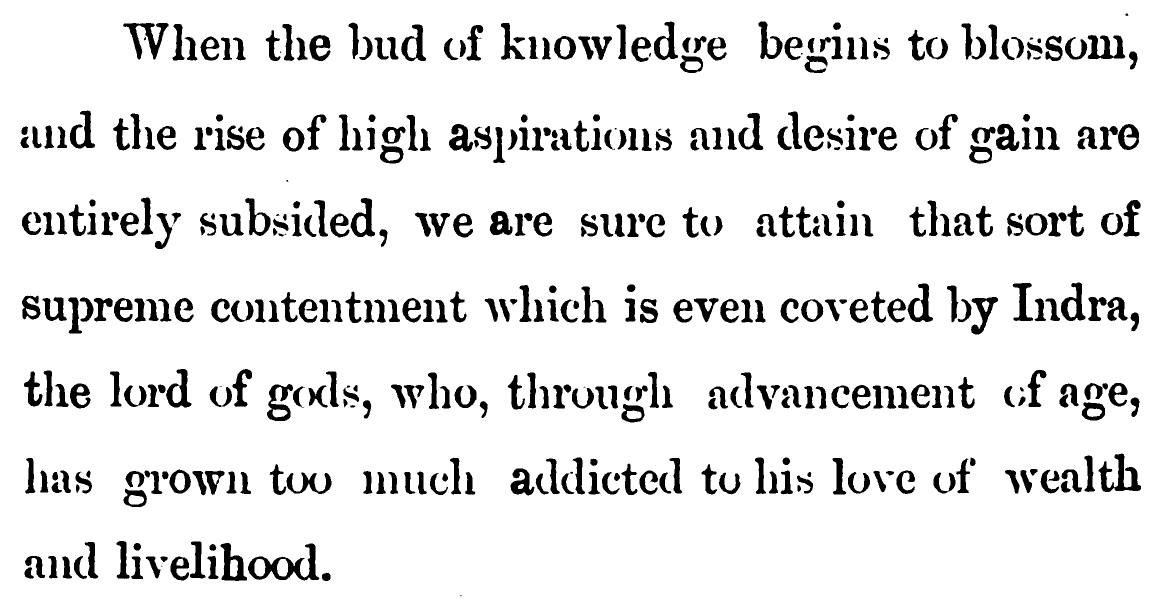
When the bud of knowledge begins to blossom, and the rise of high aspirations and desire of gain are entirely subsided, we are sure to attain that sort of supreme contentment which is even coveted by Indra, the lord of gods, who, through advancement of age, has grown too much addicted to his love of wealth and livelihood.

Gopinath1896
all
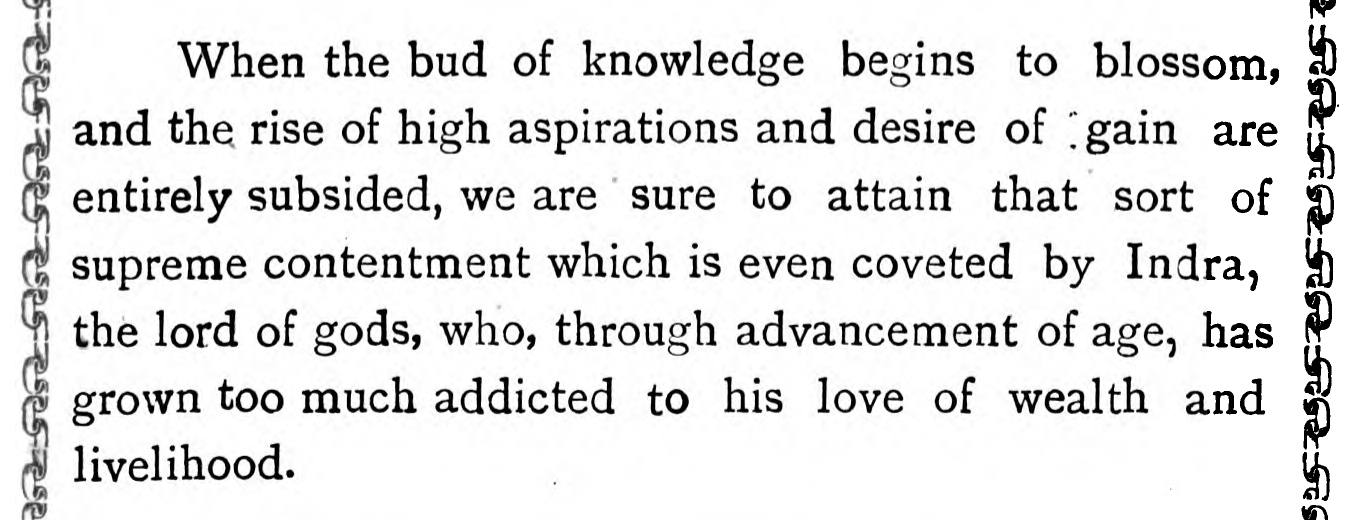
विवेकव्याकोशे विदधति शमे शाम्यति तृषा,
परिष्वङ्गे तुङ्गे प्रसरतितरां सा परिणतिः ।
जराजीर्णैश्वर्यग्रसनगहनाक्षेपकृपण - स्तृपापात्रं
यस्यां भवति मरुतामप्यधिपतिः ॥ १७ ॥
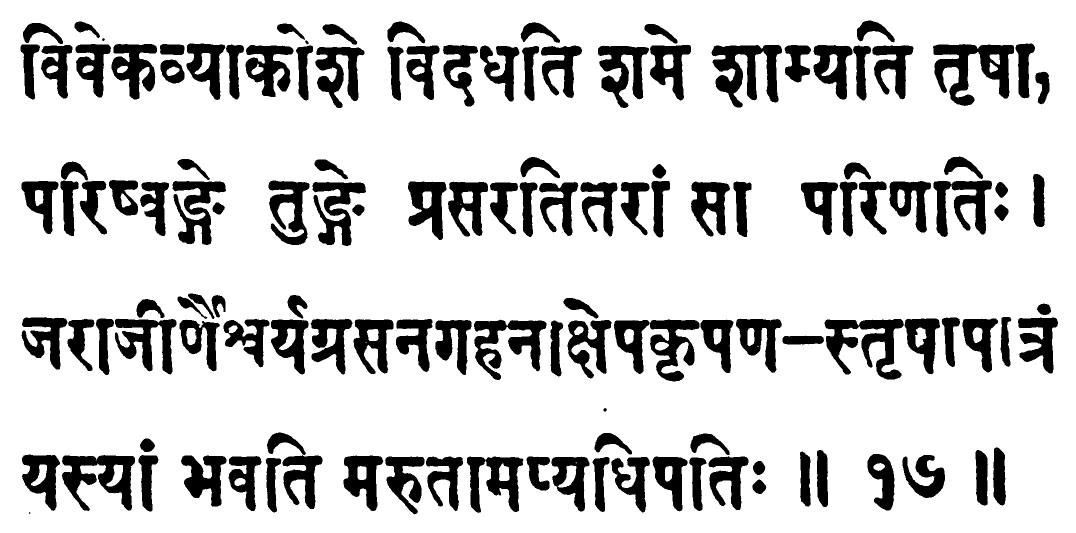
ज्ञानके प्रकाश करनेवाली शांतिको धारण करनेपर, और तृष्णाका उन्नत शिखर शांत हो जानेपर, मनुष्यको उस विशेष सुखका अनुभव हो जाता है कि जिसकी दीर्घ कालतक विविध ऐश्वर्य भोगते रहनेके कारण देवराज इंद्रभी सदैव लालसा किया करता है ॥ १७ ॥
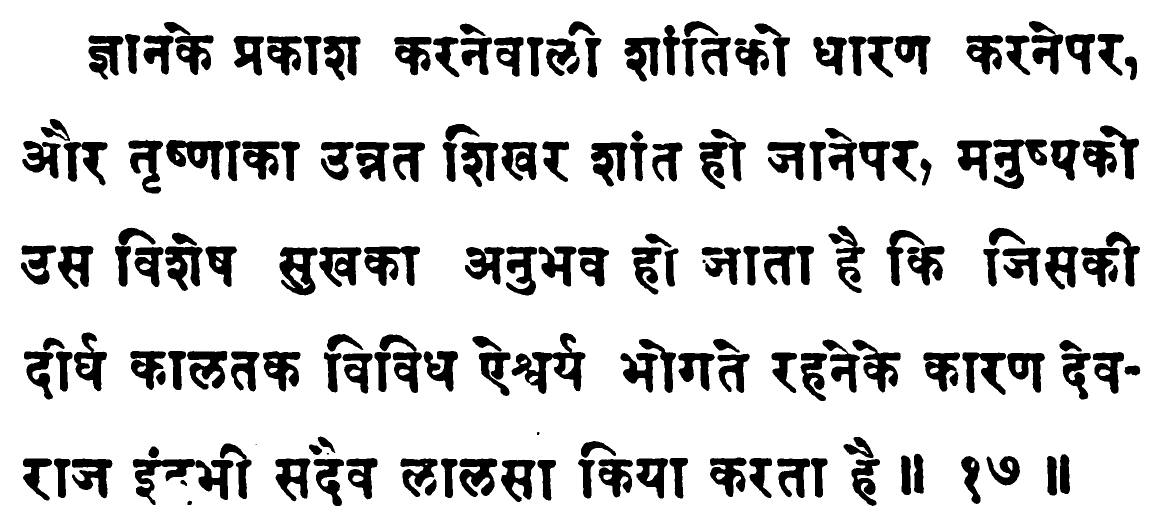
When the bud of knowledge begins to blossom, and the rise of high aspirations and desire of gain are entirely subsided, we are sure to attain that sort of supreme contentment which is even coveted by Indra, the lord of gods, who, through advancement of age, has grown too much addicted to his love of wealth and livelihood.

Kosambi
all
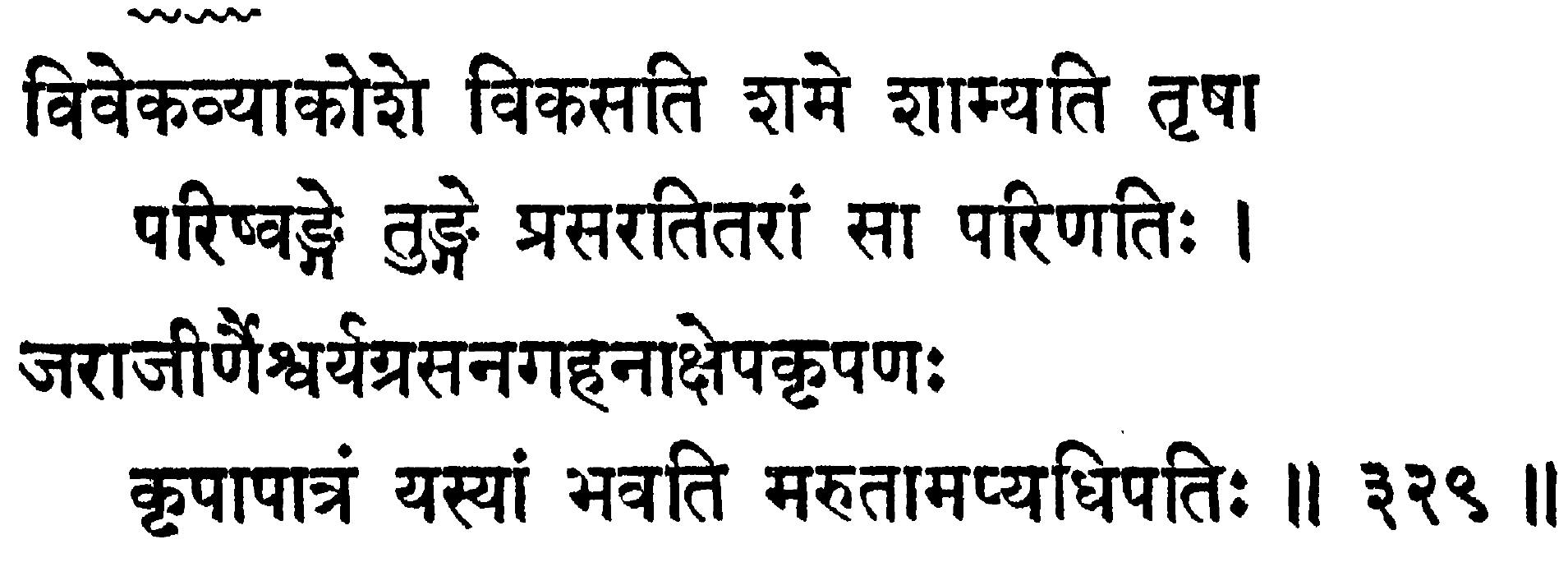
विवेकव्याकोशे विकसति शमे शाम्यति तृषा
परिष्व तुङ्गे प्रसरतितरां सा परिणतिः ।
जराजीर्णैश्वर्यग्रसनगहनाक्षेपकृपणः
कृपापात्रं यस्यां भवति मरुतामप्यधिपतिः ॥ ३२ ९ ॥
Footnote
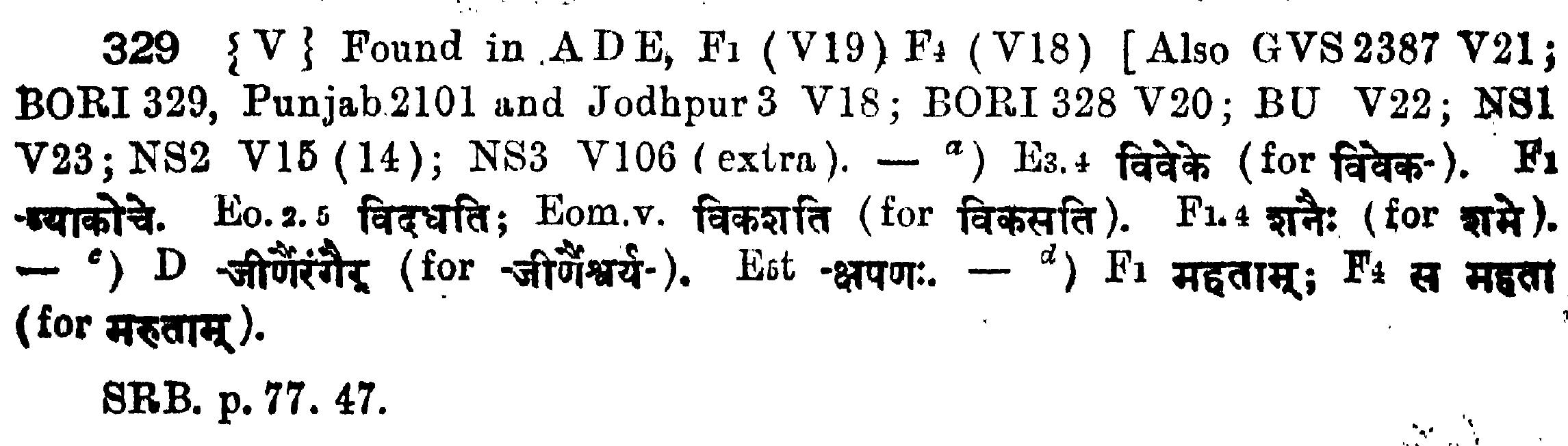
329 { V } Found in ADE , F1 ( V19 ) F ‡ ( V18 ) [ Also GVS 2387V21 ;
BORI 329 , Punjab 2101 and Jodhpur 3 V18 ; BORI 328 V20 ; BU V22 ; 791
V23 ; NS2 V15 ( ( 14 ) ; NS3 V106 ( extra ) . a ) 23. + विवेके ( for विवेक- ) . F1
-ग्याकोचे . Eo . 2.5 विदधति ; Eom.v. विकशति ( for विकसति ) . F14 शनै : ( for शमे ) .
- 0 ) D जीर्णैरंगैर ( for जीर्णैश्वर्य- ) . Eot - क्षपणः . 2 ) F1 महताम् ; F4 स महता
( for मरुताम् ) .
SRB.p. 77.47 .
Commentary