Ryder
Although the strong man be disdained,
His purpose never bends:
As when a lighted torch is held
Flame-down, the flame ascends.
Tawney
Though scorned the man of constant soul
Preserves unchanged his self-control,
In vain men trample on the fire,
For upward still its flames aspire.
Telang
all
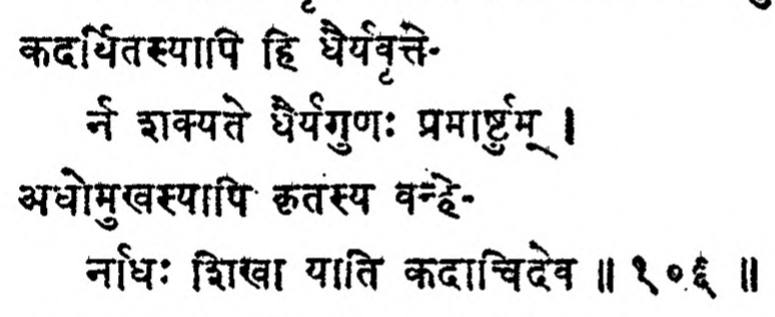
कदर्यितस्यापि हि धैर्यवृत्ते-
र्न शक्यते धैर्यगुणः प्रमार्ष्टुम् ।
अधोमुखस्यापि कृतस्य वन्हे-
र्नाधः शिखा याति कदाचिदेव ॥ १०६ ॥
Notes
St. CVI.—अधोमुखस्य कृतस्य is not a very usual construction. The reading of K. is better.—Upajâti.


Kale
all

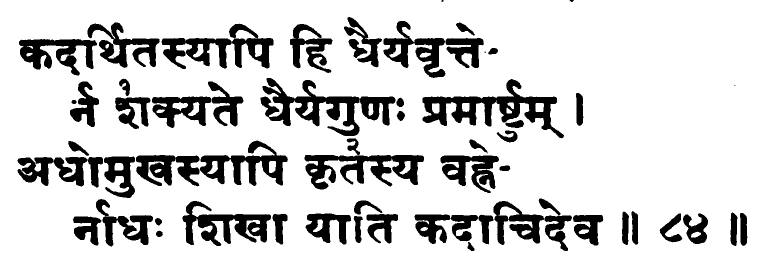
कदर्थितस्यापि हि धैर्यवृत्ते-
र्न शक्यते धैर्यगुणः प्रमार्ष्टुम् ।
अधोमुखस्यापि कृतस्य वह्ने-
र्नाधः शिखा याति कदाचिदेव ॥ ८४ ॥
Translation
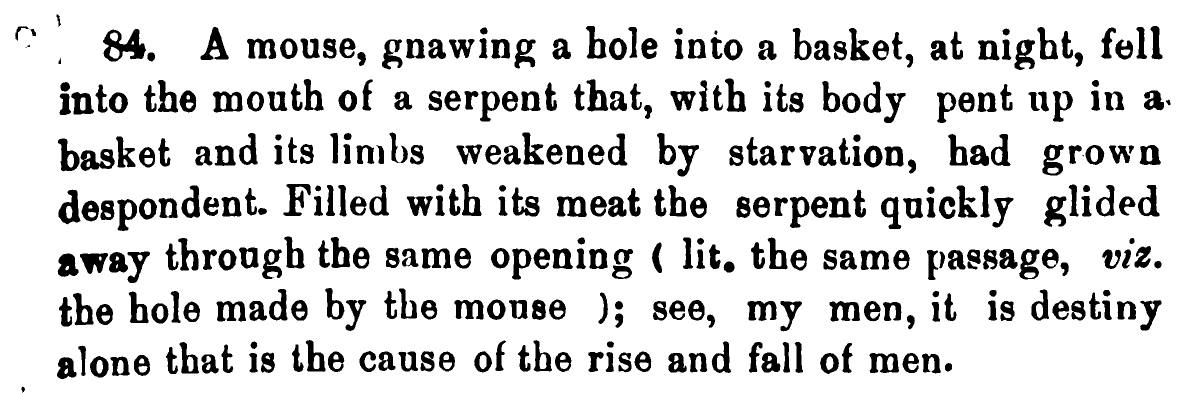
84. A mouse, gnawing a hole into a basket, at night, fell into the mouth of a serpent that, with its body pent up in a basket and its limbs weakened by starvation, had grown despondent. Filled with its meat the serpent quickly glided away through the same opening ( lit. the same passage, viz. the hole made by the mouse ); see, my men, it is destiny alone that is the cause of the rise and fall of men.
Translation
84. The virtue of courage of a heroic person cannot be obliterated though he be worried; though pointed downwards, the flame of fire does not point to the ground.

Notes
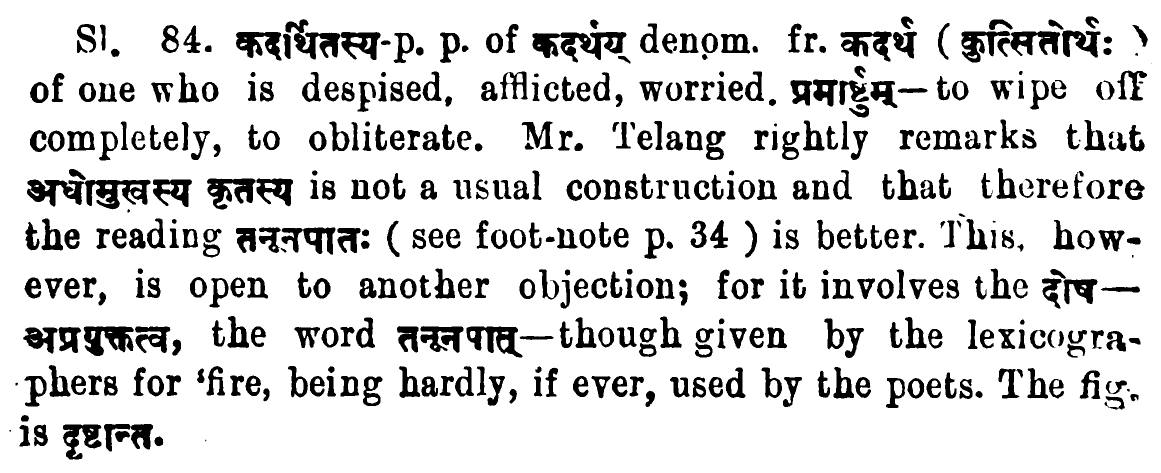
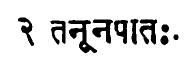
Sl. 84. कदर्थितस्य-p. p. of कदर्थय् denom. fr. कदर्थ ( कुत्सितोर्थः ) of one who is despised, afflicted, worried. प्रमार्ष्टुम्—to wipe off completely, to obliterate. Mr. Telang rightly remarks that अधोमुखस्य कृतस्य is not a usual construction and that therefore the reading तनूनपातः ( see foot-note p. 34 ) is better. This, however, is open to another objection; for it involves the दोष— अप्रयुक्तत्व, the word तनूनपात्—though given by the lexicographers for ‘fire, being hardly, if ever, used by the poets. The fig. is दृष्टान्त.

Gopinath1914
all
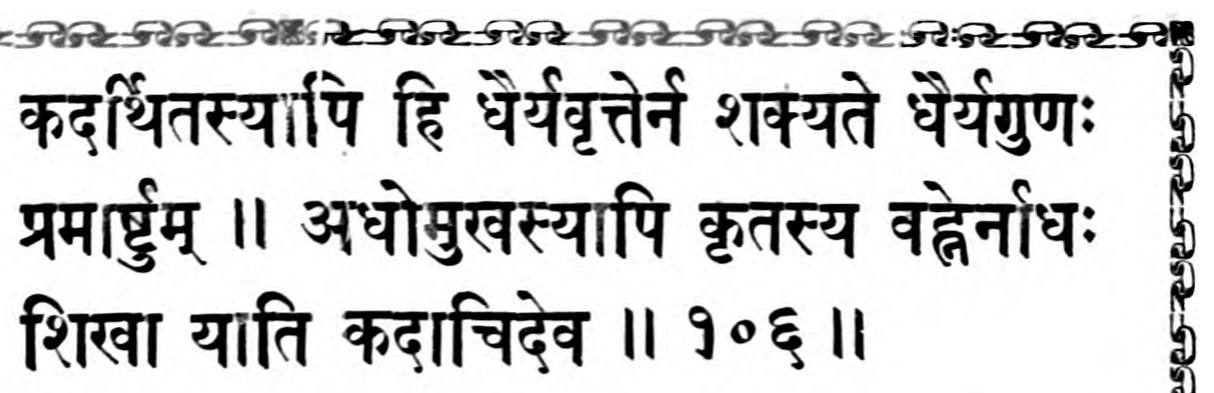
धैर्यगुणः
कदर्थितस्यापि हि धैर्यवृत्तेर्न शक्यते
प्रमाष्र्टुम् ॥ अधोमुखस्यापि कृतस्य वर्नाधः
शिखा याति कदाचिदेव ॥ १०६ ॥
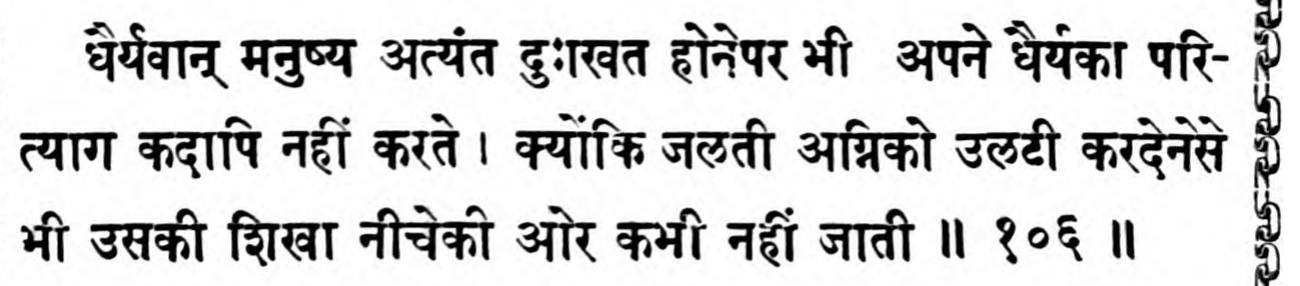
धैर्यवान् मनुष्य अत्यंत दुःखित होनेपर भी अपने धैर्यका परित्याग कदापि नहीं करते। क्योंकि जलती अग्निको उलटी करदेने से भी उसकी शिखा नीचेकी ओर कभी नहीं जाती ॥ १०६ ॥
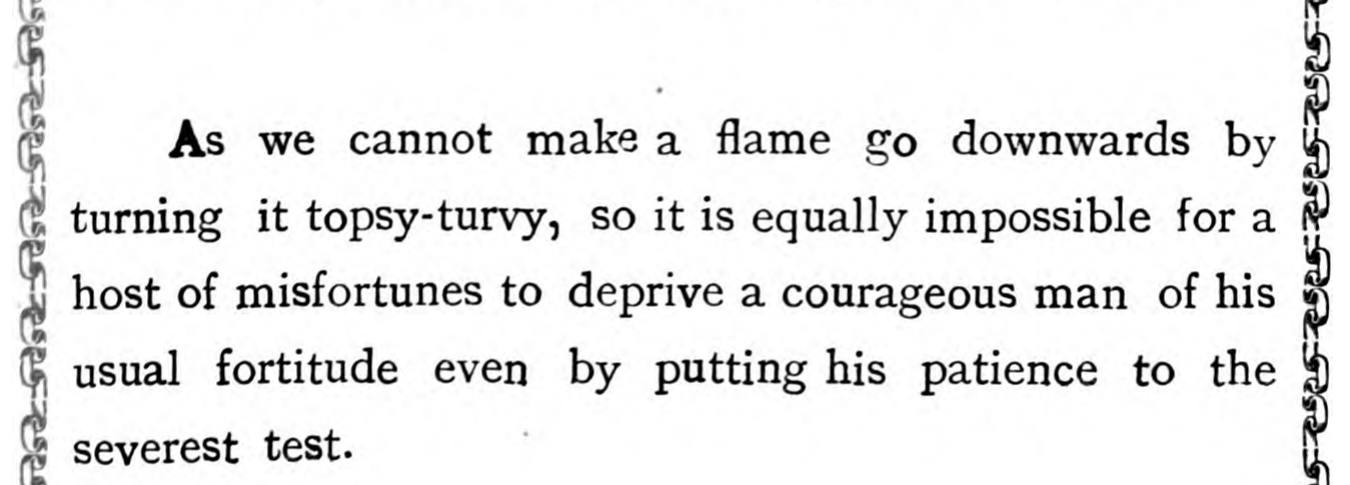
As we cannot make a flame go downwards by turning it topsy-turvy, so it is equally impossible for a host of misfortunes to deprive a courageous man of his usual fortitude even by putting his patience to the severest test.
Footnote
In the Subhashitavali ( सुभाषितावलि) this stanza is quoted under Aśvaghosha (अश्वघोष ) at No. 528 and anonymously at No. 316. The śarngadharapaddhati ( शार्ङ्गचरपद्धतेि). at No. 227 gives it under भर्तृहरी • It also stands in the Hitopadeśa (हितोपदेश । ६१ ) and the Panchatantra ( पंचतंत्र ).
Gopinath1896
all
कदर्थितस्यापि हि धैर्यवृत्ते, र्न शक्यते धैर्य -
गुणः प्रमार्टुम् । अधो मुखस्यापि कृतस्य
वह्ने, नधः शिखा याति कदाचिदेव ॥१०६ ॥
धैर्यवान् मनुष्य अत्यंत दुःखित होने परभी अपने धैर्य का परित्याग कदापि नहीं करते । क्योंकि जलती अभि को उलटी करदेने से भी उसकी शिखा नीचे की ओर कभी नहीं जाती ॥ १०६ ॥
As we cannot make a flame go downwards by turning it topsy-turvy, so it is equally impossible for a host of misfortunes to deprive a courageous man of his usual fortitude even by putting his patience to the severest test.
Footnote
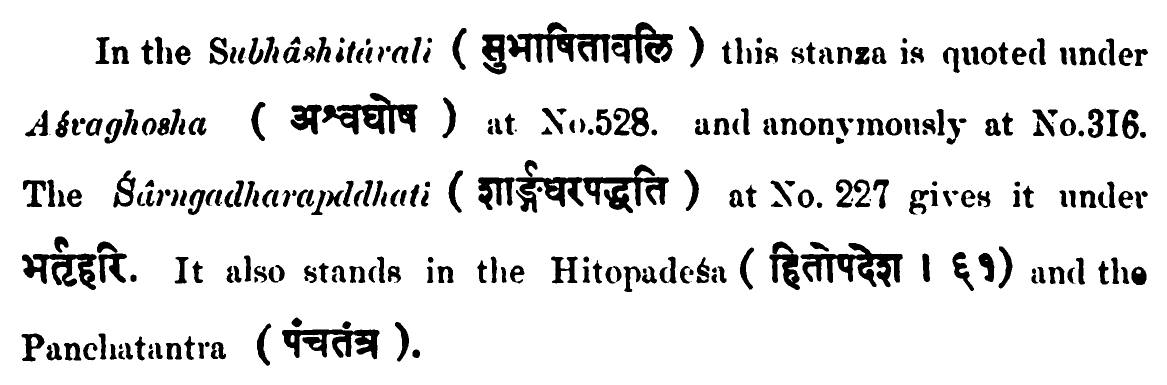
In the Subháshitirali ( सुभाषितावलि) this stanza is quoted under Abraghosha ( अश्वघोष ) at No.528 and anonymously at No.3I6. The Härngadharapaddhati ( शार्ङ्गधरपद्धति ) at No. 227 gives it under भर्तृहरि. It also stands in the Hitopadeśa (हितोपदेश । ६१ ) and the Panchatantra ( पंचतंत्र ).
Footnote
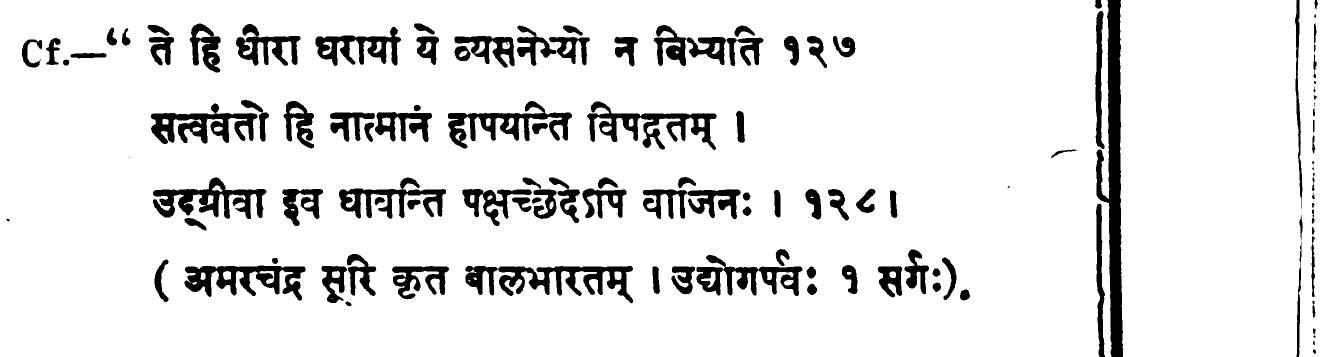
Cf. - " ते हि धीरा धरायां ये व्यसनेभ्यो न बिभ्यति १२७ सत्ववतो हि नात्मानं हापयन्ति विपद्गतम् । उद्यीवा इव धावन्ति पक्षच्छेदेऽपि वाजिनः । १२८। ( अमरचंद्र सूरि कृत बालभारतम् । उद्योगपर्व: १ सर्गः ).

Kosambi
all
कदर्थितस्यापि हि धैर्यवृत्तेर्न शक्यते धैर्यगुणः प्रमाष्टुम् ।
अधोमुखस्यापि कृतस्य वर्नाधः शिखा याति कदाचिदेव ॥ २२६ ॥

Footnote
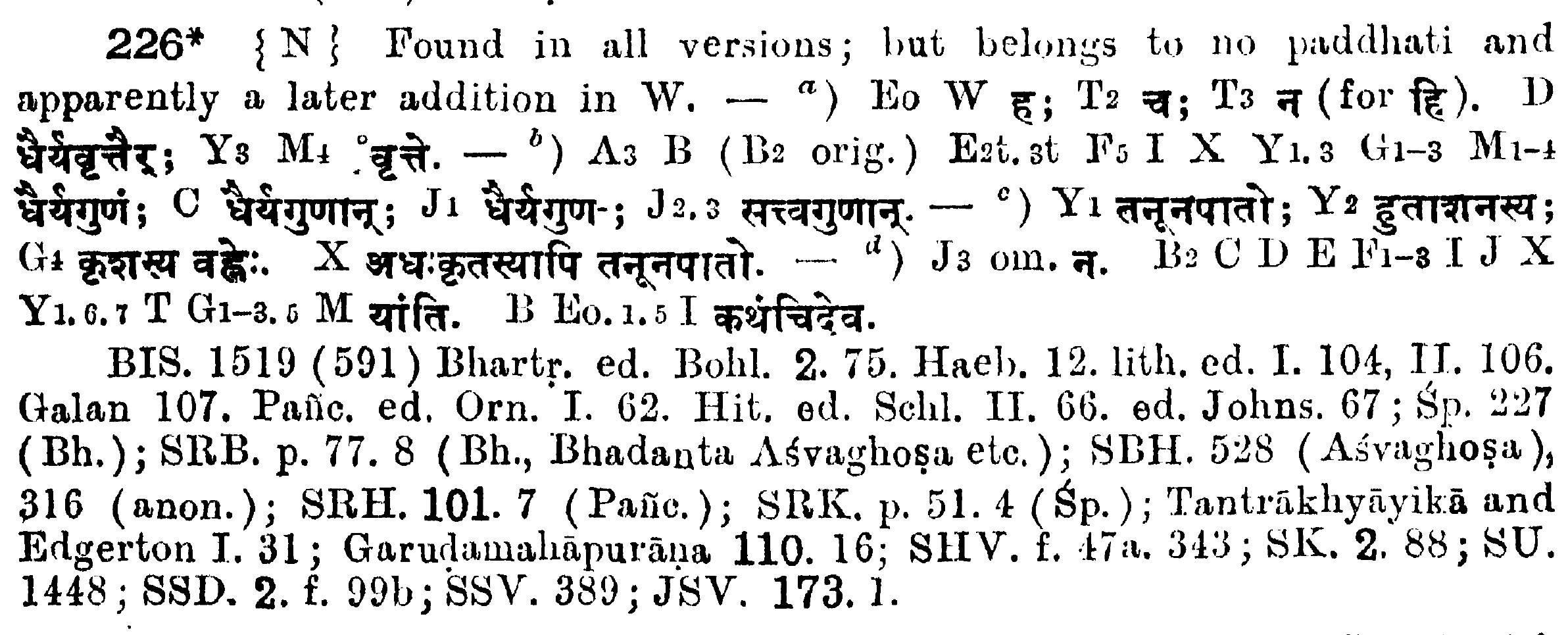
226 * { N } Found in all versions ; but belongs to no paddhati and
apparently a later addition in W. – ¬ ) Eo W ह ; T2 च ; T3 न ( for हि ) . D
धैर्यवृत्तैर ; Y3 M + : वृत्ते ● – 4 ) A3 B ( B2 orig . ) Eat.st Fs I X Y 1.3 G1-3_M1-1
धैर्यगुणं ; C धैर्यगुणान् ; J1 धैर्यगुण- ; J2.3 सत्त्वगुणान् – ० ) Y1 तन्नपातो ; Y2 हुताशनस्य ;
G4 कृशम्य वह्ने : X अधः कृतस्यापि तनूनपातो . “ ) J3 om . न . Be CDEF1 - 3 I J X
Y1.6.7 T G1 – 3.6 M यांति . B Eo . 1.5 I कथंचिदेव .
BIS . 1519 ( 591 ) Bhartr ed . Bohl . 2. 75. Haeb . 12. lith ed . I. 104 , II . 106 .
Galan 107. Paic . ed . Orn . I. 62. Hit . ed . Sehl . II . 66. ed . Johns . 67 ; Śp . 227
( Bh . ) ; SRB . p . 77. 8 ( Bh . , Bhadanta Aśvaghoșa etc. ) ; SBH . 528 ( Aśvaghoșa ) ,
316 ( anon . ) ; SRH 101. 7 ( Pañc . ) ; SRK . p . 51. 4 ( Śp . ) ; Tantrākhyāyikā and
Edgerton I. 31 ; Garudamahapurana 110. 16 ; SHV . f . 47a . 343 ; SK . 2. 88 ; SU .
1448 ; SSD . 2. f . 996 ; SSV . 389 ; JSV . 173. 1 .
Commentary