Gopinath1914
all
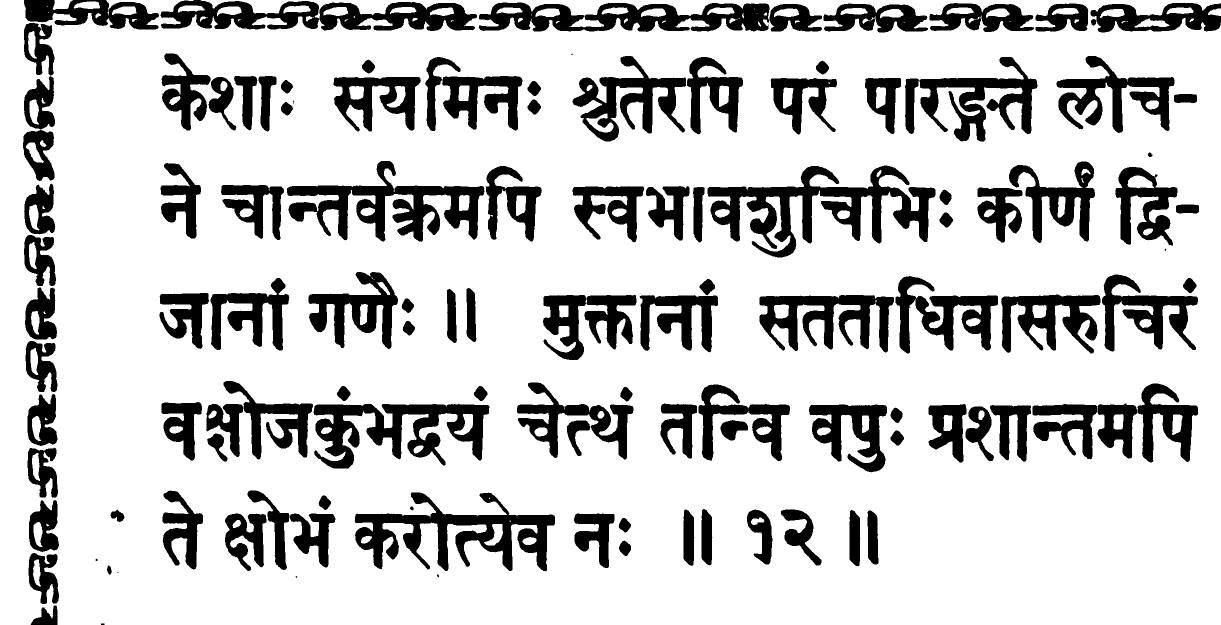
केशाः संयमिनः श्रुतेरपि परं पारङ्गते लोच-
ने AN चान्तर्वक्रमपि AN A स्वभावशुचिभिः कीर्णं द्वि-
जानां गणैः ॥ मुक्तानां सतताधिवासरुचिरं
वक्षोजकुंभद्वयं चेत्थं तन्वि वपुः प्रशान्तमपि
ते क्षोभं करोत्येव नः ॥ १२॥
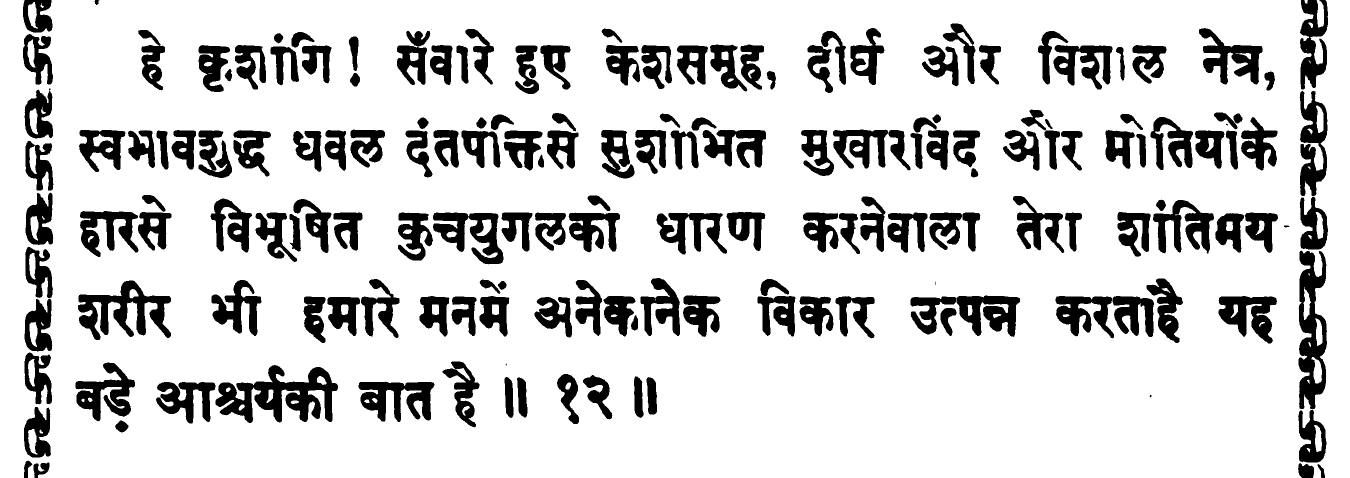
हे कृशांग ! सँवारे हुए केशसमूह, दीर्घ और विशाल नेत्र, स्वभावशुद्ध धवल दंतपंक्ति से सुशोभित मुखारविंद और मोतियोंके हारसे विभूषित कुचयुगलको धारण करनेवाला तेरा शांतिमय शरीर भी हमारे मन में अनेकानेक विकार उत्पन्न करता है यह बड़े आश्चर्यकी बात है ॥ १२ ॥
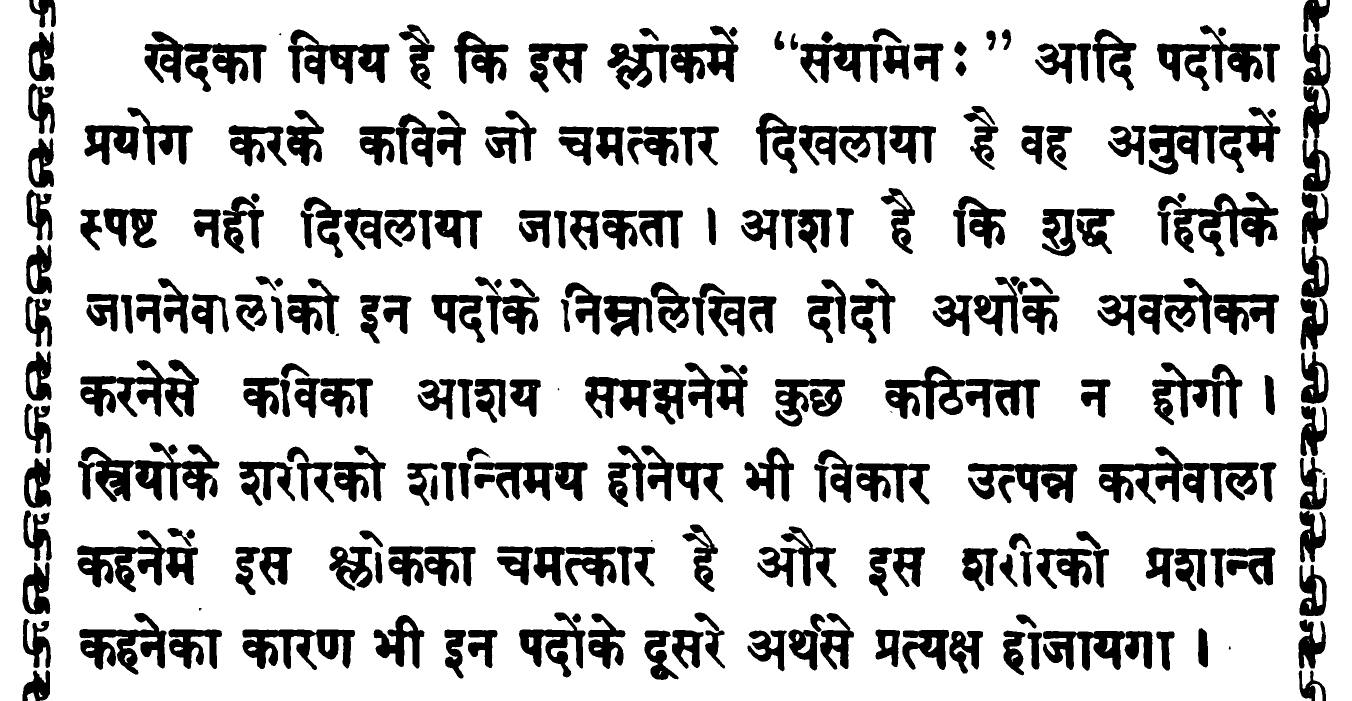
खेदका विषय है कि इस श्लोक में "संयमिनः " आदि पदोंका प्रयोग करके कविने जो चमत्कार दिखलाया है वह अनुवादमें स्पष्ट नहीं दिखलाया जासकता । आशा है कि शुद्ध हिंदीके जाननेवालों को इन पदोंके निम्नलिखित दोदो अर्थोके अवलोकन करनेसे कविका आशय समझने में कुछ कठिनता न होगी । स्त्रियोंके शरीरको शान्तिमय होनेपर भी विकार उत्पन्न करनेवाला कहने में इस लोकका चमत्कार है और इस शरीरको प्रशान्त कहने का कारण भी इन पदोंके दूसरे अर्थ से प्रत्यक्ष होजायगा ।

( ख ) " श्रुतेरपि पारङ्गते” = १ कर्णान्तायत अर्थात् कानपर्यंत देखनेवाले या विशाल और २ वेद वेदान्तादि शास्त्रोंमें पारंगत ।



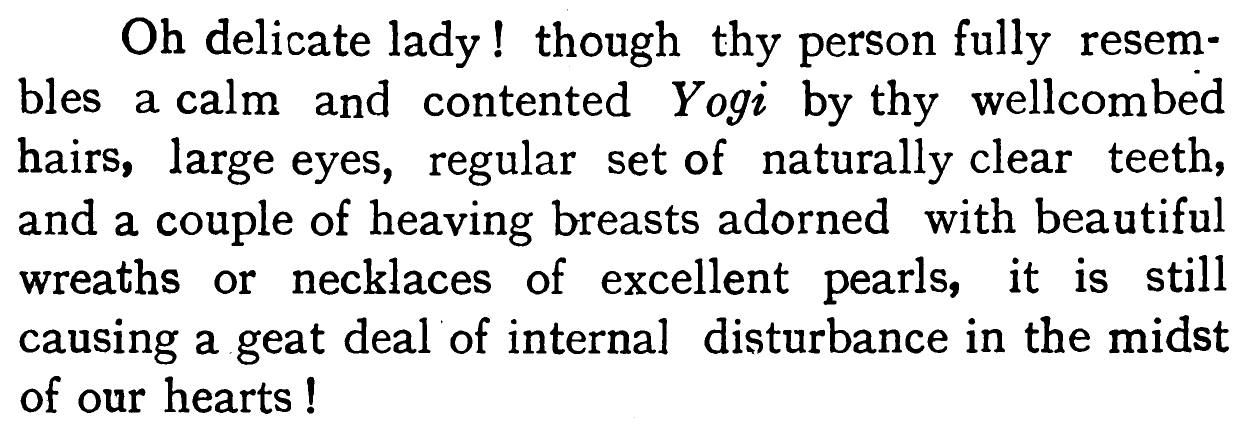
Oh delicate lady! though thy person fully resembles a calm and contented Yogi by thy wellcombed hairs, large eyes, regular set of naturally clear teeth, and a couple of heaving breasts adorned with beautiful wreaths or necklaces of excellent pearls, it is still causing a geat deal of internal disturbance in the midst of our hearts !
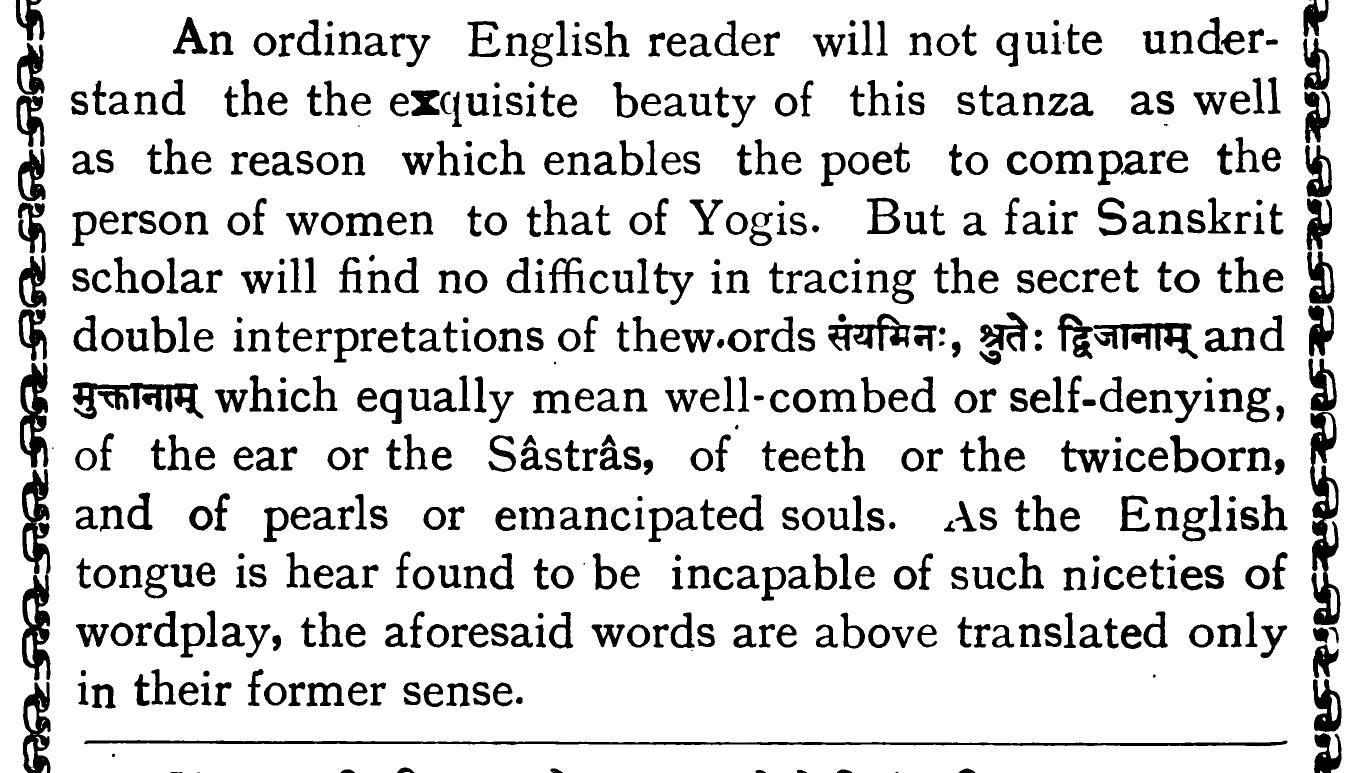
An ordinary English reader will not quite understand the the exquisite beauty of this stanza as well as the reason which enables the poet to compare the person of women to that of Yogis. But a fair Sanskrit scholar will find no difficulty in tracing the secret to the double interpretations of thewords संयमिनः , श्रुतेः द्विजानाम् and मुक्तानाम् which equally mean well-combed or self-denying, of the ear or the Sâstrâs, of teeth or the twiceborn, and of pearls or emancipated souls. As the English tongue is hear found to be incapable of such niceties of wordplay, the aforesaid words are above translated only in their former sense.
Gopinath1896
all
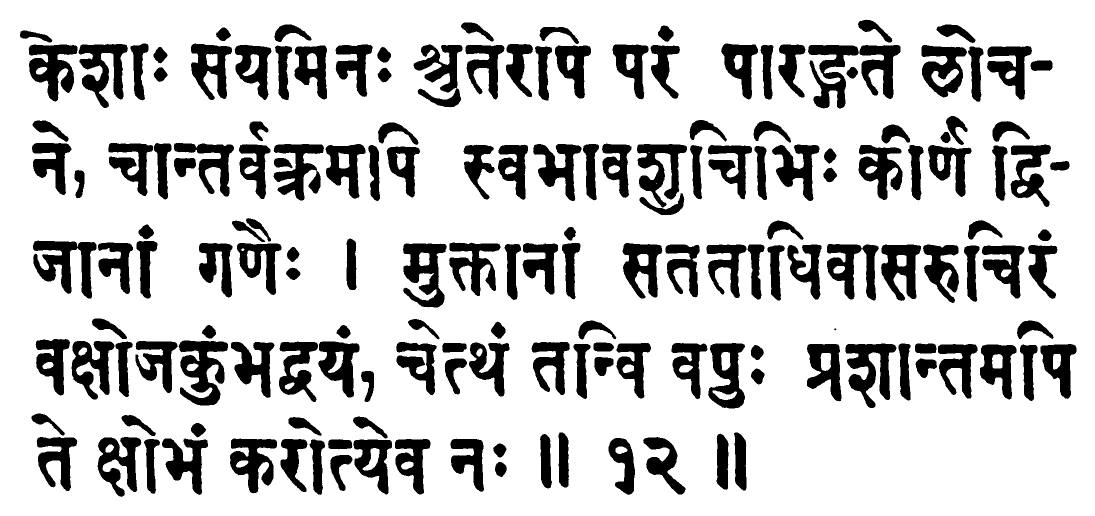
केशाः संयमिनः श्रुतेरपि परं पारङ्गते लोच-
ने, चान्तर्वक्रमपि स्वभावशुचिभिः कीर्ण द्वि-
जानां गणैः । मुक्तानां सतताधिवासरुचिरं
वक्षोजकुंभद्वयं, चेत्थं तन्वि वपुः प्रशान्तमपि
ते क्षोभं करोत्येव नः ॥ १२ ॥
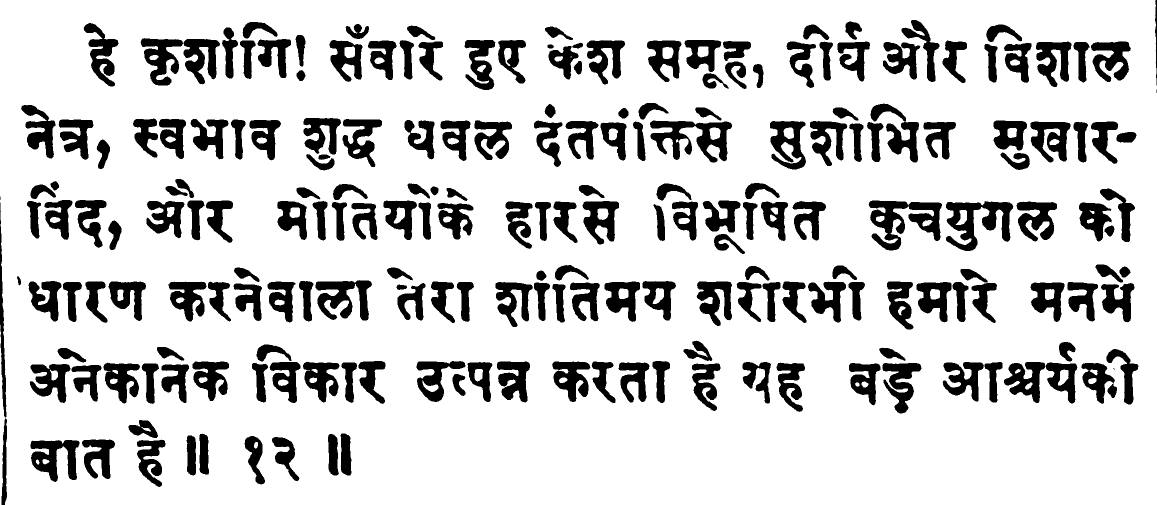
हे कृशांगि! सँवारे हुए केश समूह, दीर्घ और विशाल नेत्र, स्वभाव शुद्ध धवल दंतपंक्तिसे सुशोभित मुखारविंद, और मोतियोंके हारसे विभूषित कुचयुगल को 'धारण करनेवाला तेरा शांतिमय शरीरभी हमारे मनमें अनेकानेक विकार उत्पन्न करता है यह बड़े आश्चर्यकी बात है ॥ १२ ॥
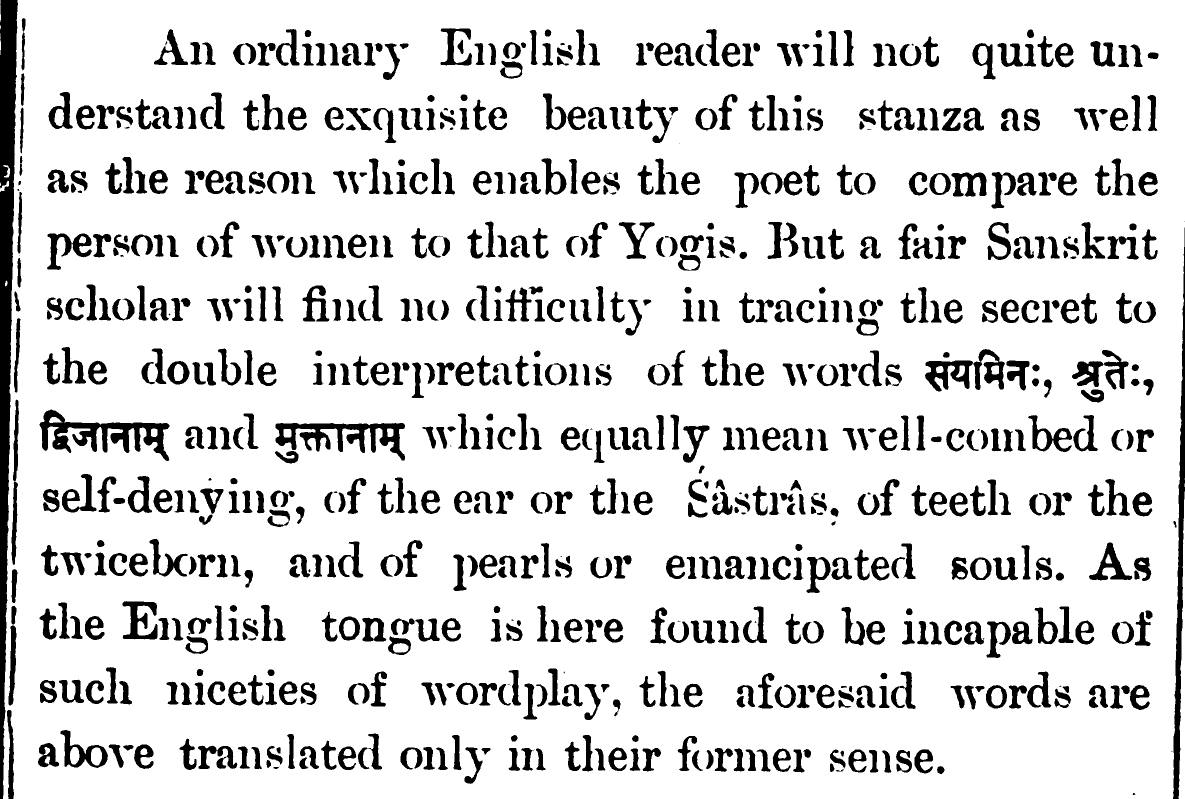
खेदका विषय है कि इस श्लोक में "संयमिनः" आदि पदोंका प्रयोग करके कविने जो चमत्कार दिखलाया है वह अनुवाद में स्पष्ट नहीं दिखलाया जासकता । आशा है कि शुद्ध हिंदीके जाननेवालोंको इन पदोंके निम्नलिखित दोदो अर्थोके अवलोकन करनेसे कविका आशय समझने में कुछ कठिनता न होगी । स्त्रियोंके शरीरको शान्तिमय होनेपर भी विकार उत्पन्न करनेवाला कहने में इस लोकका चमत्कार है और इस शरीरको प्रशान्त कहनेका कारणभी इन पदोंके दूसरे अर्थसे प्रत्यक्ष हो जायगा ।
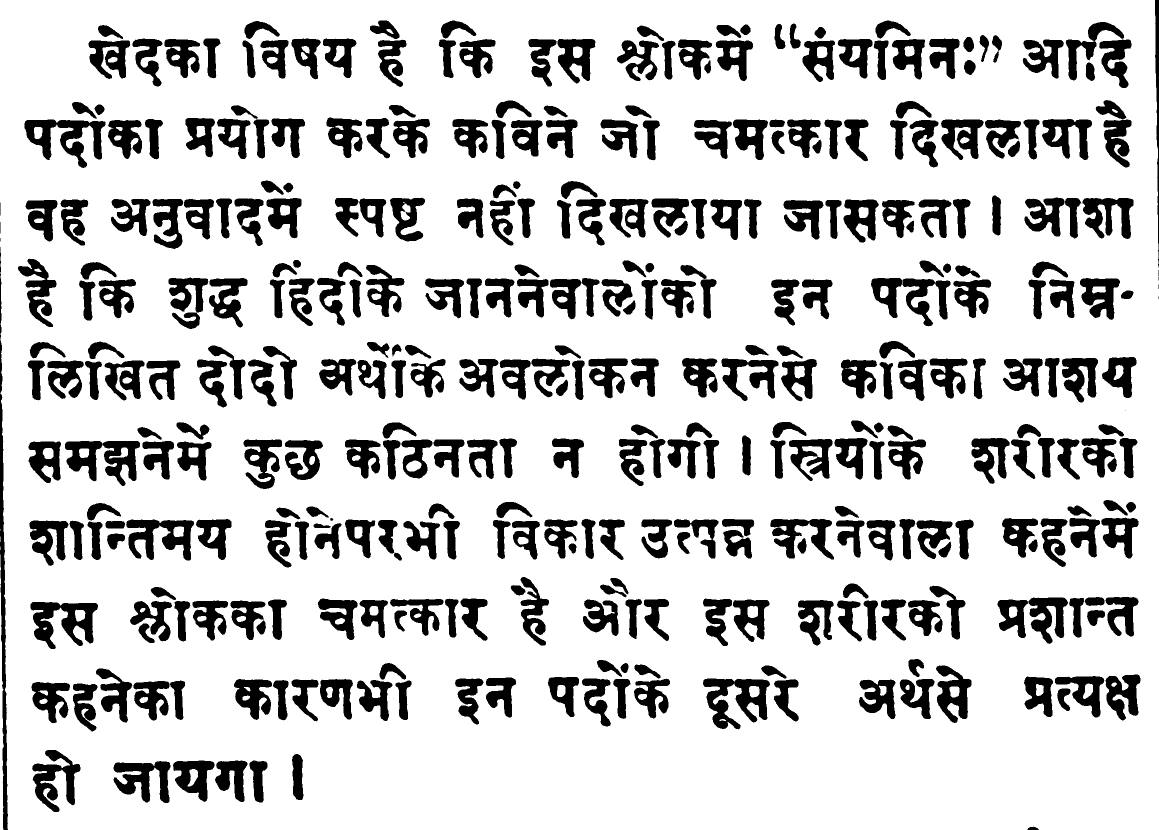

( ख ) " श्रुतेरपि पारङ्गते पारङ्गते " " = = १ कर्णान्तायत अर्थात् कानपर्यंत देखनेवाले या विशाल और २ वेद वेदान्तादि शास्त्रों में पारंगत !
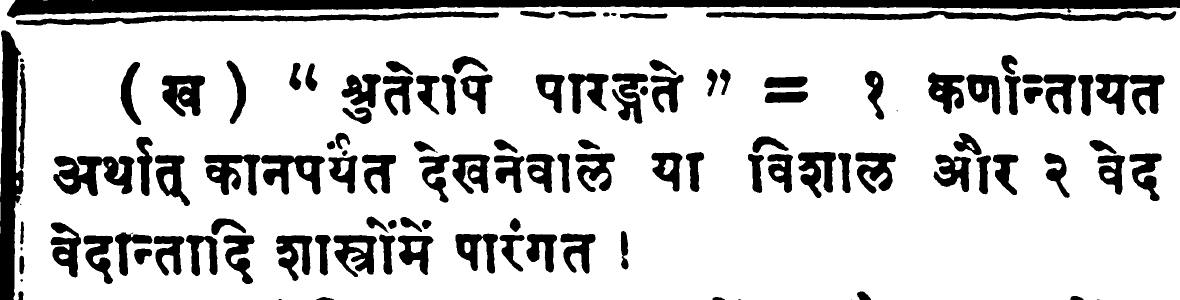


Oh delicate lady! though thy person fully resembles a calm and contented Yogi by thy wellcombed hairs, large eyes, regular set of naturally clear teeth, and a couple of heaving breasts adorned with beautiful wreaths or necklaces of excellent pearls, it is still causing a geat deal of internal disturbance in the midst of our hearts !
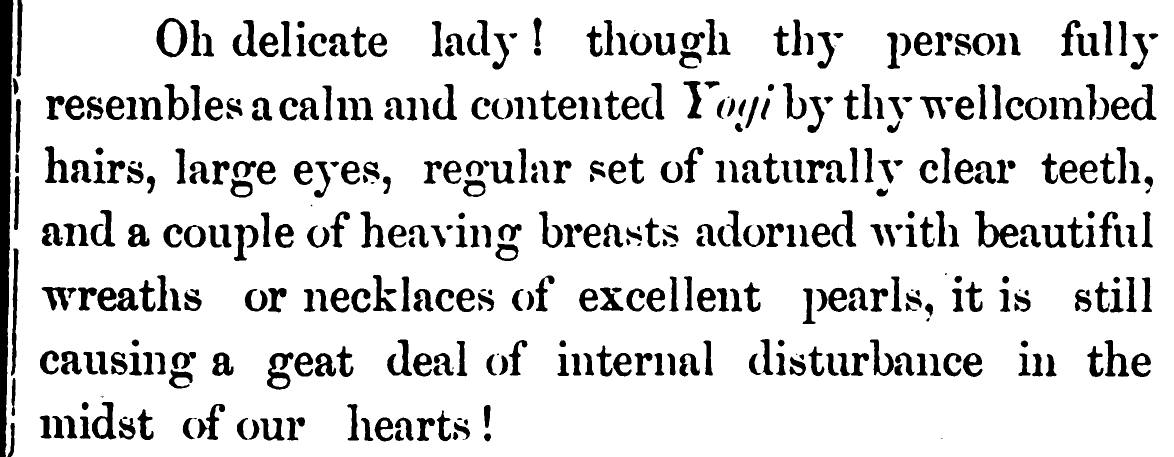
An ordinary English reader will not quite understand the exquisite beauty of this stanza as well as the reason which enables the poet to compare the person of women to that of Yogis. But a fair Sanskrit scholar will find no difficulty in tracing the secret to the double interpretations of the words संयमिनः, श्रुतेः, द्विजानाम् and मुक्तानाम् which equally mean well-combed or self-denying, of the ear or the Sastrús, of teeth or the twiceborn, and of pearls or emancipated souls. As the English tongue is here found to be incapable of such niceties of wordplay, the aforesaid words are above translated only in their former sense.
Kosambi
all
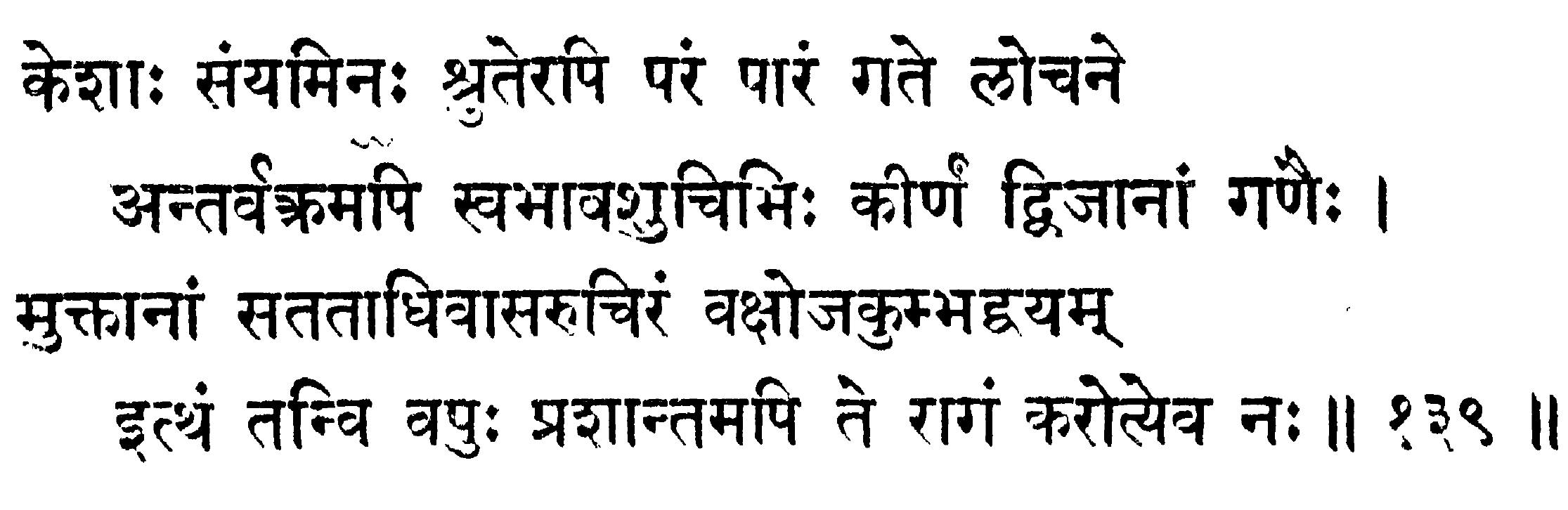
केशाः संयमिनः श्रुतेरपि परं पारं गते लोचने
अन्तर्वक्रमपि स्वभावशुचिभिः कीर्णं द्विजानां गणैः ।
मुक्तानां सतताधिवासरुचिरं वक्षोजकुम्भद्वयम्
इत्थं तन्वि वपुः प्रशान्तमपि ते रागं करोत्येव नः ॥ १३ ९ ॥
Footnote
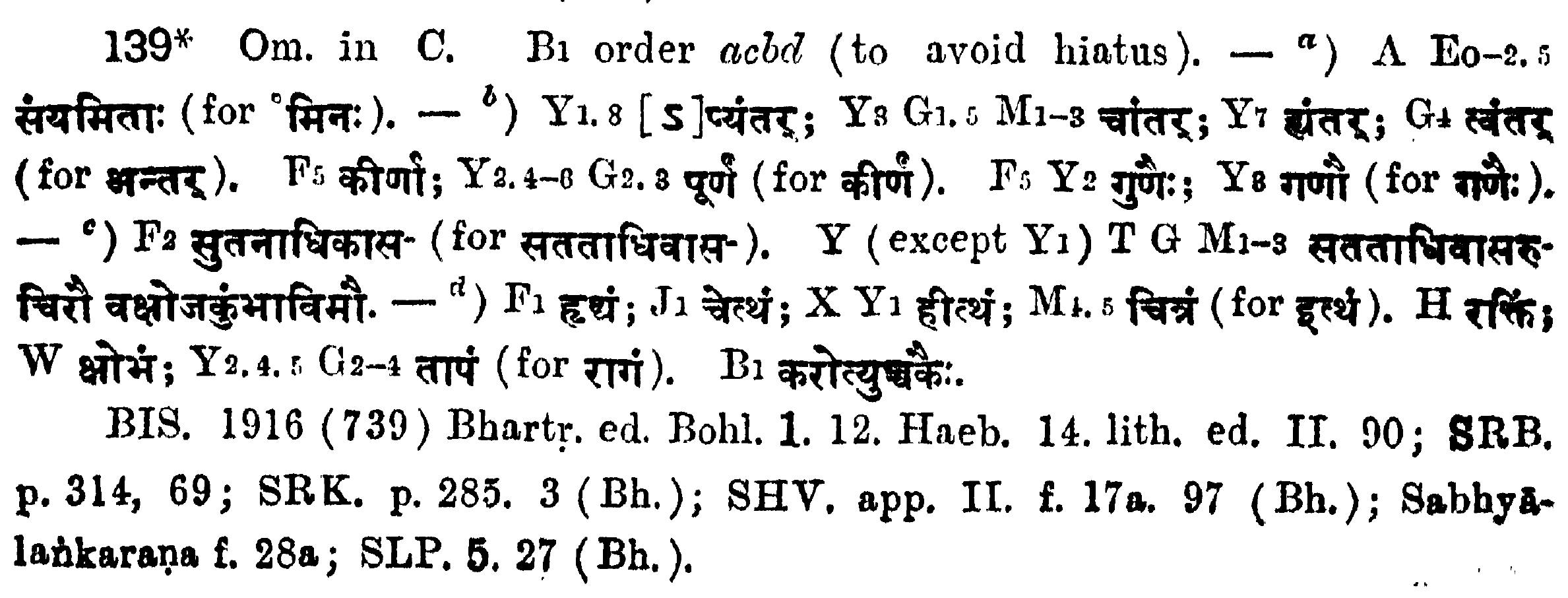
139 * Om . in C. B₁ order acbd ( to avoid hiatus ) . a ) A Eo - 25
संयमिता : ( for ' मिनः ) . - F 8 ) Y1.8 [ S ] ध्यंतर ; Y8 G1.6 M1-8 चांतर् ; Y7 ; G + स्वंतर्
( for अन्तर् ) . Fs कीर्णा ; X 2. 4-0 G2 . 3 पूर्ण ( for कीर्णं ) . Fs Y2 गुणै : ; Y8 गणौ ( for गणैः ) .
- 0 ) F2 सुतनाधिकास- ( for सतताधिवास- ) . Y ( except Y1 ) TG M1-3 सतताधिवासरु
चिरौ वक्षोजकुंभाविमौ . - . 2 d ) IF 1 हृथं ; J1 चेत्थं ; X Y1 हीत्थं ; Mr. 5 चित्रं ( for इथं ) . H रक्ति ;
W क्षोभं ; Y2.4.3 G2-4 तापं ( for रागं ) . B1 करोत्युच्चकैः .
BIS . 1916 ( 739 ) Bhartr ed . Bohl . 1. 12. Haeb . 14. lith ed . II . 00 ; SRB .
p . 314 , 69 ; SRK . p . 285 3 ( Bh . ) ; SHV app . II . f . 17a . 97 ( Bh . ) ; Sabhya
lankaraņa f . 28 & ; SLP . 5. 27 ( Bh . ) .